How Many Calories Must I Eat a Day?

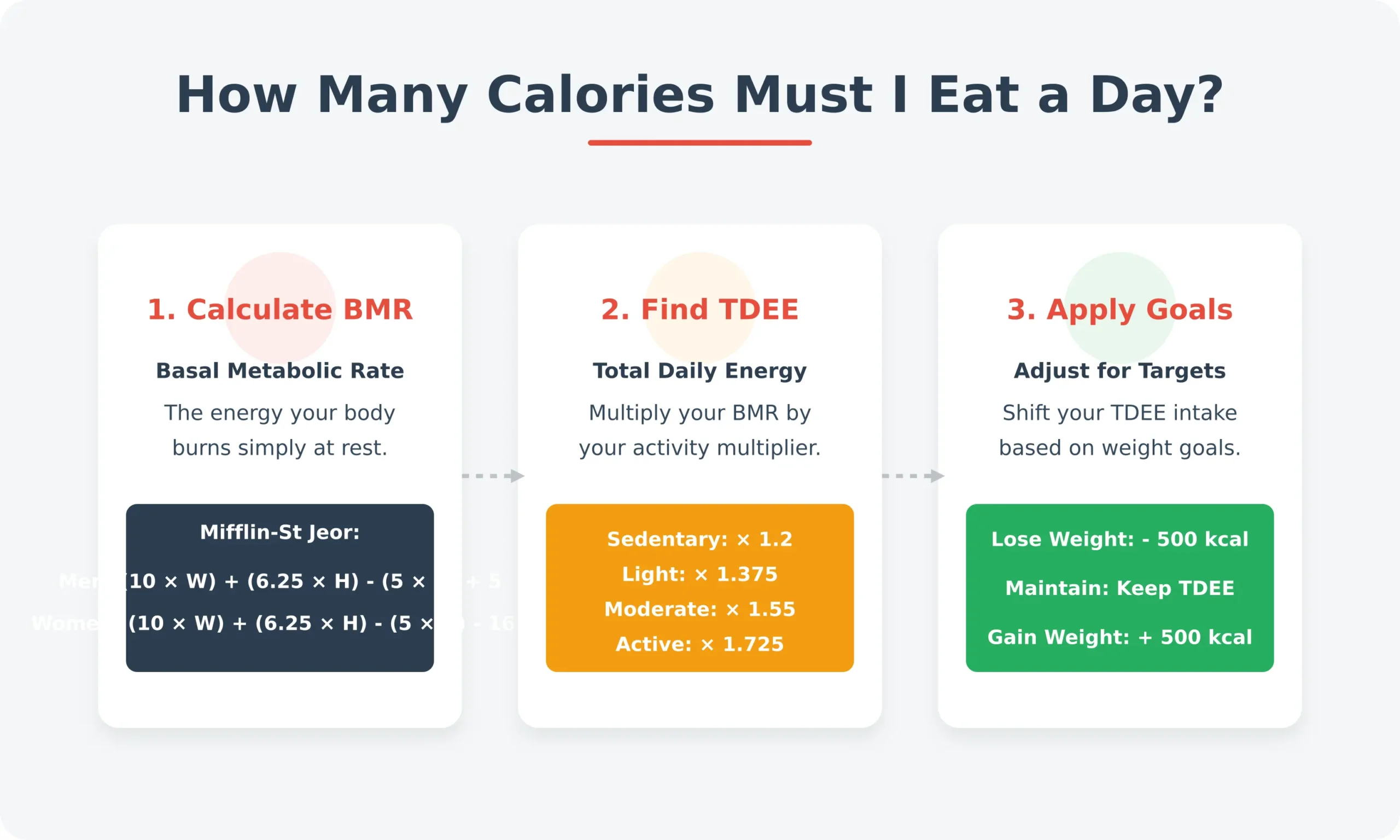
Most adults need between 1,600 and 3,000 calories per day to maintain their weight. Here’s a fast reference:
| Group | Sedentary | Moderately Active | Very Active |
|---|---|---|---|
| Women | 1,600–2,000 | 2,000–2,200 | 2,200–2,400 |
| Men | 2,000–2,400 | 2,400–2,800 | 2,800–3,000+ |
For weight loss: subtract 300–500 from your maintenance number.
For weight gain: add 200–500 to your maintenance number.
Want a more precise number? Keep reading for the full formula and personalized breakdown.
Figuring out how many calories you need each day can feel confusing, especially with so much conflicting advice online. The truth is, there’s no single magic number that works for everyone. Your daily calorie needs depend on your age, sex, body size, activity level, and health goals. This guide breaks down everything you need to know to find the right calorie target for your body and lifestyle.
Key Takeaways
- Daily calorie needs vary widely based on age, sex, height, weight, and activity level.
- Most adult women need between 1,600 and 2,400 per day, while men typically need 2,000 to 3,000.
- A calorie is simply a unit of energy your body uses to function and stay active.
- Sustainable weight loss usually comes from a modest calorie deficit of 300–500 per day.
- Food quality matters just as much as calorie quantity focus on whole, nutrient-dense foods.
- Online TDEE calculators can give you a personalized estimate in seconds.
Average Daily Calorie Needs
The average adult needs somewhere between 1,600 and 3,000 calories per day to maintain their current weight. That’s a wide range, and where you fall within it depends on several personal factors. A petite, active construction worker, even though both are adults.
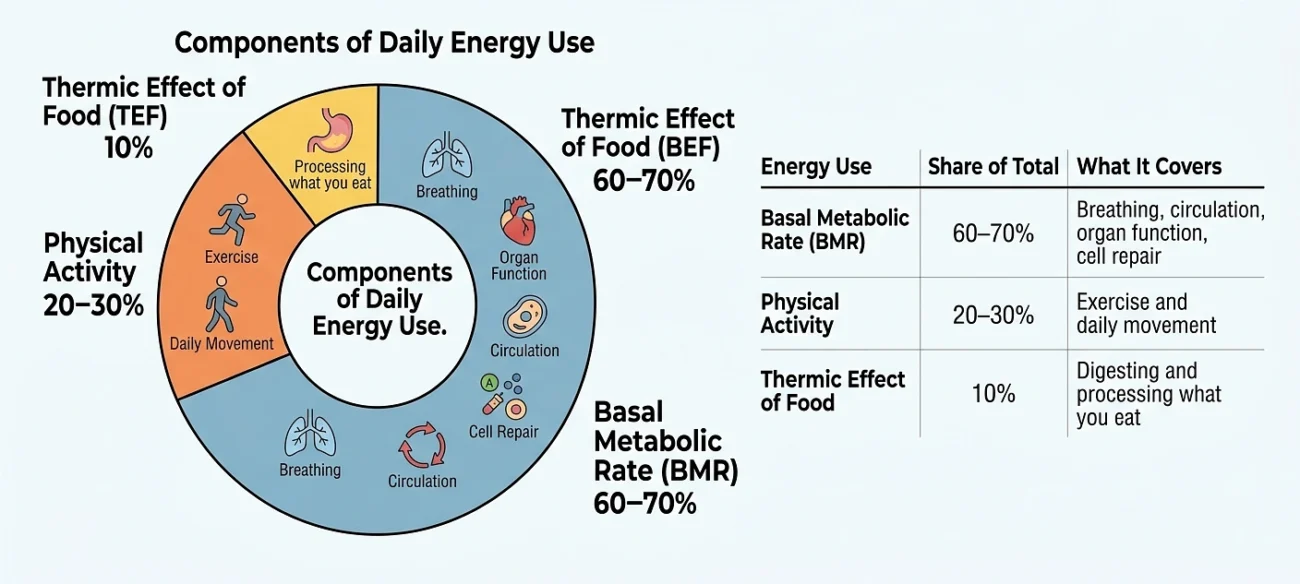
Together, these make up your Total Daily Energy Expenditure, or TDEE. Understanding your TDEE is the first step toward eating the right amount for your goals.
Calorie Recommendations for Men
Men generally need more calories than women because they tend to have more muscle mass and a higher basal metabolic rate. Here’s a closer look by age and activity level:
| Age | Sedentary | Moderately Active | Very Active |
|---|---|---|---|
| 19–30 | 2,400 | 2,600–2,800 | 3,000 |
| 31–50 | 2,200 | 2,400–2,600 | 2,800–3,000 |
| 51+ | 2,000 | 2,200–2,400 | 2,400–2,800 |
Younger men typically need more than older men, as metabolism naturally slows with age. Men who strength train regularly or have physically demanding jobs may need even more than the high end of these ranges.
Calorie Recommendations for Women
Women’s calorie needs are typically lower than men’s, but they still vary significantly based on lifestyle and body composition. Here’s a breakdown by age and activity:
| Age | Sedentary | Moderately Active | Very Active |
|---|---|---|---|
| 19–30 | 2,000 | 2,000–2,200 | 2,400 |
| 31–50 | 1,800 | 2,000 | 2,200 |
| 51+ | 1,600 | 1,800 | 2,000–2,200 |
Women going through menopause may notice their calorie needs drop slightly due to hormonal and metabolic changes.
How Many Calories Do I Need?
To calculate your personal calorie needs, you can use the Mifflin-St Jeor equation, which is one of the most accurate formulas available:
For men: (10 × weight in kg) + (6.25 × height in cm) − (5 × age in years) + 5
For women: (10 × weight in kg) + (6.25 × height in cm) − (5 × age in years) − 161
This gives you your basal metabolic rate (BMR). To find your TDEE, multiply your BMR by an activity factor:
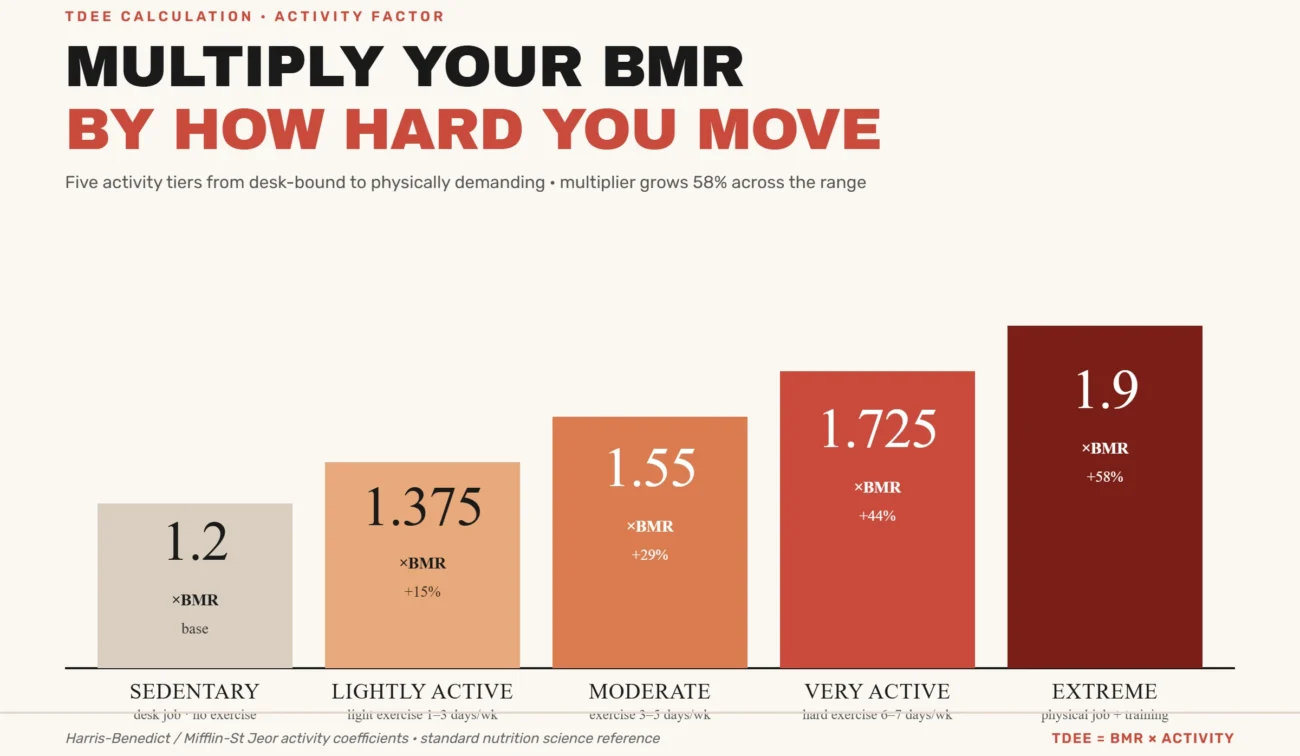
If math isn’t your thing, free online TDEE calculators do this automatically. Just enter your stats and you’ll get an estimate in seconds.
What Are Calories?
A calorie is simply a unit of energy. Specifically, one calorie is the amount of energy needed to raise the temperature of one gram of water by one degree Celsius. When we talk about food calories, we’re actually referring to kilocalories, which measure the energy your body gets from what you eat and drink.
Your body uses this energy for everything breathing, pumping blood, thinking, walking, and exercising. Different foods provide different amounts of energy:
| Source | Calories per Gram |
|---|---|
| Carbohydrates | 4 |
| Protein | 4 |
| Fat | 9 |
| Alcohol | 7 |
When you eat more than your body burns, the excess is stored as fat. When you eat fewer calories than you burn, your body taps into stored energy, which is how weight loss happens.
A Few Basic Weight Loss Tips
Losing weight doesn’t have to be complicated, but it does require consistency. Here’s a quick overview of what works, followed by a deeper dive:
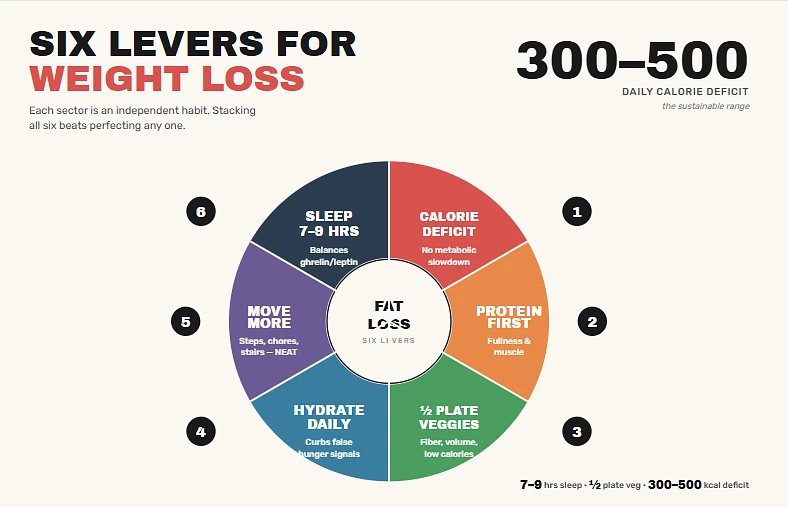
Start with a modest calorie deficit. This usually produces steady weight loss of about half a pound to one pound per week, which is sustainable and less likely to trigger rebound weight gain. Crash diets with very low calorie intakes often backfire by slowing your metabolism and causing muscle loss.
Prioritize protein at every meal. Protein keeps you fuller for longer, helps preserve muscle during weight loss, and has a higher thermic effect than carbs or fat, meaning your body burns more calories digesting it.
Fill half your plate with vegetables. They’re low but high in fiber, water, and nutrients, which helps you feel satisfied without overeating.
Drink more water. Thirst is often mistaken for hunger, and staying hydrated supports your metabolism and overall health.
Move more throughout the day. Formal exercise matters, but daily movement like walking, taking the stairs, and standing more also adds up significantly over time.
Get enough sleep. Poor sleep disrupts hunger hormones, increases cravings for high-calorie foods, and makes weight loss much harder.