
Low Residue Diet: Smart Foods, Tasty Menus and Real Life Tips

Overview
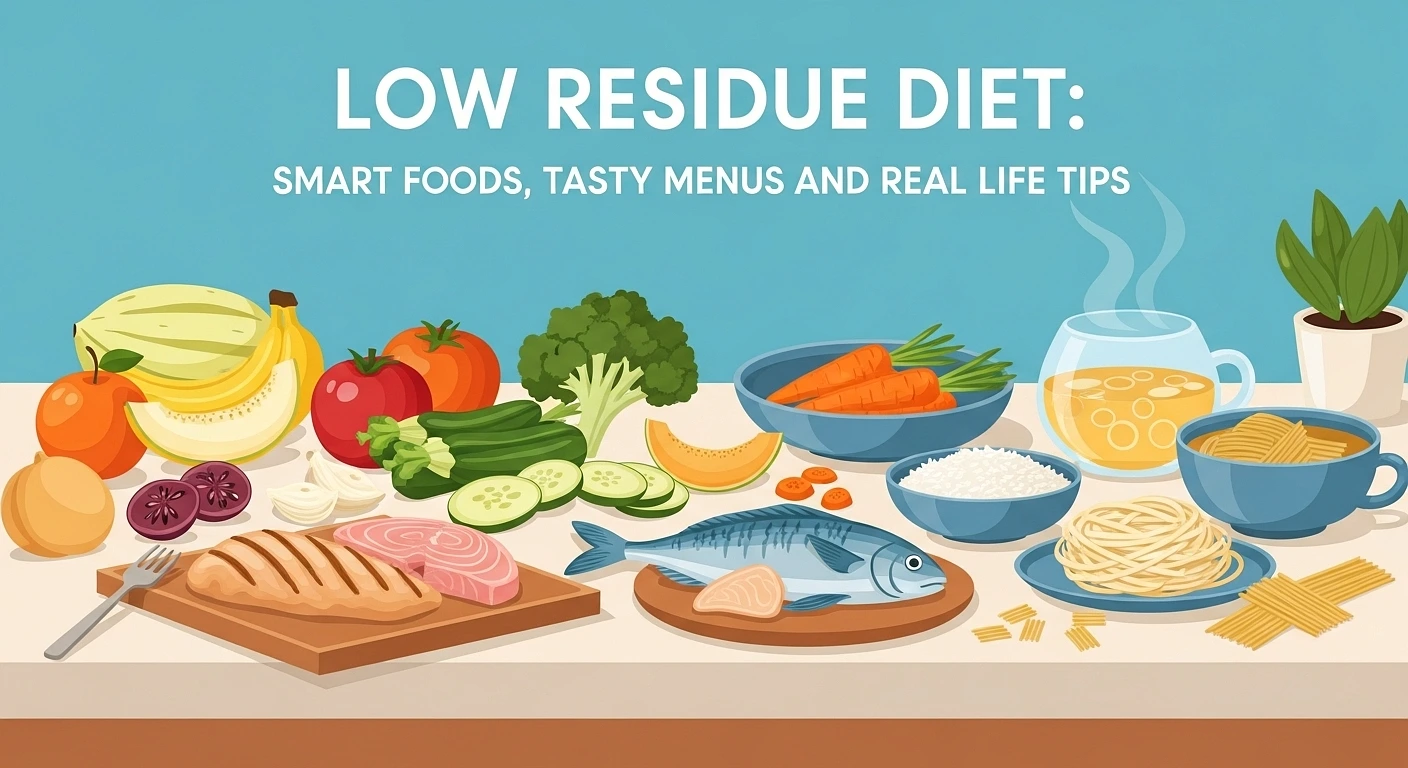
A low-residue diet is a short-term eating plan that limits fiber and hard-to-digest foods to give your gut a much-needed break. It’s commonly prescribed during Crohn’s or ulcerative colitis flare-ups, for diverticulitis, before a colonoscopy, or after bowel surgery. By focusing on refined grains, tender proteins, peeled and cooked produce, and moderate dairy, while avoiding whole grains, raw veggies, nuts, seeds, and beans, this reduces stool volume and helps your intestines heal.
What Is a Low Residue Diet?
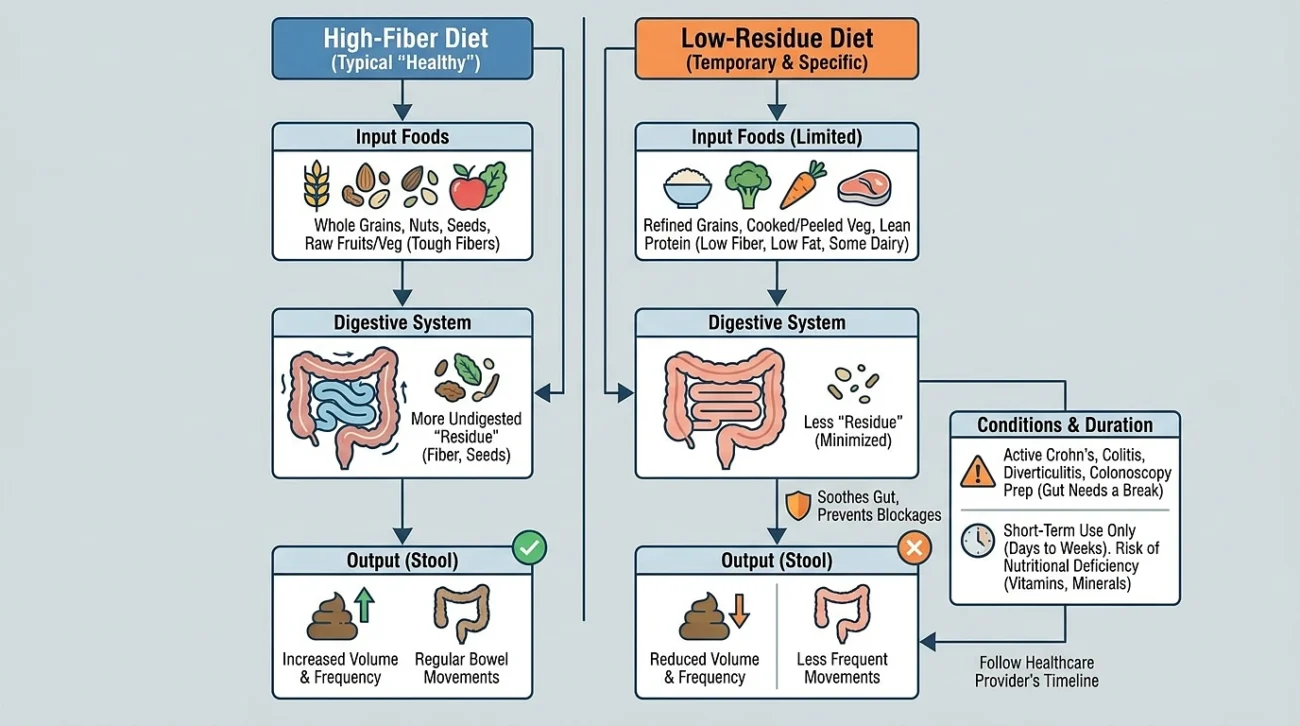
“Residue” refers to the undigested materials that remain in your digestive tract after digestion, including fiber, tough plant matter, and seeds. A low-residue diet takes this a step further than a simple low-fiber also limiting high-fat foods and some dairy products, aimed at reducing the volume and frequency of stool.
When dealing with active Crohn’s disease, ulcerative colitis, diverticulitis, or preparing for a colonoscopy, your digestive system needs a break. While “healthy eating” usually means high fiber, a low-residue flips that advice to help soothe your gut, minimize bowel movements, and prevent blockages.
How long can I safely stay on a low-residue diet? Most doctors recommend this for only a few days to a few weeks. Because it’s low in fiber, vitamins, and certain minerals, long-term use can lead to nutritional deficiencies. Always follow your healthcare provider’s specific timeline.
Smart Foods: What to Eat (Low Fiber, Easy Digestion)
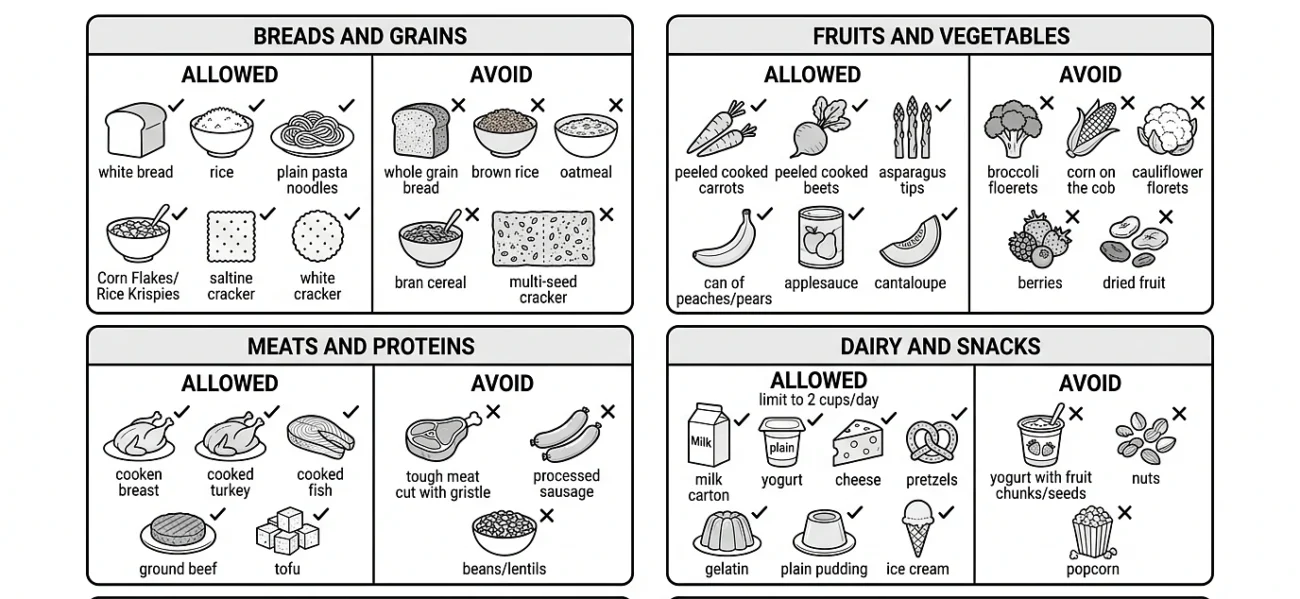
The key is choosing refined, soft, and tender foods.
Breads and Grains
- Allowed: White bread, white rice, plain pasta, refined cereals (Corn Flakes, Rice Krispies, Cream of Wheat), saltines, and white crackers.
- Avoid: Whole grains, brown rice, oatmeal, bran cereals, and anything with seeds.
Fruits and Vegetables
- Allowed: Peeled and cooked vegetables (carrots, beets, asparagus tips), ripe bananas, canned fruits (peaches, pears, applesauce), and cantaloupe.
- Avoid: Raw vegetables, vegetable skins, corn, broccoli, cauliflower, berries, and dried fruits.
Meats and Proteins
- Allowed: Lean, tender meats such as chicken, turkey, fish, ground beef, and tofu.
- Avoid: Tough meat with gristle, processed meats, and legumes (beans, lentils).
Dairy and Snacks
- Allowed: Milk, yogurt, and cheese (if tolerated, limit to 2 cups/day), pretzels, gelatin, plain puddings, and ice cream.
- Avoid: Yogurts with fruit skins or seeds, nuts, and popcorn.
Dairy is typically allowed in moderation, but some people, especially those with Crohn’s disease or IBS, may find it worsens symptoms. If you’re lactose intolerant or notice discomfort, opt for lactose-free alternatives or limit your intake.
7-Day Low Residue Sample Menu
Here is how to combine these foods into meals that won’t irritate your digestive system:
| Day | Breakfast | Lunch | Dinner |
|---|---|---|---|
| 1 | Scrambled eggs + white toast | Tuna salad on white bread | Baked chicken + white rice + carrots |
| 2 | Cream of Rice + milk | Turkey sandwich (white bread) | Tofu stir-fry + white pasta |
| 3 | Pancakes (white flour) + syrup | Chicken noodle soup (strained) | Baked salmon + mashed potatoes |
| 4 | Cornflakes + milk | Egg salad sandwich | Pork tenderloin + cooked carrots |
| 5 | Ripe banana + yogurt | Cheese sandwich + applesauce | White pasta + smooth tomato sauce |
| 6 | Poached egg + white toast | Canned chicken + white rice | Tender beef stew (no veggies) |
| 7 | Waffles + butter | Creamy chicken soup (strained) | Baked cod + skinless baked potato |
Can I eat out atrestaurants while on this diet? Yes, with careful menu choices. Look for simple dishes like grilled chicken with white rice, baked fish with mashed potatoes, or pasta with a smooth cream sauce. Avoid salads, whole-grain breads, raw vegetables, and dishes with nuts or seeds. Don't hesitate to ask the server about ingredients or request modifications.
Real Life Tips for Success
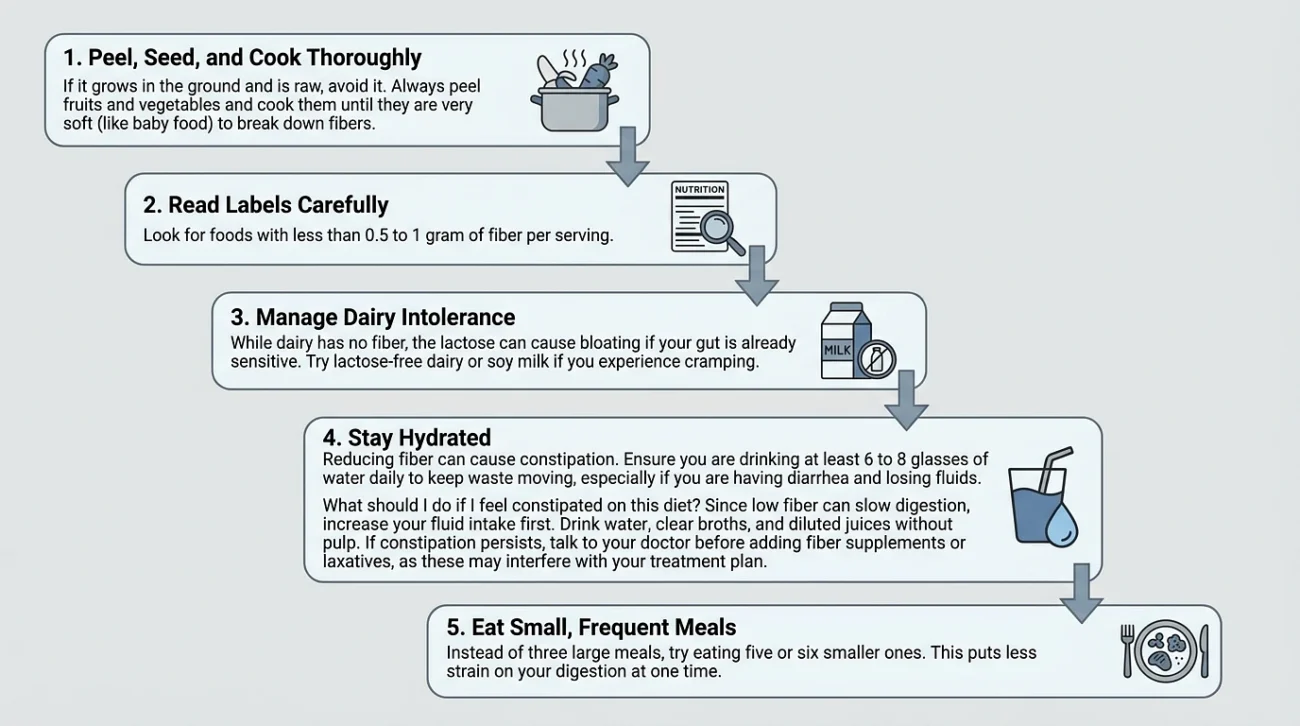
1. Peel, Seed, and Cook Thoroughly
If it grows in the ground and is raw, avoid it. Always peel fruits and vegetables and cook them until they are very soft (like baby food) to break down fibers.
2. Read Labels Carefully
Look for foods with less than 0.5 to 1 gram of fiber per serving.
3. Manage Dairy Intolerance
While dairy has no fiber, the lactose can cause bloating if your gut is already sensitive. Try lactose-free dairy or soy milk if you experience cramping.
4. Stay Hydrated
Reducing fiber can cause constipation. Ensure you are drinking at least 6 to 8 glasses of water daily to keep waste moving, especially if you are having diarrhea and losing fluids.
What should I do if I feel constipated on this diet? Since low fiber can slow digestion, increase your fluid intake first. Drink water, clear broths, and diluted juices without pulp. If constipation persists, talk to your doctor before adding fiber supplements or laxatives, as these may interfere with your treatment plan.
5. Eat Small, Frequent Meals
Instead of three large meals, try eating five or six smaller ones. This puts less strain on your digestion at one time.
When to Use This Diet
- Crohn’s/Colitis Flares: To reduce pain and diarrhea.
- Diverticulitis: To stop the inflammation.
- Pre-Colonoscopy: Usually starts 3 days before the procedure.
- Post-Surgery: To allow the bowel to heal.
How do I transition back to a normal diet? Reintroduce fiber gradually over one to two weeks. Start with small amounts of cooked vegetables, ripe fruits, and oats, then slowly add whole grains, raw produce, nuts, and legumes. Pay attention to how your body responds, and if any food causes discomfort, pull back and try again in a few days.
Are there any supplements I should take while on this diet? Because the restricts many nutrient-rich foods, your doctor may recommend a multivitamin, calcium, or vitamin D supplement, especially if you’ll be on the diet for more than a few days. Don’t start any supplements without consulting your healthcare provider first.