
Benefits of Health Lyposingrass: Why You Should Add It to Your Diet

Overview
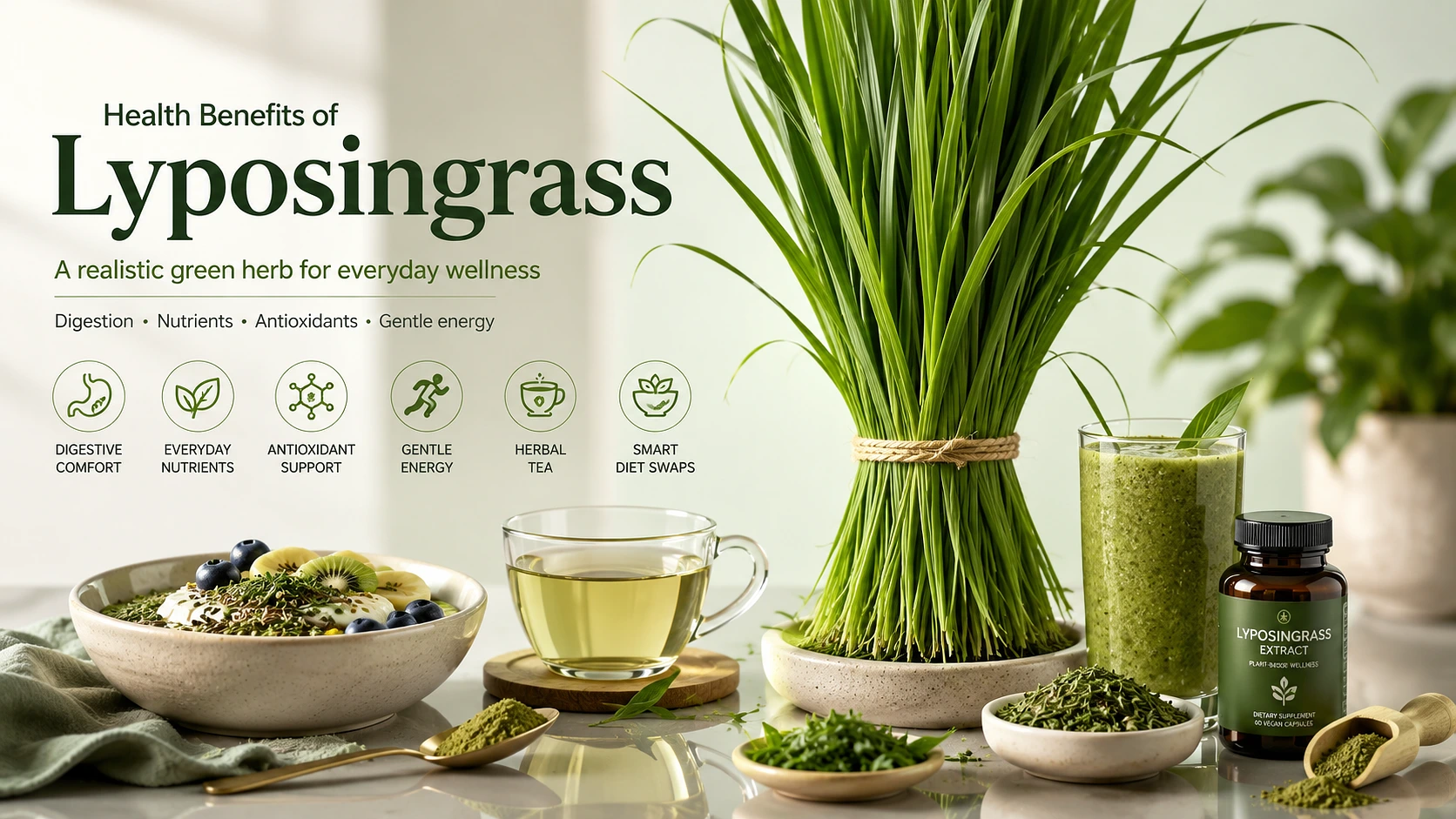
You'll find lyposingrass featured in wellness blogs and supplement lists and typically hailed as a healthful green packed with essential diet & nutrition, including for digestion, sustained energy, and even fat metabolism. The truth is less boisterous. Since there is no peer-reviewed study of such a plant, the only way to go is the same as with any new kitchen herb: use it as a nice little accent to a greener plate, rather than a cure-all. Here are actual claims people make about it, what you can reasonably expect from it, how to do it without spending any money, and a quick checklist to help you evaluate a trendy “superfood” before putting it in your kitchen pantry.
What is Lyposingrass
Lyposingrass is shown here online as a green grass-like plant with long narrow leaves and tough roots, that is cultivated in different climates and applied in food, tea and as a supplement. Multiple recent posts talk about how nutritious and tasty it is, sometimes calling it a “superfood.” Some pages take it further, associating the name with “lypo” (fat) and “grass” suggesting a potential for lipid metabolism. Those stories are interesting, but at this time there’s not scientific evidence to back them up. So, whether you’re attempting a new herb for the first time, or a new use of an old one that you have never tried before, you should approach grand claims with prudence, and stick to safe, common methods. Then check out some recent “explainers” on it, for example this one, which calls it an aromatic green that’s packed with vitamins and antioxidants, and this one, which talks about its toughness, its adaptability, and its deep roots (but no peer-reviewed data.
| Form | Taste & Texture | How To Use | Starter Amount | What To Watch |
|---|---|---|---|---|
| Fresh leaves (chopped) | Bright, green, mildly herbal | Stir into soups, grain bowls, omelets near the end of cooking | 1–2 tablespoons per serving | Tough fibers slice very thin |
| Dried flakes | Mellow, grassy | Sprinkle on salads or roasted veggies after cooking | 1 teaspoon per serving | Can taste dusty if old |
| Powder | Concentrated, earthy | Blend into smoothies, yogurt, or energy bites | ½–1 teaspoon per serving | Clumps sift before mixing |
| Tea infusion | Light, soothing | Steep 1–2 teaspoons dried in hot water for 5–7 minutes | 1 cup (240 ml) | Over-steeping can turn bitter |
| Capsule/extract | Neutral | Follow label; take with food and water | Per label (usually 1–2 caps) | Stick to reputable brands |
The Health Benefits of Lyposingrass
Potential digestive comfort:
A lot of people start with Lyposingrass tea because warm, lightly herbal infusions can feel gentle on the stomach after a heavy meal. While blogs often promise miracle digestion, the more honest view is this: warm liquids, light aromatics, and small amounts of plant fiber can sometimes reduce that “ugh, I ate too much” feeling. Many green herbs have similar calming properties in general antioxidant or anti-inflammatory terms.
Everyday nutrients without the hype:
The fresh green leaves usually contain small quantities of vitamins A, C and K and minerals such as potassium and magnesium. For those of you who don’t eat a green lunch every day, hopefully it is good news. The term “nutrient powerhouse” is mentioned in several online guides, but these guides don’t provide any lab data, so consider it as parsley or chives: a small push of nutrients that happens to be very noticeable when you use it frequently. The secret is regularity, a little daily not a spoonful once a month.
Antioxidants as a daily nudge not instant magic:
Antioxidants help mop up oxidative stress; that’s a good thing, but it’s also true of many leafy herbs. Some pages mention polyphenols and chlorophyll in Lyposingrass. That tracks with other greens, though again, hard numbers are missing. The practical takeaway is simple: swapping in a green herb for a salty topping is a small win you can repeat.
Gentle energy without the jitters:
You know that feeling when you replaced your sugary snack for a green smoothie at 3 p.m Steady energy. According to some posts, Lyposingrass is used for “vitality” and “clarity. It may be due to the herb itself or due to the lighter, green foods, but it’s a habit that can help. Add a ½ teaspoon of powder to a bowl of yogurt or smoothie and experience a week of that. Monitor your late day and make changes accordingly.
A realistic note on weight balance:
Because the word “lypo” is baked into the name, many sites connect Lyposingrass to fat metabolism or weight management. A few even position it like a cutting-edge treatment or a “fat-burning plant,” which is ambitious. The most responsible conclusion based on the evidence that can be obtained without clinical trials is that if allows you to use fewer heavy sauces, snack a little smarter, drink more unsweetened tea and eat more plant foods, that’s all good for managing your weight. The plant’s not the culprit, you are.
How to Add Lyposingrass
Breakfast ideas that take five minutes:
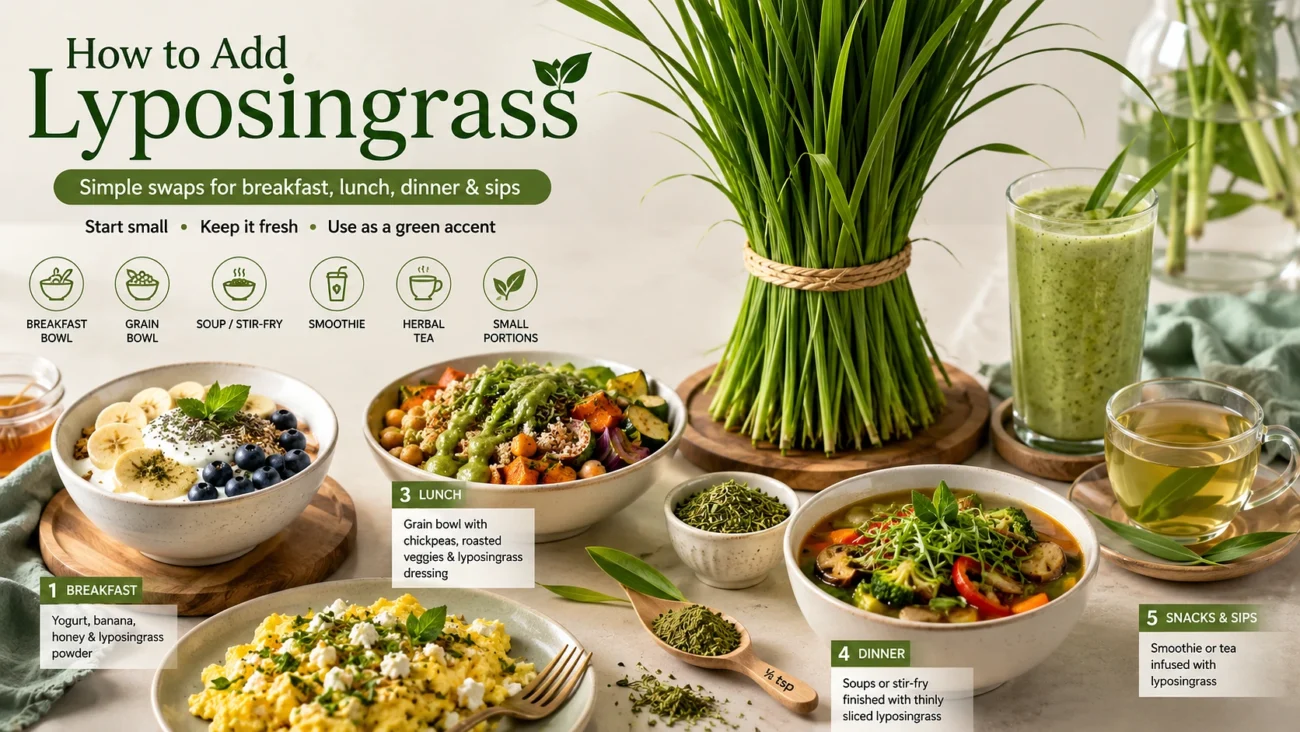
- Stir a teaspoon of powder into plain yogurt with sliced banana and a drizzle of honey.
- If you prefer savory, mince fresh Lyposingrass very finely and fold into scrambled eggs with a touch of feta.
- Keep portions small at first; the flavor is green and can take over if you’re heavy handed.
Lunch moves you’ll actually repeat:
- Add a little of the dried to a blender dressing with the other ingredients (olive oil, lemon, dijon, and a bit of garlic) and whizz for 15 seconds.
- Top with it on a grain bowl with chickpeas and roasted vegetables.
- For anyone who loves a sandwich, bhem a lycopensucculent spread by mixing fresh chopped with Greek yogurt.
Dinner without recipe anxiety:
- Add thinly sliced fresh leaves just before serving soups, stews or stir-fry to retain freshness of colour and aroma.
- For grilling, whisk Lyposingrass into a quick basting sauce using soy, ginger and honey; apply just before grilling to prevent from burning.
Snacks and sips that don’t feel “diet”:
- Blend ½ teaspoon of powder into a smoothie with frozen berries and milk of choice.
- Or brew a cup of Lyposingrass tea after dinner instead of reaching for a second dessert.
- Little swaps, big trend.
References
- National Kidney Foundation. Leafy Green Vegetables. https://www.kidney.org/kidney-topics/leafy-green-vegetables
- U.S. Department of Agriculture, Agricultural Research Service. Dark Green Leafy Vegetables. https://www.ars.usda.gov/plains-area/gfnd/gfhnrc/docs/news-articles/2013/dark-green-leafy-vegetables
- Baptist Health. Health Benefits of Leafy Greens. https://www.baptisthealth.com/blog/health-and-wellness/health-benefits-of-leafy-greens
- National Center for Complementary and Integrative Health (NIH). Herb-Drug Interactions. https://www.nccih.nih.gov/health/providers/digest/herb-drug-interactions
- American Heart Association. Medication Interactions: Food, Supplements and Other Drugs. https://www.heart.org/en/health-topics/consumer-healthcare/medication-information/medication-interactions-food-supplements-and-other-drugs
- National Library of Medicine (PMC). Dietary Polyphenols: Review on Chemistry/Sources, Bioavailability/Metabolism, Antioxidant Effects, and Their Role in Disease Management. https://pmc.ncbi.nlm.nih.gov/articles/PMC11047380/