
What to Know About Your Skin Barrier and How to Protect It Naturally

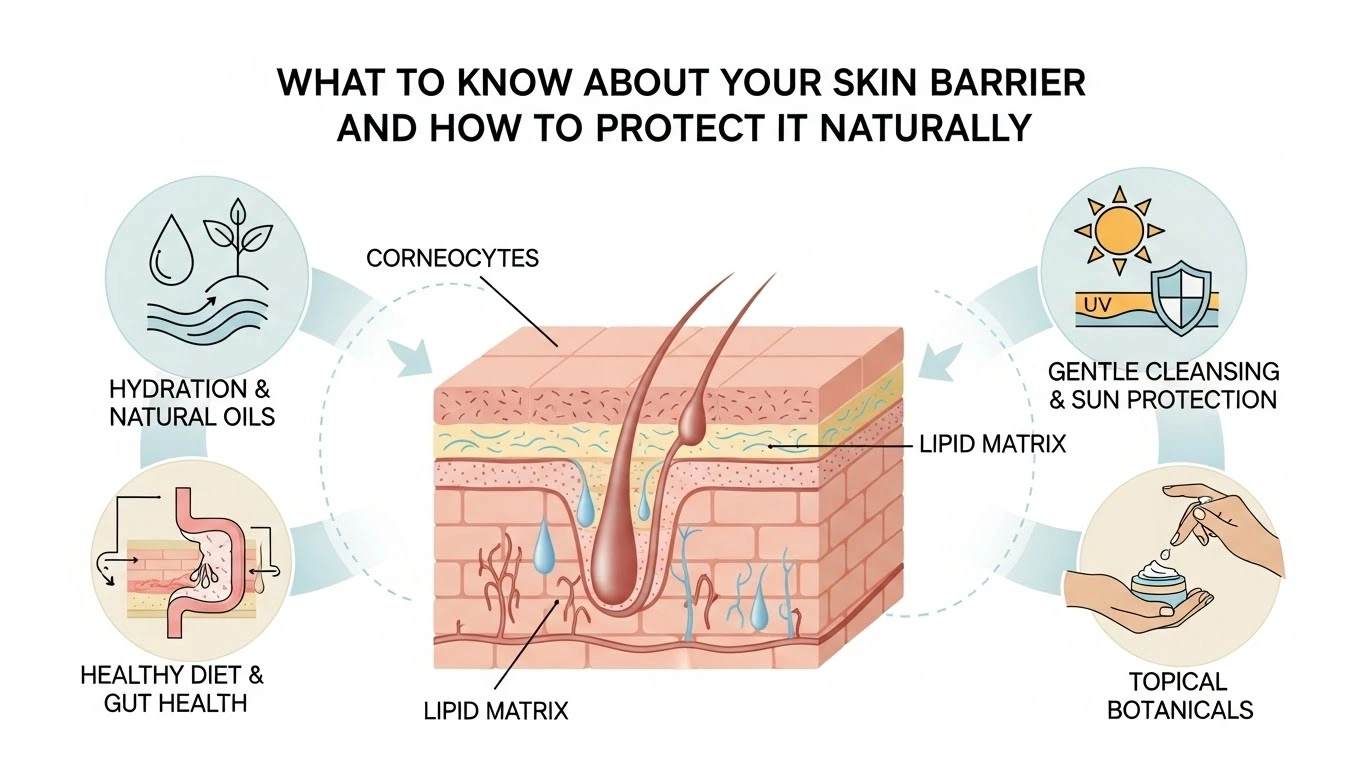
Your skin is your body’s largest organ and its first line of defense against the outside world. At the heart of this protection lies something called the skin barrier a remarkably sophisticated structure that keeps moisture in and harmful substances out. When this barrier is healthy snacks, your skin looks plump, feels smooth, and can effectively ward off irritants. When it’s compromised, you might experience dryness, sensitivity, redness, and even accelerated signs of aging.
Understanding how your skin barrier works and what you can do to protect it naturally is one of the most impactful steps you can take for long-term skin health.
What Exactly Is the Skin Barrier
The skin barrier refers to the outermost layer of your epidermis, known as the stratum corneum. This layer is remarkably thin ranging from about 10 to 30 layers of specialized cells called corneocytes, depending on the area of your body (NCBI Bookshelf – Histology, Stratum Corneum). Despite its thinness, it performs the crucial job of preventing excessive water loss from your body while blocking the entry of pathogens, allergens, and environmental pollutants.
Scientists often describe the stratum corneum using a “brick and mortar” model. The corneocytes act as the bricks flat, tough, protein-rich cells that stack together in organized columns. The mortar is composed of a specialized lipid matrix containing three essential components: ceramides, cholesterol, and free fatty acids. Together, these lipids form organized layers that create an effective seal against the outside world (ScienceDirect – The Skin Barrier: An Extraordinary Interface with an Exceptional Lipid Organization).
Ceramides alone make up approximately 50% of the lipids in this matrix, making them particularly important for maintaining barrier integrity (CeraVe – The Ceramides Difference).
The Acid Mantle: Your Skin’s Invisible Shield
Sitting on top of the stratum corneum is another layer of protection called the acid mantle a slightly acidic film with a pH of approximately 4.5 to 5.5. This acidic environment is created by a combination of natural oils, sweat, and beneficial bacteria. The acid mantle helps inhibit the growth of harmful microorganisms while supporting the activity of enzymes essential for skin cell turnover and barrier repair (Healthline – Skin Barrier Function and How to Repair and Care for It).
When products or habits disrupt this pH balance such as using highly alkaline cleansers the acid mantle can become compromised, leaving skin more vulnerable to bacterial colonization and irritation.
Signs Your Skin Barrier May Be Damaged
A compromised skin barrier often sends clear signals. Common symptoms include:
Increased dryness and flaking. When the barrier can no longer effectively retain moisture, water escapes from deeper skin layers more rapidly a process called transepidermal water loss (TEWL). This leaves the outermost skin cells dry and prone to peeling.
Tightness. Dehydrated skin cells contract and pull across the surface, creating that uncomfortable tight sensation, especially after cleansing.
Sensitivity and irritation. A weakened barrier allows irritants to penetrate more easily, leading to redness, stinging, or burning sensations when using products that previously caused no problems.
Itchiness. As the skin becomes dry and develops micro-cracks, it can trigger an itchy feeling.
Dull complexion. Healthy skin reflects light evenly. When barrier function is impaired and surface cells become dehydrated or uneven, skin can appear lackluster.
Increased breakouts. Though it might seem counterintuitive, a damaged barrier can actually worsen acne by disrupting the skin’s natural defenses and microbiome balance.
What Damages the Skin Barrier
Multiple factors can compromise your barrier function over time:
Overwashing and harsh cleansers. Washing with soap and water especially hot water has been shown to significantly disrupt skin barrier function by increasing transepidermal water loss and raising skin pH (Voegeli R. – The effect of washing and drying practices on skin barrier function, Journal of Clinical Nursing, 2008). Many foaming cleansers contain surfactants like sodium lauryl sulfate that effectively remove makeup and oil but can also strip away essential barrier lipids.
Over-exfoliation. Aggressive scrubbing or excessive use of chemical exfoliants (AHAs, BHAs, retinoids) can damage the protective corneocytes and deplete natural moisturizing factors.
Environmental factors. Low humidity, cold weather, air pollution, and excessive sun exposure can all stress the skin barrier. Pollution exposure in particular has been linked to increased transepidermal water loss through free radical damage (Transepidermal water loss (TEWL): Environment and pollution A systematic review, Skin Health and Disease, 2022).
pH disruption. Using products with a pH significantly different from your skin’s natural acidity can throw off the acid mantle for hours afterward.
Aging. As we get older, our natural production of ceramides and other barrier lipids declines, and the barrier takes longer to repair itself after damage (Cleveland Clinic – How To Tell If Your Skin Barrier Is Damaged).
Natural Ways to Protect and Repair Your Skin Barrier
The good news is that your skin barrier is remarkably resilient when given the right support. Here are evidence-based approaches to protecting and restoring it naturally:
Simplify Your Routine
Sometimes less is more. When your barrier is compromised, scaling back to a minimal routine gentle cleanser, moisturizer, and sunscreen allows your skin to focus on repair rather than processing multiple active ingredients that may cause further irritation.
Choose Gentle, pH-Balanced Cleansers
Look for cleansers with a pH between 4.5 and 5.5, which aligns with your skin’s natural acidity. Cream or milk formulas tend to be gentler than foaming options and won’t strip away protective oils. Washing with lukewarm rather than hot water also helps preserve barrier integrity.
Support Your Barrier with Ceramides
Because ceramides are such a fundamental component of the skin barrier, topical products containing these lipids can help reinforce the natural structure. Research has shown that ceramide-containing moisturizers can help repair the skin barrier, particularly in conditions like atopic dermatitis where ceramide levels are reduced (The Efficacy of Moisturisers Containing Ceramide Compared with Other Moisturisers in the Management of Atopic Dermatitis, Indian Journal of Dermatology, 2023).
For optimal results, look for products that combine ceramides with cholesterol and fatty acids the other key components of the lipid matrix. This combination mimics the natural composition of the stratum corneum.
Consider Niacinamide (Vitamin B3)
Niacinamide has emerged as one of the most well-researched ingredients for barrier support. A study published in the British Journal of Dermatology found that nicotinamide (niacinamide) increased ceramide biosynthesis by 4.1 to 5.5-fold in human keratinocytes and also boosted production of free fatty acids and cholesterol. Topical application increased ceramide and free fatty acid levels in the stratum corneum while decreasing transepidermal water loss in dry skin (Tanno O. et al. – Nicotinamide increases biosynthesis of ceramides as well as other stratum corneum lipids to improve the epidermal permeability barrier, British Journal of Dermatology, 2000).
Products containing 2-5% niacinamide can help strengthen barrier function over time by supporting your skin’s own lipid production.
Explore Beneficial Plant Oils
Not all plant oils are created equal when it comes to barrier health. Research indicates that oils with a higher ratio of linoleic acid to oleic acid tend to be more beneficial for barrier repair, while those high in oleic acid may actually be detrimental (Vaughn AR et al. – Natural Oils for Skin-Barrier Repair: Ancient Compounds Now Backed by Modern Science, American Journal of Clinical Dermatology, 2018).
Sunflower seed oil stands out as particularly beneficial. Rich in linoleic acid, it has been shown to preserve stratum corneum integrity and improve hydration without causing irritation. A study comparing olive oil to sunflower seed oil found that while olive oil caused barrier disruption and erythema, sunflower seed oil maintained barrier function and improved skin hydration (Danby SG et al. – Effect of olive and sunflower seed oil on the adult skin barrier: implications for neonatal skin care, Pediatric Dermatology, 2013).
Linoleic acid works in part by activating peroxisome proliferator-activated receptor-alpha (PPAR-α), which enhances keratinocyte proliferation and lipid synthesis, directly supporting barrier repair (Lin TK et al. – Anti-Inflammatory and Skin Barrier Repair Effects of Topical Application of Some Plant Oils, International Journal of Molecular Sciences, 2018).
Other plant oils that may support barrier function include jojoba oil (which closely mimics the composition of human sebum), rosehip seed oil, and argan oil. Cold-pressed varieties are preferable as the extraction process preserves beneficial lipids.
Use Humectants and Occlusives Together
A complete barrier-support strategy involves both humectants (which draw water into the skin) and occlusives (which prevent water from evaporating).
Hyaluronic acid and glycerin are excellent humectants that attract and hold water. However, on their own, they may not be enough you need something to seal that hydration in.
Occlusives like petrolatum, shea butter, and plant-based oils create a protective layer that reduces transepidermal water loss. Applying these over hydrating serums or onto slightly damp skin maximizes their effectiveness.
Protect Against UV Damage
Chronic sun exposure degrades barrier function and accelerates the breakdown of essential skin structures. Daily sunscreen use is one of the most straightforward ways to protect your barrier long-term. Look for broad-spectrum formulas that guard against both UVA and UVB rays.
Mind the Lifestyle Factors
Several lifestyle habits influence barrier health from the inside out:
Stay hydrated. While drinking water won’t directly hydrate your skin’s outer layers, adequate hydration supports overall skin health and function.
Prioritize sleep. Your skin undergoes significant repair during sleep. Chronic sleep deprivation can impair barrier recovery.
Manage stress. Stress triggers inflammatory pathways that can compromise barrier function.
Consider your diet. Essential fatty acids particularly omega-3s found in fatty fish, walnuts, and flaxseeds provide building blocks for healthy skin lipids.
Patience Is Key
If your skin barrier is compromised, remember that repair takes time. Most people begin seeing improvements within 2 to 4 weeks of consistent gentle care, though more significant damage may take longer to fully resolve. Resist the temptation to add active ingredients back into your routine too quickly let your barrier fully heal first.
Your skin barrier is a remarkable structure that, when properly supported, does an extraordinary job of protecting you. By understanding what it needs and what undermines it you can make informed choices that keep this essential shield strong for years to come.
References:
- NCBI Bookshelf – Histology, Stratum Corneum.
- Bouwstra JA et al. – The skin barrier: an extraordinary interface with an exceptional lipid organization, Progress in Lipid Research, 2023.
- Healthline – Skin Barrier Function and How to Repair and Care for It.
- Voegeli R. – The effect of washing and drying practices on skin barrier function, Journal of Clinical Nursing, 2008.
- Green M, Kashetsky N, Feschuk A, Maibach HI – Transepidermal water loss (TEWL): Environment and pollution A systematic review, Skin Health and Disease, 2022.
- The Efficacy of Moisturisers Containing Ceramide Compared with Other Moisturisers in the Management of Atopic Dermatitis, Indian Journal of Dermatology, 2023.
- Tanno O, Ota Y, Kitamura N, Katsube T, Inoue S – Nicotinamide increases biosynthesis of ceramides as well as other stratum corneum lipids to improve the epidermal permeability barrier, British Journal of Dermatology, 2000.
- Vaughn AR, Clark AK, Sivamani RK, Shi VY – Natural Oils for Skin-Barrier Repair: Ancient Compounds Now Backed by Modern Science, American Journal of Clinical Dermatology, 2018.
- Danby SG, AlEnezi T, Sultan A, Lavender T, Chittock J, Brown K, Cork MJ – Effect of olive and sunflower seed oil on the adult skin barrier: implications for neonatal skin care, Pediatric Dermatology, 2013.
- Lin TK, Zhong L, Santiago JL – Anti-Inflammatory and Skin Barrier Repair Effects of Topical Application of Some Plant Oils, International Journal of Molecular Sciences, 2018.