
Is Catfish Healthy? Nutrition, Benefits and More

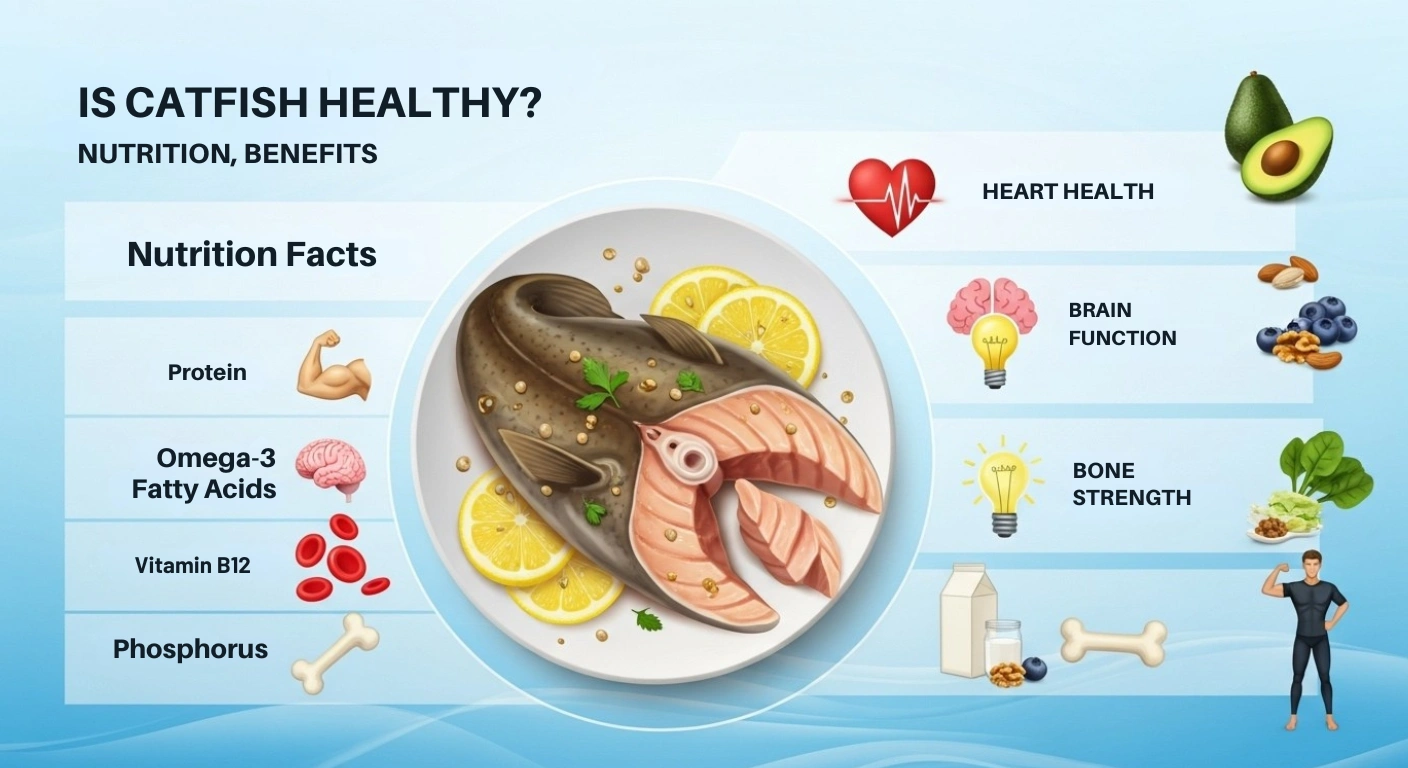
Catfish often gets overlooked at the seafood counter. Many people dismiss it as the “poor man’s fish.” But here’s the truth: catfish is a nutritional powerhouse hiding in plain sight.
This guide covers everything about catfish nutrition facts, health benefits, safety concerns, and cooking tips.
| Nutrient | Amount (per 3.5 oz/100g) | % Daily Value |
|---|---|---|
| Calories | 105 | 5% |
| Protein | 18g | 36% |
| Total Fat | 2.9g | 4% |
| Saturated Fat | 0.7g | 4% |
| Omega-3 Fatty Acids | 237-300mg | 15-20% |
| Vitamin B12 | 2.4mcg | 100-121% |
| Selenium | 12.6mcg | 23% |
| Phosphorus | 209mg | 30% |
| Potassium | 366mg | 11% |
| Sodium | 50mg | 2% |
| Cholesterol | 58mg | 19% |
| Carbohydrates | 0g | 0% |
What Is Catfish?
Catfish belongs to the Siluriformes family and gets its name from whisker-like barbels around its mouth. These fish live in freshwater lakes, rivers, and ponds worldwide. They have a mild, slightly sweet flavor with firm white flesh that makes them incredibly versatile for cooking. Compared to other fish, catfish is also very affordable.
Why Catfish Is Nutrient-Dense
Catfish packs impressive nutrition into very few calories. One serving gives you 36% of daily protein needs with 18 grams, over 100% of vitamin B12 requirements, heart-healthy omega-3 fats, essential minerals like selenium and phosphorus, and zero carbohydrates. All this comes in at only 105 calories per serving.
Catfish Nutrition Breakdown
Protein Content:
| Comparison | Protein | Calories |
|---|---|---|
| Catfish (3.5 oz) | 18g | 105 |
| Chicken Breast (3.5 oz) | 31g | 165 |
| Salmon (3.5 oz) | 20g | 230 |
| Tilapia (3.5 oz) | 21g | 96 |
Catfish provides complete protein with all essential amino acids. It has an excellent protein-to-calorie ratio, supports muscle building and repair, and keeps you feeling full longer. This makes it ideal for anyone watching their weight while trying to maintain muscle mass.
Vitamin B12:
Catfish is one of the best food sources of vitamin B12 available. This essential vitamin forms healthy red blood cells, supports nerve function, aids DNA synthesis, promotes brain health, and prevents certain types of anemia.
People who need more B12 include adults over 50, vegetarians and vegans, pregnant women, and those with digestive disorders. A single serving of catfish provides over 100% of your daily B12 needs.
Omega-3 Fatty Acids:
| Fish Type | Omega-3 per 3 oz |
|---|---|
| Salmon | 1,500-1,800mg |
| Mackerel | 1,000-1,500mg |
| Catfish | 200-300mg |
| Tilapia | Less than 200mg |
| Cod | Less than 200mg |
Catfish provides moderate omega-3s. While not as much as salmon, it contains more than tilapia or cod. These healthy fats contribute to heart health and brain function.
Catfish vs. Other Fish Comparison
| Feature | Catfish | Salmon | Tilapia | Cod |
|---|---|---|---|---|
| Calories (3.5 oz) | 105 | 230 | 96 | 82 |
| Protein | 18g | 20g | 21g | 18g |
| Omega-3s | Medium | High | Low | Low |
| Vitamin B12 | Very High | High | Medium | High |
| Mercury Level | Very Low | Low | Very Low | Low |
| Price | $ | $$$ | $ | $$ |
| Flavor | Mild | Strong | Very Mild | Mild |
Catfish offers the best value for money among popular fish options. It has lower calories than salmon, higher omega-3s than tilapia, exceptional B12 content, and very low mercury risk.
6 Health Benefits of Catfish
Supports Heart Health:
The omega-3 fatty acids in catfish reduce inflammation in blood vessels and help lower triglyceride levels. These healthy fats may also help regulate blood pressure. Combined with low saturated fat content, catfish makes an excellent choice for cardiovascular health.
Boosts Brain Function:
Omega-3s support brain cell health while vitamin B12 maintains the nervous system. Regular consumption may protect against cognitive decline and could help manage symptoms of depression and anxiety.
Aids Weight Loss:
With only 105 calories per serving and 18 grams of protein, catfish provides excellent satiety for minimal caloric intake. The high protein content keeps you feeling full longer, and zero carbohydrates make it suitable for low-carb diets.
Builds Muscle:
As a complete protein source containing all essential amino acids, catfish supports muscle protein synthesis. It’s an excellent post-workout food for athletes and helps maintain muscle mass in older adults.
Protects Eye Health:
The DHA omega-3 fatty acids in catfish support retina health. Regular fish consumption may help prevent age-related macular degeneration and reduce dry eye symptoms.
Strengthens Bones:
Catfish is rich in phosphorus, providing 30% of your daily value per serving. Phosphorus works alongside calcium to build and maintain strong bones throughout life.
Mercury Levels: Is Catfish Safe?
| Category | Fish Examples |
|---|---|
| Best Choices (2-3 servings/week) | Catfish, Salmon, Tilapia, Shrimp, Cod |
| Good Choices (1 serving/week) | Halibut, Snapper, Tuna (canned) |
| Avoid | Shark, Swordfish, King Mackerel, Tilefish |
Catfish ranks among the safest fish to eat because of its low mercury content. This happens because catfish have shorter lifespans than predatory fish and eat an omnivore diet of plants, insects, and small organisms rather than other fish. They simply don’t accumulate mercury like larger predatory species do.
This low mercury level makes catfish safe for pregnant women, breastfeeding mothers, children, and the general population. The FDA specifically lists catfish as a “Best Choice” fish that can be enjoyed 2-3 times per week.
Farm-Raised vs. Wild-Caught Catfish
| Factor | U.S. Farm-Raised | Wild-Caught |
|---|---|---|
| Taste | Mild, clean | Can be “muddy” |
| Consistency | Uniform | Variable |
| Mercury | Very low | Depends on water source |
| Omega-3s | Consistent | Potentially higher |
| Contaminants | Controlled | Risk from polluted waters |
| Price | Affordable | Variable |
| Availability | Year-round | Seasonal |
U.S. Farm-Raised Catfish:
The catfish farming industry is well-regulated in the United States, with farms primarily located in Alabama, Arkansas, Louisiana, and Mississippi producing about 94% of domestically farmed catfish. These fish are fed vegetarian diets in clean, controlled water environments.
Environmental groups including the Monterey Bay Aquarium, National Audubon Society, and Environmental Defense have endorsed U.S. farm-raised catfish as a sustainable and environmentally responsible seafood choice.
Wild-Caught Catfish:
Wild catfish may have a more varied nutrient profile due to their natural diet, potentially including higher omega-3 levels. However, they carry risks of environmental contaminants depending on water quality. Always check local fishing advisories before consuming wild-caught catfish from rivers, streams, or lakes.
Warning About Imported Catfish:
Be cautious with imported catfish from unverified sources. Quality standards vary significantly by country, and there have been documented cases of contamination with banned substances. Always look for the “U.S. Farm-Raised” label when purchasing catfish.
Baking (Best Option):
Baking preserves nutritional content while adding minimal extra fat or calories. Preheat your oven to 400-450°F, season the fish with herbs, garlic, and lemon, drizzle with olive oil, and bake for 15-20 minutes until the fish flakes easily with a fork.
Grilling:
Grilling adds wonderful smoky flavor without extra fat. The firm texture of catfish holds up well on the grill. Clean and oil your grill grates, cook over medium-high heat for 4-5 minutes per side, and ensure the internal temperature reaches 145°F.
Broiling:
Broiling works like grilling from above and produces similar healthy results. Position the rack 4-6 inches from the heat source and broil for 10-12 minutes without flipping.
Pan-Searing:
Using a small amount of healthy oil like olive or avocado oil in a hot skillet gives catfish a crispy exterior while keeping the inside moist. Cook 3-4 minutes per side for a nice crust.
Deep Frying (Occasional Treat):
While fried catfish is delicious, this method nearly doubles the calories and adds significant fat. Deep frying negates many of the health benefits of this lean fish. Save fried catfish for special occasions rather than regular consumption.
Catfish Calories by Cooking Method
| Preparation | Calories per 3.5 oz | Fat |
|---|---|---|
| Raw | 95 | 2.8g |
| Baked/Broiled | 105 | 2.9g |
| Grilled | 110 | 3.5g |
| Pan-fried (light oil) | 150 | 8g |
| Breaded & Fried | 229 | 13g |
Potential Concerns
Allergies:
Fish allergies can cause reactions ranging from mild symptoms like hives and stomach upset to severe anaphylaxis. If you’ve never eaten catfish before and have other food allergies, start with a small portion and watch for any reactions.
Omega-6 to Omega-3 Ratio:
Some critics note that catfish contains more omega-6 fatty acids relative to omega-3s compared to fattier fish. However, this isn’t a significant concern for most people eating a balanced diet. The solution is simply to include a variety of fish in your diet, including some fattier options like salmon.
Cooking Method Impact:
How you prepare catfish significantly affects its nutritional value. Deep frying can negate the health benefits of this otherwise lean protein. Stick to baking, grilling, or broiling for the healthiest results.
Who Should Eat Catfish
Catfish is ideal for weight watchers because of its low calorie and high protein content. Athletes benefit from its excellent muscle-building protein. Seniors can prevent B12 deficiency and maintain muscle mass with regular consumption.
Pregnant women can safely enjoy catfish due to its low mercury levels and beneficial nutrients. Budget-conscious families appreciate its affordable price point. People at risk for heart disease benefit from the omega-3s and low saturated fat content. Even picky eaters often enjoy catfish because of its mild, non-fishy flavor.
How to Buy Fresh Catfish
| Check | Fresh | Avoid |
|---|---|---|
| Smell | Mild, clean | Strong, fishy |
| Flesh | Firm, springs back | Soft, mushy |
| Color | Slightly translucent | Discolored, dry |
| Eyes (whole fish) | Clear, bright | Cloudy, sunken |
When buying catfish, always ask about the source and look for U.S. farm-raised products. Check the packaging date and choose the freshest option available. Inspect the fish carefully and trust your eyes and nose. Store it properly in the coldest part of your refrigerator and use within 2 days. Quality frozen catfish is also a fine option and often more convenient.
FAQs
How often can I eat catfish?
You can safely enjoy catfish 2-3 times per week. The FDA recommends 8-12 ounces of low-mercury fish weekly, and catfish qualifies as a “Best Choice” in their guidelines.
Is catfish good for weight loss?
Yes, catfish is excellent for weight loss. With only 105 calories and 18 grams of protein per serving, it provides high satiety while keeping caloric intake low.
Can pregnant women eat catfish?
Absolutely. The FDA lists catfish as a “Best Choice” fish for pregnancy due to its low mercury content. Just ensure it’s fully cooked to an internal temperature of 145°F.
Is catfish healthier than chicken?
Both are excellent lean protein sources. Catfish has more omega-3 fatty acids and vitamin B12, while chicken breast has slightly more protein per serving. Including both in your diet provides good nutritional variety.
Does catfish taste fishy?
No, catfish has a mild, slightly sweet flavor that most people find pleasant. It’s a great choice for those who typically don’t enjoy strong fish tastes.
Is farm-raised catfish safe?
U.S. farm-raised catfish is considered safe and sustainable. It’s endorsed by the Monterey Bay Aquarium and other respected environmental organizations.
How do I know when catfish is cooked?
Catfish is done when the internal temperature reaches 145°F. The flesh will turn opaque white and flake easily with a fork.
Can I eat catfish raw?
No, eating raw catfish is not recommended. Always cook catfish thoroughly to avoid the risk of foodborne illness.
The End
Catfish deserves far more recognition than it typically receives. This affordable fish delivers 18 grams of high-quality protein and over 100% of your daily vitamin B12 needs in just 105 calories. It contains heart-healthy omega-3 fatty acids, has very low mercury levels, and is safe for pregnant women and children.
For the healthiest results, choose U.S. farm-raised catfish when possible and prepare it using baking, grilling, or broiling methods. Enjoy it 2-3 times per week as part of a balanced diet, and include other fish varieties for omega-3 diversity.
Stop overlooking catfish at the seafood counter. It’s time to give this nutritional powerhouse a regular spot in your meal rotation.
Disclaimer: This article is for informational purposes only. Consult a healthcare provider for personalized dietary advice.