
Is Jif Peanut Butter Healthy for Diabetics? What You Need to Know

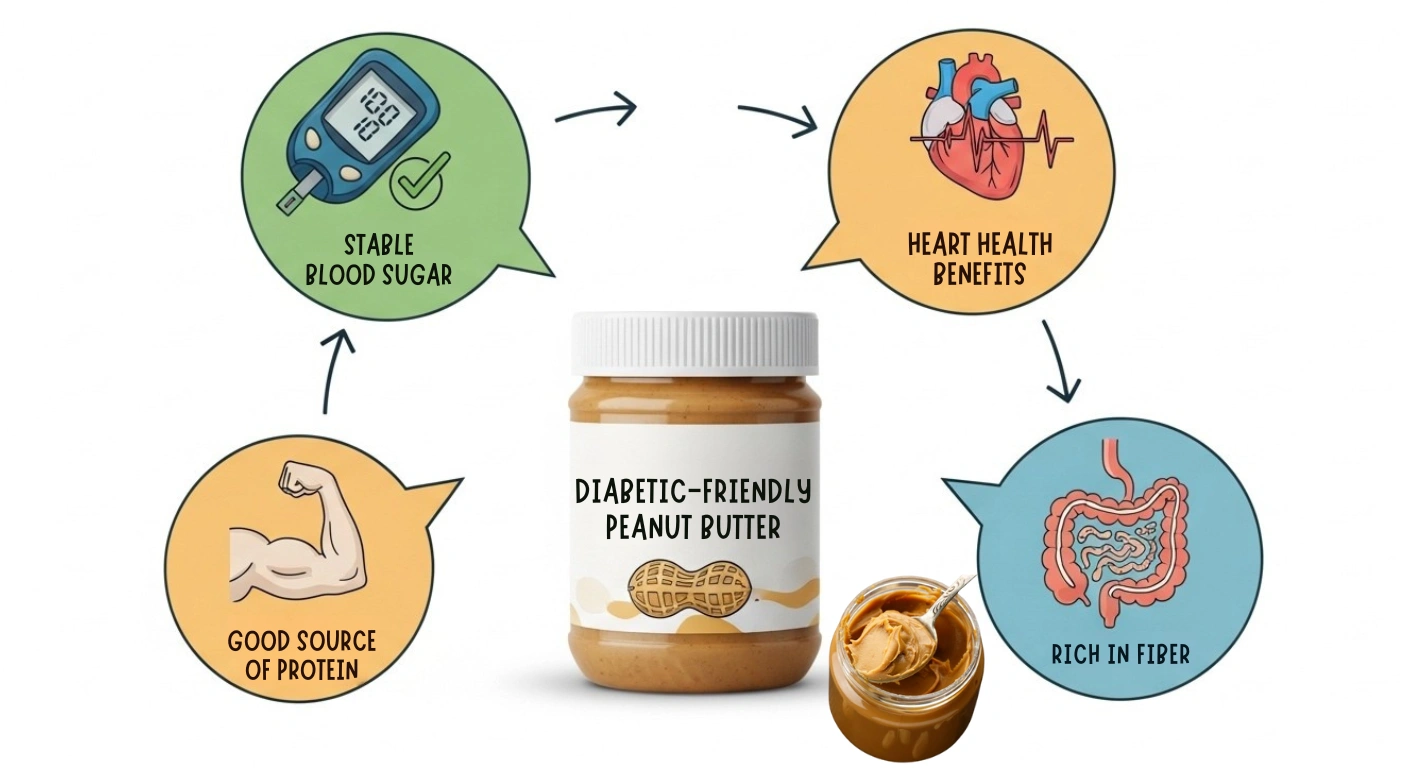
If you live with diabetes, food choices can feel overwhelming. One day something is “healthy.” The next day, it’s suddenly off-limits.
Peanut butter sits right in the middle of that confusion.
It feels wholesome.
It tastes amazing.
And somehow, it always ends up in your shopping cart.
What Is Jif Peanut Butter
Jif peanut butter is made from:
- Roasted peanuts
- Sugar
- Hydrogenated vegetable oils
- Salt
That ingredient list tells an important story.
Peanuts themselves are naturally low in carbs and rich in healthy fats. That’s a good start.
But Jif also adds sugar and processed oils. Those extras change how your body reacts, especially if you have diabetes.
So while Jif begins as a healthy food, it becomes more complicated once those added ingredients enter the mix.
Why Diabetics Need to Look Beyond Calories
Most people only check calories.
If you’re diabetic, that’s not enough.
You also need to think about:
- Added sugar
- Total carbohydrates
- Fat quality
- Portion size
- What you eat it with
Blood sugar doesn’t respond to one food by itself. It responds to the whole plate.
Jif Peanut Butter Nutrition
A standard two-tablespoon serving of Jif contains moderate calories, healthy fats, some protein, a small amount of carbs, and added sugar.
The fat and protein slow digestion.
The added sugar speeds glucose rise.
So Jif doesn’t spike blood sugar like candy, but it isn’t neutral either.
It sits somewhere in the middle.
Does Jif Peanut Butter Raise Blood Sugar
On its own, Jif has a relatively low glycemic impact. That means it doesn’t cause sharp spikes like soda or white bread.
Problems usually happen when:
- Portions get too big
- It’s paired with refined carbs
- You snack straight from the jar
That’s when blood sugar slowly creeps up.
Healthy Fats Jif’s Biggest Strength
Peanut butter is rich in unsaturated fats.
These fats help:
- Slow digestion
- Keep you full longer
- Support heart health
- Reduce sudden glucose swings
For diabetics, feeling full matters. Satisfaction prevents constant snacking.
The downside is that Jif uses hydrogenated oils. They’re more processed than the natural oils found in pure peanut butter.
Not terrible in small amounts, but not ideal every day.
Protein Helps More Than You Realize
Jif also provides protein.
Protein helps:
- Stabilize blood sugar
- Reduce hunger
- Support muscle health
This makes Jif a better choice than sugary spreads.
Still, protein can’t fully cancel out added sugar. Balance matters.
Where Most People Slip Up
Two tablespoons of peanut butter is smaller than most people think.
It’s easy to double that without noticing.
For diabetics, this matters because:
- Calories add up fast
- Sugar adds up quietly
- Blood glucose rises slowly
Here’s a simple trick.
Spread peanut butter no thicker than your index finger on toast. That’s about two tablespoons.
No measuring cups needed.
Jif vs Natural Peanut Butter
Jif Peanut Butter
- Contains added sugar
- Uses processed oils
- Sweeter taste
- Creamier texture
- Moderate blood sugar impact
Natural Peanut Butter
- No added sugar
- Usually just peanuts and salt
- Earthier flavor
- Oil separates naturally
- Lower blood sugar impact
Natural peanut butter is the better option for diabetes control.
Jif wins on taste and convenience.
Is Reduced-Sugar Jif Better
Yes. Reduced-sugar Jif is a step in the right direction.
It lowers added sugar while keeping the familiar flavor.
But it still contains processed oils, so natural peanut butter remains the healthiest choice.
Emotional Eating and Peanut Butter
Peanut butter is comfort food.
People don’t overeat it because they’re hungry.
They overeat it because it feels safe and satisfying.
Stress. Tiredness. Boredom.
Suddenly, the spoon keeps diving back into the jar.
Pausing for just a moment before grabbing another scoop can save hundreds of hidden calories each week.
Use the Plate Pairing Rule
Never eat Jif by itself.
Always pair it with fiber or protein.
Good combinations include:
- Apple slices with peanut butter.
- Celery sticks with peanut butter.
- Whole-grain toast with eggs and peanut butter.
- Greek yogurt with a small swirl of peanut butter.
Fiber and protein slow digestion and soften glucose rises.
Think of peanut butter as a teammate. It works best with support.
Can Diabetics Eat Jif Every Day
Daily use increases exposure to added sugar and processed oils.
A better approach is to rotate between:
- Natural peanut butter.
- Almond butter.
- Cashew butter.
Save Jif for occasional enjoyment.
Variety improves nutrition and protects blood sugar.