
Floxer Tablet 500mg – Uses, Side Effects & More

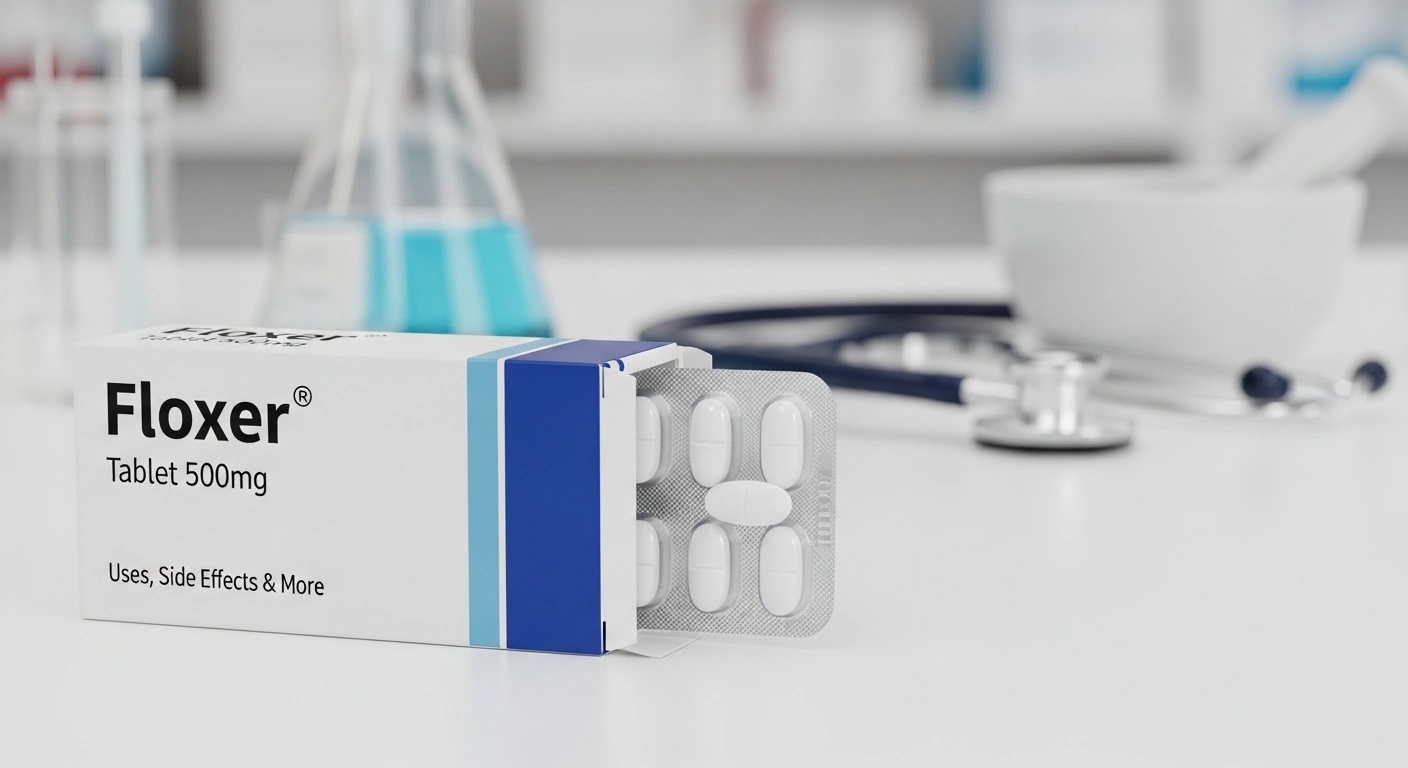
If your doctor has prescribed Floxer 500mg or you’ve seen it at your local pharmacy, you probably want to know what it does, who it’s for, and what to watch out for. Here’s everything you need to know explained simply.
What Is Floxer 500mg
Floxer is a brand-name antibiotic made by Efroze Chemical Industries (Pvt.) Ltd., based in Karachi, Pakistan. Each tablet contains 500mg of Levofloxacin, a fluoroquinolone antibiotic. Levofloxacin was first approved by the U.S. FDA in 1996 and has been used worldwide ever since for treating bacterial infections.
One thing to be clear about upfront Floxer only works against bacteria. It won’t do anything for viral infections like the cold or flu.
How Does Floxer Work
Levofloxacin is a bactericidal antibiotic, meaning it kills bacteria rather than just slowing them down. It targets a bacterial enzyme called DNA gyrase and a related enzyme called topoisomerase IV. Both enzymes are essential for bacteria to copy and repair their DNA.
By blocking these enzymes, the drug stops bacterial cells from dividing and replicating. This halts the infection and gives your immune system a chance to clear out what’s left. Levofloxacin is broad-spectrum, so it works against a wide range of gram-positive, gram-negative, and atypical bacteria.
What Is Floxer 500mg Used For
According to its manufacturer Efroze, Floxer is indicated for mild to moderate bacterial infections. The most common uses include:
- Community-acquired pneumonia and hospital-acquired (nosocomial) pneumonia
- Acute bacterial exacerbation of chronic bronchitis
- Acute bacterial maxillary sinusitis
- Urinary tract infections (UTIs) both uncomplicated and complicated, including acute pyelonephritis (kidney infection)
- Skin and soft tissue infections cellulitis, wound infections, and abscesses caused by bacteria like Staphylococcus aureus and Streptococcus pyogenes
- Chronic bacterial prostatitis
- Pharyngitis and tonsillitis caused by bacteria
Levofloxacin is also sometimes used off-label for traveler’s diarrhea, tuberculosis, and endocarditis — but those uses are entirely at your doctor’s discretion.
Dosage: How to Take Floxer 500mg
The standard adult dose is 500mg once daily. Your doctor decides the treatment duration based on the infection type and severity — most courses run between 7 and 14 days.
Some practical tips for taking it right:
- Swallow the tablet whole with a full glass of water don’t crush, chew, or break it
- You can take it with or without food
- Take it at the same time every day
- If you’re also taking antacids (containing magnesium or aluminum), iron supplements, zinc, or calcium products, leave at least a 2-hour gap these interfere with absorption
- Stay well-hydrated to prevent crystal formation in urine
- Complete the full course even if you feel better stopping early risks the infection returning and contributes to antibiotic resistance
What If You Miss a Dose
Take it as soon as you remember. If it’s almost time for your next dose, skip the missed one and continue your regular schedule. Never take a double dose to make up for it.
How Quickly Does Floxer Work
Levofloxacin absorbs rapidly with an oral bioavailability of approximately 99%. Peak blood levels are reached within 1-2 hours of taking the tablet. Most patients start feeling better within 2-3 days, though the full course must still be completed.
In a healthy person, the drug clears from the body within about 30-40 hours after the last dose.
Common Side Effects
These are usually mild and tend to resolve on their own:
- Nausea
- Diarrhea
- Headache
- Dizziness or lightheadedness
- Constipation
- Trouble sleeping
If any of these persist or become bothersome, consult your doctor.
Serious Side Effects
This is where fluoroquinolones require extra attention. While uncommon, these side effects can be severe and in some cases permanent.
- Tendon Problems — Levofloxacin can cause tendinitis and, rarely, tendon rupture — especially in the Achilles tendon. Risk is higher if you’re over 60, taking corticosteroids, or have had an organ transplant. Stop the medication immediately and contact your doctor if you feel sudden pain, swelling, or stiffness in any joint.
- Nerve Damage (Peripheral Neuropathy) — Pain, burning, tingling, numbness, or weakness in the hands or feet may signal nerve damage. The FDA issued a specific warning about this in 2013, noting that the damage may be irreversible (FDA Drug Safety Communication: FDA requires label changes to warn of risk for possibly permanent nerve damage from antibacterial fluoroquinolone drugs).
- Central Nervous System Effects — Confusion, hallucinations, paranoia, depression, memory problems, seizures, and thoughts of self-harm have been reported sometimes after just a single dose.
- Heart Rhythm Changes (QT Prolongation) — Levofloxacin can affect the heart’s electrical activity, potentially causing dangerous irregular heartbeat. This risk is higher in elderly patients and those taking other QT-prolonging medications.
- Aortic Aneurysm and Dissection — In 2018, the FDA warned that fluoroquinolones can increase the risk of tears or bulges in the aorta, the body’s main artery, which can cause life-threatening bleeding (FDA In Brief: FDA warns that fluoroquinolone antibiotics can cause aortic aneurysm in certain patients).
- Liver Damage (Hepatotoxicity) — Watch for loss of appetite, dark urine, yellowing skin or eyes, and persistent nausea. The NCBI StatPearls database classifies levofloxacin’s likelihood of causing clinically apparent liver injury as category “A” — a well-established cause (Levofloxacin – StatPearls – NCBI Bookshelf).
- Low Blood Sugar (Hypoglycemia) — Especially dangerous for diabetic patients on blood sugar-lowering medications. The FDA reinforced this warning in 2018 (FDA reinforces safety information about serious low blood sugar levels and mental health side effects with fluoroquinolone antibiotics).
- Photosensitivity — Your skin may become much more sensitive to sunlight. Avoid prolonged sun exposure and tanning beds while on this medication.
The FDA’s Black Box Warning
This is something every Floxer user should know about. In July 2016, the U.S. FDA strengthened its Black Box Warning the most serious warning the agency can issue — on all fluoroquinolone antibiotics including levofloxacin (FDA Drug Safety Communication: FDA updates warnings for oral and injectable fluoroquinolone antibiotics due to disabling side effects).
The warning states that fluoroquinolones carry risks of disabling and potentially permanent side effects involving the tendons, muscles, joints, nerves, and central nervous system — and these effects can occur together in the same patient.
The FDA also recommended in May 2016 that fluoroquinolones should be reserved for patients who have no other treatment options when it comes to uncomplicated infections like acute sinusitis, bronchitis, and simple UTIs because the serious risks may outweigh the benefits for milder conditions (FDA Drug Safety Communication: FDA advises restricting fluoroquinolone antibiotic use for certain uncomplicated infections).
This doesn’t mean Floxer is inherently dangerous. For serious infections like pneumonia, complicated UTIs, or cases where other antibiotics have failed, fluoroquinolones remain a critical treatment option. The point is they shouldn’t be the default choice for every minor infection.
Who Should NOT Take Floxer?
Floxer is contraindicated in the following situations:
- Known allergy to levofloxacin or any other fluoroquinolone (ciprofloxacin, moxifloxacin, ofloxacin, etc.)
- Myasthenia gravis — a condition causing severe muscle weakness. Fluoroquinolones can dangerously worsen symptoms and have been linked to deaths and respiratory failure in these patients
- Pregnancy — animal studies show risk to the developing baby, and adequate human studies are lacking
- Breastfeeding — levofloxacin passes into breast milk and may harm the baby
- Children under 18 — generally avoided due to the risk of joint and cartilage damage, with exceptions for specific situations like anthrax exposure
Drug Interactions
Several medications can interact with Floxer, either reducing its effectiveness or increasing side effect risk:
- Antacids (magnesium/aluminum), iron, zinc, and calcium supplements — reduce absorption significantly. Keep a 2-hour gap
- Corticosteroids (prednisolone, dexamethasone, prednisone) — increase the risk of tendon rupture
- NSAIDs (ibuprofen, naproxen) — may interact and increase certain risks
- Oral diabetes medications (like glimepiride) and insulin — can cause dangerously low blood sugar
- QT-prolonging drugs (certain heart medications, antipsychotics) — combined use raises the risk of heart rhythm problems
Always provide your doctor with a complete list of everything you’re taking — prescriptions, over-the-counter products, vitamins, and supplements.
Special Populations
Kidney Disease — Levofloxacin is primarily eliminated through the kidneys. Patients with impaired kidney function usually need a reduced dose based on creatinine clearance levels.
Liver Disease — Dose adjustment is generally not needed since levofloxacin undergoes minimal liver metabolism. However, stop the medication and seek help immediately if you develop signs of jaundice.
Elderly Patients (Over 60) — Higher risk of tendon problems, QT prolongation, and drug accumulation due to naturally declining kidney function. Extra monitoring is recommended.
Storage
Store at room temperature below 30°C. Keep away from heat, moisture, and direct sunlight. Keep out of reach of children.
Disclaimer: This article is for informational purposes only and is not a substitute for professional medical advice, diagnosis, or treatment. Always consult your doctor or pharmacist before starting, stopping, or changing any medication.
References:
- FDA Drug Safety Communication: FDA updates warnings for oral and injectable fluoroquinolone antibiotics due to disabling side effects (July 2016)
- FDA Drug Safety Communication: FDA advises restricting fluoroquinolone antibiotic use for certain uncomplicated infections (May 2016)
- FDA reinforces safety information about serious low blood sugar levels and mental health side effects with fluoroquinolone antibiotics (July 2018)
- Levofloxacin — StatPearls, NCBI Bookshelf
- Levofloxacin (oral route) — Mayo Clinic
- Levofloxacin — MedlinePlus Drug Information (U.S. National Library of Medicine)
- Levofloxacin (Levaquin): Uses & Side Effects — Cleveland Clinic
- Efroze Pharmaceuticals — Floxer Product Detail
- Maciuca S, et al. “Overview of Side-Effects of Antibacterial Fluoroquinolones: New Drugs versus Old Drugs, a Step Forward in the Safety Profile?” — Pharmaceutics, 2023
- Suárez-Rivero JM, et al. “Fluoroquinolones: Neurological Complications and Side Effects in Clinical Practice” — Life, 2024