
How Online Pharmacies Are Raising the Bar for Patient Data Protection

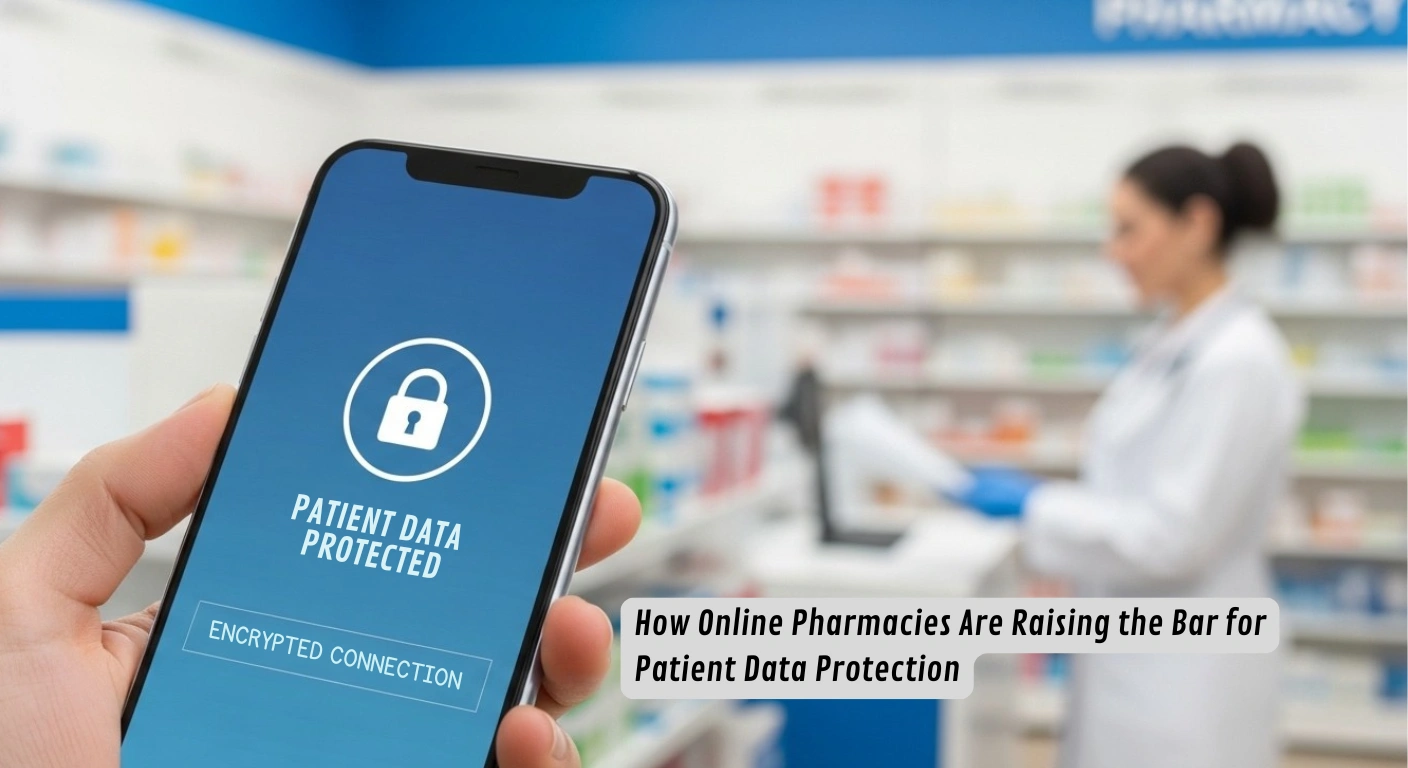
Online pharmacies have transformed access to medication. More importantly, they have redefined expectations around patient data protection. In modern healthcare delivery, data security is not a secondary operational concern. It is a core clinical responsibility.
Every digital prescription, consultation, and transaction involves protected health information. Regulatory bodies enforcing HIPAA in the United States and GDPR in the European Union have established clear standards for safeguarding such data. Leading online pharmacies are not merely complying with these standards. They are operationalizing them at scale.
Patient data protection is not optional. It is foundational.
Patient Data Protection as a Core Healthcare Obligation
Digital pharmacy platforms routinely process personally identifiable information, prescription records, medical history details, payment credentials, and delivery information. This data is clinically sensitive and legally protected. Healthcare cybersecurity analyses published by the Ponemon Institute report that healthcare breaches are among the most costly in any industry. Patient trust depends on robust protection.
For pharmacy leaders, the implication is clear. Protecting patient data is synonymous with protecting patient trust.
Online pharmacies integrate security architecture into the core design of their platforms. Security is not layered on after development. It is built in from inception.
Encryption as a Clinical Standard
Encryption is a baseline requirement in digital health infrastructure. Modern online pharmacies implement end to end encryption using industry standard protocols such as Secure Socket Layer and Transport Layer Security. Data is encrypted in transit, at rest, and during authentication workflows.
Encryption prevents interception, reduces exposure risk, and ensures confidentiality among users and licensed pharmacists. These measures align with clinical risk mitigation frameworks recommended by national cybersecurity centers.
Identity Verification and Fraud Prevention
Prescription fraud and identity misuse represent documented risks within online pharmaceutical services. Peer reviewed research and industry reports underscore the necessity of multi factor authentication and behavioral anomaly detection in healthcare environments.
Leading platforms deploy:
- Multi factor authentication
- Behavioral anomaly monitoring
- Secure prescription validation systems
- Pharmacist led verification protocols
Prescriptions are authenticated by licensed professionals prior to fulfillment. Automated systems flag irregular patterns before medication is dispensed. This layered system maps directly to risk based security frameworks.
Regulatory Compliance as Operational Infrastructure
Online pharmacies operate within strict regulatory ecosystems. These include HIPAA in the United States, GDPR in the European Union, PCI DSS for payment security, and national pharmacy licensing regulations. Compliance requires processes, recurring audits, access controls, and breach notification protocols.
High performing digital pharmacies embed compliance into platform architecture rather than addressing it reactively. Audit trails are maintained, access is logged, and data retention policies are enforced. Compliance is structural.
Secure Cloud Architecture and Access Control
Enterprise grade cloud infrastructure has become standard in advanced digital pharmacy systems. These environments include encrypted cloud storage, redundant backup capabilities, intrusion detection systems, and continuous monitoring.
Role based access control ensures that only authorized personnel can access defined categories of patient data. Access is constrained by need and logged for accountability. The principle is consistent with minimum necessary access standards in healthcare governance.
Confidential Telepharmacy and Encrypted Communication Channels
Telepharmacy services expand patient access to professional guidance. Virtual consultations require strict confidentiality safeguards. Secure telepharmacy systems use encrypted video platforms and protected messaging portals. These systems include digital consent verification and secure session logging.
Clinicians and patients communicate with assurance that sessions are protected. Privacy is preserved not through assumption but through encryption.
AI Powered Threat Detection and Continuous Monitoring
Healthcare cybersecurity frameworks recommend proactive threat detection rather than reactive incident response. Online pharmacies now deploy AI powered systems capable of identifying unusual login behavior, detecting irregular prescription patterns, and flagging abnormal transaction activity. Machine learning models adapt to evolving threat patterns, and continuous monitoring allows for real time intervention.
Security is not static. It is adaptive. Security is not periodic. It is continuous.
Transparent Data Governance and Patient Control
Evidence based digital governance emphasizes transparency. Patients must understand how their data is collected, processed, and retained. Leading online pharmacies provide clearly defined data usage policies, access to personal data summaries, and mechanisms for correction or deletion requests.
Transparency strengthens accountability. Accountability strengthens trust. For revolution healthcare leaders, trust remains a measurable determinant of patient engagement and adherence.
Integration of Data Management Tools for Enhanced Security
Effective data protection requires advanced data management tools that unify security and operational functions. Online pharmacies increasingly adopt enterprise level tools that manage large volumes of sensitive health data while enforcing compliance.
Such tools provide controlled systems for monitoring access, enforcing encryption standards, and automating audit logging. They also integrate with broader security frameworks used in healthcare environments. A relevant example includes enterprise license solutions designed to centralize and enforce device and data policies across distributed networks. This type of infrastructure complements clinical data protection standards and supports operational accountability.
Cross Border Protection in Global Medication Access
Online pharmacies frequently support cross border medication distribution, particularly for rare or specialized therapies. Cross border services require heightened data governance. Best practices include jurisdiction specific compliance validation, vendor security audits, encrypted cross network transmission, and regulatory harmonization reviews.
Global reach does not justify reduced standards. It requires elevated standards. Online pharmacy leaders prioritize harmonized data protection protocols regardless of geography.
Comparison With Traditional Data Handling Systems
Traditional pharmacy operations often rely on paper based prescription storage, manual data entry, and local network systems with limited oversight. These systems carry documented risks including unauthorized access, misplacement, and inconsistent audit trails.
Digital pharmacy systems replace these vulnerabilities with encrypted records, centralized monitoring, and structured access control. This transition represents a measurable improvement in risk mitigation as documented in cybersecurity benchmarking studies.
Strategic Implications for Healthcare Leaders
For executives and healthcare policymakers, the shift is significant. Online pharmacies are not defined solely by accessibility or convenience. They are defined by infrastructure maturity. Data protection now influences organizational reputation, regulatory compliance risk, patient retention, and strategic growth.
Leaders who prioritize security first digital architecture will shape the future of pharmacy delivery. The trajectory is clear. Digital pharmacy platforms are not adapting to cybersecurity demands. They are setting new operational standards.
Patient data protection is not a support function. It is a clinical function. It is a strategic function. It is a leadership function. Online pharmacies are raising the bar in measurable and sustainable ways.