
Cosome Syrup: Uses, Side Effects, Price, Dosage & More

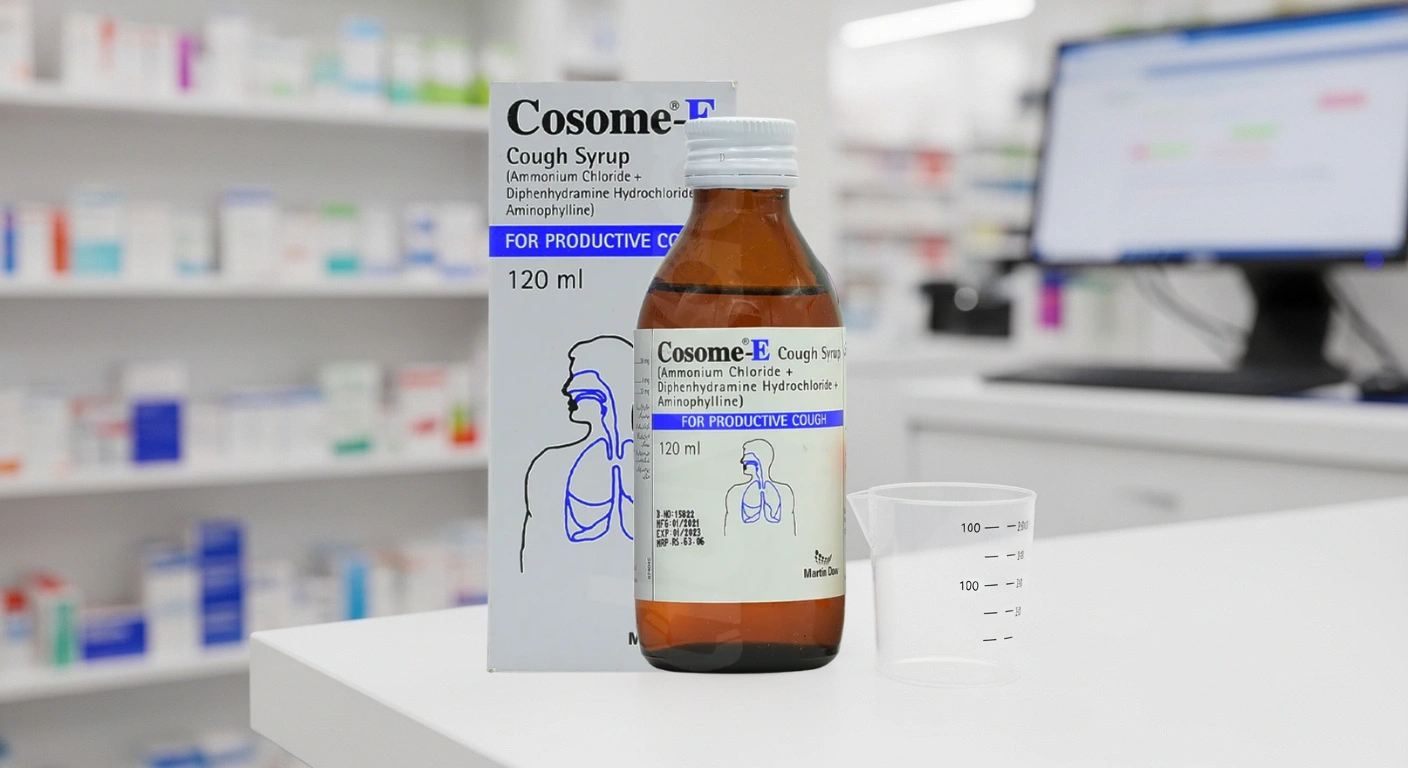
That stubborn dry cough keeping you up at night, A runny nose that won’t stop no matter how many tissues you go through, Cosome Syrup is one of most popular over-the-counter cough remedies, and it’s been a medicine cabinet staple for years. Let’s break down everything you need to know about it.
What Is Cosome Syrup
Cosome Syrup is a combination cough medication made by Martin Dow Marker Ltd, a well-known pharmaceutical company based. It comes in a 120 ml glass bottle and is designed to give temporary relief from common cold, flu, and allergy symptoms.
It’s classified as a prescription medicine, so you should use it under a doctor’s guidance.
Composition
Each 5 ml of Cosome Syrup contains three active ingredients:
- Dextromethorphan Hydrobromide USP — 10 mg (cough suppressant)
- Pseudoephedrine Hydrochloride USP — 30 mg (nasal decongestant)
- Chlorpheniramine Maleate USP — 2 mg (antihistamine)
These three ingredients work together to address cough, nasal congestion, and allergic irritation all at once.
How Does It Work
Dextromethorphan acts on the brainstem, specifically the nucleus tractus solitarius where vagal afferents terminate, to suppress the cough reflex. It doesn’t numb your throat it reduces the signals in your brain that trigger coughing (Dextromethorphan StatPearls, NCBI Bookshelf, Updated December 2025). Its effects last approximately 3 to 8 hours after an oral dose.
Pseudoephedrine narrows the blood vessels in your nasal passages. Less swelling means better drainage and easier breathing.
Chlorpheniramine blocks histamine, the chemical your body releases during allergic reactions. This is what stops the sneezing, itchy eyes, and runny nose. It reaches peak plasma levels about 2.5 to 6 hours after you take it (Cosome Cough Syrup Official Product Leaflet – Martin Dow Marker Ltd).
Uses
According to the official Martin Dow product leaflet, Cosome Syrup provides temporary relief from:
- Dry cough and cough from minor throat or bronchial irritation
- Runny nose
- Sneezing
- Itching of the nose or throat
- Itchy, watery eyes
- Nasal congestion and swelling of nasal passages
Important: Cosome is for dry, non-productive coughs only. The product leaflet specifically states “do not use if cough is accompanied by excessive sputum.” If you have a wet, mucus-heavy cough, this is not the right syrup for you.
Dosage & Administration
Dosage information from the official Martin Dow product leaflet:
- Adults: 2 teaspoonfuls (10 ml), three times daily
- Children (6–12 years): ½ to 1 teaspoonful, three times daily
- Children below 6 years: Not recommended contraindicated
Tips for use:
- Shake the bottle well before each dose
- Use a proper measuring cup or spoon, not a household tablespoon
- Can be taken with or without food
- Do not exceed the recommended dose
- Do not use for more than 5 days without consulting a doctor
Side Effects
Side effects are broken down by ingredient, as listed in the official product leaflet:
From Pseudoephedrine:
- Anxiety, tremor, palpitations, increased heart rate
- Elevated blood pressure, nausea, vomiting, headache
- Occasionally insomnia or urinary retention in men
- Rarely, sleep disturbance, hallucinations, or psychosis (with misuse)
From Chlorpheniramine:
- Drowsiness (most common)
- Nausea, vomiting, headaches, blurred vision
- Dry mouth, loss of appetite
- Less commonly: rash, angioedema, dizziness, constipation
From Dextromethorphan:
- Side effects are rare at normal doses
- Possible gastrointestinal upset, diarrhea, dizziness, or hypersensitivity
Drowsiness is the side effect you’ll most likely notice. Avoid driving or operating machinery until you know how the syrup affects you.
Who Should NOT Take Cosome Syrup
The official product leaflet lists these contraindications. Avoid Cosome Syrup if you have:
- A known allergy to any of its ingredients
- Severe or uncontrolled high blood pressure
- Coronary artery disease
- Bronchial asthma
- Narrow-angle glaucoma
- Epilepsy
- A cough with excessive mucus
- Respiratory failure or risk of it
- Children under 6 years of age
Also, do not take Cosome Syrup if you are currently using or have used an MAOI within the past 14 days (medications like isocarboxazid, phenelzine, selegiline, or tranylcypromine). The combination with dextromethorphan can cause dangerous reactions including extremely high fever, hallucinations, or coma (Cosome Cough Syrup Official Product Leaflet Martin Dow Marker Ltd).
Precautions & Warnings
Use Cosome Syrup with caution and consult your doctor first if you have:
- Kidney or liver impairment
- Diabetes
- Thyroid disorders (hyperthyroidism)
- Prostate enlargement or bladder dysfunction
- Heart disease
- Bipolar disorder or are taking antipsychotic medications
People with chronic coughs from smoking, asthma, or conditions with heavy secretions should talk to their doctor before using this syrup. Dextromethorphan doesn’t help with those types of cough, and masking symptoms could delay proper treatment.
Drug Interactions
Cosome Syrup can interact with several medications. Key interactions from the official leaflet:
- MAO inhibitors: Life-threatening when combined with dextromethorphan within 14 days
- Cardiac glycosides & tricyclic antidepressants: Increased risk of abnormal heart rhythms with pseudoephedrine
- Antihypertensive medications: Pseudoephedrine may reduce their blood-pressure-lowering effects
- CNS depressants (alcohol, barbiturates, sedatives, antipsychotics): Chlorpheniramine enhances their sedative effects
- Quinidine & Amiodarone: Can raise dextromethorphan levels in the blood, increasing toxicity risk
- CYP2D6 inhibitors (fluoxetine, paroxetine, ritonavir): Increase dextromethorphan effects since it’s metabolized by CYP2D6 in the liver (Dextromethorphan – StatPearls, NCBI Bookshelf, Updated December 2025)
- Phenytoin: Chlorpheniramine may slow the body’s elimination of phenytoin
Always tell your doctor or pharmacist about every medication you’re taking before starting Cosome Syrup.
Pregnancy & Breastfeeding
The official Martin Dow leaflet states that Cosome Syrup should not be used during pregnancy or lactation unless the benefits clearly outweigh the risks. If you’re pregnant, planning to become pregnant, or breastfeeding, consult your doctor before using this syrup.
Cosome Syrup Formula
Here’s a quick look at the complete formula per 5 ml serving:
| Ingredient | Amount per 5 ml | Role |
|---|---|---|
| Dextromethorphan Hydrobromide USP | 10 mg | Cough suppressant (antitussive) |
| Pseudoephedrine Hydrochloride USP | 30 mg | Nasal decongestant |
| Chlorpheniramine Maleate USP | 2 mg | Antihistamine |
This formula is sourced directly from the official Cosome Cough Syrup product leaflet published by Martin Dow Marker Ltd. The three-ingredient combination is what makes Cosome a multi-symptom relief syrup it suppresses cough, opens up blocked nasal passages, and controls allergic reactions like sneezing and watery eyes, all in a single dose.
Storage
- Store below 30°C
- Protect from light and heat
- Keep out of the reach of children
- Do not use after the expiry date
Cosome vs. Cosome-E vs. Cosome-A
Martin Dow makes several variants. Here’s the quick breakdown:
- Cosome Cough Syrup — Dextromethorphan + Pseudoephedrine + Chlorpheniramine. Best for dry cough, runny nose, sneezing, nasal congestion.
- Cosome-E Syrup — Aminophylline + Ammonium Chloride + Diphenhydramine. A bronchodilator and expectorant. Better for wet coughs with chest congestion.
- Cosome-A Syrup — Ambroxol + Guaifenesin + Terbutaline. Also targets productive coughs by breaking down mucus and relaxing airways.
Each one serves a different purpose. When in doubt, ask your pharmacist or doctor which variant fits your symptoms.
References:
- Dextromethorphan – StatPearls, National Center for Biotechnology Information (NCBI) Bookshelf, Updated December 13, 2025
- Dextromethorphan: MedlinePlus Drug Information, U.S. National Library of Medicine
- Dextromethorphan Guaifenesin – StatPearls, NCBI Bookshelf
- Dextromethorphan: Uses, Interactions, Mechanism of Action – DrugBank Online