
Provate Ointment: Uses, Side Effects, and More

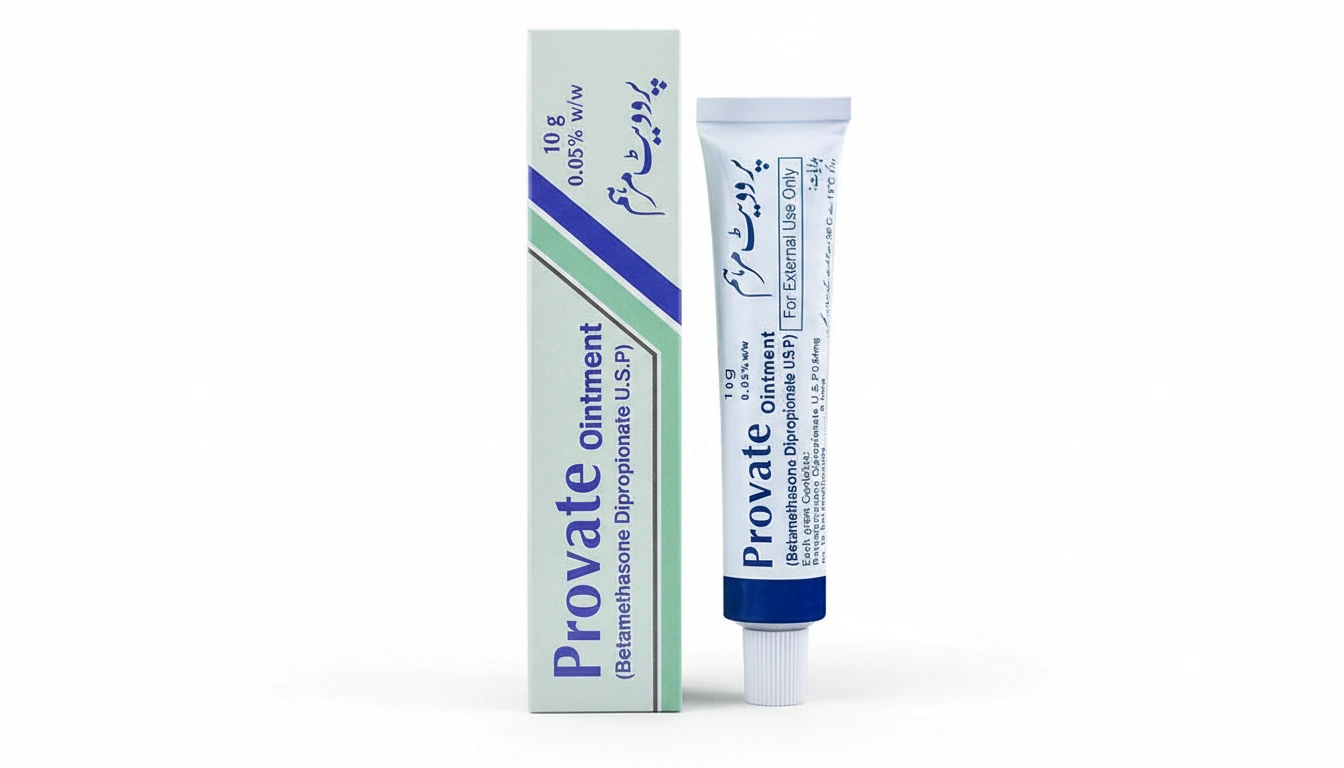
If you have been dealing with skin conditions like psoriasis or eczema, your doctor may have prescribed Provate Ointment. It is one of the most commonly used topical medicines for inflamed, itchy, and scaly skin. Before you start using it, you need to know how it works, what it treats, and what risks come with it.
What Is Provate Ointment?
Provate Ointment, also known as Provate S Ointment, is a combination topical medicine. It has two active ingredients that work together:
- Clobetasol Propionate (0.05%) — This is a strong corticosteroid. It reduces redness, swelling, and itching by blocking the chemicals in your skin that cause these reactions.
- Salicylic Acid (6%) — This is a keratolytic agent. It softens and removes dead or hardened skin cells, which helps clobetasol reach deeper into the skin and work better.
Both ingredients together make this ointment more effective than using either one on its own.
Uses of Provate Ointment
Doctors prescribe Provate Ointment for a range of skin conditions. Here is what it treats:
- Psoriasis — It reduces thick, red, scaly patches that appear on areas like the scalp, elbows, knees, and lower back.
- Eczema (Atopic Dermatitis) — It calms inflamed, itchy, and rough skin during flare-ups.
- Seborrheic Dermatitis of the Scalp — It loosens flaky scalp patches while reducing the inflammation underneath.
- Ichthyosis Vulgaris — It softens and removes the dry, scaly skin buildup that comes with this inherited skin condition.
- Dermatoses — It helps manage various inflammatory skin lesions, as directed by a skin specialist.
- Other Dry and Scaly Skin Conditions — It can also be used for other conditions that involve dryness, scaling, and redness.
How Does Provate Ointment Work?
Provate Ointment works because of how its two ingredients act together on your skin.
Clobetasol Propionate slows down your skin’s immune response. It reduces the activity of white blood cells in the skin and lowers the leakage from blood vessels, which brings down redness and swelling. Salicylic Acid breaks down the layer of dead skin cells sitting on top, making the surface smoother and open to treatment. This allows clobetasol to go deeper and do its job more effectively.
How to Use Provate Ointment
The right way to apply this ointment matters a lot. Follow these steps every time:
- Wash your hands well before you touch the ointment.
- Clean and dry the skin area you want to treat.
- Apply a thin layer only on the affected area, usually 2 to 3 times a day or as your doctor tells you.
- Rub it in gently so it spreads evenly.
- Wash your hands again after applying, unless your hands are the area being treated.
- Do not cover the treated area with tight bandages or airtight dressings unless your doctor says so.
- Keep it away from your eyes, nose, mouth, and vaginal area. If it touches these areas by accident, rinse with cold water right away.
- Do not stop using it suddenly without talking to your doctor first.
- If you see no improvement after 2 weeks, go back to your doctor.
Common Side Effects
Most side effects happen at the spot where you apply the ointment. They are usually mild and go away on their own as your body gets used to the medicine.
- Burning or stinging on the skin
- Itching and irritation
- Redness at the application site
- Skin peeling or dryness
- Thinning of the skin with long-term use
- Skin rash
If any of these do not go away or get worse, talk to your doctor.
Serious Side Effects Act Quickly
Some side effects need urgent medical attention. Stop using Provate Ointment and call your doctor right away if you notice:
- Blurred vision or dizziness
- Fainting or a fast, irregular heartbeat
- Unusual thirst or frequent urination
- Tiredness or weakness that does not go away
- Convulsions or stomach bloating
- Sudden weight gain around the face or belly, or stretch marks (signs of Cushing’s syndrome)
- Severe skin thinning, skin fragility, or swelling of the face and lips (angioedema)
Long-term misuse of strong steroids like clobetasol can lead to serious conditions such as Cushing’s syndrome, high blood pressure, and growth problems in children. These are rare, but you need to be aware of them.
Warnings and Precautions
Do not use Provate Ointment if you have:
- An allergy to clobetasol, salicylic acid, or any other ingredient in this medicine
- An active herpes simplex skin infection
- Rosacea or perioral dermatitis
- Acne vulgaris
- Open wounds, skin ulcers, or skin infestations in the area you want to treat
- Diaper rash in infants
Use it with extra care if you have:
- Diabetes — clobetasol can affect your blood sugar if used for a long time
- Glaucoma — keep it away from your eyes at all times
- Any active untreated skin infection (bacterial, fungal, or viral) — steroids can hide or worsen infection symptoms
- Heart failure, high blood pressure, liver disease, or kidney problems
Avoid applying it on these areas:
- Face, groin, and armpits — these areas absorb medicine faster, raising the risk of side effects
- Around or near the eyes
- Near the breasts, especially during breastfeeding
Provate Ointment in Special Populations
Pregnancy: Avoid using it during pregnancy unless your doctor says it is necessary. Do not apply it over large skin areas or for a long time.
Breastfeeding: Only use if your doctor prescribes it. Avoid applying near the breast or chest area to protect the baby.
Children under 12: This ointment is not recommended for children below 12 years. Their skin absorbs more medicine, which increases the risk of growth problems and adrenal suppression.
Elderly (over 65): Use with caution. Older skin is thinner and more sensitive to steroid-related side effects.
Drug Interactions
Since Provate Ointment is applied on the skin, it is less likely to interact with medicines you take by mouth. But some interactions are still possible:
- Ritonavir (used for HIV) — Can increase clobetasol levels in the body, raising side effect risk.
- Itraconazole (antifungal medicine) — Can have a similar effect on clobetasol absorption.
- Other topical steroids (like betamethasone or hydrocortisone) — Do not use them on the same area at the same time.
- Cosmetics and skincare products — Do not apply them on the treated area while using this ointment.
Always tell your doctor about any other creams, gels, or ointments you are already using.
Dosage and Duration
Apply a thin layer to the affected area 2 to 3 times a day, or follow your doctor’s exact instructions. Do not use more than prescribed — it will not give faster results, but it will increase your chances of side effects. Treatment with this ointment is usually kept short because of how strong clobetasol is. Never change your dose or stop the treatment without speaking to your doctor first.
Overdose
Since you apply this ointment on the skin, a single overdose is not likely. But using too much for too long can cause real problems:
- Steroid toxicity
- Adrenal suppression
- Cushing’s syndrome
- Electrolyte imbalance
- Convulsions or stomach bloating
If you think you have used too much, or if someone swallows it by accident, get medical help right away.
Storage Instructions
- Keep it in the original container with the lid tightly closed.
- Store it in a cool, dry place away from sunlight and heat.
- Do not freeze it.
- Keep it away from children and pets at all times.
- Do not use it if the tube is damaged or the medicine has expired.
- Throw away unused medicine through a local disposal program.
Skin Care Tips While Using Provate Ointment
(Not covered by most sources)
Taking care of your skin during treatment helps you heal faster and feel more comfortable. Here are some simple tips to follow:
- Moisturize regularly — Use a gentle, fragrance-free moisturizer after the ointment absorbs into your skin. This helps with dryness caused by salicylic acid.
- Use lukewarm water — Hot showers or baths can increase how much medicine your skin absorbs and worsen irritation. Stick to lukewarm water.
- Pat, do not rub — After washing the treated area, pat your skin dry with a soft towel. Rubbing can make irritation worse.
- Wear loose clothing — Choose soft, loose cotton clothes over the treated area. Avoid wool or synthetic fabrics that can trap heat or scratch the skin.
- Do not scratch — If the area feels itchy, tap or pat it gently instead of scratching. You can also press a cool, damp cloth on the skin for relief.
- Drink enough water — Staying hydrated supports your skin from the inside and helps offset the drying effect of the medicine.
- Cut back on alcohol — Alcohol can make skin inflammation worse and reduce how well the treatment works.
How to Monitor Your Progress and Know When to Stop
(Not covered by most sources)
Keeping track of how your skin responds is just as important as applying the medicine correctly.
Signs the treatment is working:
- Redness and swelling start to reduce within 3 to 7 days
- Itching and discomfort lessen at the treated spot
- Scaly patches soften and shrink within 1 to 2 weeks
- Your skin gradually starts to look and feel more normal
Go back to your doctor if:
- You see no improvement after 2 weeks of regular use
- Your skin condition is getting worse, not better
- A new infection appears — watch for spreading redness, warmth, pus, or a new rash
- You notice skin thinning, stretch marks, or new hair growth on the treated area
- You feel systemic symptoms like unusual weight gain, ongoing fatigue, or vision changes
Do not stop suddenly:
If you have used Provate Ointment for a long time, stopping it all at once is not safe. Abrupt stopping of a strong corticosteroid can trigger steroid withdrawal syndrome. Your skin may flare up again with more redness and burning than before. Always ask your doctor how to reduce the frequency gradually before you stop.
Disclaimer: This article is for general information only and does not replace professional medical advice. Always consult a licensed doctor or dermatologist before starting, changing, or stopping any medication.