
Imdur: Side Effects, Uses, Dosage & More

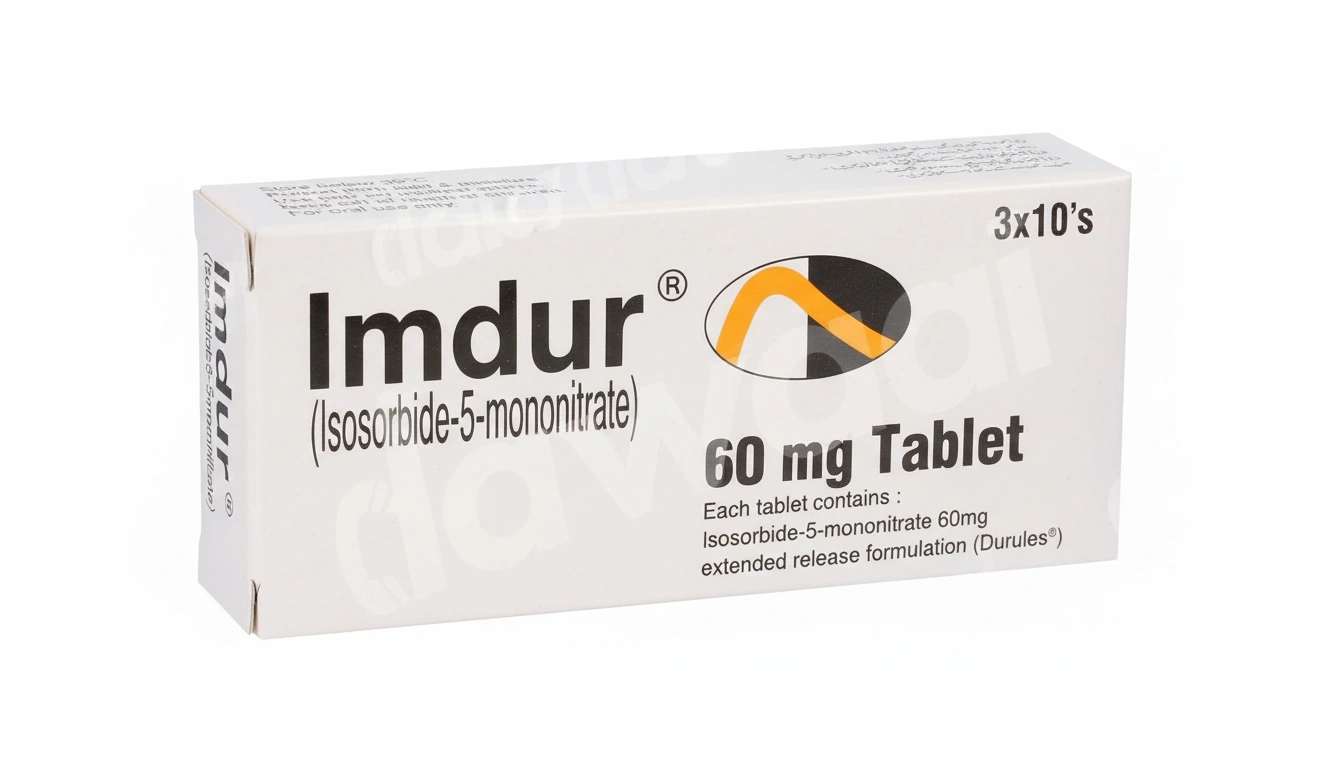
Imdur is the brand name for isosorbide mononitrate (ISMN), a long-acting nitrate medication prescribed for the prevention of heart-related chest pain. The Imdur Tablets 60mg has since been discontinued in the U.S., but FDA-approved generics remain widely available under the names Monoket and ISMO (Drugs.com, Imdur Drug Information).
What Is Imdur Used For?
Imdur is prescribed for the prevention of angina pectoris chest pain caused by coronary artery disease. It does not work fast enough to stop a chest pain episode that has already begun. It is strictly a long-term preventive medication (FDA Prescribing Information, IMDUR Extended Release Tablets).
Approved use:
- Prevention of angina pectoris due to coronary artery disease
Off-label uses documented in medical literature include:
- Heart failure with reduced ejection fraction
- Achalasia a disorder affecting swallowing and the esophagus (StatPearls, “Isosorbide,” NCBI Bookshelf)
Always carry a fast-acting nitrate such as nitroglycerin for acute chest pain episodes as directed by your doctor. Imdur cannot stop an active attack.
How It Works
Imdur belongs to the organic nitrate class of drugs. It works by releasing nitric oxide (NO) in the body, which relaxes smooth muscle in the walls of both veins and arteries.
This causes vasodilation the widening of blood vessels. The result is less blood returning to the heart, reduced resistance the heart pumps against, and improved oxygen delivery to the heart muscle. Overall, the heart works less hard, and angina episodes occur less frequently (StatPearls, “Isosorbide,” NCBI Bookshelf).
Dosage
Extended-Release Tablets (Most Common)
| Tablet Strength | Starting Dose | Maintenance | Maximum |
|---|---|---|---|
| 30 mg, 60 mg, 120 mg | 30–60 mg once daily (morning) | 60–120 mg once daily | 240 mg/day (rare) |
The recommended starting dose is 30 mg or 60 mg once daily. After several days, the doctor may increase this to 120 mg once daily. In rare cases, 240 mg may be required (FDA Prescribing Information, IMDUR Extended Release Tablets).
Immediate-Release Tablets
| Strength | Starting Dose | Maintenance |
|---|---|---|
| 5–10 mg | 5–10 mg orally twice daily, 7 hours apart | 20 mg twice daily |
The strict 7-hour gap between doses is designed to preserve a nitrate-free window and prevent the body from building tolerance (StatPearls, “Isosorbide,” NCBI Bookshelf).
Key dosing rules to follow:
- Take extended-release tablets in the morning upon rising
- Swallow whole with at least half a glass of water
- Never crush, chew, or break the tablet
- Maintain a 12–14 hour nitrate-free period every day to prevent tolerance
- Never self-adjust your dose follow your doctor’s instructions exactly
Common Side Effects
The following adverse events occurred in more than 5% of subjects across three placebo-controlled North American studies at doses of 30 mg to 240 mg (FDA Prescribing Information, IMDUR Extended Release Tablets):
- Headache the most frequently reported side effect; usually mild to moderate and improves with continued use
- Dizziness or lightheadedness
- Flushing warmth or redness of the skin
- Nausea
- Low blood pressure (hypotension)
- Fatigue or weakness
Do not stop taking Imdur because of headaches. Speak to your doctor about appropriate pain relief options instead.
Serious Side Effects
While less common, some side effects require urgent attention:
- Severe hypotension – especially when combined with other vasodilators or when standing up quickly
- Syncope – sudden fainting due to blood pressure drop
- Reflex tachycardia – rapid heartbeat triggered by falling blood pressure
- Paradoxical chest pain – – in some people with existing heart disease, this medication may trigger chest pain, which can signal a heart attack. Seek emergency care immediately (WebMD, Isosorbide Mononitrate Drug Overview)
- Methemoglobinemia – a rare condition where the blood loses its ability to carry oxygen effectively
- Severe allergic reaction – stop the medication immediately and seek emergency help if you notice hives, difficulty breathing, or swelling of the face, lips, or throat
Important Drug Interactions
Contraindicated
| Drug / Class | Risk |
|---|---|
| PDE-5 inhibitors: sildenafil (Viagra), tadalafil (Cialis), vardenafil (Levitra), avanafil (Stendra) | Potentially fatal sudden drop in blood pressure |
| Riociguat (for pulmonary hypertension) | Severe hypotension |
Use With Caution / Monitor Closely
| Drug / Class | Concern |
|---|---|
| Other antihypertensives or vasodilators | Additive blood pressure lowering |
| Calcium channel blockers | Enhanced hypotensive effect |
| Alcohol | Significantly increases vasodilation and fainting risk |
| Rectal nitroglycerin | Additive hypotensive effects |
| CYP3A4 inhibitors (e.g., rucaparib, ribociclib, stiripentol) | May increase ISMN blood levels |
| CYP3A4 inducers (e.g., mitotane, nafcillin, phenobarbital, primidone) | May decrease ISMN effectiveness |
(Medscape, Isosorbide Mononitrate Drug Interactions)
Warnings & Precautions
There are several important safety considerations to keep in mind before and during treatment.
Nitrate tolerance can develop if the medication is taken too frequently or without a proper daily break. This is why maintaining the nitrate-free interval is essential not optional.
Never stop abruptly. Sudden discontinuation can trigger a severe rebound angina attack. Always taper gradually under your doctor’s supervision (Drugs.com, Imdur Drug Information).
Use with caution if you have any of the following:
- Low blood pressure or low blood volume (hypovolemia)
- Severe anemia
- Alcohol dependency
- Hyperthyroidism
- Congestive heart failure
- Increased intracranial pressure from head trauma or cerebral hemorrhage potential contraindication
- Closed-angle glaucoma or increased intraocular pressure
- Recent heart attack with low cardiac filling pressures
- Hypertrophic obstructive cardiomyopathy (HOCM)
If you develop vomiting, diarrhea, or excessive sweating while on this medication, contact your doctor right away. These conditions can further lower blood pressure to dangerous levels (RxList, Imdur Monograph; Mayo Clinic, Isosorbide Mononitrate Oral Route).
Who Should Avoid Imdur?
- Anyone taking PDE-5 inhibitors (Viagra, Cialis, Levitra, Stendra)
- Patients with severe hypotension (systolic BP below 90 mmHg)
- Anyone with a known allergy to isosorbide mononitrate or any inactive tablet ingredient
- Patients with hypertrophic obstructive cardiomyopathy (HOCM)
- Patients who have recently had a heart attack consult your doctor before use
| Population | Guidance |
|---|---|
| Elderly (65+) | Higher risk of low blood pressure and falls; may need dose adjustment due to age-related liver, kidney, or heart changes (Mayo Clinic, Isosorbide Mononitrate Oral Route) |
| Children | Safety and efficacy not established — not recommended (Mayo Clinic, Isosorbide Mononitrate Oral Route) |
| Pregnancy | Unknown risk to the unborn baby — use only when benefits clearly outweigh risks (Drugs.com, Imdur Drug Information) |
| Breastfeeding | Unknown if the drug passes into breast milk — consult your doctor before breastfeeding (Drugs.com, Imdur Drug Information) |
Storage
Proper storage protects the medication’s effectiveness:
- Store at controlled room temperature: 20°–25°C (68°–77°F)
- Brief exposure to 15°–30°C (59°–86°F) is acceptable during transport
- Keep away from moisture, heat, and direct light
- Always keep the bottle tightly closed when not in use
- Keep out of reach of children
(FDA Prescribing Information, IMDUR Extended Release Tablets)
Missed Dose & Overdose Management
If You Miss a Dose
- Take it as soon as you remember
- Skip it entirely if your next scheduled dose is coming up soon
- Never double up to make up for a missed dose
Overdose Seek Emergency Help Immediately
An overdose of isosorbide mononitrate can be fatal. Contact emergency services or a Poison Control Center right away if an overdose is suspected (Drugs.com, Imdur Drug Information).
Overdose symptoms to watch for:
- Severe, throbbing headache
- High fever and confusion
- Extreme dizziness
- Fast or pounding heartbeat
- Vision disturbances
- Severe nausea, vomiting, stomach pain, or bloody diarrhea
- Difficulty breathing
- Cold or clammy skin
- Fainting or seizures
Practical Lifestyle Tips While Taking Imdur
Small daily habits can make a significant difference in your safety and comfort while on this medication.
Rise slowly. Imdur lowers blood pressure. Always stand up slowly from lying or sitting to avoid sudden dizziness or fainting (orthostatic hypotension).
Sit or rest when taking your dose. Be seated when you take Imdur, especially during the first few days. A blood pressure drop can occur shortly after taking the tablet (Drugs.com, Imdur Drug Information).
Avoid alcohol. Alcohol amplifies the vasodilatory effect of Imdur and significantly raises the risk of dizziness, fainting, and dangerous hypotension.
Use caution when driving. Imdur can impair alertness and physical coordination. Avoid driving or operating heavy machinery until you understand how this medication affects you (WebMD, Isosorbide Mononitrate Drug Overview).
Never run out. Refill your prescription before it runs out. Stopping abruptly can cause dangerous rebound angina.
Know about “Monday Disease.” A well-documented phenomenon in nitrate pharmacology: patients who skip doses over the weekend and restart on Monday often experience tachycardia, severe headache, and dizziness upon re-exposure — a direct result of lost nitrate tolerance during the break. Consistent, prescribed dosing prevents this entirely (StatPearls, “Isosorbide,” NCBI Bookshelf).
Medical Disclaimer: This article is for educational purposes only and does not constitute medical advice. Always follow your doctor’s or pharmacist’s specific instructions. Never start, stop, or change any medication without consulting a licensed healthcare provider.
References
- FDA Prescribing Information, IMDUR Extended Release Tablets (Isosorbide Mononitrate) Kremers Urban Pharmaceuticals Inc.
- Drugs.com Imdur (Isosorbide Mononitrate) Drug Information.
- Mayo Clinic Isosorbide Mononitrate (Oral Route): Description and Brand Names.
- StatPearls [Internet]. “Isosorbide.” StatPearls Publishing, Treasure Island, FL. NCBI Bookshelf.
- Medscape Reference Isosorbide Mononitrate (Imdur, Monoket): Drug Interactions.
- WebMD Isosorbide Mononitrate Oral: Uses, Side Effects, Interactions, Pictures, Warnings & Dosing.