
What Families Need To Get Right For Home Infection Control During Chemotherapy

This article is for informational purposes only and is not a substitute for medical advice. Follow the specific guidance provided by the oncology team caring for the patient, as recommendations vary based on the individual treatment plan, drug regimen, and patient risk factors.
When someone in the family begins chemo, the most dangerous part of treatment isn’t the chemo itself. It’s the space between treatments, when the patient’s white blood cell count drops so low that a common household germ can land them in the hospital. That window is called neutropenia, and how clean the house is during that window genuinely affects whether the next treatment cycle happens on time or gets pushed back.
This is not normal cleaning. The kitchen, the bathroom, the food in the fridge, even the flowers on the table all behave differently when someone in the house has almost no immune defence. Get a feel for the timing and the specific risk points and you’ll handle it fine. Treat it like ordinary household tidying and there’s a decent chance you end up in the ER at some point during the cycle.
When Is The Patient Most Vulnerable?
About 7 to 12 days after each chemo dose.
That’s the window when the white blood cell count hits its lowest point, which doctors call the nadir. The CDC’s patient guidance on neutropenia and infection risk lays this out clearly the exact timing shifts a bit depending on which chemo drugs the patient is on, but the nadir window is fairly predictable, and the oncology team will tell you roughly when to expect it for that specific patient.
When the absolute neutrophil count is below 500, it’s called severe neutropenia. At that level the patient basically has no working defence against common bacteria, which is why something as small as a paper cut or a slightly off piece of chicken can escalate to sepsis fast.
A fever of 100.4°F or higher in a neutropenic patient is a medical emergency. Not a wait-and-watch situation, not a take-Tylenol-and-see-how-it-goes situation. It triggers immediate IV antibiotics and usually a hospital admission. Catch it early and you’ve done the single most important thing. Wait it out, hoping it passes on its own, and you can lose days of treatment to the delay that follows.
Where Do Infections Actually Come From In The House?
Most of the damage is done in three areas. The kitchen, the bathroom, and high-touch surfaces. Everything else is secondary.
The Kitchen
The kitchen is the single biggest infection source in any house, and during chemo the rules get even tighter. The American Cancer Society’s home cleaning guidance for cancer patients lists the kitchen as the top priority area, and the food safety rules are more stringent than most people are accustomed to.
What changes during treatment cycles:
- Raw meat never shares surfaces or utensils with anything else. Separate cutting boards, washed right after use, no exceptions.
- Fruits and vegetables get washed thoroughly even if they will be peeled, because the knife carries surface bacteria into the flesh.
- Leftovers older than 24 hours go in the trash, not into the patient.
- No raw or undercooked anything. No sushi, no rare steak, no soft cheeses, no raw sprouts, no unpasteurised juices.
- Hand wash before any food prep. Twenty seconds with soap, every single time.
Many cancer centres prescribe what’s called a neutropenic diet or low-microbial diet during the nadir window, which is basically all of the above plus a few more restrictions specific to the patient’s risk level.
The Bathroom
The bathroom carries a complication most families don’t know about until someone tells them. Chemo drugs come out in the patient’s urine, sweat, vomit, and other body fluids for roughly 48 to 72 hours after each treatment. Surfaces in the bathroom can carry a trace amount of cytotoxic drug residue that’s harmful to anyone else who uses the room.
Memorial Sloan Kettering Cancer Center’s patient safety guidance lays out the protocol for the first 48-hour window after each treatment:
- Patient flushes the toilet twice after each use.
- Caregivers wear two pairs of disposable gloves when handling any body fluids, used diapers, bedpans, or vomit.
- Toilet seat and rim get wiped down with disinfecting wipes after each use.
- Full bathroom cleaning and sanitisation after the 48-hour window closes.
- Patient’s bathroom towels and washcloths get washed separately from the rest of the household laundry.
If the patient is sharing a bathroom with the rest of the family, this matters more, not less.
High-Touch Surfaces Everywhere Else
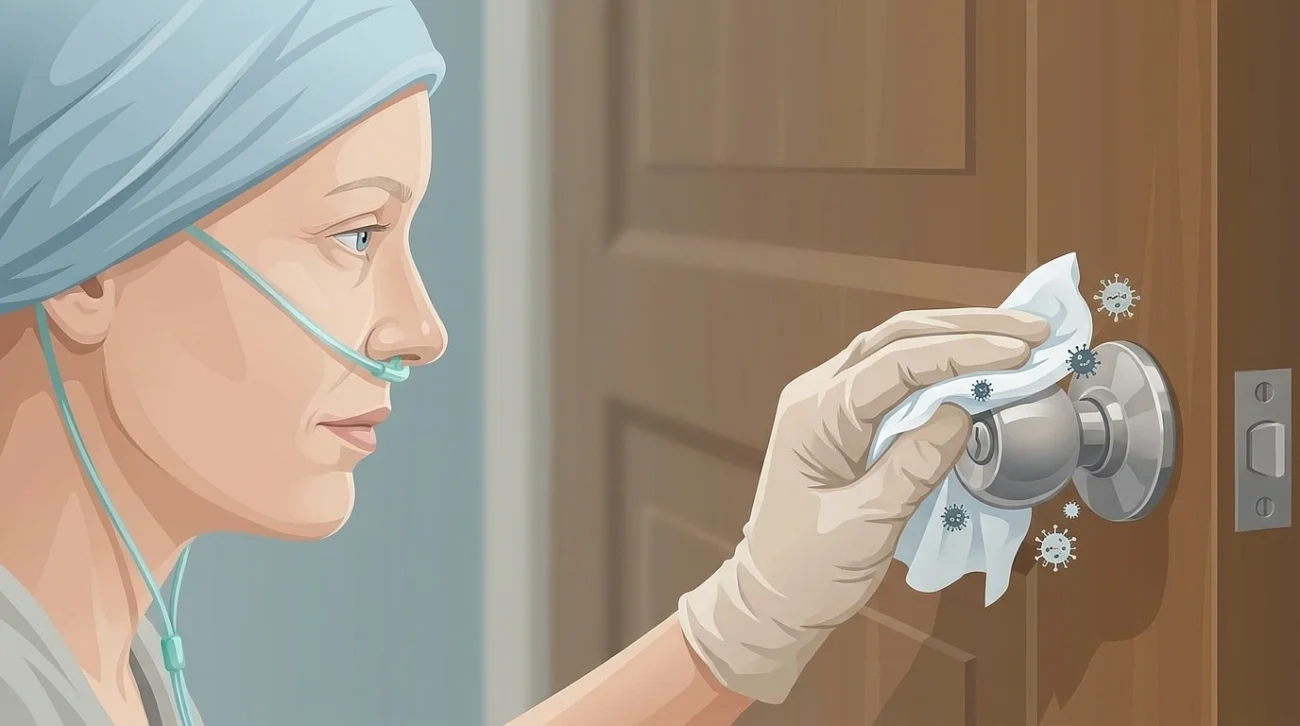
Doorknobs, light switches, phones, remote controls, fridge handles, faucets, keyboards. These get touched by everyone who comes through the house, and any visitor with a cold leaves traces on them that survive for hours.
WebMD’s home preparation guide for chemotherapy patients recommends daily disinfection of high-touch surfaces during active treatment cycles. Trash cans, bathtubs, and floors get a deeper clean weekly.
The instinct most families have is to focus on visible dirt — the floors, the dust on the shelves, the visible mess. That stuff matters less. The infection risk lives on the surface of your hands.
Acknowledgment: The practical residential cleaning execution side of this article was informed by conversations with Badger Luxe Cleaning, a professional cleaning service serving the Green Bay and Madison areas, on how cleaning protocols actually get maintained in sensitive home environments. The medical guidance throughout the article is sourced from trusted resources.
Things People Don’t Realise Are Dangerous
A few common household items become problems during chemo specifically because of how the treatment affects the immune system.
Fresh Flowers And Live Plants
Get rid of them during active treatment cycles. This one surprises people.
The soil and the standing water in a vase carry mould spores and bacteria. A healthy person breathes that in and never notices. A neutropenic patient can pick up a respiratory infection from it. WebMD’s home prep guide specifically calls this out. Silk flowers are fine. Real ones, for now, are not.
Pets
The pets themselves usually stay. It’s the pet care tasks that need reassigning.
Cleaning litter boxes, changing fish tank water, bird cages, picking up after the dog — all of it puts whoever does it in contact with organisms the patient should be nowhere near. If a non-patient family member can take those jobs over during treatment cycles, that’s the answer. If nobody can, the patient does it in gloves and a mask and washes thoroughly afterwards.
Visitors
Anyone with a cold, flu, GI bug, or recent exposure to someone sick stays away during the nadir window.
This is also the case when children have recently received certain live virus vaccines, such as oral polio, varicella, or the nasal flu spray, because the vaccine virus can shed for a few weeks and infect a neutropenic person. This is in the CDC guidance and most major cancer centre patient handbooks. It’s socially awkward to enforce, but it’s the right call.
What Should The House Have Ready Before Treatment Starts?
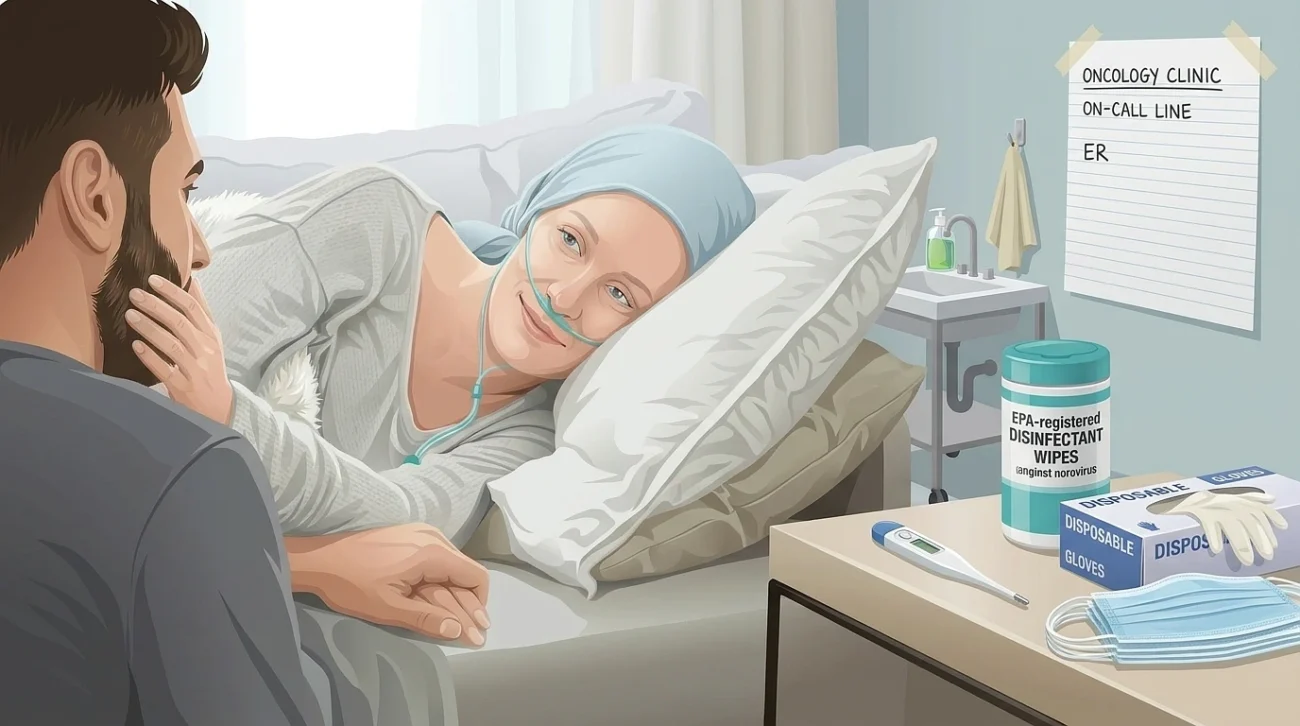
The families who handle this well set the house up before the first treatment, rather than after.
The supply list:
- Digital thermometer — patient checks twice a day, plus any time they feel off.
- EPA-registered disinfectant wipes — ideally rated effective against norovirus and rotavirus, kept in the bathroom and kitchen.
- Disposable gloves — in the bathroom and kitchen, both patient and caregivers know when to wear them.
- Liquid hand soap at every sink — hand washing is the single most important habit in the whole protocol.
- Separate cleaning cloths for the patient’s bathroom — never used anywhere else in the house.
- Face masks — for visitors, and for the patient when going to the clinic or any unavoidable public setting.
- Written phone list — oncology clinic, on-call oncology line, nearest ER familiar with the patient’s case, all stuck somewhere visible.
The bigger thing is getting the whole household on the same page about the protocol before treatment starts, rather than renegotiating the rules every week while the patient is feeling at their worst.
So What Should The Patient Do?
A few habits do most of the work, and they come straight from CDC and major cancer center patient education materials.
- Wash hands with soap and water for 20 seconds before eating, after the bathroom, after touching any potentially contaminated surface.
- Shower or bathe daily, paying particular attention to sweaty areas like the feet and groin.
- Soft toothbrush, gentle technique gum bleeding can introduce bacteria into the bloodstream.
- Avoid crowds during the nadir window wear a mask for unavoidable public outings.
- Check temperature twice a day anything over 100.4°F gets reported immediately.
That last one is the one that counts. Fever is the warning sign that triggers the entire emergency response, and the families that do well are the ones that don’t wait to see if it passes.
Why Does All This Actually Matter?
Because chemo runs on a schedule, and the schedule is what affects outcomes.
Cancer treatment is built around tightly timed cycles, and the oncology team plans each cycle assuming the patient will arrive for the next one in reasonable shape. An infection during the nadir window doesn’t just put the patient in the hospital for a few days, it usually delays the next chemo cycle, and treatment delays can affect overall outcomes in many cancer protocols.
Home infection control isn’t really about keeping the patient comfortable between treatments. It’s about safeguarding the treatment schedule itself, which is the thing most directly tied to long-term outcomes.
Treat the home environment as part of the medical plan and the schedule tends to hold. Treat it as a separate household concern and you'll probably find yourself sitting across from the oncologist explaining why you're two weeks behind.