
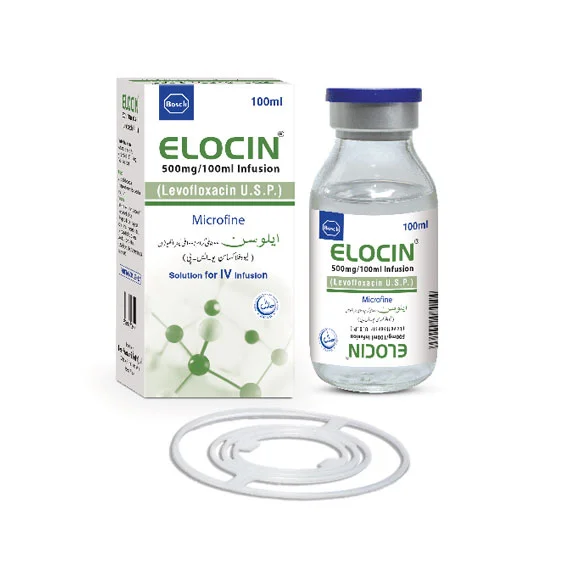


Description
Elocin 500mg Injection contains levofloxacin, a fluoroquinolone antibiotic used in Pakistan to treat serious bacterial infections. Administered in hospitals for conditions like pneumonia, urinary tract infections, or skin infections, it’s effective against gram-negative and some gram-positive bacteria, especially in high-risk cases like post-surgical infections in cities like Islamabad or Peshawar. Produced by Bosch Pharmaceuticals, it’s available as a single vial, priced around Rs. 225-250, prescription-only, and widely stocked in DRAP-registered pharmacies.
How It Functions
Levofloxacin inhibits bacterial DNA gyrase and topoisomerase IV, enzymes critical for DNA replication and repair, leading to bacterial cell death. Chemically, it’s (-)-(S)-9-fluoro-2,3-dihydro-3-methyl-10-(4-methylpiperazin-1-yl)-7-oxo-7H-pyrido[1,2,3-de]-1,4-benzoxazine-6-carboxylic acid hemihydrate. Effective against aerobic gram-negative bacteria (e.g., Pseudomonas aeruginosa, E. coli) and some gram-positive strains (e.g., Streptococcus pneumoniae), it reaches peak levels within 1-2 hours post-IV infusion, lasting 12-24 hours.
Dosage Information
Administered via IV infusion by healthcare professionals, typically 250-750mg once daily over 60 minutes for adults, with 500mg common for severe infections like pneumonia or pyelonephritis. Dose adjusts for kidney function (e.g., reduced to 250mg in renal impairment). Not for children unless critical, due to tendon risks. Infusion solutions (e.g., 500mg in 100ml NS or D5W) must be clear; discard if particulate matter is visible. Duration is usually 7-14 days, based on infection severity.
Side Effects
- Very Common (>1 in 10): Nausea, diarrhea, headache, insomnia.
- Common (up to 1 in 10): Dizziness, vomiting, loss of appetite, bad taste, shortness of breath, joint/muscle pain, ringing in ears, weakness, fever, elevated liver enzymes, rash.
- Rare: Visual disturbances, severe liver injury, severe skin reactions (e.g., Stevens-Johnson syndrome), tendon rupture, peripheral neuropathy, heart rhythm changes (QT prolongation).
Drug Interactions
Levofloxacin may interact with:
- Antacids, calcium, iron, zinc supplements: Reduces absorption if taken concurrently.
- NSAIDs: Increases seizure risk.
- Warfarin: Enhances bleeding risk.
- Corticosteroids: Raises tendon rupture risk.
- Glucose-lowering agents: Alters blood sugar levels.
- Theophylline: Increases toxicity risk.
- Drugs causing QT prolongation (e.g., amiodarone): Risks dangerous heart rhythms.
Indications
Approved for treating:
- Urinary tract infections (e.g., pyelonephritis).
- Respiratory tract infections (e.g., community-acquired pneumonia).
- Skin and soft tissue infections.
- Inhalation anthrax (post-exposure).
- Otitis externa (specialist use).
- Bacterial conjunctivitis (specialist use).
- Pelvic inflammatory disease.
- Prostate infections.
When Not to Use
Avoid in:
- Hypersensitivity to levofloxacin, fluoroquinolones, or excipients.
- History of tendon disorders (e.g., tendonitis, bursitis).
- Myasthenia gravis (worsens muscle weakness).
- Seizure disorders or history of epilepsy.
- Children/adolescents under 18 (except critical cases).
- Pregnancy or breastfeeding without specialist approval.
Precautions
- Monitor for tendon pain/swelling, especially in elderly or those on corticosteroids; discontinue if present.
- Check blood sugar in diabetics; levofloxacin can cause significant fluctuations.
- Avoid direct sunlight; use sunscreen and protective clothing to prevent photosensitivity.
- Use cautiously in kidney disease; adjust dose based on creatinine clearance.
- Watch for heart rhythm issues (QT prolongation) in patients with heart conditions or low potassium/magnesium.
- Ensure hydration, especially in hot climates or during fasting, to support kidney function.
- Buy from DRAP-registered pharmacies; verify holograms to avoid counterfeits.
Warnings
- Tendon damage: Stop immediately if tendon pain or swelling occurs; risk higher in elderly or steroid users.
- QT prolongation: May cause dangerous heart rhythms, especially with heart disease or certain drugs.
- Peripheral neuropathy: Discontinue if numbness/tingling develops; may be irreversible.
- Seizures: Avoid in epilepsy or high-risk patients; monitor closely.
- Liver/kidney disease: Use with caution; monitor function tests.
- Allergic reactions: Stop if rash, swelling, or breathing difficulty occurs.
Additional Notes
- Pregnancy Category: Consult physician; category C, avoid unless benefits outweigh fetal risks.
- Breastfeeding: Avoid; passes into milk, may harm infant.
- Availability: Common in hospitals and pharmacies; generics like Levo or Floxig available.
- Stability: IV solution stable for 72 hours refrigerated, 24 hours at room temperature.
- Reporting: Log batch for side effects; report to DRAP for quality control.
Doctor Review
Dr. Ayesha Khan, an infectious disease specialist in Lahore, notes Elocin’s efficacy in tackling resistant gram-negative infections like urinary tract infections in hospital settings. DRAP data supports its role in severe cases like pneumonia, but Dr. Khan emphasizes monitoring for tendon and heart rhythm issues, especially in diabetic patients common in Pakistan.
Disclaimer
This is general product information, not a prescription or medical advice. Consult your doctor or pharmacist for personal guidance.


Reviews
There are no reviews yet.