
Bloqueo Emocional: How to Free Yourself and Heal from Within

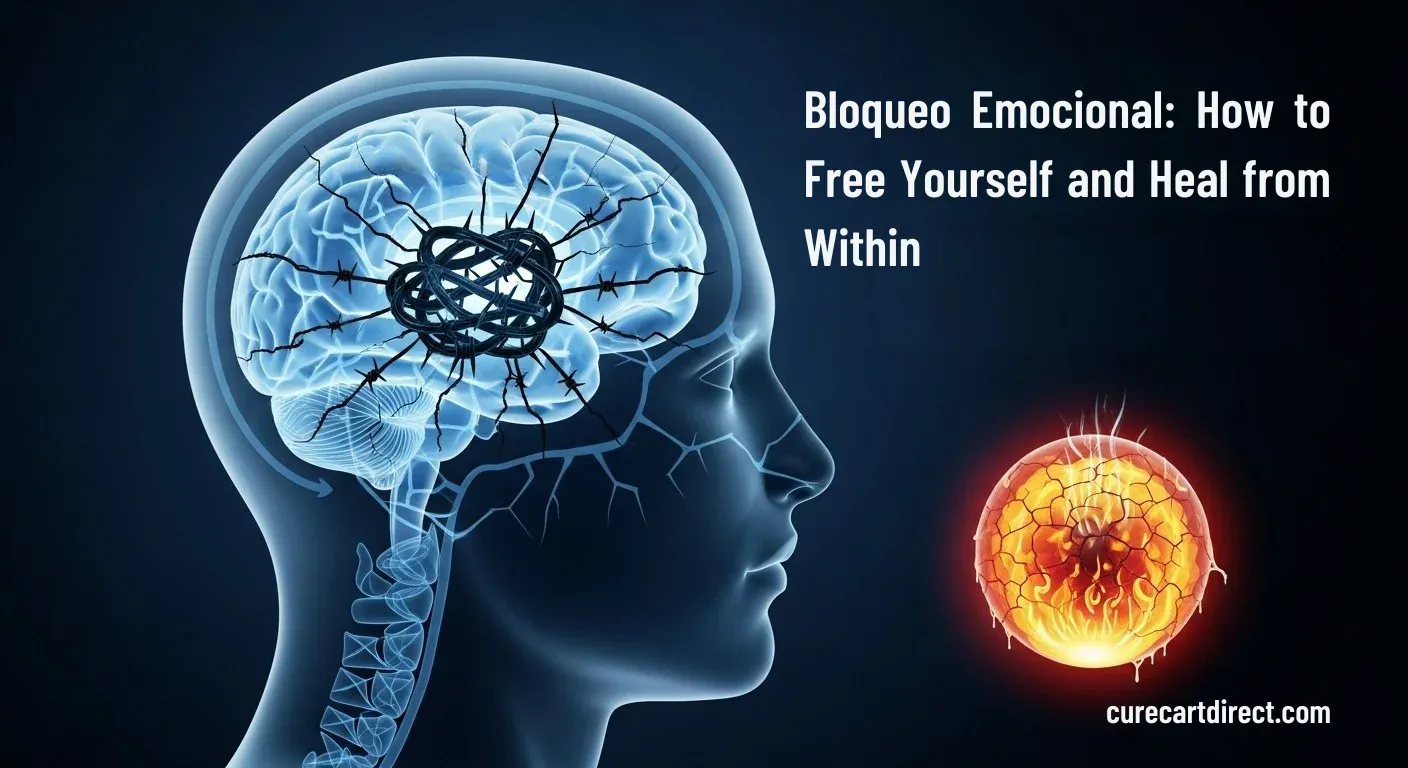
Bloqueo Emocional: How to Free Yourself and Heal from Within is a practical guide designed to help individuals understand, identify, and overcome emotional blockages that impede personal growth and wellness being. This book explores the psychological mechanisms behind “emotional lockdown,” such as past traumas, fear, and limiting beliefs, which often manifest as chronic stress, anxiety, or an inability to form healthy connections. Key strategies covered include mindfulness techniques, cognitive behavioral tools, and self-compassion exercises to facilitate deep internal healing. The core premise is that by confronting and processing these suppressed emotions, individuals can reclaim their inner strength, foster emotional resilience, and live a more authentic, liberated life.
Have you ever felt like something’s holding you back emotionally like you’re walking around with a heavy invisible blanket on your heart That’s often what a bloqueo emocional (emotional blockage) feels like. It isn’t just “being sad” or “feeling off”; it’s a deeper freeze inside your emotional world where neither joy nor pain flows easily.
What Is Bloqueo Emocional
A bloqueo emocional is when your emotions get stuck. They don’t move freely. You might feel numb, shut down, detached, or unable to feel deeply even when you know you should be able to. The mechanism is often your mind’s way of protecting you from something painful but over time, that protection becomes its own prison.
The Psicología Dana article describes it as “a mechanism that appears as a protective body‐strategy, but that can become a significant barrier to emotional well-being”. Neuromotiva emphasises how blocked emotions can become diseases of the invisible kind, affecting body and mind. So we’re talking about more than “I don’t want to talk about it” it’s deeper. It changes how you feel, move, think.
Signs & Symptoms of a Bloqueo Emocional
Here are some of the signals you might be dealing:
- Feeling numb or emotionally flat you don’t feel sad, happy, excited, angry easily.
- Avoiding situations, people or feelings because you fear what might come up.
- Physical symptoms: chronic fatigue, tension, unexplained aches, changes in sleep or appetite.
- Difficulty making decisions, procrastinating, feeling “stuck” in life.
- Disconnect from others or feeling like you don’t quite fit in emotionally or socially.
Causes What Leads to a Bloqueo Emocional
Root triggers:
- Trauma (abuse, loss, major shock) registering the event may have been too much to process, so your system hangs out in “safe but blocked” mode.
- Chronic stress or lingering anxiety when your nervous system is over-taxed it can freeze emotionally to conserve energy.
- Lack of emotional expression or safe emotional environment (e.g., childhood, culture) having been told “don’t cry”, “be strong”, “not like that” can lock you in.
- Negative self beliefs and avoidance patterns thinking “I shouldn’t feel this”, or “it’s not safe to feel” reinforces the freeze.
- Physical body memory and nervous system patterns emotions don’t live only in thoughts; they live in your body and nervous system. For instance: “Emotions can get stored in your body you can’t just think your way out of emotions.”
| Aspect | What it means | Why it matters |
|---|---|---|
| Definition | Emotional responses are stuck/not flowing freely | Recognises you’re not just “sad” or “lazy” |
| Signs | Numbness, avoidance, physical symptoms, decisional freeze | Helps you identify the issue concretely |
| Main causes | Trauma, stress, lack of expression, body memory | Helps you see root rather than just symptom |
| Underlying mechanism | Nervous system / emotional memory / energy flow | Gives you the “why” behind the “what” |
| Healing focus | Freeing internal emotional flow & rebuilding from within | Moves you from coping to genuine healing |
Acknowledge and Open the Door
Before you can heal, you must acknowledge there is a bloqueo emocional. Say: “I might be blocked.” Without blame, simply curiosity. Many people skip this because it feels shameful.
During this phase:
- Set aside quiet time each day (5-10 minutes) just to be with yourself. You don’t need to “solve” anything just notice.
- Ask: “What emotion feels locked right now?” Maybe it’s emptiness, maybe irritability. Give it a soft name.
- Breathe with kindness. You might feel resistance: that’s okay. The door opens through the resistance, not around it.
Listen to Your Body & Nervous System
This is where we add new value: many guides talk about talking or journaling only. But your body remembers.
- Recognize that emotion has physical signatures: tightness in chest, stomach knot, tingling, headaches. Neuromotiva emphasises this mind-body link.
- Practice somatic breathing: take slow inhalations (count 4), hold 1 second, exhale slowly (count 6 or 7). Repeat 5 times. Feel what changes.
- Move your body gently: a short walk, sway to music, gentle stretching.
- Notice what happens if you soften your posture (drop shoulders, relax jaw). See if emotions start shifting.
Expression and Release
Now you want to give the stuck emotion an outlet not for everyone to see, but somewhere it moves.
- Write a letter you don’t send: “Dear Me, I’m sorry I locked you away”
- Use voice note: just speak into your phone for 2-3 minutes uninterrupted. Let sounds come out cry, sigh, laugh whatever surfaces.
- Use creative movement or sound: you might stomp your feet, hum a note, draw scribbles quickly. The goal is flow, not perfection.
- If you feel ready: share one part of this with a trusted friend “I’ve been feeling shut off emotionally.” Talking can crack the lid. The TalktoAngel article emphasises building support.
Re Frame and Rebuild
Once the door is open and body begun to heal, you need to rebuild from within create new story, new emotional habits.
- Identify what emotion should have been able to flow but didn’t. Example: After a loss, you might not have felt sadness or rage.
- Ask: “What would I do now if I could feel that emotion freely?” Write 3 small acts (e.g., I’ll watch the sunset and just cry, I’ll talk to a friend about the sadness).
- Create a daily micro-habit: 2 minutes at end of day: check in emotionally. Ask: “What did I feel today? Even a little?”
- Visualisation: Imagine yourself one year from now, fluid in your emotional life able to feel, connect, decide. Let that become the mental habit.
- Set boundaries: Emotional blocks often protect someone who couldn’t say “no” or “I’m hurt”. Now you say gently but firmly what you will/won’t accept. This empowers your emotional flow.
Sustaining Healing
Healing isn’t one-and-done; it’s a journey.
- Keep noticing physical cues of blockage returning (tight shoulders, exhaustion). When you see them: pause and breathe.
- Check your social environment: blockages often reappear when you’re around people who keep you small or disconnected. Choose connection over mere company.
- Celebrate small wins: “Today I cried. Today I felt something real. Today I said no.” These matter.
- If triggers come (they will): instead of guilt, use curiosity: “That old wall rose again what wants to move”
- Consider professional support if you feel immobilised. Emphasise seeing a therapist when it’s persistent.
Your thoughts, body, emotions, nervous system they’re all linked. When you only talk (cognitive therapy) you may miss body memory. When you only move (exercise) you may miss emotional meaning. This integrated approach covers both.
FAQs
Q: How long does it take to heal a bloqueo emocional?
A: There’s no fixed timeline. Some people feel noticeable relief in a few weeks; others may need months or longer. What matters is regular engagement and being gentle with yourself rather than chasing a “finish line”.
Q: Can I heal without a therapist?
A: Yes many of the strategies above you can do on your own. But if you have a history of major trauma, chronic depression or feel unsafe with your emotions, professional support is strongly recommended.
Q: What if I start feeling worse when I open up?
A: That’s quite common. The blockage may be holding in emotions you haven’t processed. When you begin to release them, you may feel a surge: sadness, anger, exhaustion. It means you’re moving. If it becomes overwhelming, pause, ground yourself (breathing, body move), maybe seek support.
Q: Are there quick “miracle” fixes?
A: No genuine ones. While you may have a sudden breakthrough moment (and that’s wonderful), most healing is gradual, with ups and downs. Beware of claims promising “instant emotional knockout”. This post gives sustainable methods, not quick fixes.
Q: Can physical illness come from emotional blockage?
A: Yes. Several articles point to psychosomatic effects: emotional blocks can manifest as headaches, stomach issues, fatigue, tension.
Conclusion
If you have been reading this and thinking, “Yeah that resonates,” you’re already taking the first step. Recognising the blockage is step one. From here, you can apply a path: acknowledge → body listen → express & release → rebuild → sustain. By doing this, you’re not just “managing” your emotional life you’re freeing yourself and healing from the inside out. Remember the goal isn’t to become perfect at emotions. The goal is to become you-alive, fluid, responsive, connected.