
Dopin 15mg: Uses, Side Effects & How to Use

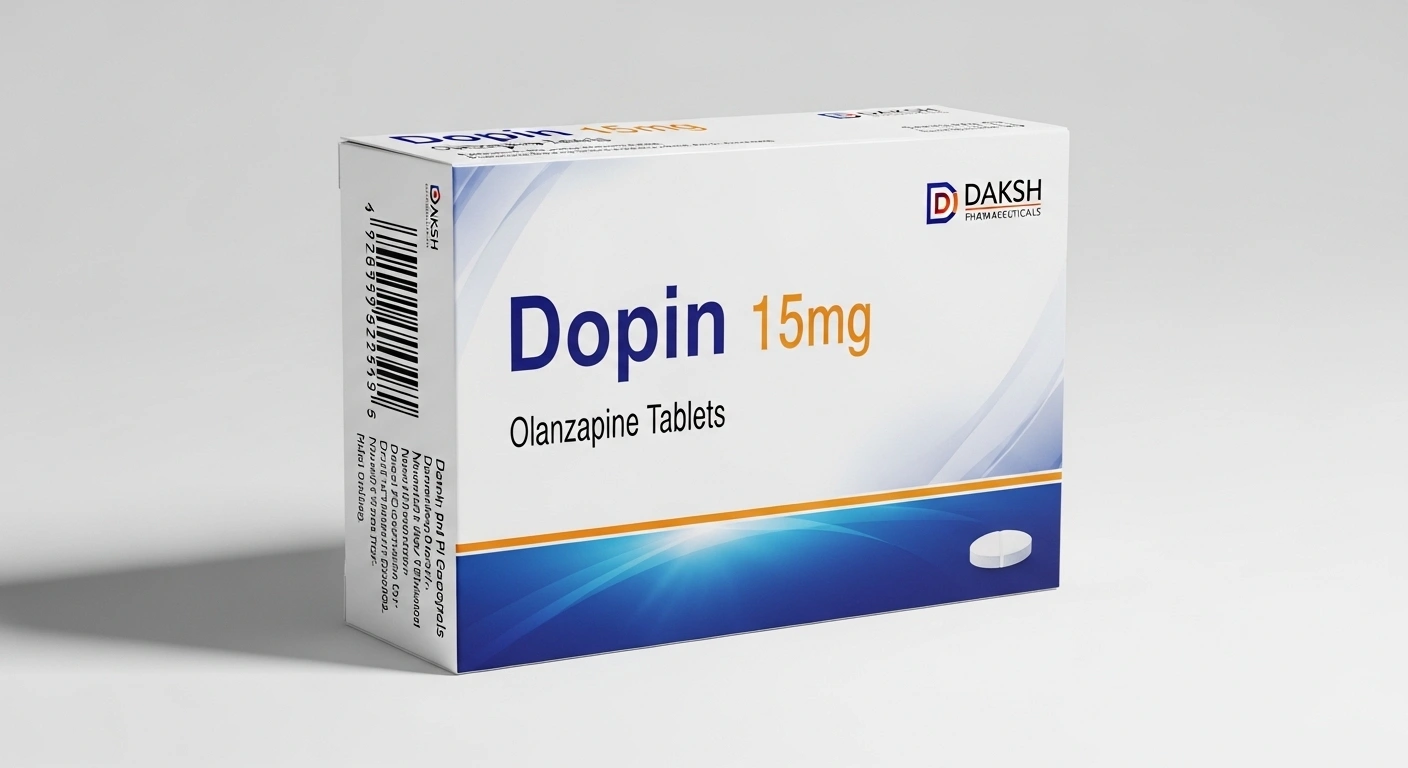
Dopin 15mg is a brand of olanzapine made by Daksh Pharmaceuticals. Olanzapine is a second-generation (atypical) antipsychotic first developed by Eli Lilly in the 1990s under the brand name Zyprexa. It remains one of the most widely prescribed antipsychotics worldwide, and Dopin is among several generic versions available, especially in South Asian markets.
Formula & Composition of Dopin 15mg
Knowing what’s inside your tablet matters, especially if you have allergies or sensitivities.
Active Ingredient
Olanzapine 15mg per tablet
| Property | Detail |
|---|---|
| Chemical Name | 2-Methyl-4-(4-methyl-1-piperazinyl)-10H-thieno[2,3-b][1,5]benzodiazepine |
| Molecular Formula | C₁₇H₂₀N₄S |
| Molecular Weight | 312.44 g/mol |
| Chemical Class | Thienobenzodiazepine |
| Drug Class | Atypical (second-generation) antipsychotic |
| Physical Appearance | Yellow crystalline solid |
| Solubility | Practically insoluble in water |
| Molar Equivalent (15mg) | 48 μmol |
This data comes from the official Zyprexa prescribing label on FDA AccessData.
Inactive Ingredients (Excipients)
Inactive ingredients vary slightly between generic manufacturers. Based on the FDA-approved Zyprexa label and standard generic formulations, typical excipients include:
Core tablet:
- Lactose (or lactose anhydrous) — filler
- Microcrystalline cellulose — binder and filler
- Crospovidone — disintegrant
- Hydroxypropyl cellulose — binder
- Low-substituted hydroxypropylcellulose — disintegrant
- Magnesium stearate — lubricant
- Colloidal anhydrous silica — glidant
Coating:
- Hypromellose — film coating base
- Carnauba wax — polishing agent
- Titanium dioxide — colorant and UV protector
- FD&C Blue No. 2 Aluminum Lake — colorant (certain strengths)
Note for lactose-intolerant patients: Olanzapine tablets contain lactose, though the amount is typically very small. Discuss with your pharmacist if you have severe intolerance.
Note about the orally disintegrating (ODT) form: The ODT version uses different excipients including gelatin, mannitol, aspartame, sodium methyl paraben, and sodium propylparaben. Patients with phenylketonuria (PKU) should know the ODT form contains aspartame, a source of phenylalanine.
What Is Dopin 15mg Used For?
Olanzapine is FDA-approved for several psychiatric conditions. Here’s what each one means and how Dopin helps.
Schizophrenia:
Schizophrenia is a chronic mental illness causing hallucinations, delusions, disorganized thinking, and social withdrawal. Olanzapine manages both the “positive” symptoms (hallucinations, delusions, hostility) and “negative” symptoms (emotional flatness, social withdrawal, poor motivation).
The CATIE trial one of the largest real-world studies comparing antipsychotics found olanzapine among the most effective options for schizophrenia, though with more metabolic side effects than alternatives (Lieberman et al., “Effectiveness of Antipsychotic Drugs in Patients with Chronic Schizophrenia,” The New England Journal of Medicine, 2005).
Efficacy was demonstrated in a dose range of 10–15mg per day in clinical trials per the FDA-approved Zyprexa label. However, doses above 10mg were not shown to be more effective on average the increase to 15mg is based on individual response.
Bipolar I Disorder:
Dopin treats acute manic or mixed episodes in bipolar I disorder episodes marked by extremely elevated mood, racing thoughts, reduced need for sleep, and reckless behavior. It can be used alone or alongside lithium or valproate. It’s also approved for long-term maintenance to help prevent future manic episodes.
Treatment-Resistant Depression (with Fluoxetine):
Combined with fluoxetine (an SSRI), olanzapine treats depressive episodes in bipolar I disorder and treatment-resistant depression. This combination is also marketed as Symbyax. Dopin itself comes in a variant called Dopin-F containing olanzapine 5mg + fluoxetine 20mg.
Off-Label Uses:
Doctors sometimes prescribe olanzapine off-label for:
- Chemotherapy-induced nausea and vomiting (CINV) — now appearing in several antiemetic guidelines
- Acute agitation — especially the injectable form in emergency settings
- Tourette syndrome — for tic control
- Severe anxiety and insomnia — though metabolic risks usually outweigh benefits for insomnia alone
- Anorexia nervosa — as an appetite stimulant in select cases
How Does Dopin 15mg Work?
Olanzapine blocks multiple receptor types in the brain. Its two primary targets are:
Dopamine D2 receptors — Excessive dopamine activity in the mesolimbic pathway drives psychotic symptoms like hallucinations and delusions. Blocking D2 receptors reduces these. Olanzapine also acts on D1, D3, D4, and D5 receptors.
Serotonin 5-HT2A/2C receptors — Blocking 5-HT2A helps improve negative symptoms and reduces movement-related side effects common with older antipsychotics. A study in The Journal of Clinical Investigation titled “The Atypical Antipsychotic Olanzapine Causes Weight Gain by Targeting Serotonin Receptor 2C” (Lord et al., 2017) identified the 5-HT2C receptor specifically as a key driver of olanzapine-induced overeating and weight gain.
Olanzapine also binds to:
- Histamine H1 receptors — causes sedation and contributes to weight gain
- Muscarinic M1–M5 receptors — causes dry mouth, constipation, blurred vision
- Alpha-1 adrenergic receptors — causes dizziness on standing (orthostatic hypotension)
- Serotonin 5-HT3 and 5-HT6 receptors — contributing to its broad neurochemical profile
Pharmacokinetics How the Body Processes Dopin
| Parameter | Detail |
|---|---|
| Absorption | Well absorbed orally |
| Time to peak levels | 5–8 hours (oral); 15–45 min (IM) |
| Food effect | No significant impact |
| Bioavailability | ~60% (first-pass metabolism) |
| Distribution | ~1,000 liters; 93% protein-bound |
| Half-life | 21–54 hours (average ~30 hours) |
| Steady state | ~1 week of daily dosing |
| Metabolism | Liver — CYP1A2 (major), CYP2D6 (minor), glucuronidation |
| Excretion | ~57% urine, ~30% feces |
| Dialyzable | No |
Source: FDA-approved Zyprexa prescribing information and StatPearls olanzapine monograph on NCBI.
Key factors affecting metabolism:
- Gender: Clearance is ~30% lower in women, though dose adjustments aren’t usually needed.
- Smoking: Clearance is ~40% higher in smokers. Quitting smoking can cause olanzapine levels to rise significantly.
- Age: Elderly patients have a longer elimination half-life (~1.5x longer than younger adults).
How to Take Dopin 15mg
Take it once daily at the same time each day. The long half-life (~30 hours) makes once-daily dosing sufficient.
With or without food. Meals don’t affect absorption.
Swallow whole. Don’t crush, chew, or break the tablet. Use water to swallow.
Night-time dosing is preferred by many patients since olanzapine causes drowsiness — turning this side effect into a sleep benefit.
Never stop abruptly. Sudden discontinuation can cause withdrawal symptoms including insomnia, nausea, sweating, tremors, anxiety, and psychosis rebound. Always taper gradually with your doctor.
Missed dose? Take it as soon as you remember. If it’s nearly time for the next dose, skip the missed one. Never double up.
For the ODT form: Dry your hands first. Peel back the foil don’t push the tablet through it. Place on your tongue, let it dissolve, and swallow with or without water.
Dosing Summary by Condition
| Condition | Starting Dose | Usual Range |
|---|---|---|
| Schizophrenia (adults) | 5–10mg/day | 10–20mg/day |
| Bipolar mania (monotherapy) | 10–15mg/day | 5–20mg/day |
| Bipolar mania (with lithium/valproate) | 10mg/day | 5–20mg/day |
| Bipolar depression (with fluoxetine) | 5mg + fluoxetine 20mg | Olanzapine 5–18mg |
| Treatment-resistant depression | 5mg + fluoxetine 20mg | Same as above |
| Elderly patients | 5mg/day | Adjust conservatively |
| Liver/kidney impairment | 5mg/day | Adjust conservatively |
| Adolescents (13–17 years) | 2.5–5mg/day | Up to 20mg/day |
Dose changes should generally occur at least one week apart that’s how long olanzapine takes to reach steady state.
Side Effects of Dopin 15mg
Not everyone experiences side effects. Many are mild and temporary, fading as the body adjusts.
Common Side Effects:
Weight gain is the most significant concern. A review in Frontiers in Psychiatry titled “Worth the Weight? Olanzapine Prescribing in Schizophrenia” (Fitzgerald et al., 2021) noted that olanzapine and clozapine carry the highest weight gain risk among all antipsychotics. In the CAFE trial, roughly 80% of olanzapine patients gained over 7% of their initial body weight within one year.
Increased appetite hits early. A study in Frontiers in Pharmacology titled “Increased Appetite Plays a Key Role in Olanzapine-Induced Weight Gain in First-Episode Schizophrenia Patients” (Huang et al., 2020) found 77% of patients experienced increased appetite during 12 weeks of treatment, with 58% noticing it within the first four weeks.
Other common side effects include:
- Drowsiness and sedation (especially in the first few weeks) — due to histamine H1 receptor blockade
- Dry mouth and constipation — from muscarinic receptor blockade
- Dizziness on standing (orthostatic hypotension) — from alpha-1 blockade; rise slowly from sitting or lying
- Restlessness (akathisia) — an inner urge to keep moving
Metabolic Side Effects:
These need proactive monitoring because of long-term health consequences:
- Elevated blood sugar (hyperglycemia): Can trigger new-onset diabetes or even diabetic ketoacidosis. The FDA label recommends baseline and periodic blood glucose checks.
- Increased triglycerides: The CATIE trial data in the FDA label reported a mean triglyceride increase of 40.5 mg/dL over ~9 months. In adolescents, increases of 28.4 mg/dL in triglycerides and 12.9 mg/dL in total cholesterol were observed.
- Metabolic syndrome: Weight gain + high sugar + abnormal lipids + elevated blood pressure combine to significantly raise cardiovascular risk. The Fitzgerald et al. (2021) review noted that schizophrenia patients on antipsychotics die on average 14.5 years earlier than the general population, mostly from cardiovascular disease.
Prolactin Relate Side Effects:
Many competitor resources skip this entirely, but it’s important.
Olanzapine can raise prolactin levels. In pre-marketing studies, elevated prolactin was seen in 34% of olanzapine-treated adults versus 13.1% on placebo (FDA prescribing label). This can cause:
- In women: Breast milk production (galactorrhea), missed or stopped periods, difficulty getting pregnant
- In men: Decreased sex drive, erectile dysfunction, breast enlargement (gynecomastia)
These effects are generally reversible once the dose is reduced or the medication stopped.
Serious (Rare) Side Effects:
These are uncommon but need immediate medical attention:
- Neuroleptic Malignant Syndrome (NMS): Potentially fatal marked by high fever, severe muscle rigidity, confusion, and unstable heart rate/blood pressure. The FDA label warns about this with all antipsychotics.
- Tardive dyskinesia: Involuntary repetitive movements, especially of the face and tongue. Risk increases with longer use, higher doses, and older age.
- Seizures: Occurred in 0.9% (22/2,500) of patients in pre-marketing trials per the FDA label. Use cautiously in patients with seizure history.
- Increased mortality in elderly with dementia: Subject of an FDA Boxed Warning (the most serious type). Olanzapine is not approved for dementia-related psychosis.
Withdrawal Symptoms:
Stopping olanzapine abruptly after regular use can cause:
- Insomnia
- Nausea and vomiting
- Sweating
- Tremors
- Anxiety and agitation
- Psychosis rebound (return of hallucinations, delusions, or mania)
Always taper gradually under medical supervision.
Precautions and Warnings
Elderly with dementia: FDA Boxed Warning increased death risk. Not approved for this use.
Pregnancy: Third-trimester use may cause movement disorders, breathing problems, and feeding difficulties in newborns. Use only if benefits clearly outweigh risks.
Breastfeeding: Olanzapine passes into breast milk. Generally considered unsafe unless the doctor decides otherwise.
Liver/kidney impairment: Start at 5mg. Olanzapine is liver-metabolized but not removed by dialysis.
Smoking: Increases olanzapine clearance by ~40%. Quitting smoking can cause levels to rise — inform your doctor about your smoking status.
Alcohol: Strictly avoid. Amplifies drowsiness, dizziness, and impaired judgment.
Driving: Avoid until you know how Dopin affects you.
Heat sensitivity: Olanzapine may impair temperature regulation. Be cautious with exercise, hot weather, and dehydration.
Suicidal thoughts: Monitor closely, especially in early weeks of treatment or after dose changes.
Drug Interactions
Key interactions to watch for:
- Fluvoxamine and ciprofloxacin (CYP1A2 inhibitors) — significantly raise olanzapine levels; dose reduction may be needed
- Carbamazepine (CYP1A2 inducer) — lowers olanzapine levels; dose increase may be needed
- Benzodiazepines (especially injectable) — risk of excessive sedation and dangerous blood pressure drops; combination not recommended
- Blood pressure medications — olanzapine’s own alpha-1 blockade can amplify their effect
- Levodopa and dopamine agonists — olanzapine blocks dopamine receptors, directly opposing their mechanism
- Alcohol — amplifies CNS depression
- MAO inhibitors — use with extreme caution
Always tell your doctor about every medication, supplement, or herbal product you take.
Final Thought
Dopin 15mg is a proven, effective antipsychotic for schizophrenia and bipolar disorder backed by decades of clinical use and large-scale trials like CATIE. But its metabolic side effects, especially weight gain and blood sugar changes, are real and need active management from day one. Stay in close contact with your doctor, keep up with routine blood work, and never adjust or stop your dose without professional guidance. The right medication, taken the right way, with the right monitoring that’s what makes the difference.
References
- Fitzgerald I, O’Dwyer S, Brooks M, Sahm L, Crowley E, Ní Dhubhlaing C. “Worth the Weight? Olanzapine Prescribing in Schizophrenia. A Review of Weight Gain and Other Cardiometabolic Side Effects of Olanzapine.” Frontiers in Psychiatry, 2021. DOI: 10.3389/fpsyt.2021.730769
- Huang J, Hei GR, Yang Y, et al. “Increased Appetite Plays a Key Role in Olanzapine-Induced Weight Gain in First-Episode Schizophrenia Patients.” Frontiers in Pharmacology, 2020. DOI: 10.3389/fphar.2020.00739
- Lieberman JA, Stroup TS, McEvoy JP, et al. “Effectiveness of Antipsychotic Drugs in Patients with Chronic Schizophrenia.” The New England Journal of Medicine, 2005; 353(12):1209-1223.
- Lord CC, Wyler SC, Wan R, et al. “The Atypical Antipsychotic Olanzapine Causes Weight Gain by Targeting Serotonin Receptor 2C.” The Journal of Clinical Investigation, 2017; 127(9):3402-3406. DOI: 10.1172/JCI93362
- Praharaj SK, Jana AK, Goyal N, Sinha VK. “Metformin for Olanzapine-Induced Weight Gain: A Systematic Review and Meta-Analysis.” British Journal of Clinical Pharmacology, 2011; 71(3):377-382. DOI: 10.1111/j.1365-2125.2010.03783.x
- Zyprexa (Olanzapine) Prescribing Information. Eli Lilly and Company. Available at: FDA AccessData (accessdata.fda.gov)
- Olanzapine. StatPearls [Internet]. National Center for Biotechnology Information (NCBI).
- Olanzapine Drug Information. MedlinePlus, U.S. National Library of Medicine.