
Everything About Overbite: Causes, Types & Treatment Options

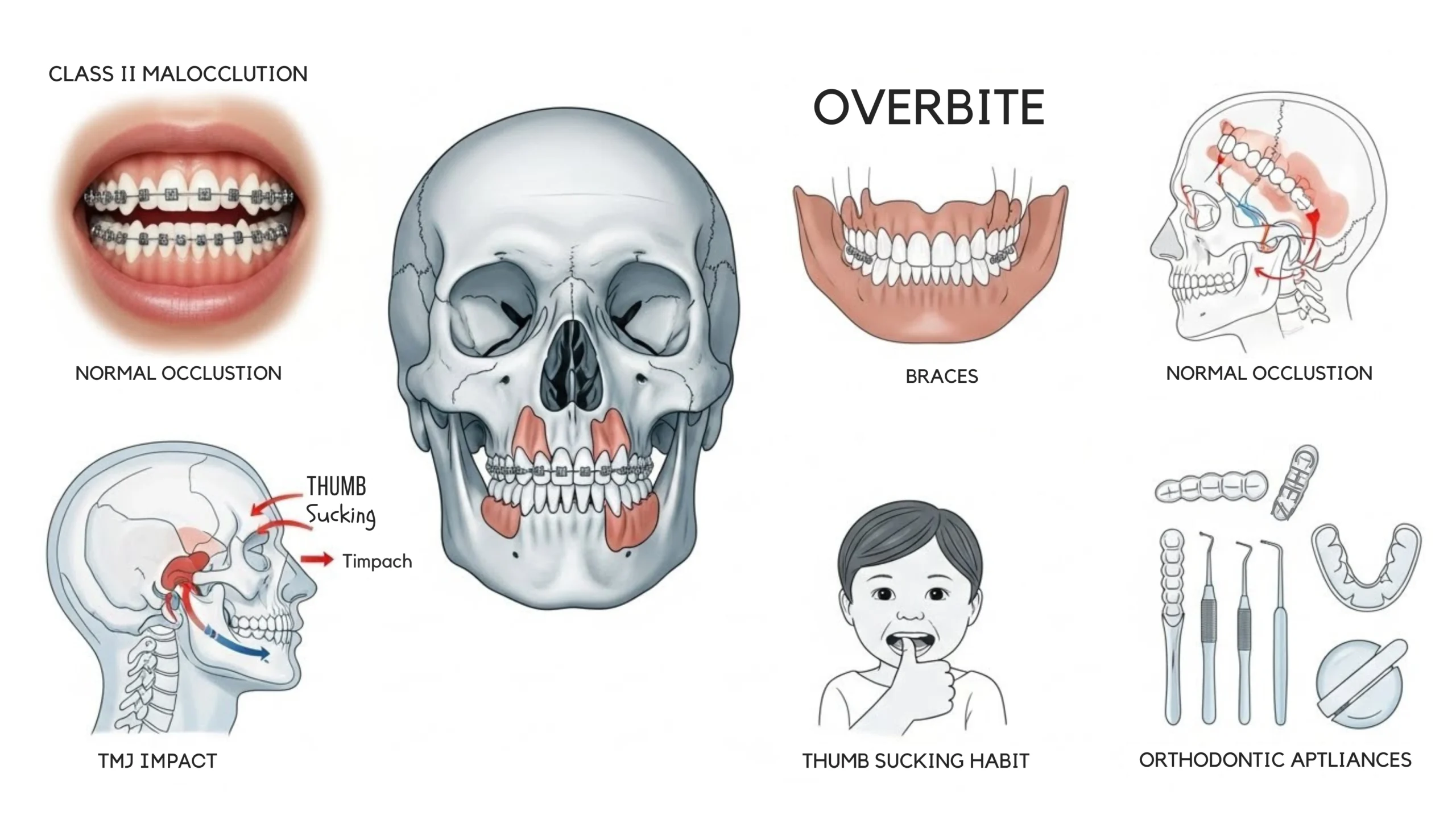
When you close your mouth, do your upper front teeth cover too much of your lower teeth? You might be dealing with an overbite, one of the most common dental alignment issues affecting people worldwide. Understanding what causes an overbite, how severe yours might be, and what treatment options exist can help you make informed decisions about your oral health.
What Is an Overbite
An overbite, clinically known as a deep bite or vertical malocclusion, occurs when the upper front teeth excessively overlap the lower front teeth when the jaw is closed. While some degree of overlap is normal and even necessary for proper biting function, problems arise when this overlap becomes excessive.
In a healthy bite, the upper teeth typically overlap the lower teeth by about 2 to 4 millimeters, or roughly 20 to 30 percent of the lower teeth’s height. When the overlap exceeds this range, orthodontists classify it as a deep bite requiring evaluation and potential treatment.
An overbite differs from an overjet, though people often confuse the two. An overbite refers to the vertical overlap of teeth, while an overjet describes the horizontal distance between the upper and lower front teeth. Many patients have both conditions simultaneously.
Types of Overbites
Orthodontists classify overbites into two primary categories based on their underlying cause, and understanding this distinction is crucial because it directly influences treatment approaches.
Dental Overbite:
A dental overbite develops when the teeth themselves are mispositioned, but the jawbones are properly aligned. The teeth may have erupted at incorrect angles or shifted over time due to habits or missing teeth. Dental overbites are generally easier to treat because they involve repositioning teeth rather than modifying bone structure.
Skeletal Overbite:
A skeletal overbite results from a discrepancy in jaw development. Either the upper jaw has grown too far forward, the lower jaw hasn’t developed enough, or a combination of both has occurred. Skeletal overbites often require more comprehensive treatment approaches, potentially including surgical intervention in severe cases.
Measuring Severity:
Orthodontists typically measure overbite severity as a percentage of lower tooth coverage or in millimeters:
Mild overbite covers approximately 30 to 50 percent of the lower teeth. Moderate overbite covers 50 to 70 percent of the lower teeth. Severe or deep overbite covers more than 70 percent, with some cases showing complete coverage where the lower teeth contact the gum tissue behind the upper teeth.
What Causes an Overbite
Overbites develop from a combination of genetic and environmental factors. Understanding these causes helps patients recognize risk factors and, in some cases, take preventive measures for their children.
Genetic Factors:
Jaw size, shape, and the relationship between upper and lower jaws are largely inherited traits. If your parents or grandparents had overbites, you face a higher likelihood of developing one. Some people inherit a smaller lower jaw or a larger upper jaw, creating a natural predisposition toward excessive overlap.
Tooth size relative to jaw size also plays a role. Inherited crowding can push teeth into misaligned positions, contributing to overbite development.
Childhood Habits:
Certain repetitive behaviors during childhood can influence jaw development and tooth positioning. Prolonged thumb sucking beyond age three or four can push upper front teeth forward and affect the growth pattern of the upper jaw. The American Dental Association notes that thumb sucking typically only causes lasting dental problems if it continues after permanent teeth begin erupting (American Dental Association).
Extended pacifier use produces similar effects. The pressure applied to developing teeth and jaws can alter their growth trajectory, particularly when the habit persists into later childhood.
Tongue thrusting, where the tongue pushes against or between the front teeth during swallowing or speaking, places repeated pressure on teeth that can gradually shift them forward over time.
Missing or Extra Teeth:
When teeth are lost prematurely or fail to develop, neighboring teeth often drift into the empty spaces. This shifting can disrupt the normal bite relationship and contribute to overbite development. Similarly, extra teeth can cause crowding that pushes other teeth out of alignment.
Teeth Grinding:
Chronic teeth grinding, known as bruxism, creates abnormal wear patterns and forces that can gradually shift teeth. Over time, this may contribute to changes in the bite relationship.
Temporomandibular Joint Issues:
Problems with the jaw joint can affect how the upper and lower jaws relate to each other, potentially contributing to or worsening an overbite.
Problems Caused by Untreated Overbites
An overbite isn’t merely a cosmetic concern. When left untreated, significant overbites can lead to various functional and health problems.
Tooth Wear and Damage:
Improper alignment means teeth don’t contact each other as designed. This creates uneven pressure distribution, leading to accelerated wear on certain teeth. In severe cases, the lower teeth may contact the gum tissue behind the upper teeth, causing irritation and damage.
Jaw Pain and TMJ Disorders:
An improper bite forces jaw muscles to work harder and can place stress on the temporomandibular joint. This may result in chronic jaw pain, headaches, clicking or popping sounds when opening the mouth, and difficulty chewing.
Speech Difficulties:
The position of teeth affects how we form certain sounds. Severe overbites can contribute to lisping or difficulty pronouncing specific words clearly.
Breathing and Sleep Issues:
In some cases, jaw positioning associated with significant overbites may contribute to airway narrowing, potentially affecting breathing patterns during sleep.
Self-Esteem Concerns:
Many people feel self-conscious about the appearance of a pronounced overbite, which can affect confidence in social and professional situations.
Treatment Options for Overbite Correction
Modern orthodontics offers multiple approaches to overbite correction. The right treatment depends on the type and severity of the overbite, patient age, and individual factors.
Traditional Metal Braces:
Metal braces remain one of the most effective treatments for overbites, particularly moderate to severe cases. Brackets bonded to teeth are connected by wires that gradually shift teeth into proper positions. Orthodontists may use additional components like rubber bands to help adjust the bite relationship between upper and lower jaws.
Treatment duration varies but typically ranges from 18 months to three years depending on severity.
Ceramic Braces:
Ceramic braces function identically to metal braces but use tooth-colored or clear brackets that blend with natural teeth. They offer a less noticeable alternative while providing the same corrective capability.
Clear Aligners:
Clear aligner systems use a series of custom-made, removable plastic trays that gradually shift teeth. Each set of aligners is worn for about one to two weeks before progressing to the next set in the series.
Clear aligners work well for mild to moderate overbites in patients with good compliance. However, severe overbites or cases requiring significant vertical tooth movement may still require traditional braces. A study published in the Angle Orthodontist found that clear aligners demonstrated effectiveness in treating mild to moderate malocclusions, though complex cases showed variable results (Ke Y, Zhu Y, Zhu M. A comparison of treatment effectiveness between clear aligner and fixed appliance therapies. BMC Oral Health. 2019).
Palate Expanders:
For children whose jaws are still developing, palate expanders can widen the upper jaw to create more space and improve the relationship between upper and lower jaws. This device is most effective before the palatal suture fuses, typically before mid-adolescence.
Tooth Extraction:
In cases involving significant crowding, removing one or more teeth may be necessary to create space for the remaining teeth to align properly. This approach is considered carefully as part of a comprehensive treatment plan.
Jaw Surgery (Orthognathic Surgery):
Severe skeletal overbites in adults may require surgical intervention. Orthognathic surgery repositions the jaw bones to achieve proper alignment. This approach is typically reserved for cases where orthodontic treatment alone cannot achieve satisfactory results and is performed after jaw growth is complete.
Surgery is followed by orthodontic treatment to fine-tune tooth positioning. While more invasive, surgical correction can produce dramatic improvements in both function and appearance for appropriate candidates.
Retainers:
After active treatment, retainers are essential for maintaining results. Teeth have a tendency to drift back toward their original positions, and consistent retainer wear prevents relapse. Most orthodontists recommend wearing retainers indefinitely, at least during sleep.
Treatment Considerations by Age
Children:
Early evaluation is valuable. The American Association of Orthodontists recommends children receive their first orthodontic evaluation by age seven (American Association of Orthodontists). At this age, enough permanent teeth have emerged to identify developing problems, yet there’s still time to guide jaw growth.
Early intervention, called interceptive orthodontics, can take advantage of natural growth to address skeletal discrepancies. Treatments like palate expanders or partial braces may reduce the complexity of later treatment or eliminate the need for it entirely.
Teenagers:
Adolescence is often ideal for comprehensive orthodontic treatment. Most permanent teeth have erupted, but some growth remains, allowing orthodontists to influence final jaw positioning. Teens also tend to heal quickly and adapt well to treatment.
Adults:
Adults can absolutely achieve successful overbite correction, though treatment may take longer since bones are fully developed and more resistant to movement. Skeletal overbites in adults are more likely to require surgical intervention.
Modern treatment options like clear aligners have made adult orthodontics more appealing to those who prefer a discreet approach.
What to Expect During Treatment
The treatment process begins with a thorough evaluation including photographs, X-rays, and often digital scans or impressions of your teeth. Your orthodontist uses these records to develop a customized treatment plan.
During active treatment, you’ll have regular appointments, typically every four to eight weeks, for adjustments and progress monitoring. Some discomfort is normal, particularly after adjustments, but it usually subsides within a few days.
Good oral hygiene becomes especially important during treatment. Braces create additional surfaces where plaque can accumulate, and diligent brushing and flossing help prevent cavities and gum problems.
Dietary modifications may be necessary with braces. Hard, sticky, and chewy foods can damage brackets and wires. Clear aligner wearers have more flexibility since aligners are removed for eating.
Cost Factors
Treatment costs vary significantly based on severity, treatment type, geographic location, and provider. Traditional braces and clear aligners typically fall in similar price ranges, while surgical cases involve substantially higher costs.
Many dental insurance plans provide partial coverage for orthodontic treatment, particularly for children. Flexible payment plans are commonly offered to make treatment more accessible.
Finding the Right Provider
Board-certified orthodontists complete dental school plus an additional two to three years of specialized residency training in tooth movement and jaw development. While general dentists may offer some orthodontic services, complex overbite cases often benefit from specialist expertise.
Look for providers who offer comprehensive evaluations, explain treatment options clearly, and have experience with cases similar to yours. Many orthodontists offer free or low-cost initial consultations.
Living With Your Results
Completing treatment is just the beginning of maintaining your new smile. Consistent retainer wear is the single most important factor in preserving your results long-term.
Continue regular dental checkups to monitor oral health and catch any issues early. Address teeth grinding if it occurs, as this can affect tooth positioning over time.
The confidence that comes from a properly aligned bite often motivates patients to maintain excellent oral hygiene habits, benefiting overall dental health for years to come.
Conclusion
An overbite is a common but highly treatable condition. Whether caused by genetics, childhood habits, or other factors, modern orthodontic techniques offer effective solutions for patients of all ages. From traditional braces to clear aligners to surgical options for severe cases, there’s an appropriate treatment path for virtually every situation.
If you suspect you or your child has an overbite, scheduling an evaluation with a qualified orthodontist is the first step toward understanding your options. Early intervention often simplifies treatment, but it’s never too late to pursue the functional and aesthetic benefits of a properly aligned bite.
References
- American Dental Association – Thumb Sucking.
- American Association of Orthodontists – Orthodontic Evaluation for Children.
- Ke Y, Zhu Y, Zhu M. A comparison of treatment effectiveness between clear aligner and fixed appliance therapies. BMC Oral Health. 2019;19(1):3.