
Famot 40 mg Tablet: Uses, Dosage, Side Effects & More

That burning chest after a heavy meal. The sour taste creeping up at 2 AM. The stomach pain that just won’t quit. If this sounds familiar, someone has probably told you to “take something for your acid.”
Famot 40 mg is one of those somethings, and you should understand what it does, how to take it properly, and what to watch out for. This guide covers everything in plain language.
What Is Famot 40 mg?
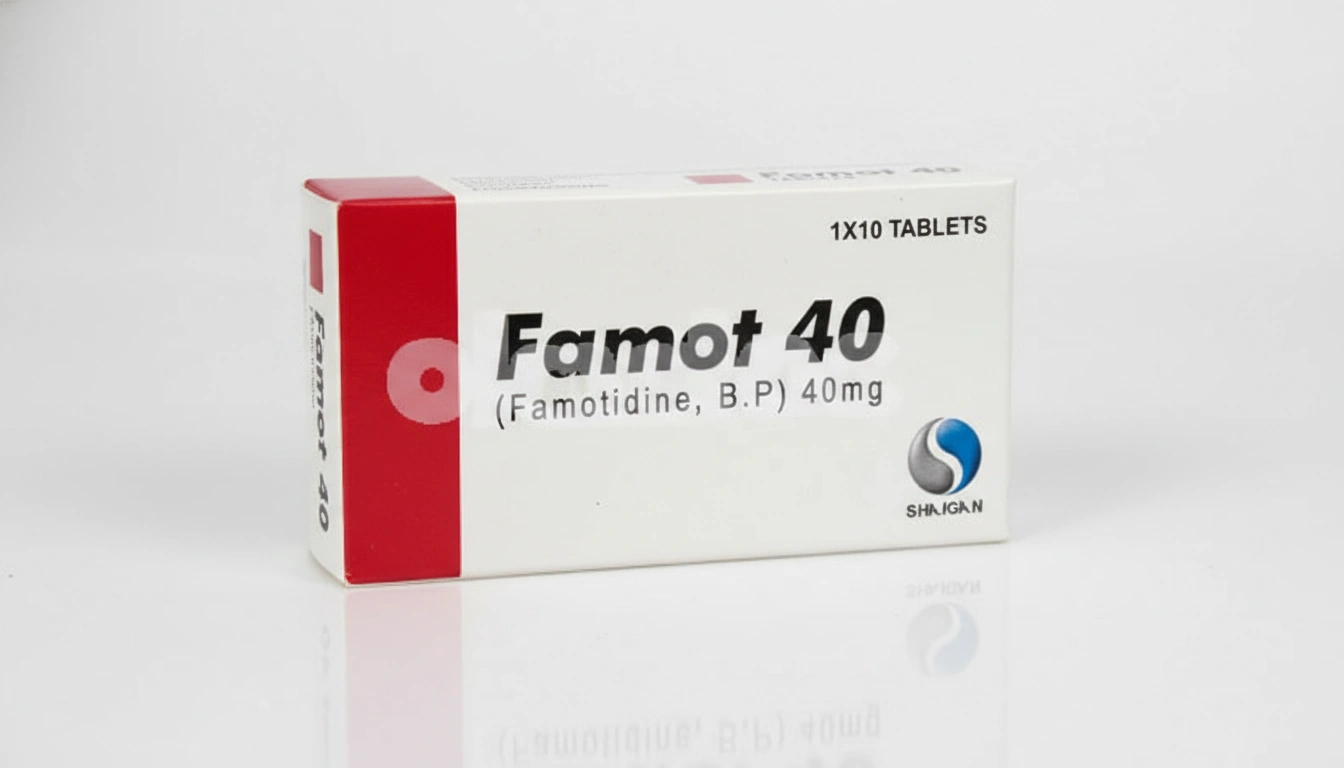
Shaigan Pharmaceuticals (Pvt.) Ltd. manufactures Famot 40 mg as a brand-name tablet. Each film-coated tablet contains 40 mg of famotidine as the active ingredient.
Famotidine falls under a class of drugs called histamine H2-receptor antagonists, or H2 blockers for short (FDA-approved prescribing information, Pepcid label).
Here is how it works. Your stomach has special cells called parietal cells. These cells release acid when a chemical messenger called histamine triggers them. Famotidine blocks the H2 receptors on these cells and brings down the acid output. It does not just suppress acid when you eat. It also lowers acid during rest, sleep, and when caffeine, food, insulin, or pentagastrin stimulate the stomach.
This makes it different from antacids. Antacids neutralize acid your stomach has already made. Famotidine stops your stomach from producing as much acid in the first place.
In terms of strength, famotidine stands roughly 20 to 50 times more potent than cimetidine and about 8 to 9 times more potent than ranitidine. When regulators pulled ranitidine from global markets in 2020 after finding the cancer-causing contaminant NDMA in its products, famotidine became a go-to replacement. NDMA has not shown up in famotidine (Poison Control “What Is Famotidine Used For”).
Famot 40 mg Formula and Composition
Knowing what goes into your tablet matters, especially if you deal with allergies or intolerances.
Active Ingredient:
| Component | Amount per Tablet |
|---|---|
| Famotidine | 40 mg |
Inactive Ingredients (Excipients):
According to the Summary of Product Characteristics for famotidine 40 mg tablets (EMC – Famotidine 40 mg Tablets SmPC), the excipients typically include:
- Microcrystalline cellulose – works as a filler and binder that holds the tablet together
- Lactose monohydrate – another filler; each 40 mg tablet carries approximately 3.19 mg of lactose. Talk to your doctor before taking this tablet if you deal with lactose or galactose intolerance.
- Magnesium stearate – a lubricant that keeps ingredients from sticking during manufacturing
- Hypromellose – part of the film coating that gives the tablet its smooth outer layer
- Sodium starch glycolate (Type A) – a disintegrant that helps the tablet break apart in your stomach for proper absorption
- Colloidal anhydrous silica – a glidant that ensures uniform powder flow during production
- Pregelatinized starch – helps with binding and disintegration
- Macrogol 4000 – a plasticizer in the film coating
- Talc – a coating agent for smoothness
- Titanium dioxide (E171) – a colouring agent that gives the tablet its white look
The branded Pepcid version runs a slightly different excipient profile that includes hydroxypropyl cellulose, corn starch, iron oxides, and carnauba wax (Pepcid FDA-approved prescribing information, RxList). Always check the leaflet that comes with your specific product.
Physical Appearance:
Famotidine 40 mg tablets generally come as white, oblong, biconvex, film-coated tablets with a score line on one side. That score line helps you break the tablet for easier swallowing. It does not exist for dividing the tablet into equal doses (EMC – Famotidine 40 mg Tablets PIL).
Pack Size:
Shaigan Pharmaceuticals typically supplies Famot 40 mg in strips of 10 tablets.
What Do Doctors Prescribe Famot 40 mg For?
Famot 40 mg carries several FDA-approved indications for adults and certain children (StatPearls NCBI Bookshelf, “Famotidine” monograph):
- Stomach (Gastric) Ulcers – open sores on the inner stomach lining. Famotidine brings down acid so damaged tissue can heal. Treatment usually runs 4 to 8 weeks.
- Duodenal Ulcers – ulcers in the upper small intestine. Doctors also prescribe lower doses after healing to keep these ulcers from coming back.
- Gastroesophageal Reflux Disease (GERD) – chronic acid backflow into the esophagus that causes heartburn. For erosive esophagitis, where the esophagus already has tissue damage, doctors may prescribe 20 to 40 mg twice daily for up to 12 weeks (Mayo Clinic – Famotidine Oral Route).
- Zollinger-Ellison Syndrome – a rare condition where tumors trigger excessive acid production, calling for higher and more frequent dosing.
- Heartburn and Acid Indigestion (OTC Use) – you can buy lower strengths (10 to 20 mg) without a prescription for short-term relief.
- NSAID-Induced Ulcer Prevention – doctors commonly prescribe it to prevent stomach ulcers that painkillers like ibuprofen and naproxen can cause.
Off-label uses include refractory urticaria (chronic hives that do not respond to standard antihistamines), stress ulcer prevention in critically ill patients, and symptom relief from gastritis (StatPearls – NCBI Bookshelf, “Famotidine” monograph).
How Does Famot 40 mg Move Through Your Body?
Understanding the pharmacokinetics helps explain why doctors dose it the way they do.
After you swallow the tablet, your GI tract absorbs famotidine with a bioavailability of roughly 40 to 45% (DrugBank – Famotidine pharmacokinetics). Food may slightly boost absorption while antacids may slightly lower it, but neither change carries clinical significance.
Here are the key numbers:
- Onset of action: within 1 hour
- Peak effect: 1 to 3 hours after oral dosing
- Duration: 10 to 12 hours per single dose
- Protein binding: 15 to 20% (low)
- Metabolism: minimal first-pass hepatic metabolism via CYP1A2; the only metabolite found in humans is the S-oxide
- Elimination: 65 to 70% leaves the body unchanged through the kidneys
- Half-life: 2.5 to 3.5 hours in healthy adults
In patients with severe kidney impairment (creatinine clearance below 10 mL/min), the half-life can stretch beyond 20 hours. That means the drug stays active far longer, and doctors must reduce the dose (StatPearls NCBI Bookshelf, “Famotidine” monograph).
The 10 to 12 hour duration explains why a once-daily bedtime dose works well for many conditions. It covers the overnight hours when acid production naturally spikes.
Dosage Guide
Dosing changes based on the condition. The following reflects standard adult prescribing guidelines (Mayo Clinic – Famotidine Oral Route; Drugs.com – Famotidine Dosage Guide):
Gastric (Stomach) Ulcers: Take 40 mg once daily at bedtime for up to 8 weeks.
Duodenal Ulcers: Take 40 mg once daily at bedtime, or 20 mg twice daily, for up to 8 weeks. Most patients heal within 4 weeks. For maintenance, take 20 mg once daily at bedtime for up to a year or longer.
Erosive Esophagitis Due to GERD: Take 20 to 40 mg twice daily for up to 12 weeks.
Non-Erosive GERD: Take 20 mg twice daily for up to 6 weeks.
Zollinger-Ellison Syndrome: Start at 20 mg every 6 hours. Your doctor may increase it up to 160 mg every 6 hours based on your response. Some patients have taken doses up to 800 mg daily for up to one year (EMC – Famotidine 40 mg Tablets SmPC).
Children (Weighing 40 kg or More): Follow the same dosing as adults for the relevant condition.
Kidney Impairment: If creatinine clearance drops below 50 mL/min, cut the dose in half or extend the interval to every 36 to 48 hours. Dialysis patients should take it at the end of the session, since the process removes some of the drug (EMC – Famotidine 40 mg Tablets PIL).
General Tips:
- You can take it with or without food
- Bedtime dosing works best for once-daily use because acid peaks overnight
- Space antacids at least 2 hours before or after famotidine
- Swallow it whole with a full glass of water. Do not crush or chew it.
Side Effects
Most people tolerate famotidine well. In controlled trials involving about 2,500 patients, the side effect rate with famotidine 40 mg at bedtime matched the placebo group (Pepcid FDA-approved prescribing information, RxList).
Common Side Effects (showed up in more than 1% of trial participants):
- Headache – the most frequent, showing up in roughly 4 to 5% of patients
- Constipation
- Diarrhea
- Dizziness
These tend to stay mild and pass on their own.
Uncommon Side Effects (0.1% to 1%):
- Nausea and vomiting
- Flatulence
- Dry mouth
- Abdominal discomfort or bloating
- Fatigue
- Changes in taste
(Drugs.com – Famotidine Side Effects)
Rare but Serious Side Effects:
These do not happen often, but they need immediate medical attention:
- Neurological effects – confusion, hallucinations, agitation, disorientation, seizures. Elderly patients and those with serious kidney disease face higher risk (MedlinePlus – Famotidine Drug Information).
- Liver-related effects – elevated liver enzymes, cholestatic jaundice, hepatitis.
- Cardiac rhythm changes – QT prolongation. Bring this up with your doctor if you have a history of Long QT syndrome.
- Severe skin reactions – Stevens-Johnson syndrome and toxic epidermal necrolysis. Extremely rare, but reported in post-marketing surveillance.
- Allergic reactions – hives, facial swelling, anaphylaxis. Get emergency care right away.
- Thrombocytopenia – low platelet count, possibly from bone marrow suppression or platelet autoantibodies (StatPearls – NCBI Bookshelf, “Famotidine” monograph).
- Pediatric-specific risks – acid-suppressing medications including famotidine have shown an association with higher rates of community-acquired pneumonia and acute gastroenteritis in children (StatPearls – NCBI Bookshelf, “Famotidine” monograph).
If you notice confusion, an irregular heartbeat, unexplained muscle weakness, persistent diarrhea, or any sign of an allergic reaction, contact your doctor or call emergency services right away.
Drug Interactions
Because famotidine lowers stomach acid, it can get in the way of medications that need an acidic environment to absorb properly. Watch out for these:
- Ketoconazole and itraconazole – antifungals that absorb poorly without enough acid. Take ketoconazole at least 2 hours before famotidine (EMC – Famotidine 40 mg Tablets PIL).
- Atazanavir and delavirdine – HIV medications that lose effectiveness alongside famotidine.
- Dasatinib, erlotinib, gefitinib, neratinib, pazopanib – cancer drugs that may work less effectively.
- Sucralfate – an ulcer-protective agent. Do not take it within 2 hours of famotidine.
- Posaconazole oral suspension – an antifungal that may lose effectiveness.
- Risedronate – an osteoporosis drug whose blood levels may rise when you combine it with famotidine.
- Cefuroxime axetil – an antibiotic that needs acidic conditions to absorb well.
Always tell your doctor or pharmacist about every medication, supplement, or herbal product you take before starting famotidine.
Warnings and Precautions
Kidney Disease: The kidneys handle most of the clearing work for famotidine. Without a dose adjustment in moderate to severe kidney disease, the drug builds up and raises the chance of neurological side effects.
Masking Serious Conditions: Acid-suppressing medications can ease symptoms of more dangerous conditions like stomach cancer. Doctors should rule out gastric malignancy before prescribing famotidine for gastric ulcers (EMC – Famotidine 40 mg Tablets SmPC). If you notice unexplained weight loss, trouble swallowing, blood in vomit, or black tarry stools, get a medical evaluation before blaming simple reflux.
H. pylori Infection: Famotidine alone will not clear an ulcer caused by Helicobacter pylori bacteria. You need a combination of antibiotics alongside acid-suppressing therapy.
Lactose Intolerance: Each 40 mg tablet contains about 3.19 mg of lactose monohydrate. Talk to your doctor if you deal with sugar intolerances (EMC – Famotidine 40 mg Tablets SmPC).
Pregnancy: Famotidine falls under Category B, meaning animal studies showed no fetal harm, but limited human data exists. The American Society of Anesthesiologists supports famotidine for aspiration prophylaxis in obstetric anesthesia (StatPearls – NCBI Bookshelf, “Famotidine” monograph). For everyday GERD during pregnancy, doctors prefer starting with lifestyle changes and antacids first.
Breastfeeding: Famotidine does pass into breast milk, but at lower concentrations than other H2 blockers. Current evidence suggests it probably will not harm a breastfed infant, though you should still discuss the decision with your doctor (StatPearls – NCBI Bookshelf, “Famotidine” monograph).
Elderly Patients: Older adults tend to react more to side effects, especially confusion and drowsiness, mostly because kidney function declines with age.
Allergies: Do not take Famot 40 mg if you know you are allergic to famotidine or any other H2 blocker like cimetidine or nizatidine. Cross-sensitivity within this drug class does happen.
Clostridium difficile Risk: Acid-suppressing medications, including famotidine, carry a link to higher C. difficile infection risk. Let your doctor know promptly if you develop persistent diarrhea while on this medication.
Long-Term Use: Tolerance, Tachyphylaxis and What You Should Know
Most medication guides skip this part, but it matters a lot if you plan to stay on famotidine for a while.
Every H2 blocker, including famotidine, comes with a well-documented limitation called tolerance or tachyphylaxis. In simple terms, your body starts responding less to the drug over time. The same dose that worked on day one produces a weaker acid-suppressing effect later on.
A review titled “Histamine2-receptor antagonists: Rapid development of tachyphylaxis with repeat dosing” published in the World Journal of Gastroenterology (Wolfe and Sachs, 2014), looked at 18 clinical studies and found something striking. Tolerance shows up as early as the second day of use. This does not creep in gradually over months. The drop in effectiveness can hit fast. On top of that, bumping up the dose does not reliably overcome this tolerance once it kicks in.
What this means for you in practice:
- Famotidine works best for occasional, on-demand symptom relief rather than continuous daily therapy
- If it stops helping after a few weeks, that is likely tachyphylaxis and not your condition getting worse
- Your doctor may suggest periodic drug-free breaks or a switch to a PPI for sustained suppression
Other things to keep in mind with long-term use:
- Lower stomach acid over extended periods can interfere with vitamin B12 and iron absorption, though H2 blockers carry less risk here than PPIs
- Doctors should monitor kidney function regularly, especially in older patients
- Prolonged acid suppression may theoretically raise the risk of certain GI infections
- The FDA label covers famotidine for up to one year for preventing duodenal ulcer recurrence. Formal clinical trials have not studied longer durations.
The takeaway: Famotidine stays safe for long-term use under medical supervision. But use the lowest effective dose for the shortest time you need it, and check in with your doctor regularly
Famotidine vs. Proton Pump Inhibitors (PPIs)
PPIs like omeprazole, esomeprazole, and pantoprazole work by irreversibly blocking the proton pump in stomach cells. They deliver stronger, longer-lasting acid suppression than H2 blockers.
When famotidine may suit you better:
- It kicks in faster, often within one hour, making it solid for quick relief
- It carries a simpler side effect profile
- It poses fewer long-term concerns than PPIs, which observational studies have linked to reduced magnesium, vitamin B12 deficiency, and higher fracture risk with prolonged use
- It does not trigger the antiandrogenic effects that cimetidine sometimes causes
When a PPI may work better:
- PPIs do a stronger job healing erosive esophagitis
- They maintain remission more effectively in moderate to severe GERD
- Some doctors combine a daytime PPI with bedtime famotidine to tackle nighttime acid breakthrough
Your doctor can figure out which option fits your situation best.
Missed Dose and Overdose
Missed dose: Take it as soon as you remember. If your next dose is almost due, skip the one you missed. Never double up.
Overdose: You may experience amplified versions of the usual side effects, like headache, dizziness, and stomach trouble. Call your doctor, poison control, or emergency services immediately. Bring the remaining tablets or packaging with you.
Important note: If you have taken famotidine long-term for ulcers, do not stop it suddenly after your symptoms clear up. Talk to your doctor about tapering off properly (MedlinePlus – Famotidine Drug Information).
| Feature | Details |
|---|---|
| Brand Name | Famot |
| Manufacturer | Shaigan Pharmaceuticals (Pvt.) Ltd. |
| Active Ingredient | Famotidine 40 mg |
| Drug Class | H2-receptor antagonist (H2 blocker) |
| Key Excipients | Microcrystalline cellulose, lactose monohydrate, hypromellose, magnesium stearate, sodium starch glycolate, titanium dioxide, others |
| Common Uses | Gastric ulcers, duodenal ulcers, GERD, erosive esophagitis, Zollinger-Ellison syndrome |
| Onset of Action | Within 1 hour |
| Peak Effect | 1 to 3 hours |
| Duration of Effect | 10 to 12 hours |
| Half-Life | 2.5 to 3.5 hours (healthy adults) |
| Bioavailability | 40 to 45% |
| Common Side Effects | Headache, dizziness, constipation, diarrhea |
| Habit-Forming | No |
| Prescription Required | Yes (for 40 mg strength) |
| Pack Size | 10 tablets per strip |
Final Thoughts
Famot 40 mg does what it should. It reliably brings down stomach acid, eases symptoms, and gives damaged tissue the breathing room to heal. But it works best when you pair it with smart everyday choices and proper medical guidance. Take it as prescribed, stay alert for tolerance if you use it long-term, and never sit on a concern without telling your doctor. Your stomach will thank you for it.
Disclaimer: This article serves informational purposes only and does not replace professional medical advice, diagnosis, or treatment. Always talk to your healthcare provider before you start, stop, or change any medication.
References:
- Mayo Clinic – Famotidine (Oral Route): Description, Side Effects and Dosage
- MedlinePlus – Famotidine Drug Information
- Drugs.com – Famotidine Dosage Guide
- Drugs.com – Famotidine Side Effects: Common, Severe, Long Term
- EMC – Famotidine 40 mg Tablets Patient Information Leaflet (PIL)
- EMC – Famotidine 40 mg Tablets Summary of Product Characteristics (SmPC)
- Kaiser Permanente – Famotidine 40 mg Tablet Drug Information
- RxList – Pepcid (Famotidine): Side Effects, Uses, Dosage, Interactions, Warnings
- Shaigan Pharmaceuticals – Famot 40 Tablets Product Page
- Wolfe and Sachs (2014), “Histamine2-receptor antagonists: Rapid development of tachyphylaxis with repeat dosing,” World Journal of Gastroenterology