
Is Nutella Healthy? Ingredients, Nutrition & More

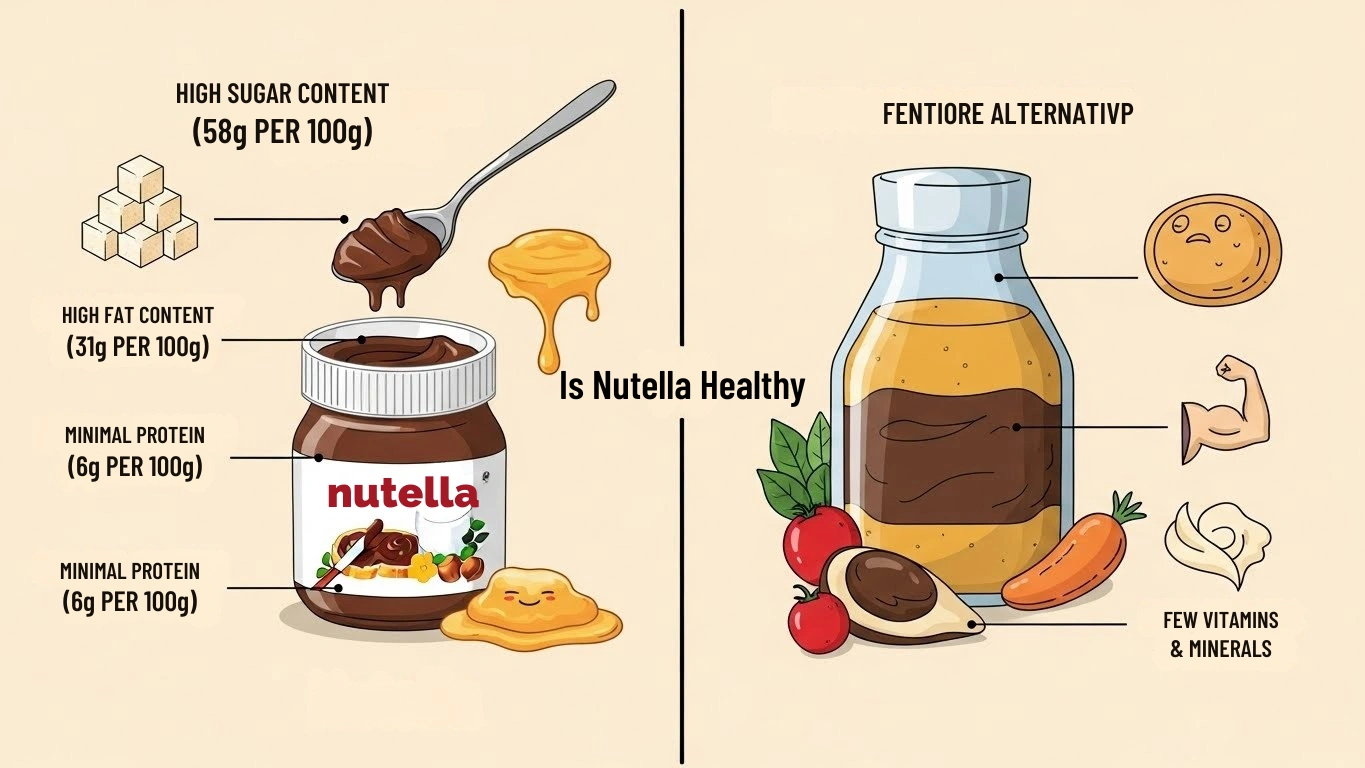
Nutella, the widely known hazelnut cocoa spread made by Ferrero has become a household name across countries and cultures, part of breakfast traditions or as snacking option between the slices of bread. Advertised as delicious breakfast option made from quality ingredients, is Nutella good for you this article reviews its Nutrition Facts, the pros and cons and ingredient list with verified data.
Ingredients Breakdown
The Nutella recipe is the same everywhere in the world, except in the U.S. and Canada where it contains only soy lecithin. These percentages can be altered slightly according to traits or source, and ingredients are listed in descending order proportion of quantity (as of 2016): sugar (about 57% when including added sugars), palm oil, hazelnuts, cocoa solids, milk powder, lecithin (emulsifier) and vanillin (artificial flavor).
- Sugar: The top ingredient, providing sweetness but contributing to high calorie density. Excessive free sugar intake is linked to increased risk of obesity and dental caries (“Guideline: Sugars Intake for Adults and Children,” World Health Organization, 2015).
- Palm Oil: Provides a creamy feel and solid texture, it’s high in saturated fats. A systematic review discovered no clear evidence that palm oil is associated with increased risk of cardiovascular disease, although it may elevate LDL cholesterol relative to what you’d get consuming oils low in saturated fats (“Systematic Review of Palm Oil Consumption and the Risk of Cardiovascular Disease,” PLOS One, 2018). There are no hydrogenated fats in Nutella; Palm oil is also a key ingredient used to produce the most important raw material for the making of Nutella: sugar.
- Hazelnuts: Comprising 13% of the spread, they add nutty flavor and provide monounsaturated fats, vitamin E, and fiber. Hazelnut consumption has been shown to improve lipid profiles and reduce oxidative stress (“Phytoextracts for Human Health from Raw and Roasted Hazelnuts and from Hazelnut Skin and Oil: A Narrative Review,” Nutrients, 2023).
- Cocoa: We have added fat reduced cocoa powder (7.4 %) to ensure you get the chocolate taste followed by natural goodness and antioxidants in it, flavanols. By improving nitric oxide production and reducing inflammation, cocoa flavanols have a positive effect on cardiovascular health (“Cocoa and Chocolate in Human Health and Disease,” Antioxidants & Redox Signaling, 2011).
- Skim Milk Powder: Adds creaminess (and a small amount of protein — 8.7 percent in the product).
- Lecithin: A soy-based emulsifier to maintain texture.
- Vanillin: An artificial flavor mimicking vanilla.
Nutella contains no artificial colors, preservatives, or hydrogenated fats, but its high processing level means it’s not a whole food.
Nutrition Facts
A standard serving of Nutella is 2 tablespoons (37g), providing the following approximate values based on official labeling:
| Nutrient | Amount per Serving | % Daily Value* |
|---|---|---|
| Calories | 200 | – |
| Total Fat | 12g | 15% |
| Saturated Fat | 4g | 20% |
| Trans Fat | 0g | – |
| Cholesterol | 0mg | 0% |
| Sodium | 15mg | 1% |
| Total Carbohydrates | 23g | 8% |
| Dietary Fiber | 1g | 4% |
| Total Sugars | 21g | – |
| Added Sugars | 19g | 38% |
| Protein | 2g | – |
| Calcium | 40mg | 4% |
| Iron | 1mg | 6% |
| Potassium | 170mg | 4% |
*Based on a 2,000-calorie diet.
This profile shows Nutella is energy-dense, with most calories from fats and sugars. It offers minimal fiber or protein, and micronutrients are limited compared to whole nuts or fruits.
Potential Health Benefits
While not a health food, Nutella’s positive aspects stem from its hazelnut and cocoa content, though portions are small.
- Antioxidant Support: The combination of hazelnuts and cocoa supply polyphenols and vitamin e, offering support against oxidative stress. Consumption of nuts, including hazelnuts, is also linked to decreased danger of heart disease (“A Hazelnut-Enriched Diet Modulates Oxidative Stress and Inflammation Gene Expression Without Weight Gain,” Oxidative Medicine and Cellular Longevity, 2019). Flavanols in cocoa may improve insulin sensitivity and reduce blood pressure (“Impact of Cocoa Flavanols on Human Health,” Food and Chemical Toxicology, 2021).
- Heart Health: Monounsaturated fats from hazelnuts and palm oil don’t appear to raise LDL cholesterol when eaten in moderation. Research shows hazelnuts reduce LDL cholesterol and inflammation (“Effects of Hazelnut Consumption on Cardiometabolic Risk Factors and Acceptance: A Systematic Review,” International Journal of Environmental Research and Public Health, 2022).
- Micronutrient Boost: Small amounts of iron, calcium, and potassium from cocoa and milk powder support basic needs, though not significantly per serving.
These benefits are diluted by the high sugar content, making whole hazelnuts or pure cocoa preferable for maximal gains.
Potential Drawbacks
Nutella’s health concerns primarily arise from its composition.
- High in Sugar: At 21g of sugar per serving (mostly added), it’s more than half of the WHO’s recommended daily intake at least 25g or less than 50g for grown ups. Consumption of high levels of free sugars is associated with weight gain, type 2 diabetes and heart disease (“Get the Facts: Added Sugars”, Centers for Disease Control and Prevention, 2024).
- Calorie density and saturated fat: Small serving size, 200 calories too much of this can lead to excessive calorie intake. Some individuals may have increased LDL cholesterol associated with the saturated fat content of palm oil (“Palm Oil and the Heart: A Review,” World Journal of Cardiology, 2015). Nutella is very high in fat and sugar leading to numerous health issues if consumed in large quantities (“Is Nutella Healthy? “snack made from?” Nutrition, and More,” Healthline, 2018).
- Poor Nutrition Value: If you think the cocoa in Nutella is healthful, think again; a 2-tablespoon serving provides much less protein and fiber than plain nut butter, which means it won’t keep you satisfied nearly as long.
- Palm oil at high temperatures has not been shown to directly cause cancer or other hazards, but some palm oil contaminants were listed by the European Food Safety Authority as a possible concern; Ferrero insists its processing is safe (“Nutella Maker Fights Back Against Cancer-Causing Claims,” ABC News, 2017).
Overall Verdict
Nutella is not necessarily “healthy” as it’s tasty but also full of sugar, salt, fat and processed ingredients. In moderation (1-2 tablespoons here and their) it can be worked into a good diet without real harm and to some benefit from the hazelnuts and cocoa. But if you’re going to be eating that stuff every day, you should reach for alternatives like pure hazelnut butter or get creative and blend your own spreads with less sugar. Consider it a treat, not a staple.
References:
- “Guideline: Sugars Intake for Adults and Children,” World Health Organization, 2015.
- “Systematic Review of Palm Oil Consumption and the Risk of Cardiovascular Disease,” PLOS ONE, 2018.
- “Phytoextracts for Human Health from Raw and Roasted Hazelnuts and from Hazelnut Skin and Oil: A Narrative Review,” Nutrients, 2023.
- “Cocoa and Chocolate in Human Health and Disease,” Antioxidants & Redox Signaling, 2011.
- “Get the Facts: Added Sugars,” Centers for Disease Control and Prevention, 2024.
- “Palm Oil and the Heart: A Review,” World Journal of Cardiology, 2015.
- “A Hazelnut-Enriched Diet Modulates Oxidative Stress and Inflammation Gene Expression without Weight Gain,” Oxidative Medicine and Cellular Longevity, 2019.
- “Impact of Cocoa Flavanols on Human Health,” Food and Chemical Toxicology, 2021.
- “Effects of Hazelnut Consumption on Cardiometabolic Risk Factors and Acceptance: A Systematic Review,” International Journal of Environmental Research and Public Health, 2022.