
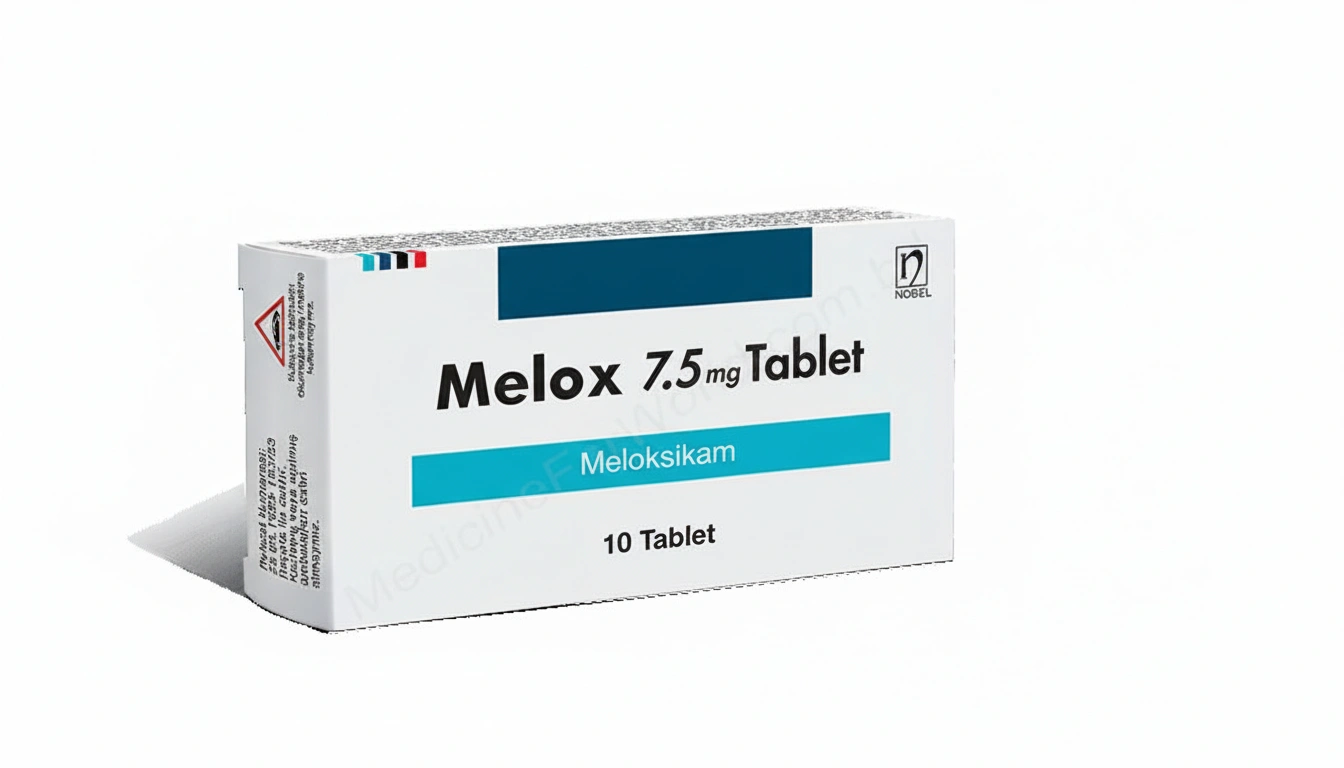
Melox 7.5 MG: Dosage, Side Effects & More

Medical Disclaimer: This article is for informational purposes only and does not replace professional medical advice. Always consult your doctor or pharmacist before starting, stopping, or changing your medication.
What Is Melox 7.5 MG?
Melox 7.5 mg is a prescription tablet containing meloxicam, a nonsteroidal anti-inflammatory drug (NSAID) of the oxicam group. It is widely used to relieve pain, swelling, stiffness, and inflammation caused by arthritis.
It works by blocking COX enzymes particularly COX-2 more than COX-1 which reduces the body’s production of prostaglandins, the substances responsible for pain, fever, and inflammation.
Uses & Indications
Melox 7.5 mg is prescribed for the following conditions:
- Osteoarthritis (OA) – including short-term treatment of acute flare-ups
- Rheumatoid Arthritis (RA) – for long-term symptomatic management
- Ankylosing Spondylitis – arthritis that mainly affects the spine
- Juvenile Idiopathic Arthritis (JIA) – in children 2 years and older under specific weight conditions
- Gout attacks – sometimes prescribed off-label by a physician
Important: Meloxicam does not cure arthritis. It only manages symptoms for as long as you continue taking it.
Dosage Guide
The full daily dose should be taken once a day, with water or another liquid, preferably during a meal. Always use the lowest effective dose for the shortest possible time.
Adults:
| Condition | Starting Dose | Maximum Dose |
|---|---|---|
| Osteoarthritis | 7.5 mg once daily | 15 mg/day |
| Rheumatoid Arthritis | 7.5 mg once daily | 15 mg/day |
| Ankylosing Spondylitis | 7.5 mg once daily | 15 mg/day |
Elderly Patients:
The recommended dose for long-term treatment in elderly patients is 7.5 mg per day. Older adults are more prone to serious stomach, heart, and kidney problems, so lower doses are preferred.
Children (Juvenile Rheumatoid Arthritis):
- Children 2 years and older weighing 60 kg or more – 7.5 mg once daily (max 7.5 mg/day)
- Children 2 years and older (oral suspension) – 0.125 mg/kg once daily (max 7.5 mg/day)
- Children under 2 years or weighing less than 60 kg – dose must be determined by a doctor
- Oral tablets are not suitable for children weighing less than 60 kg
Special Populations:
- Hemodialysis patients – Max 7.5 mg/day (drug is not removed during dialysis and may build up)
- Mild-to-moderate renal impairment – No dose reduction needed
- Severe renal impairment (not on dialysis) – Contraindicated
- Mild-to-moderate hepatic impairment – No dose adjustment required
- Severe hepatic impairment – Contraindicated
Missed Dose
Take it as soon as you remember. If your next dose is near, skip the missed dose and continue your regular schedule. Never take two doses at once.
How Long Does It Take to Work?
Meloxicam effects can generally be felt within 1 hour of the first dose. For chronic inflammatory conditions like rheumatoid arthritis, it may take up to 2 weeks to experience the full benefit. Taking it at the same time every day helps maintain a stable level in the bloodstream.
Common Side Effects
These are usually mild and often improve as the body adjusts:
- Nausea or vomiting
- Stomach upset, pain, or heartburn
- Diarrhea or constipation
- Gas or bloating
- Dizziness
- Headache
- Cold-like symptoms (runny nose, sore throat)
Tell your doctor if any of these side effects persist or worsen.
Serious Side Effects & Warnings
Cardiovascular Risk (FDA Black Box Warning)
Meloxicam carries an FDA black box warning for increased risk of heart attack, stroke, and blood clots. This risk:
- May occur at any time, even in people without prior heart disease
- Is higher with long-term use or higher doses
- Is elevated in people with high blood pressure, high cholesterol, diabetes, or those who smoke
Do not use meloxicam just before or after coronary artery bypass graft (CABG) surgery.
Seek emergency help for: chest pain, shortness of breath, weakness on one side of the body, slurred speech, or sudden vision changes.
Gastrointestinal Bleeding (FDA Black Box Warning)
Meloxicam can cause serious and potentially fatal bleeding, ulcers, and perforations in the stomach or intestines often without any warning signs. The risk increases in people who:
- Are 60 years or older
- Have a history of stomach ulcers or GI bleeding
- Smoke or drink alcohol regularly
- Take steroids, blood thinners, or other NSAIDs
Emergency signs: severe stomach pain, black or tarry stools, bloody vomit, or vomit resembling coffee grounds.
Kidney Damage
Long-term meloxicam use can lead to renal insufficiency or acute kidney failure. Risk is higher in dehydrated patients, the elderly, and those with pre-existing kidney or heart conditions.
Warning signs: decreased urine output, leg or ankle swelling, and unusual fatigue.
Liver Damage (Hepatotoxicity)
Liver enzyme elevations occur in up to 15% of patients on NSAIDs. Serious liver damage is rare but possible.
Warning signs: nausea, loss of appetite, dark urine, yellowing of the skin or eyes (jaundice), and upper-right abdominal pain.
High Potassium Levels (Hyperkalemia)
Meloxicam can raise potassium to dangerously high levels. Your doctor may check your potassium levels — especially if you take ACE inhibitors or potassium-sparing diuretics.
Warning signs: muscle weakness, irregular heartbeat, and numbness or tingling.
Severe Skin Reactions
Meloxicam can rarely cause life-threatening skin reactions, including:
- Exfoliative Dermatitis
- Stevens-Johnson Syndrome (SJS)
- Toxic Epidermal Necrolysis (TEN)
Stop the medication immediately and seek emergency care if you develop a rash, blistering, peeling skin, or sores in the mouth or genitals.
High Blood Pressure (Hypertension)
Meloxicam may raise or worsen blood pressure. It can also reduce the effectiveness of antihypertensive medications such as ACE inhibitors, diuretics, or ARBs. Monitor blood pressure throughout treatment.
Heart Failure & Fluid Retention
Fluid retention and edema have been observed in some patients. Avoid meloxicam in patients with severe heart failure unless benefits clearly outweigh risks.
Warning signs: sudden weight gain, ankle or feet swelling, and shortness of breath when lying down.
Anaphylactic Reactions
Meloxicam can cause a severe allergic reaction (anaphylaxis) even in patients without a known allergy to the drug. It is contraindicated in patients with aspirin-sensitive asthma.
Emergency signs: hives, facial or throat swelling, difficulty breathing, rapid heartbeat.
Drug Interactions
| Drug / Category | Risk |
|---|---|
| Other NSAIDs / Aspirin | Increased GI ulcers and bleeding |
| Warfarin / Blood Thinners | Significantly increased bleeding risk |
| Clopidogrel / Anti-platelets | Increased bleeding risk |
| SSRIs / SNRIs (antidepressants) | Increased bleeding risk |
| ACE Inhibitors / ARBs / Beta-Blockers | Reduced antihypertensive effect |
| Lithium | May raise lithium to toxic levels |
| Methotrexate | May raise methotrexate to toxic levels |
| Corticosteroids | Increased GI bleeding and ulceration |
| Diuretics | Reduced effectiveness; increased kidney risk |
Always inform your doctor and pharmacist of all medications, supplements, and herbal products you are currently taking.
Who Should NOT Take Melox 7.5 MG
Do not take this medication if you:
- Are allergic to meloxicam, aspirin, or any NSAID (ibuprofen, naproxen, celecoxib, diclofenac)
- Have aspirin-sensitive asthma (with or without nasal polyps)
- Have had a recent heart attack
- Are scheduled for or recently had CABG (heart bypass) surgery
- Have severe renal or hepatic impairment
- Are in the third trimester of pregnancy
Use During Pregnancy & Breastfeeding
Meloxicam use during pregnancy carries significant risks that are often overlooked:
- After 20 weeks NSAIDs can cause fetal kidney problems and low amniotic fluid
- After 30 weeks (third trimester) Meloxicam is contraindicated due to risk of premature closure of the fetal ductus arteriosus
- Fertility NSAIDs may temporarily interfere with ovulation in women trying to conceive (reversible upon stopping the drug)
- Breastfeeding Consult your doctor before use; safety data is limited
Monitoring & Follow-Up While on Melox 7.5 MG
Most sources skip this but knowing what to actively monitor while taking meloxicam can prevent serious complications. Here is what to track:
- Blood pressure Check regularly, especially in the first few weeks. Seek care if systolic hits 180 mmHg or diastolic hits 120 mmHg or above.
- Kidney function Periodic blood tests (creatinine, BUN) may be ordered by your doctor, especially for elderly or dehydrated patients.
- Liver enzymes ALT/AST levels may be checked during long-term therapy. Report jaundice or dark urine immediately.
- Potassium levels Important if you are also on ACE inhibitors, ARBs, or potassium-sparing diuretics.
- Body weight & swelling Sudden weight gain or leg swelling may signal fluid retention or early heart failure.
- Complete Blood Count (CBC) Long-term NSAID use can affect blood counts. Routine monitoring may be recommended.
Keep all scheduled lab appointments. Your doctor monitors your response and adjusts your dose accordingly.
Lifestyle Tips for Patients Taking Melox 7.5 MG
These practical habits help you get the most benefit from Melox 7.5 mg while staying safe:
- Take it with food or milk to reduce stomach upset and heartburn
- Take it at the same time every day for consistent drug levels in your blood
- Stay well hydrated especially during hot weather, exercise, or illness; dehydration raises kidney risk
- Avoid alcohol completely it significantly increases the risk of GI bleeding and liver stress
- Do not combine with other NSAIDs always check OTC pain reliever labels for ibuprofen, naproxen, or diclofenac
- Ask about stomach protection if you have a history of ulcers, your doctor may add a proton pump inhibitor (PPI) like omeprazole
- Do not switch forms without your doctor’s guidance tablets, capsules, and suspensions are not interchangeable
- Be cautious when driving meloxicam can cause dizziness, especially in the early days of treatment
- Use sunscreen some NSAIDs are associated with mild photosensitivity during prolonged sun exposure
Storage Instructions
- Store at room temperature (20°C–25°C)
- Keep the container tightly closed, away from moisture and direct light
- Do not store in the bathroom
- Keep out of the reach of children
- Dispose of unused or expired medication safely