
The Nutritional Value of Movie Theater Popcorn

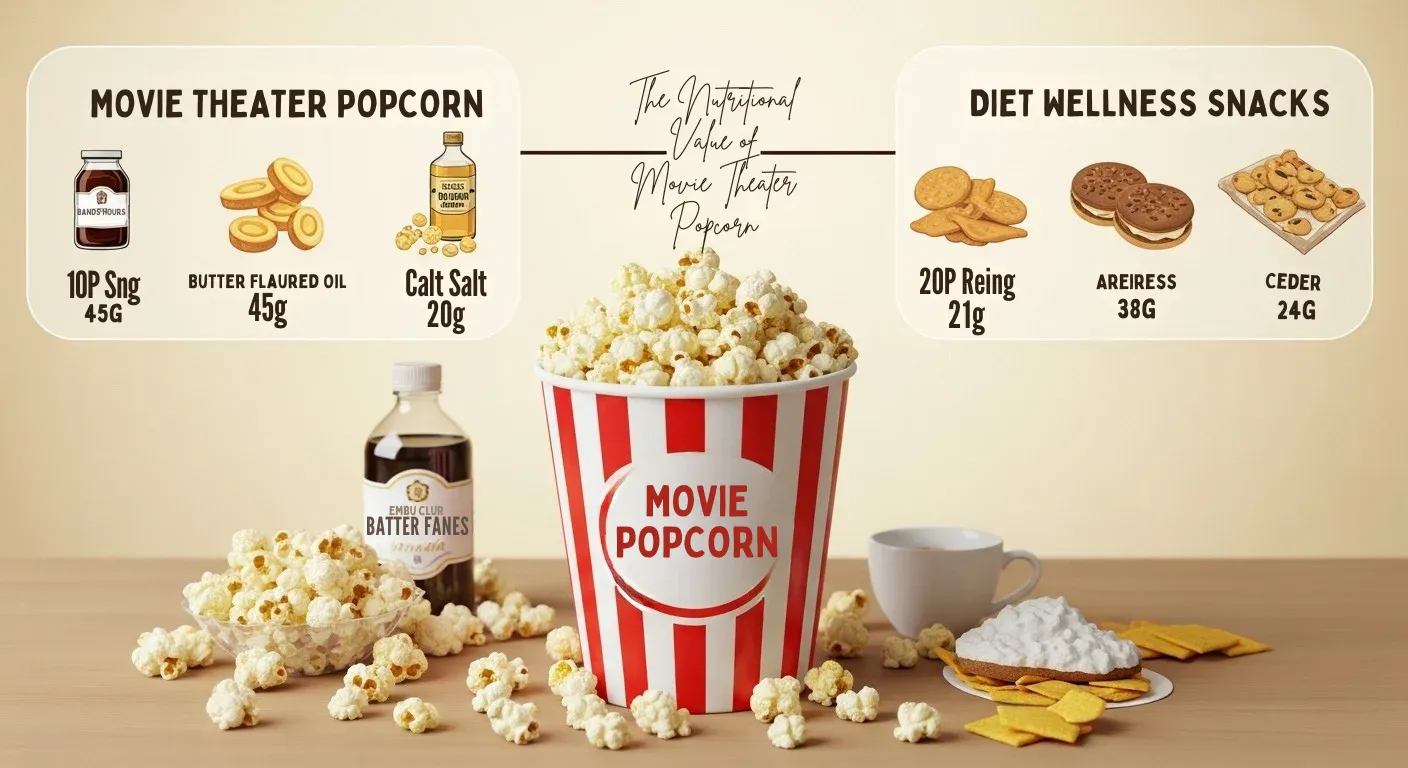
This analysis explores the significant difference between the nutritional profile of plain, air popped popcorn and that typically sold in movie theaters. As a whole grain, air-popped popcorn offers substantial health benefits, including high fiber content, antioxidants (polyphenols), and essential minerals, while being naturally low in calories and fat.
The good-the-bad- of movie theater popcorn is a thing. On the one hand: you have popcorn, which is a whole grain, high-fiber snack with important minerals and antioxidants you have a pool-size tub popped in oil, butter flavoring sprinkled on top, salt glittery and wet as Lake Geneva; presented in a fashion that compounds to “one more handful please.”
If you attend movies and enjoy popcorn, do not consider this a guilt trip but an excuse to make more intelligent decisions. Split the tub, reject the excess butter, request less salt or opt for a smaller size. You are paying tribute to the good part of that snack without giving the bad part a win.
What Popcorn Could Be: The Whole Grain Base
Let’s start with the good news. Plain popcorn popped without a ton of butter or salt is actually pretty decent nutrition wise. This background is often missing in some of the competitor posts, which focus almost entirely on the “bad” side without acknowledging the “could be good” side.
Whole grain and fiber benefits:
Popcorn is whole grain, so you’re eating the entire kernel (sort of), with its fiber and minerals and other good stuff. These kernels are high on calorie content which when air popped contains roughly 110 calories, 3.4 g protein, 22.1g carbs and 1.29g fat per serving of one ounce (approximately 28 gram). Fiber is a big deal popcorn has lots of it and fiber can help with the feeling of fullness, digestion and decrease disease risks. It also has those polyphenols, antioxidants that probably help protect your cells from harm.
The Reality Check What Happens at the Theater
Now, flip to the other side: when you’re at the theater, things change. Highlight this, but I’ll go a step further and give extra detail, draw comparisons, and uncover some lesser noted facts.
Big portions, big impact:
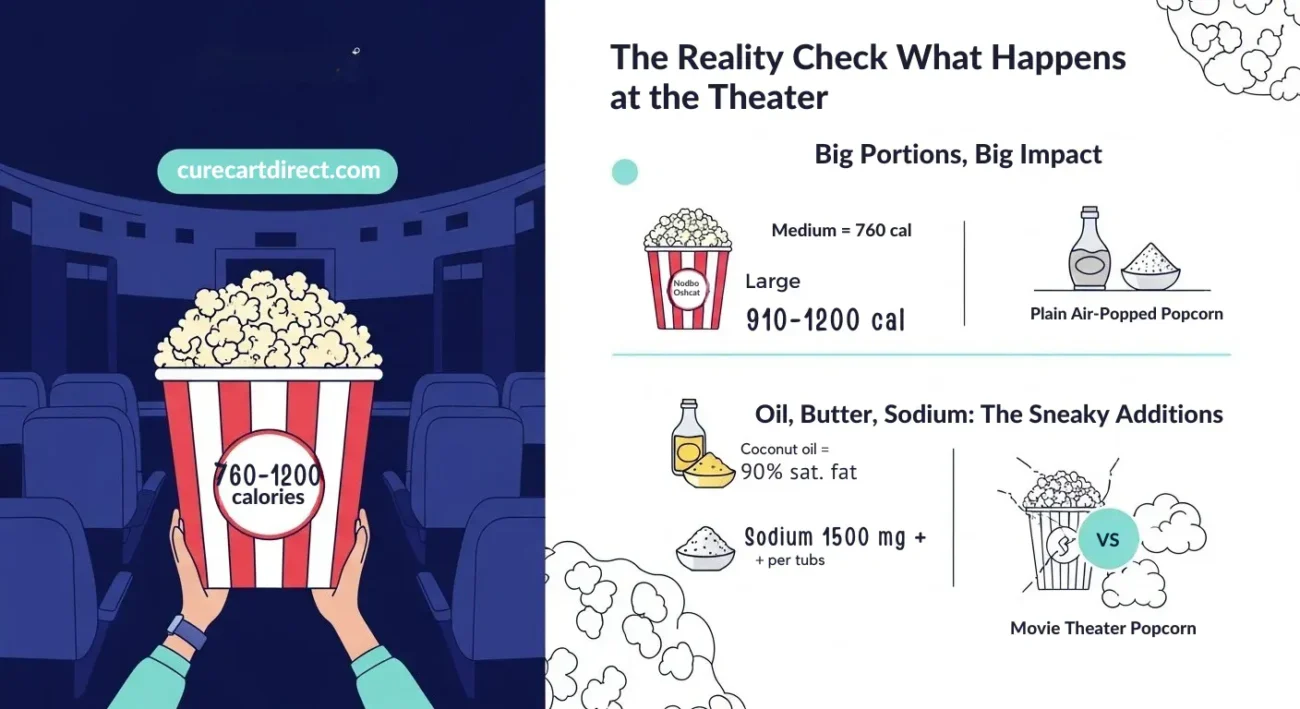
At the theater, you’re often served large volumes “small,” “medium,” “large” buckets that contain dozens of cups of popcorn. For example: one study found a medium bucket (14 cups) at a certain chain had 760 calories; the large (17 cups) reached 910 calories. In another case, a large tub had 1,200 calories and 60 g saturated fat in one sitting.
Oil, butter, sodium the sneaky additions:
Here’s where the “nutritional value” aspect becomes even more dubious. The kernels may be whole grain, but they’re generally popped in oil (often coconut oil, which boasts plenty of saturated fat) and then drowned in a buttery-flavored topper and salt. For example: one analysis mentioned how popcorn that is popped in coconut oil (which contains 90% saturated fat) was being used by several theaters. Sodium’s no slouch either: one large tub was 1,500 mg more of the stuff than many people should have in an entire day.
The Nutritional Value of Movie Theater Popcorn
Here we’ll examine typical nutrient values, what they mean, and how you can interpret them.
Calories:
- A sample medium size of a theatre-style tub (14 cups) can hit ~760 calories.
- A large might go as high as ~1,200 calories.
- For reference: plain air-popped popcorn is about 30 110 calories (depending on volume) when no oil or added fat.
So the “movie version” often puts you in snack territory fast more like a light meal’s worth of calories rather than just a little treat.
Fat & Saturated Fat:
- One example: un-buttered movie popcorn (66 g) contained 32 g of total fat and 19 g saturated fat.
- Many analyses report saturated fat at 20-30 g+ for a large tub.
Saturated fat is the kind we try to limit because it can raise “bad” LDL cholesterol and contribute to heart disease risk.
Sodium:
- One large serving had up to 1,500 mg of sodium.
That’s big, because many health guidelines suggest limiting sodium to around 1,500 mg per day (for those at risk) or roughly 2,300 mg for the general population. So one popcorn tub can take you to the limit or beyond.
Carbohydrates, Fiber, Protein:
- The popcorn kernel itself gives carbs and fiber: for example, 100 g of plain popcorn has ~15 g fiber.
- But in theater popcorn the fiber benefit gets overshadowed by fat/sodium/calories.
- Protein is modest: e.g., ~4 g for some servings.
Micronutrients & Antioxidants:
We talked earlier about vitamins, minerals and polyphenols in plain popcorn. The kernel has magnesium, phosphorus, zinc, B vitamins.
The issue is the more topping, oil and salt you add, the less you’re getting purely “kernel benefit” and more flavor cost.
So, Is Movie Popcorn Good, Bad, or Somewhere In Between?
The “Could be Good” Case:
If you were to order a smaller size, ask for no butter topping, minimal salt, you’d get closer to the benefits: whole grain snack, filling (thanks to fiber and volume), possibly better than say a candy bar or large soda. Some theaters are improving oil choices (for example, using canola instead of coconut oil).
The “Problematic” Case:
Most typical movie‐theater popcorn orders fall into the high calorie, high saturated fat, high sodium category. Even smaller or “no butter” versions can surprise you. Example: a small at one chain still delivered 670 calories, 550 mg sodium and 24 saturated fat grams.
The “Depends on the Preparation” Case:
It really depends on:
- Oil type (coconut vs canola vs other)
- Portion size
- Whether butter/topping is added
- How much salt is used
Chains like Cinemark claim their popcorn is non-GMO, sustainable, popped in canola oil and catering to healthier options.
How to Enjoy Movie Theater Popcorn
Since most of us will keep going to the movies (popcorn is part of the ritual!), here are practical, easy tips to get more from your snack and less excess. Many blogs point out you can “share,” but I’ll give a fuller set of strategies.
Share the tub:
Split a large or medium with someone else. Half the tub = half the calories (roughly) if you both dip in equally.
Ask for no/less butter topping:
If the theater allows, go light on the buttery coating or ask for it on the side. Every tablespoon of topping can add another ~100-130 calories and many grams of saturated fat.
Go for the smaller size (or portion it):
Instead of the “big bucket,” choose the smallest size and fill it only partly, or bring a portion home for later.
Request less salt or no added salt
Popcorn without salt (or with light salt) reduces the sodium load considerably. Some theaters said they’ll pop it without salt if asked.
Balance with your drink and candy:
If you’re going to have popcorn, choose a water or diet drink rather than a large soda. Many combo deals pair huge popcorn with drinks and it pushes calorie + sugar intake sky-high.
Track it in your day:
Know that if you grab a “large tub” it might be the equivalent of half your daily calorie allowance for some people. Plan around it (e.g., lighter dinner).
Consider bringing your own:
If permitted, bring a homemade air-popped popcorn (in a sealed bag) and skip or downsize the theater version. It’s less fun maybe but much lighter.
FAQs
Is all movie theater popcorn bad for you?
Not automatically. The kernel base gives you whole-grain goodness. The danger comes from portion size, topping and salt. If you go minimal on those, it can be a reasonable snack.
How many calories are in a typical medium bucket?
It varies, but around 700-900 calories (for ~14-17 cups) is common in some chains.
Does plain popcorn (no butter) mean it’s ‘healthy’?
It’s healthier than the heavily topped version, but “healthy” is relative. Even un-buttered theater popcorn can have lots of oil and salt, and portion size still matters. For example: one un-buttered serving had ~398 calories, 32 g fat, 19 g saturated fat.
Can popcorn help me lose weight?
Yes if the popcorn is air-popped, minimally salted, and consumed in a sensible portion, popcorn can be a filling snack with fiber and relatively low calories. But the theater version often flips that script.
What should I watch out for when ordering popcorn at the theater?
Watch portion size (bucket vs bag), toppings (butter, “buttery” flavour oils), salt level, and what you drink alongside it (soda adds huge calories and sugar). Also, if the theater uses coconut oil or similar, saturated fat may be very high.
Conclusion
The good-the-bad of movie theater popcorn is a thing. On one side: you’ve got popcorn a whole grain, high-fiber treat with valuable minerals and antioxidants. On the other hand: you have a pool-size tub popped in oil, butter flavoring sprinkled on top, salt as sparkly and wet as Lake Geneva; presented in such a manner that invites “just one more handful please.” If you go to movies and love your popcorn, this is not a guilt trip but an opportunity to make smarter choices. Divide the tub, skip the extra butter, ask for less salt or choose a smaller size. You are honoring the good part of the snack, without allowing the bad side to win.