
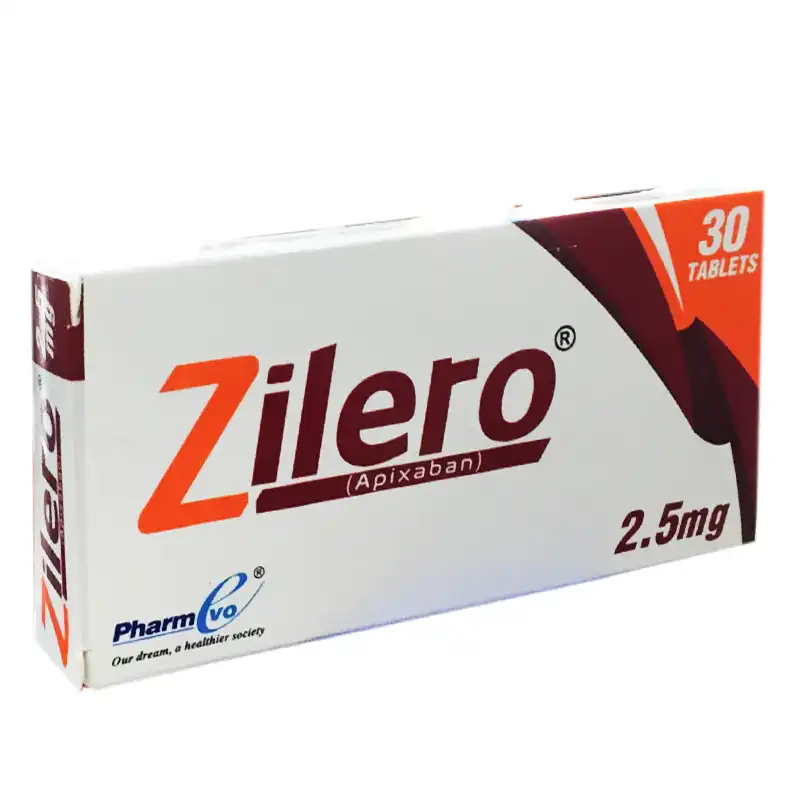


Description
Zilero 2.5mg contains Apixaban, a direct and selective inhibitor of Factor Xa, a key enzyme involved in blood clot formation. By blocking Factor Xa, it helps prevent thrombin generation and reduces the formation of harmful clots in blood vessels. Unlike older anticoagulants, it does not require routine INR monitoring and has predictable anticoagulant action when taken orally.
Primary Uses
Zilero is commonly used for:
-
Prevention of stroke and systemic embolism in patients with atrial fibrillation.
-
Treatment of deep vein thrombosis (DVT) and pulmonary embolism (PE).
-
Prevention of recurrent DVT and PE.
-
Prevention of venous thromboembolism (VTE) after hip or knee replacement surgery.
Indications
Doctors prescribe Apixaban for:
-
Atrial fibrillation (non-valvular) to prevent stroke.
-
Post-surgical clot prevention after orthopedic procedures.
-
Management of acute or recurrent venous thromboembolic disorders.
How It Works
Apixaban inhibits Factor Xa — an essential enzyme responsible for converting prothrombin into thrombin during the clotting process. By blocking this step, it reduces fibrin clot formation, lowering the risk of blood vessel blockage. It does not dissolve existing clots, but prevents new ones from forming or growing.
Dosage
(General reference only — follow physician’s instructions)
-
Standard adult dose varies depending on indication, renal function, and risk factors.
-
Tablets must be swallowed whole with water, with or without meals.
-
Do not skip or double doses, as irregular intake may increase clotting or bleeding risk.
Side Effects
Common:
-
Nosebleeds (epistaxis), bleeding gums, easy bruising.
-
Gastrointestinal bleeding or rectal bleeding.
-
Blood in urine (haematuria).
Uncommon / Rare:
-
Eye bleeding, coughing up blood (haemoptysis).
-
Vaginal or urogenital bleeding.
-
Brain or respiratory tract hemorrhage (rare but serious).
Drug Interactions
Use with caution or avoid with:
-
Strong CYP3A4 / P-gp inhibitors or inducers (e.g., Rifampicin, Carbamazepine, St. John’s Wort).
-
Other anticoagulants or antiplatelets (e.g., Heparin, Clopidogrel, Aspirin, NSAIDs).
-
Thrombolytics and fibrinolytics.
When Not to Use
Avoid in:
-
Active bleeding (GI or internal).
-
Severe liver disease with coagulation issues.
-
Recent major surgery or trauma involving brain, spine, or eyes.
-
Known hypersensitivity to Apixaban.
-
Concurrent use of HIV protease inhibitors (e.g., Ritonavir).
Precautions
-
Not recommended in patients with prosthetic heart valves.
-
Requires careful supervision in renal impairment or low body weight.
-
Stop before surgeries as advised by the physician.
Warnings
⚠ Stopping Apixaban abruptly may increase the risk of blood clots. Do not discontinue without medical supervision.
⚠ Risk of spinal or epidural hematoma during spinal procedures — monitor carefully.
⚠ Serious bleeding can occur — patients must report signs of internal bleeding immediately.
Doctor’s Overview
Dr. Ayesha Khan (Cardiologist):
“Apixaban is widely used for stroke prevention in atrial fibrillation and clot management due to its predictable anticoagulant effect and no need for constant lab monitoring. Patients should remain alert to any bleeding signs, as even minor symptoms may indicate internal bleeding.”
Disclaimer
This profile is for informational purposes only, based on commonly available medical guidelines in Pakistan. It does not substitute a doctor’s prescription or treatment plan. Always consult a healthcare professional before starting or stopping Apixaban.


Reviews
There are no reviews yet.