
Tear Trough Filler: Procedure, Safety, Cost, and Results

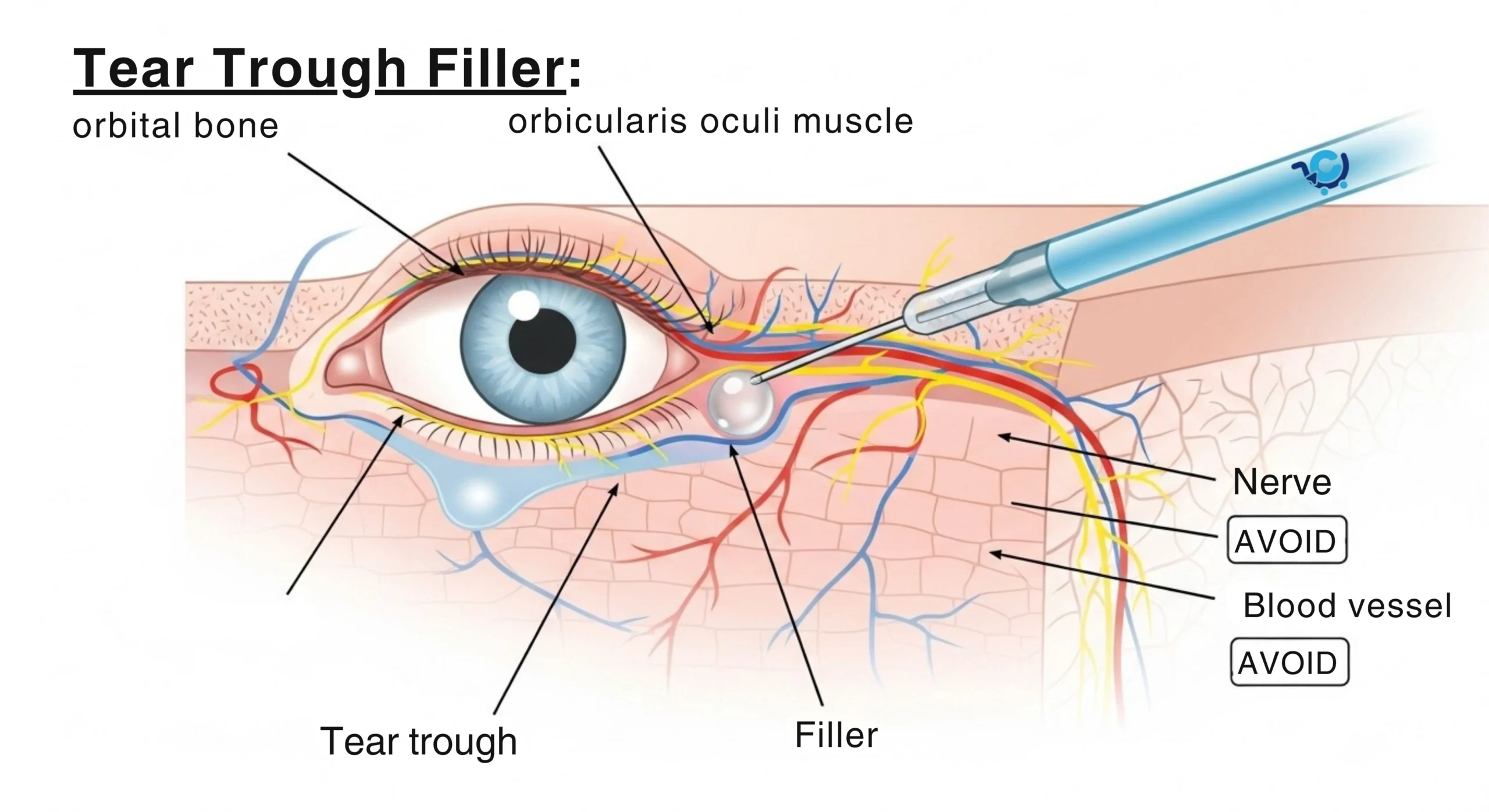
That tired look staring back at you in the mirror might have nothing to do with how many hours you slept last night. As we age, the area beneath our eyes undergoes significant changes. The fat pads that once provided support begin to diminish, the skin thins, and the underlying bone structure becomes more prominent. The result is a hollow groove running from the inner corner of the eye toward the cheek, casting shadows that make us look exhausted regardless of how rested we actually feel.
Tear trough filler have emerged as one of the most sought-after solutions for this concern. This non-surgical treatment involves injecting hyaluronic acid-based dermal fillers into the under-eye area to restore lost volume and create a smoother, more refreshed appearance. But before you book that appointment, there’s much to understand about who this treatment is right for, what it involves, and what you can realistically expect.
What Is the Tear Trough, and Why Does It Change?
The tear trough, medically known as the nasojugal groove, is the depression that extends from the inner corner of your eye downward toward your cheek. This anatomical feature exists because of the way skin and soft tissue attach to the underlying orbital bone.
Several factors contribute to prominent tear troughs. Aging plays a major role. As we get older, we lose collagen and fat in the face, and the facial bones themselves actually change shape, becoming thinner and wider. Genetics also matter significantly. Some individuals are simply born with deeper tear trough anatomy, experiencing noticeable hollowing even in their twenties. Other contributing factors include sun exposure, smoking, diet, and lifestyle habits that accelerate the breakdown of collagen and facial fat over time.
The shadows created by tear trough hollowing are often mistaken for dark circles. However, true pigmentation-based dark circles and tear trough shadows are distinct concerns that require different approaches to treatment.
How Tear Trough Fillers Work
The premise is straightforward: hyaluronic acid, a substance naturally present in human skin, is injected beneath the surface to restore volume where it has been lost. Hyaluronic acid has the remarkable ability to hold up to 1,000 times its weight in water, which helps hydrate and plump the treated area.
When skillfully placed, the filler accomplishes three primary objectives. First, it fills the hollow depression, reducing the shadowing effect. Second, it smooths the transition between the lower eyelid and the cheek, eliminating that sharp demarcation that accentuates a tired appearance. Third, it provides hydration from within, improving overall skin quality in the treated area.
The most commonly used fillers for tear trough treatment include products from the Restylane and Juvéderm families. In February 2022, Juvéderm Volbella XC became the first and only FDA-approved filler specifically indicated for improvement of infraorbital hollows in adults over 21 (FDA Approval Notice, 2022). Clinical trial data showed that 90% of subjects reported satisfaction through one year after treatment. While other fillers are frequently used off-label in this area, Volbella’s formulation was specifically designed with lower hyaluronic acid concentration and low water affinity, making it particularly well-suited for the delicate under-eye region.
The Procedure: What to Expect
A tear trough filler appointment typically takes between 15 and 40 minutes from start to finish. The process begins with a thorough assessment of your under-eye area, including evaluation of skin thickness, the depth of hollowing, and the presence of any fat pads or puffiness.
Before the injections begin, the skin is cleansed to prevent infection. A topical numbing cream is often applied approximately 20 to 30 minutes before the procedure, though many modern fillers also contain lidocaine, a local anesthetic that minimizes discomfort during injection.
The filler itself is delivered using either a fine needle or a blunt-tipped cannula. Many practitioners prefer the cannula technique for this area because the blunt tip is less likely to pierce blood vessels, potentially reducing bruising and decreasing the risk of vascular complications. During the injection, you’ll feel pressure around the eye area, which can be slightly unsettling, but most patients report only minimal pain.
After the filler is placed, the practitioner gently massages the area to ensure even distribution. Most people require between 0.2 and 0.45 mL of filler per eye, with some needing one to two syringes total for both sides.
Who Makes a Good Candidate?
The ideal candidate for tear trough filler has genuine hollowing or volume loss beneath the eyes with relatively good skin thickness and elasticity. They should have realistic expectations and understand that this treatment reduces the appearance of under-eye concerns rather than eliminating them entirely.
You’re likely a good candidate if you:
- Have mild to moderate hollowness beneath the eyes
- Are frequently told you look tired even when well-rested
- Have adequate skin thickness to support the filler
- Are not experiencing significant under-eye puffiness or bags
- Understand the temporary nature of the treatment
Individuals in their mid-twenties through their sixties may benefit from tear trough fillers, though candidacy depends far more on individual anatomy than age alone.
Who Should Avoid This Treatment?
Not everyone is suitable for tear trough filler, and understanding the contraindications is crucial for avoiding disappointing or problematic outcomes.
Significant under-eye bags or festoons: Festoons are swollen mounds that appear in the lower eyelid or cheek region due to midface aging. Adding filler to already puffy areas not only fails to improve the appearance but often makes the puffiness more pronounced. For these patients, surgical options like blepharoplasty may be more appropriate.
Very thin or crepey skin: The under-eye area naturally has some of the thinnest skin on the body, measuring less than half a millimeter in some places. When skin is exceptionally thin, filler may become visible or create a lumpy appearance. The risk of the Tyndall effect—a bluish discoloration caused by light scattering through superficially placed filler—also increases significantly.
Pigmentation-based dark circles: If your dark circles are primarily caused by hyperpigmentation rather than hollowing, fillers won’t address the underlying concern. Filler restores volume but doesn’t change skin color. In these cases, treatments like chemical peels, laser therapy, or topical lightening agents may be more effective.
Other contraindications include:
- Active skin infections near the treatment area
- Known allergies to hyaluronic acid or lidocaine
- Blood clotting disorders
- Pregnancy and breastfeeding
- Certain medical conditions that affect healing
Always disclose your complete medical history to your provider before proceeding.
Safety Profile and Potential Risks
Tear trough fillers are generally considered safe when performed by an experienced, qualified provider. However, no cosmetic procedure is without risk, and the under-eye area presents unique challenges due to its thin skincare, complex vascular anatomy, and proximity to the eye itself.
Common side effects include temporary swelling, bruising, redness, and tenderness at the injection site. These typically resolve within one to two weeks. Swelling often peaks within 48 to 72 hours after treatment before gradually subsiding.
Tyndall effect deserves particular attention as a potential complication. This occurs when filler is placed too superficially, causing blue light to scatter through the particles and creating a visible bluish discoloration beneath the skin. As described in a review published in the Journal of Cutaneous and Aesthetic Surgery, this effect is more likely to occur where there is thinning of the skin, and the tear trough region is one of the most common sites where it is observed (PMC5300720). The discoloration may appear immediately after treatment or develop days later and, without corrective measures, can persist for months or years. Treatment typically requires dissolving the filler with an enzyme called hyaluronidase.
Malar edema, or swelling in the cheek area, occurs in some patients following tear trough treatment. Hyaluronic acid fillers attract water, and in patients with weak lymphatic drainage, this can cause persistent puffiness. Certain filler formulations with higher water affinity may increase this risk.
Lumps and irregularities can occur if filler is placed unevenly or in excessive amounts. These may be addressed through massage, additional filler to even out the area, or hyaluronidase to dissolve the product.
Vascular occlusion represents the most serious potential complication of any dermal filler injection. This occurs when filler accidentally enters or compresses a blood vessel, blocking blood flow. In the context of tear trough treatment, the angular artery crosses the nasojugal groove medially, making it vulnerable during injection. A literature review in Plastic Surgery and Reconstructive Surgery Global Open identified the tear trough as one of several high-risk zones for vascular complications alongside the glabella, nasal dorsum, and nasolabial folds (PMC7583139).
If vascular occlusion affects the retinal artery system, it can result in vision loss. A review article in the journal Dermatologic Surgery examined peer-reviewed literature on visual complications from facial fillers and found that while the most common injection sites related to blindness were the glabella (38%), nose (25%), nasolabial folds (13%), and forehead (12%), there were no reports of vision loss specifically associated with tear trough injections in the reviewed cases (2015). However, the theoretical risk exists due to anatomical connections between periorbital vessels.
Central retinal artery occlusion (CRAO) can cause permanent blindness within 60 to 90 minutes if not treated immediately. While extremely rare—estimated at approximately one in 10,000 to one in one million injections depending on the area treated—this potential outcome underscores the importance of choosing a highly qualified provider who understands facial vascular anatomy and has protocols in place for managing emergencies.
Cost Considerations
Tear trough filler is a cosmetic procedure not covered by insurance. The cost varies significantly based on geographic location, provider experience, the type and amount of filler used, and the facility where treatment is performed.
According to the American Society of Plastic Surgeons, the national average cost for hyaluronic acid filler is approximately $684 to $715 per syringe. However, prices for tear trough treatment specifically range from approximately $500 to $1,500 per syringe, with most patients requiring one to two syringes total. This means the total cost for a complete tear trough treatment typically falls between $1,000 and $2,000.
In major metropolitan areas like New York City or Los Angeles, prices tend to be higher, sometimes reaching $2,000 to $2,500 or more for a single treatment session. Conversely, smaller cities and regions with lower costs of living may offer more affordable options, though it’s essential not to sacrifice quality and safety for price savings when it comes to injections around the eyes.
Provider experience commands a premium, but this expertise is particularly valuable for tear trough treatment given the technical difficulty and safety considerations involved. Board-certified dermatologists, plastic surgeons, and oculoplastic surgeons who specialize in periorbital rejuvenation typically charge more than general injectors but may deliver superior results with lower complication rates.
Remember that maintenance treatments will be needed to preserve results, so factor ongoing costs into your decision. Some practices offer package pricing or membership programs that can make repeated treatments more affordable.
Results: What to Expect and How Long They Last
One of the appealing aspects of tear trough filler is that results are visible immediately. You’ll leave your appointment looking more refreshed, though some swelling will initially mask the final outcome. Most patients notice the full effect after about two weeks, once all swelling has resolved and the filler has fully integrated with the surrounding tissue.
The longevity of tear trough fillers varies considerably between individuals. Manufacturers typically report duration of 6 to 12 months, but research and clinical experience suggest the area may retain filler longer than other parts of the face. A retrospective study published in The Journal of Clinical and Aesthetic Dermatology examined 155 patients who received tear trough hyaluronic acid filler treatments and found significant results persisting at 18 months posttreatment, challenging the conventional belief that results last only 6 to 12 months (JCAD, 2024).
Some practitioners report seeing filler remain visible under the eyes for several years. Because this area has less muscular movement than areas like the lips, the product doesn’t break down as quickly. While this extended longevity can be beneficial when results are good, it also means that any complications may persist longer without intervention.
Factors that influence how long your results last include your individual metabolism, the specific filler product used, the injection technique employed, and your lifestyle habits. Sun protection, adequate hydration, avoiding smoking, and maintaining good skincare practices may help prolong the effects.
To maintain optimal results, most patients schedule touch-up treatments every 9 to 18 months, though this varies based on individual needs and preferences.
Recovery and Aftercare
Recovery from tear trough filler is minimal compared to surgical alternatives. Most patients return to normal activities immediately after their appointment, though some precautions during the first 24 to 48 hours can optimize healing and results.
First 48 hours:
- Avoid strenuous exercise, heavy lifting, and bending over
- Apply cold compresses intermittently (20 minutes on, 20 minutes off) with a cloth barrier
- Sleep with your head elevated to minimize fluid accumulation
- Avoid sleeping face down
- Don’t touch, rub, or massage the treated area unless instructed
- Skip makeup for at least 24 hours to reduce infection risk
General aftercare:
- Avoid alcohol and blood-thinning medications or supplements as directed
- Stay hydrated and maintain gentle skincare routines
- Protect the area from excessive sun exposure
Bruising timeline:
- Days 1-2: Redness and swelling; bruising begins
- Days 3-4: Peak discoloration (dark purple to blue)
- Days 5-7: Color fades to green or yellow; swelling lessens
- Days 8-14: Bruising clears and filler settles
Contact your provider immediately if you experience:
- Severe or worsening pain
- Unusual skin color changes (blanching or graying)
- Vision changes
- Signs of infection (increasing redness, warmth, fever)
Alternatives to Tear Trough Filler
If you’re not a suitable candidate for filler or prefer to explore other options, several alternatives exist for under-eye rejuvenation:
- Blepharoplasty (eyelid surgery): Offers more permanent results for patients with significant skin laxity, fat herniation, or pronounced bags. Recovery takes two to three weeks, but results can last many years.
- PRP/PRF injections: Use growth factors from your own blood to stimulate collagen production and improve skin quality. Works well for mild darkness or texture concerns but doesn’t add volume.
- Polynucleotides: Injectable skin boosters that improve skin quality without adding volume. Particularly useful for patients with crepey skin who aren’t good candidates for traditional filler.
- Laser treatments and radiofrequency devices: Address skin texture, fine lines, and mild laxity without injections. May be combined with filler or used as standalone treatments.
- Chemical peels and topical treatments: Help with hyperpigmentation-related dark circles that won’t respond to filler.
- At-home maintenance: Topical products containing caffeine can temporarily reduce puffiness, while vitamin C, retinoids, and antioxidants support collagen production. Daily sunscreen is essential for preventing further damage.
Choosing the Right Provider
The importance of selecting a qualified, experienced provider for tear trough treatment cannot be overstated. This is one of the most technically challenging areas of the face to inject, with minimal margin for error.
What to look for:
- Board certification in dermatology, plastic surgery, or oculoplastic surgery
- Specific experience with tear trough injections
- Before-and-after photos of actual patients (not stock images)
- Clear protocols for managing complications
- Willingness to answer questions thoroughly
During your consultation, expect:
- A thorough assessment of skin quality, tear trough depth, and overall facial anatomy
- Discussion of your medical history and any contraindications
- Honest evaluation of whether you’re a suitable candidate
- Explanation of alternatives if filler isn’t recommended
Be wary of providers who seem rushed, don’t answer questions thoroughly, or pressure you into treatment. Taking time to find the right practitioner is an investment in your safety and satisfaction.
The Bottom Line
Tear trough filler offers a non-surgical solution for under-eye hollowing, delivering natural-looking results with minimal downtime when performed by an experienced provider on the right candidate. However, this treatment isn’t for everyone those with significant bags, very thin skin, or pigmentation-based dark circles may need alternative approaches. The key to success lies in choosing a qualified practitioner who will honestly assess your anatomy and set realistic expectations. If you’re considering this treatment, schedule a consultation with a board-certified specialist to determine whether tear trough filler aligns with your goals.
References:
- FDA Approves JUVÉDERM® VOLBELLA® XC For Undereye Hollows.
- JUVÉDERM® VOLBELLA® XC – P110033 / S053, FDA Medical Devices.
- Dermal Fillers for the Treatment of Tear Trough Deformity: A Review of Anatomy, Treatment Techniques, and their Outcomes, Journal of Cutaneous and Aesthetic Surgery.
- Management of Tyndall Effect, Journal of Cutaneous and Aesthetic Surgery.
- Complications after cosmetic periocular filler: prevention and management, Plastic Surgery and Reconstructive Surgery Global Open.
- Long-Term Effects of Tear Trough Hyaluronic Acid Filler: A Retrospective Study, The Journal of Clinical and Aesthetic Dermatology.
- Tear Trough Filler: Procedure, Safety, Cost & Results, Healthline.