
10 Effective Skin Care Tips for Achieving Naturally Glowing Skin
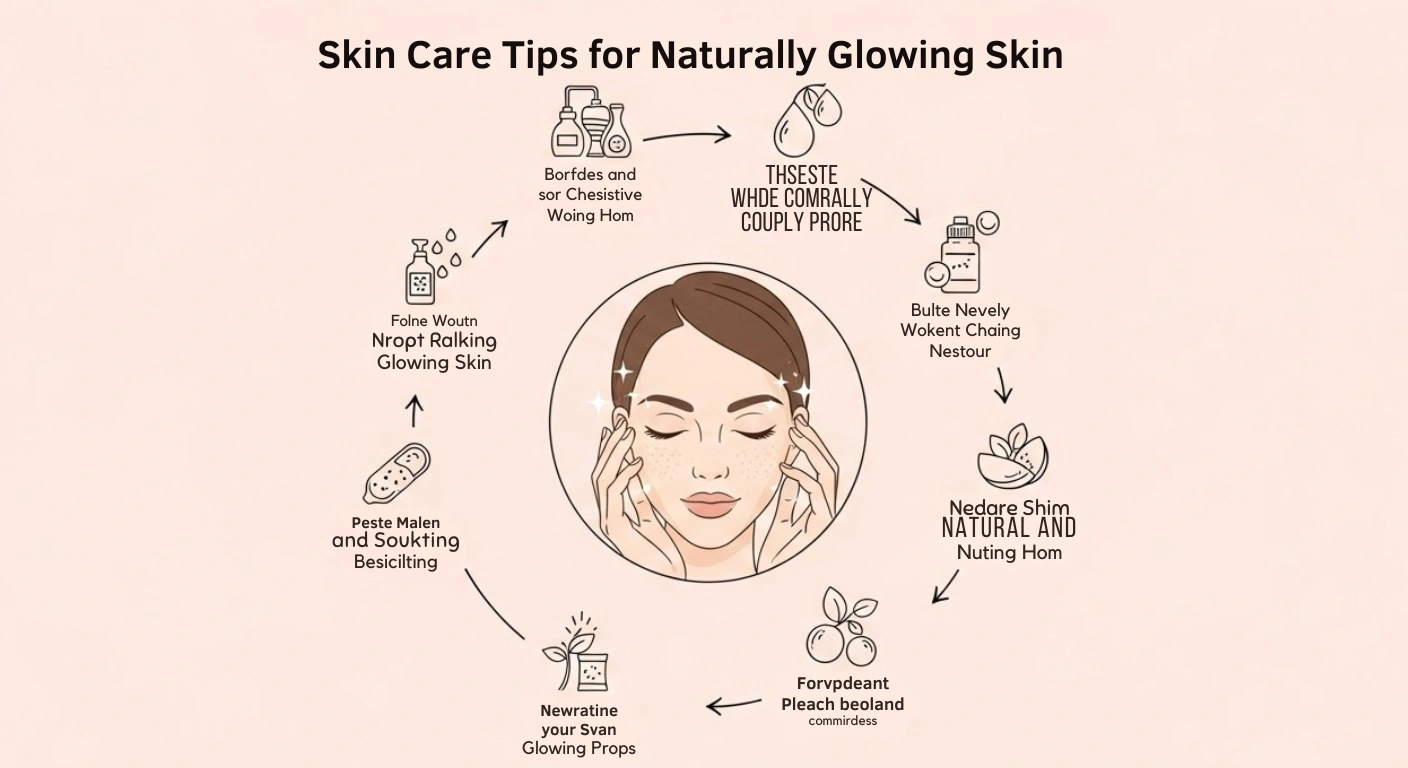
Your skin reflects your overall health. That coveted natural glow comes from nurturing it both inside and out. Here are ten science-backed tips to help you achieve luminous, healthy-looking skin.
Stay Hydrated from Within
Water makes up a significant portion of your skin and supports its structure. Research in Clinical, Cosmetic and Investigational Dermatology (Palma et al., 2015) found that adding approximately 2 liters of water daily improved both surface and deep skin hydration, particularly in those who weren’t drinking enough initially.
A systematic review in Skin Research and Technology (Akdeniz et al., 2018) confirmed these benefits are most noticeable in people with lower prior water consumption. Drink enough to keep your urine pale yellow, and your skin will benefit.
Protect Your Skin from UV Damage Daily
UV radiation is the primary driver of photoaging premature aging that causes wrinkles, pigmentation, and loss of elasticity.
A landmark study in Annals of Internal Medicine (Hughes et al., 2013) followed 903 adults over 4.5 years and found that daily sunscreen users showed no detectable increase in skin aging compared to occasional users. This was the first clinical trial to prove sunscreen prevents photoaging.
Key sunscreen tips:
- Choose broad-spectrum SPF 30 or higher
- Apply 20 minutes before sun exposure
- Reapply every two hours
- Reapply after swimming or sweating
Prioritize Quality Sleep
During deep sleep, your body releases growth hormone for tissue repair and collagen synthesis. Sleep deprivation elevates cortisol, which accelerates collagen breakdown.
Research presented at the International Investigative Dermatology Meeting (Oyetakin-White et al., 2013) found that poor sleepers showed increased signs of skin aging including fine lines, uneven pigmentation, and reduced elasticity.
What happens when you don’t sleep enough:
- Increased cortisol production
- Reduced collagen synthesis
- Slower recovery from UV damage
- Compromised skin barrier function
Aim for seven to nine hours nightly.
Incorporate Retinoids for Anti-Aging
Retinoids (vitamin A derivatives) remain the gold standard in topical anti-aging. They stimulate collagen production, increase cell turnover, and reduce enzyme activity that breaks down skin structure.
A randomized, double-blind study in Archives of Dermatology (Kang et al., 2007 ClinicalTrials.gov: NCT00272610) showed that 0.4% retinol significantly improved fine wrinkles over 24 weeks by increasing glycosaminoglycan expression and procollagen production.
How to start using retinoids:
- Begin with lower concentrations
- Apply every other night initially
- Gradually increase frequency as tolerated
- Expect some initial irritation that typically resolves
Use Vitamin C for Brightness and Protection
Vitamin C is a potent antioxidant that neutralizes free radicals and plays an essential role in collagen synthesis.
A review in the Journal of Clinical and Aesthetic Dermatology (Al-Niaimi & Chiang, 2017) found that vitamin C protects against photoaging, increases collagen synthesis, and stabilizes collagen fibers. A double-blind study in Experimental Dermatology (Humbert et al., 2003) showed that 5% vitamin C cream over six months produced visible improvement in photodamaged skin.
Tips for vitamin C serums:
- Look for L-ascorbic acid (most effective form)
- Choose concentrations between 10-20%
- Apply in the morning under sunscreen
- Store in dark, cool place to prevent oxidation
Cleanse Gently to Preserve Your Skin Barrier
Your skin’s acid mantle (pH 4.5-5.5) maintains barrier function and protects against pathogens. Harsh cleansers disrupt this balance.
A review in Skin Pharmacology and Physiology (Schmid-Wendtner & Korting, 2006) found that pH changes contribute to conditions like contact dermatitis, atopic dermatitis, and acne. Cleansers with pH around 5.5 support skin health.
Gentle cleansing guidelines:
- Choose pH-balanced cleansers (around 5.5)
- Avoid over-washing (twice daily is sufficient)
- Use lukewarm water, not hot
- Pat dry instead of rubbing
Nourish Your Skin Through Diet
What you eat directly influences your skin’s health. Omega-3 fatty acids possess anti-inflammatory properties that benefit skin conditions.
A review in Frontiers in Immunology (Sawada et al., 2021) highlighted that omega-3s modulate inflammatory responses and improve outcomes in psoriasis, atopic dermatitis, and acne. The Linus Pauling Institute notes that skin fibroblasts depend on vitamin C for collagen synthesis.
Skin-healthy foods to include:
- Fatty fish (salmon, mackerel, sardines) — omega-3s
- Colorful fruits and vegetables — antioxidants
- Nuts and seeds — vitamin E
- Citrus fruits — vitamin C
- Avocados — healthy fats
Exercise Regularly for Improved Circulation
Physical activity increases blood flow, delivering oxygen and nutrients while removing waste products.
A narrative review in JMIR Dermatology (2024) found that exercise increases cutaneous blood perfusion by approximately eightfold during activity and can mitigate age-related skin changes by promoting mitochondrial biosynthesis.
Exercise benefits for skin:
- Increased oxygen and nutrient delivery
- Enhanced waste removal
- Improved skin cell metabolism
- Better skin structure over time
Aim for at least 150 minutes of moderate aerobic activity weekly. Cleanse sweat afterward to prevent clogged pores.
Manage Stress for Clearer Skin
Chronic stress triggers cortisol release, which stimulates oil production, promotes inflammation, and accelerates collagen breakdown.
A study in the Journal of Cosmetic Dermatology (Pujos et al., 2024) demonstrated that psychological stress affects skin through multiple pathways: DNA damage, altered gene expression, impaired antioxidant barrier, and weakened physical skin barrier.
Stress-related skin effects:
- Increased oil production and acne
- Flare-ups of psoriasis and eczema
- Accelerated collagen breakdown
- Slower wound healing
Stress management techniques:
- Meditation and deep breathing
- Regular physical activity
- Adequate sleep
- Social connection and hobbies
Moisturize with Hyaluronic Acid
Hyaluronic acid naturally occurs in skin and holds up to 1,000 times its weight in water. Its content decreases with age, contributing to dryness and fine lines.
A study in Dermatology and Therapy (Draelos et al., 2021) found that topical hyaluronic acid serum produced immediate increases in skin hydration with benefits accumulating over six weeks. A review in Dermatologic Therapy (Bravo et al., 2022) concluded that hyaluronic acid cosmeceuticals effectively improve skin hydration and rejuvenation.
Hyaluronic acid tips:
- Look for products with multiple molecular weights
- High molecular weight — forms protective surface film
- Low molecular weight — penetrates for deeper hydration
- Apply to damp skin for best results
- Layer under moisturizer to seal in hydration
References:
- Akdeniz M, et al. (2018). Does dietary fluid intake affect skin hydration in healthy humans? A systematic literature review. Skin Research and Technology, 24(3), 459-465.
- Al-Niaimi F, Chiang NYZ. (2017). Topical Vitamin C and the Skin: Mechanisms of Action and Clinical Applications. Journal of Clinical and Aesthetic Dermatology, 10(7), 14-17.
- Ananthapadmanabhan KP, et al. (2004). Cleansing without compromise: the impact of cleansers on the skin barrier and the technology of mild cleansing. Dermatologic Therapy, 17(Suppl 1), 16-25.
- Draelos ZD, et al. (2021). Efficacy Evaluation of a Topical Hyaluronic Acid Serum in Facial Photoaging. Dermatology and Therapy, 11(4), 1385-1394.
- Guan LL, et al. (2021). Sunscreens and Photoaging: A Review of Current Literature. American Journal of Clinical Dermatology, 22(6), 819-828.
- Hughes MCB, et al. (2013). Sunscreen and Prevention of Skin Aging: A Randomized Trial. Annals of Internal Medicine, 158(11), 781-790.
- Humbert PG, et al. (2003). Topical ascorbic acid on photoaged skin: Clinical, topographical and ultrastructural evaluation. Experimental Dermatology, 12(3), 237-244.
- Kang S, et al. (2007). Improvement of Naturally Aged Skin With Vitamin A (Retinol). Archives of Dermatology, 143(5), 606-612.
- Oyetakin-White P, et al. (2013). Effects of Sleep Quality on Skin Aging and Function. International Investigative Dermatology Meeting, Edinburgh, Scotland.
- Palma L, et al. (2015). Dietary water affects human skin hydration and biomechanics. Clinical, Cosmetic and Investigational Dermatology, 8, 413-421.
- Pujos M, et al. (2024). Impact of Chronic Moderate Psychological Stress on Skin Aging. Journal of Cosmetic Dermatology, 24(1), e16634.
- Pullar JM, et al. (2017). The Roles of Vitamin C in Skin Health. Nutrients, 9(8), 866.
- Sawada Y, et al. (2021). Omega 3 Fatty Acid and Skin Diseases. Frontiers in Immunology, 11, 623052.
- Schmid-Wendtner MH, Korting HC. (2006). The pH of the skin surface and its impact on the barrier function. Skin Pharmacology and Physiology, 19(6), 296-302.
- Yoshida H, et al. (2024). The Potential of Exercise on Lifestyle and Skin Function: Narrative Review. JMIR Dermatology, 7, e51962.