Pumpkin Seeds: Benefits of Health, Nutrients and Recipes

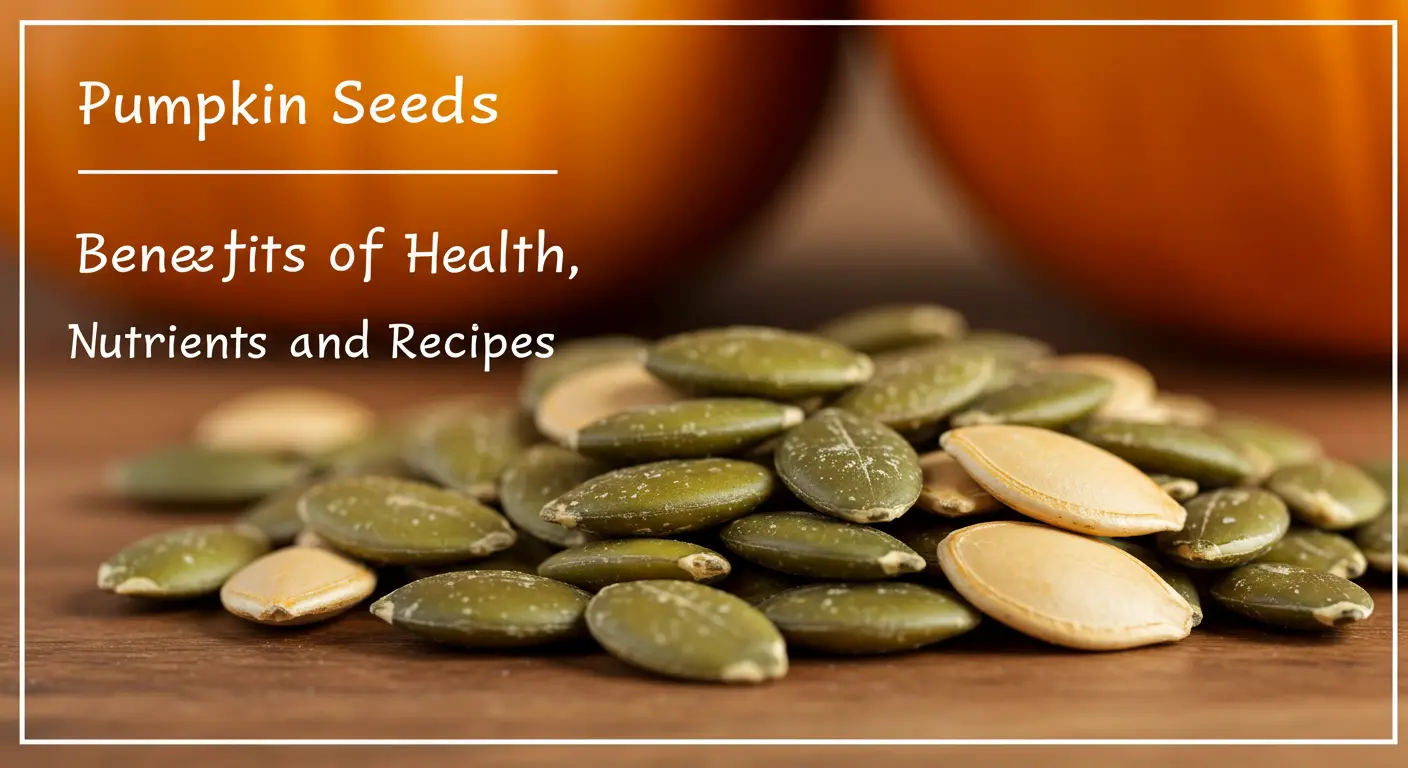
You know those little green-and-white seeds that spill out when you carve a pumpkin? Most people scoop them into the trash without a second thought. That’s a mistake. Pumpkin seeds, also called pepitas, are one of the most nutrient-dense snacks you can eat packed with minerals your body is probably short on, healthy fats your heart loves, and plant protein that rivals eggs ounce for ounce.
What is Pumpkin Seeds?
Come from the center of pumpkins and other squash varieties. You’ll find them in two forms: the cream-colored whole seed with its fibrous shell, and the olive-green kernel inside (the pepita), which is what you usually see sold at the store. Both are edible, though pepitas are softer and easier to snack on.
People have been eating these seeds for a long, long time archaeological evidence points to part of human diets in the Oaxaca Highlands of Mexico over 7,500 years ago.
The Nutrition Breakdown (Per One Ounce, About 28 Grams)
A single ounce of pumpkin seeds roughly a small handful is a nutrition overachiever. Based on data from the USDA FoodData Central entry for “Seeds, pumpkin and squash seed kernels, dried,” a 1-ounce serving gives you:
| Nutrient | Amount | Notes |
|---|---|---|
| Calories | About 126 | — |
| Protein | Around 7 g | — |
| Healthy fats | Roughly 13 g | Mostly unsaturated |
| Fiber | About 1.7 g | — |
| Magnesium | ~150 mg | Roughly 37% of Daily Value |
| Zinc | About 2 mg | ~19% of Daily Value |
| Iron | Around 2.5 mg | — |
| Copper | Present | Meaningful amount |
| Manganese | Present | Meaningful amount |
| Phosphorus | Present | Meaningful amount |
| Potassium | Present | Meaningful amount |
For context, one serving of pumpkin delivers almost 40% of your daily magnesium need a mineral about half of Americans don’t consume enough of, according to the NIH Office of Dietary Supplements “Magnesium Health Professional Fact Sheet.”
7 Science-Backed Health Benefits of Pumpkin Seeds
1. They’re a Magnesium Superstar
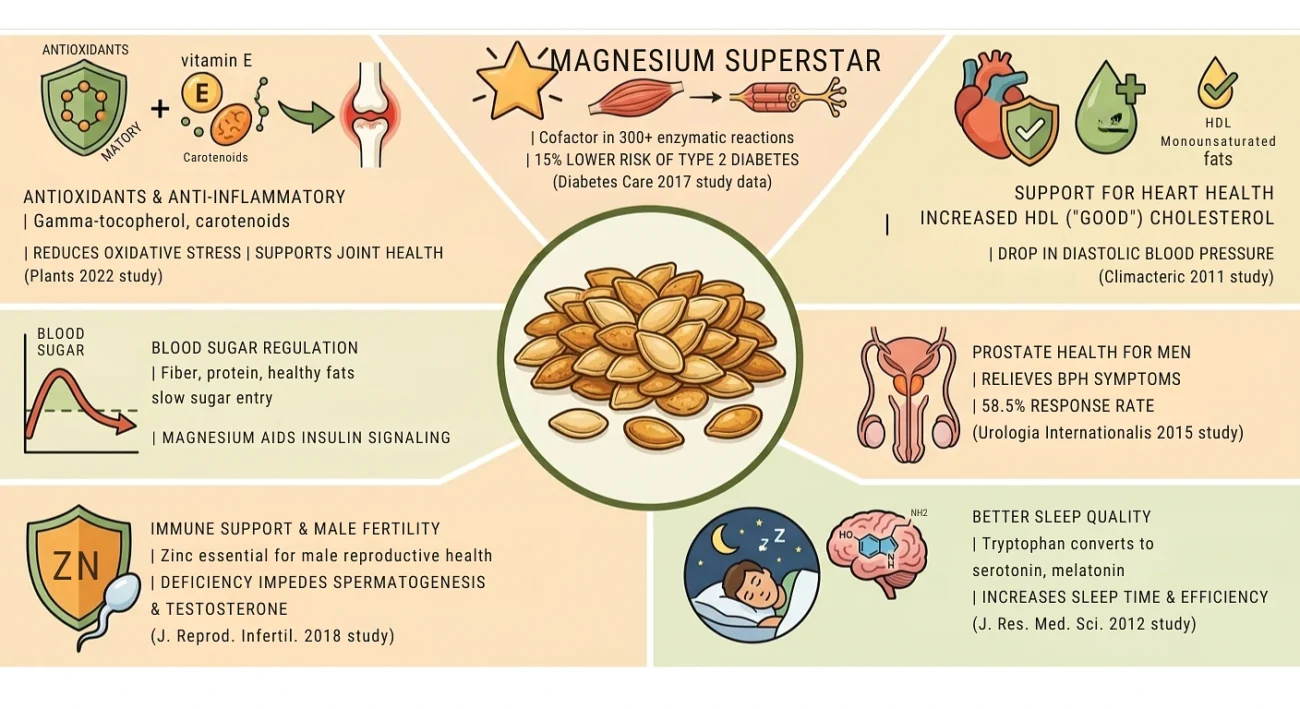
Magnesium is the unsung hero of your body. It’s a cofactor in over 300 enzymatic reactions everything from nerve function to blood sugar control to building strong bones.
The study titled “Magnesium Intake, Quality of Carbohydrates, and Risk of Type 2 Diabetes: Results From Three U.S. Cohorts” published in Diabetes Care (2017), which followed 69,176 nurses, 91,471 women in NHS2, and 42,096 men over 28 years, found that participants with the highest magnesium intake had a 15% lower risk of type 2 diabetes compared to those with the lowest intake.
2. Support for Heart Health
Loaded with monounsaturated and polyunsaturated fats the kind your cardiovascular system actually benefits from. They also contain plant sterols, which help lower LDL (“bad”) cholesterol.
A randomized, double-blind, placebo-controlled pilot study titled “Improvement in HDL cholesterol in postmenopausal women supplemented with pumpkin seed oil” published in Climacteric (2011) gave 35 postmenopausal women either 2 grams of pumpkin seed oil or wheat germ oil (placebo) daily for 12 weeks. Women in the pumpkin seed oil group showed a statistically significant increase in HDL (“good”) cholesterol (from 0.92 to 1.07 mmol/L, p = 0.029) and a drop in diastolic blood pressure (from 81.1 to 75.67 mmHg, p < 0.046).
3. Prostate Health for Men
This one has solid clinical backing. The study titled “Effects of pumpkin seed in men with lower urinary tract symptoms due to benign prostatic hyperplasia in the one-year, randomized, placebo-controlled GRANU study” published in Urologia Internationalis (2015) enrolled 1,431 men aged 50–80 with benign prostatic hyperplasia (BPH). Men taking 5 grams of pumpkin seed twice daily had a 58.5% response rate (IPSS drop ≥ 5 points) versus 47.3% in the placebo group after 12 months.
A separate clinical trial titled “Pumpkin seed oil (Cucurbita pepo) versus tamsulosin for benign prostatic hyperplasia symptom relief: a single-blind randomized clinical trial” published in BMC Urology (2021) compared 360 mg pumpkin seed oil twice daily against 0.4 mg tamsulosin in 73 men. The authors concluded pumpkin seed oil relieved BPH symptoms with no side effects, though tamsulosin was more effective overall.
4. Better Sleep Quality
Pumpkin seeds contain tryptophan, the amino acid that converts into serotonin and melatonin the hormones that regulate your sleep-wake cycle. They also deliver a meaningful dose of magnesium, which is involved in regulating sleep.
The randomized double-blind, placebo-controlled clinical trial titled “The effect of magnesium supplementation on primary insomnia in elderly: A double-blind placebo-controlled clinical trial” published in the Journal of Research in Medical Sciences (2012) gave 46 elderly adults either 500 mg of magnesium or placebo daily for 8 weeks. The magnesium group showed statistically significant increases in sleep time (p = 0.002), sleep efficiency (p = 0.03), and serum melatonin concentration (p = 0.007), along with reduced insomnia severity scores.
5. Immune Support and Male Fertility from Zinc
One ounce of provides roughly 19% of your daily zinc. Zinc matters for immune cell function, wound healing, and reproductive health.
The review titled “Zinc is an Essential Element for Male Fertility: A Review of Zn Roles in Men’s Health, Germination, Sperm Quality, and Fertilization” published in the Journal of Reproduction & Infertility (2018, Vol. 19, Issue 2) concluded that zinc deficiency impedes spermatogenesis, causes sperm abnormalities, and negatively affects serum testosterone concentrations.
6. Blood Sugar Regulation
The combination of fiber, protein, and healthy fats in seeds helps slow down how fast sugar enters your bloodstream. The magnesium content plays a role here too magnesium is directly involved in insulin signaling, and the Hruby et al. (2017) study referenced above showed a stronger protective association against diabetes in people with high-glycemic-index diets, suggesting magnesium may help offset poor carbohydrate quality.
7. Packed with Antioxidants and Anti-Inflammatory Compounds
Contain vitamin E (particularly gamma-tocopherol), carotenoids, and phenolic compounds. The review titled “Nutritional Value, Phytochemical Potential, and Therapeutic Benefits of Pumpkin (Cucurbita sp.)“ published in Plants (2022), available via PubMed Central, outlines how pumpkin seed phytosterols, tocopherols, and polyphenols contribute to antioxidant, anti-inflammatory, and antimicrobial activity, with potential roles in supporting joint health and reducing oxidative stress.
How to Eat Pumpkin Seeds
Here’s the practical part. You can eating raw, roasted, salted, unsalted, whole, or shelled. Raw retain slightly more heat-sensitive nutrients, but lightly roasted seeds are just as nutritious for most purposes. What you want to avoid is the heavily salted, commercially roasted kind coated in industrial oils and sodium that undoes a lot of the benefit.
A reasonable daily serving is about ¼ cup (roughly 1 ounce). Any more and you may experience mild digestive discomfort if you’re not used to the fiber load.
3 Easy Pumpkin Seed Recipes
Recipe 1: Classic Roasted Pumpkin Seeds
This is the no-fuss starter recipe. If you just carved a pumpkin, don’t throw those seeds out.
Ingredients:
- 1½ cups fresh (from one medium pumpkin)
- 1 tablespoon olive oil
- ½ to 1 teaspoon salt
Instructions:
- Scoop the seeds out of the pumpkin and separate them from the pulp. Rinse thoroughly in a colander.
- Pat dry with a clean towel this is important. Wet seeds steam instead of roast.
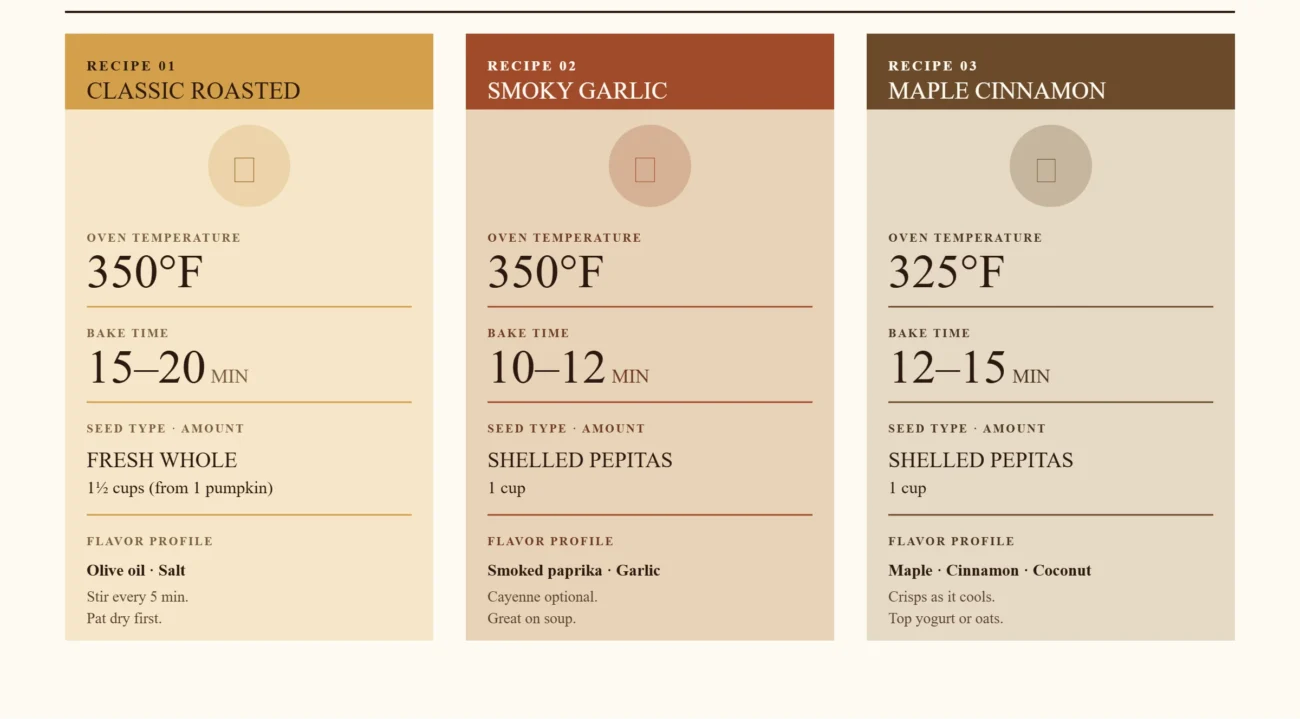
- Preheat oven to 350°F (177°C).
- Toss seeds with olive oil and salt on a parchment-lined baking sheet in a single layer.
- Bake for 15 to 20 minutes, stirring every 5 minutes for even browning. Pull them when they’re golden and smell toasty.
- Cool completely before storing in an airtight container. They’ll keep for about a week at room temperature.
Recipe 2: Smoky Garlic Pepitas
A savory, snackable upgrade that works as a salad topper or on its own.
Ingredients:
- 1 cup shelled (pepitas)
- 1 tablespoon olive oil
- 1 teaspoon smoked paprika
- ½ teaspoon garlic powder
- ½ teaspoon salt
- ¼ teaspoon cayenne pepper (optional)
Instructions:
- Preheat oven to 350°F.
- Toss pepitas with oil and all seasonings in a bowl until evenly coated.
- Spread on a parchment-lined baking sheet in a single layer.
- Roast for 10 to 12 minutes, stirring halfway. Watch closely the spices can darken fast.
- Cool and serve. These are incredible over tomato soup or roasted vegetables.
Recipe 3: Maple Cinnamon Pumpkin Seeds
The sweet version perfect over yogurt, oatmeal, or mixed into homemade granola.
Ingredients:
- 1 cup shelled pumpkin seeds
- 1 tablespoon maple syrup
- 1 tablespoon coconut oil, melted
- 1 teaspoon cinnamon
- Pinch of sea salt
Instructions:
- Preheat oven to 325°F (lower temperature because the syrup can burn).
- Mix seeds with maple syrup, melted coconut oil, cinnamon, and salt.
- Spread on parchment paper and bake for 12 to 15 minutes, stirring once halfway through.
- Let cool completely they’ll crisp up as they cool. Break apart and store.
References
- USDA FoodData Central — Seeds, pumpkin and squash seed kernels, dried.
- Hruby A., Guasch-Ferré M., Bhupathiraju S.N., Manson J.E., Willett W.C., McKeown N.M., Hu F.B. (2017). Magnesium Intake, Quality of Carbohydrates, and Risk of Type 2 Diabetes: Results From Three U.S. Cohorts. Diabetes Care, 40(12), 1695–1702.
- Gossell-Williams M., Hyde C., Hunter T., Simms-Stewart D., Fletcher H., McGrowder D., Walters C. (2011). Improvement in HDL cholesterol in postmenopausal women supplemented with pumpkin seed oil: pilot study. Climacteric, 14(5), 558–564.
- Vahlensieck W., Theurer C., Pfitzer E., Patz B., Banik N., Engelmann U. (2015). Effects of pumpkin seed in men with lower urinary tract symptoms due to benign prostatic hyperplasia in the one-year, randomized, placebo-controlled GRANU study. Urologia Internationalis, 94(3), 286–295.
- Shirvan M.K., Mahboub M.R.D., Ghanadi H., Rad M.M., Hajian P. (2021). Pumpkin seed oil (Cucurbita pepo) versus tamsulosin for benign prostatic hyperplasia symptom relief: a single-blind randomized clinical trial. BMC Urology, 21(1), 147.
- Abbasi B., Kimiagar M., Sadeghniiat K., Shirazi M.M., Hedayati M., Rashidkhani B. (2012). The effect of magnesium supplementation on primary insomnia in elderly: A double-blind placebo-controlled clinical trial. Journal of Research in Medical Sciences, 17(12), 1161–1169.
- Fallah A., Mohammad-Hasani A., Hosseinzadeh Colagar A. (2018). Zinc is an Essential Element for Male Fertility: A Review of Zn Roles in Men’s Health, Germination, Sperm Quality, and Fertilization. Journal of Reproduction & Infertility, 19(2), 69–81.
- Batool M., Ranjha M.M.A.N., Roobab U., Manzoor M.F., Farooq U., Nadeem H.R., Nadeem M., Kanwal R., AbdElgawad H., Jaouni S.K.A., Selim S., Ibrahim S.A. (2022). Nutritional Value, Phytochemical Potential, and Therapeutic Benefits of Pumpkin (Cucurbita sp.). Plants, 11(11), 1394.
- National Institutes of Health, Office of Dietary Supplements — Magnesium Fact Sheet for Health Professionals.