
Best High-Protein Foods for Healthy Meals

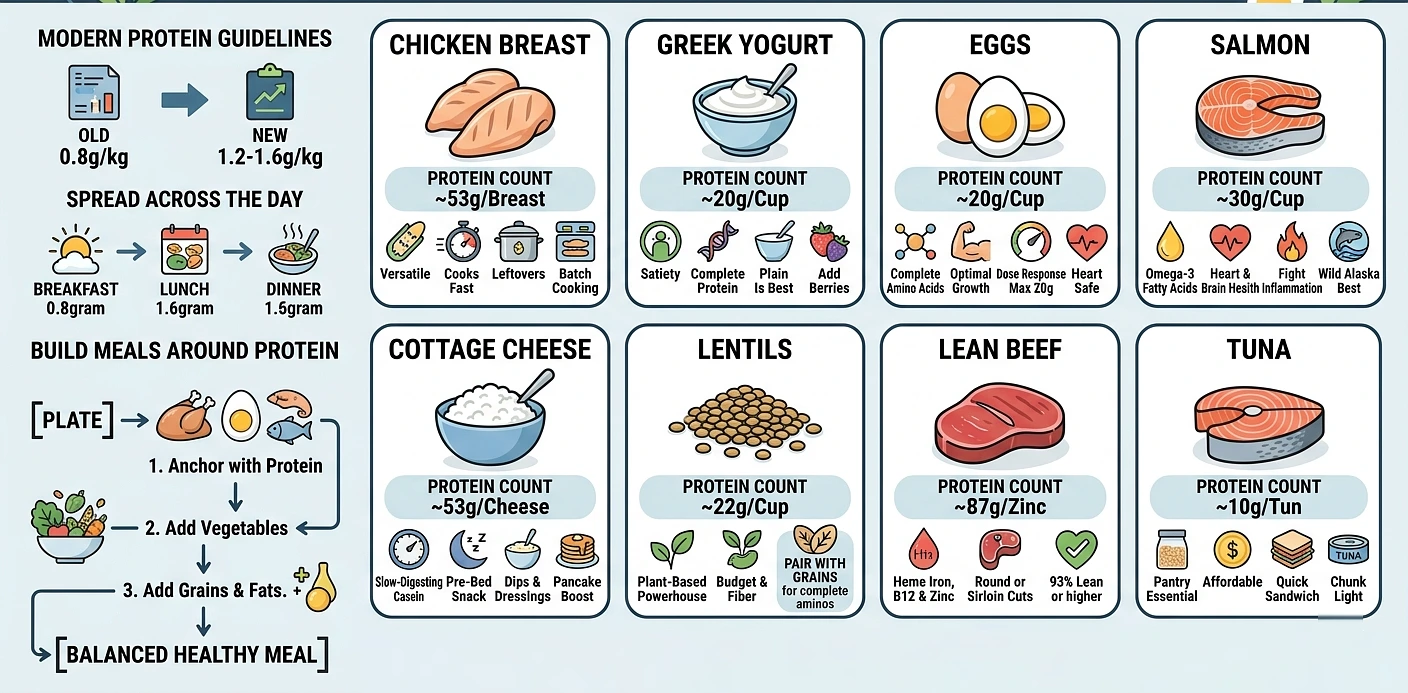
Protein is the nutrition your body leans on all day. It rebuilds the muscles you wore down on your morning walk. It keeps you full hours after breakfast. And it fuels everything from enzymes to immune cells. Yet most people plan meals around carbs and fats.
Overview
- Most adults need more the old RDA suggested aim for 1.2 to 1.6 grams per kilogram of body weight if you’re generally active.
- Spread across the day, with at least 25–30 grams at each meal, rather than piling it all into dinner.
- Animal sources (chicken, eggs, salmon, Greek yogurt, cottage cheese, lean beef) are complete with all nine essential amino acids.
- Plant sources (lentils, beans) are budget-friendly and fiber-rich, but pair them with grains across your day to get a complete amino acid profile.
- Quality beats quantity at one meal. Around 20 grams of high-quality maximally stimulates muscle synthesis after exercise eating triple that won’t triple the benefit.
- Build meals around first, then add vegetables, grains, and fats around it.
How Much Protein Do You Actually Need?
Before we get to the foods, let’s settle the math.
The old Recommended Dietary Allowance was 0.8 grams of per kilogram of body weight. That number was designed to prevent deficiency, not help you thrive.
The newly revised dietary guidelines instead recommend 1.2 to 1.6 grams per kilogram, raising that 150-pound person’s recommendation to 80 to 110 grams a day.
If you’re active, older, or trying to preserve muscle while losing weight, you need more. Avid exercisers potentially need even more: 1.4 to 2 grams per kilogram of body weight, or 20 to 40 grams per meal.
Spread it across the day. Your body can’t stockpile the way it does fat. A massive dinner steak won’t make up for a bagel-only breakfast.
One rule worth remembering: aim for at least 25–30 grams at breakfast. This helps maximize muscle protein synthesis, the process by which your body actually builds and maintains muscle.
Chicken Breast: The Reliable Workhorse
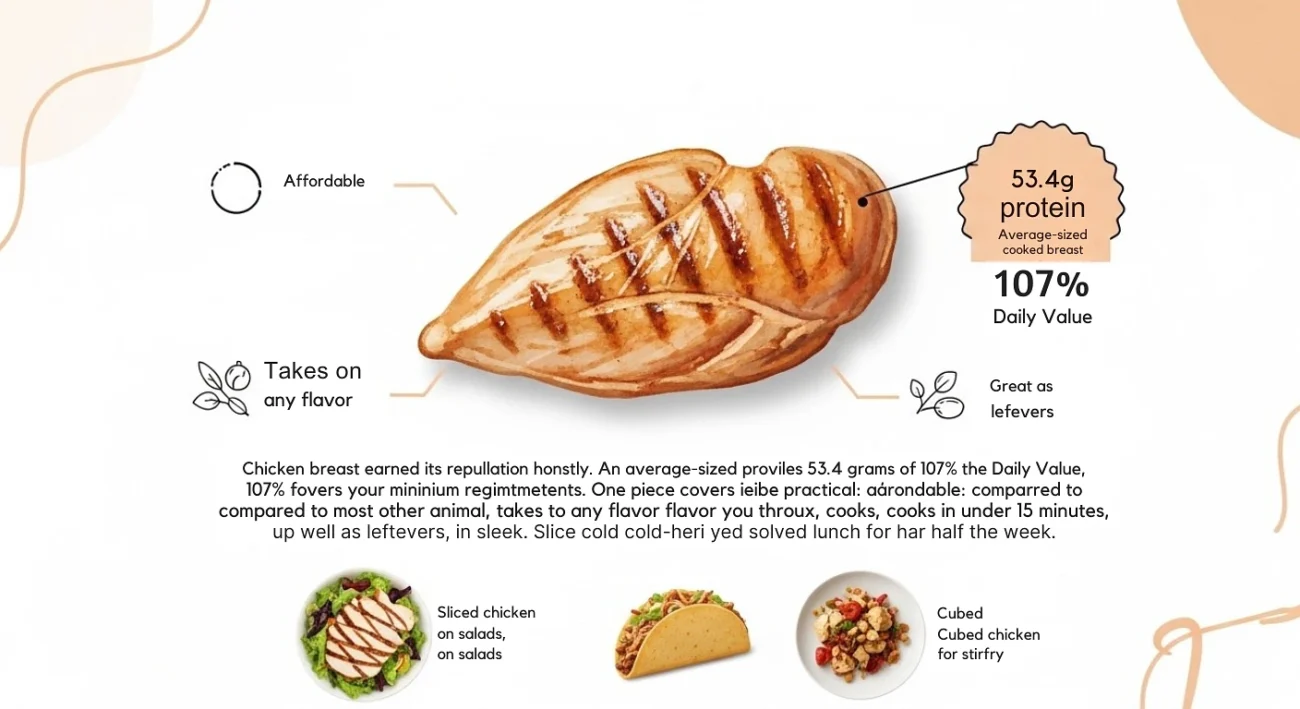
Chicken breast earned its reputation honestly. An average-sized cooked chicken breast provides 53.4 grams, 107% of the daily value.
One piece covers your entire day’s minimum requirement for most adults.
Beyond the numbers, chicken breast is practical:
- Affordable compared to most other animal.
- Takes on any flavor you throw at it.
- Cooks in under 15 minutes.
- Holds up well as leftovers.
Batch-cook a few breasts on Sunday and you’ve solved lunch for half the week. Slice cold chicken over salads. Shred it into tacos. Cube it for stir-fries.
Greek Yogurt: Breakfast, Solve
If you’ve ever felt hungry an hour after a bowl of cereal, Greek yogurt is your answer.
One cup of Greek yogurt delivers 14 to 21 grams. That’s 28 to 42 percent of your daily value.
What makes Greek yogurt special isn’t just the quantity. It’s the quality. Greek yogurt is a complete, meaning it delivers all nine essential amino acids your body can’t produce on its own.
Eggs: The Original Perfect Food
That quality matters. Essential amino acids have to come from food. Your body can’t make them.
- Research backs up the muscle-building benefits, too. A landmark study by Moore and colleagues Ingested dose response of muscle and albumin protein synthesis after resistance exercise in young men (American Journal of Clinical Nutrition, 2009) fed young men whole-egg in doses of 0, 5, 10, 20, and 40 grams after leg resistance training. MPS displayed a dose response to dietary ingestion and was maximally stimulated at 20 g.
The old fear about eggs and cholesterol? Largely overblown for healthy people. Harvard Health notes that eating one egg a day is safe for most healthy adults. Just don’t drown them in butter or pair them with three strips of bacon.
Salmon: Protein Plus Much More
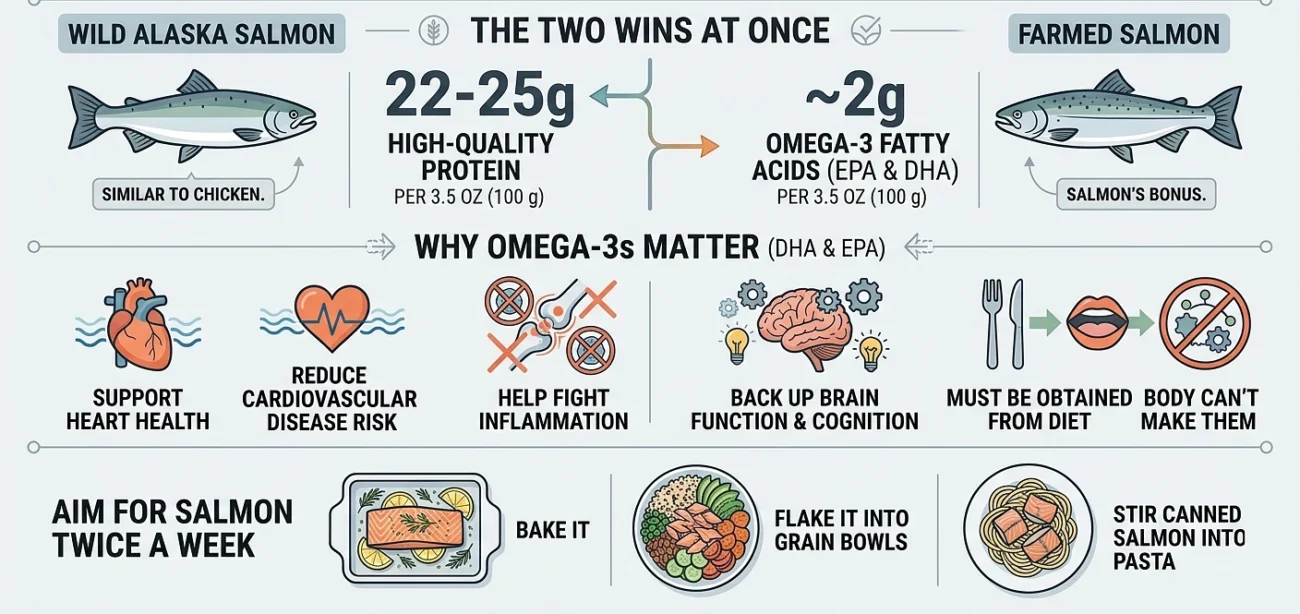
Salmon is one of those rare foods that gives you two wins at once.
Wild Alaska salmon specifically Copper River salmon stands out as a superior protein source, delivering an impressive 22-25 grams of high-quality protein per 3.5-ounce serving.
That’s similar to chicken. But salmon adds something chicken can’t: omega-3 fatty acids.
On average a 3.5 oz. (100 g) portion of farmed salmon also contains ~2 g of the omega-3 fatty acids eicosapentaenoic acid (EPA) and docosahexaenoic acid (DHA).
These fats matter because:
- They support heart health and reduce cardiovascular disease risk.
- They help fight inflammation.
- They back up brain function and cognition.
- Your body can’t make them, so diet is the only source.
Aim for salmon twice a week. Bake it with lemon and herbs, flake it into grain bowls, or stir canned salmon into pasta for a weeknight shortcut.
Cottage Cheese: The Forgotten Champion
Cottage cheese fell out of fashion somewhere between the 1970s and now. But it’s quietly one of the most-dense foods in the dairy aisle.
A cup serving provides 24.9 grams, 50% of the daily value.
It’s also slow-digesting. The casein releases gradually over several hours, feeding your muscles while you sleep. That makes it ideal as a pre-bed snack.
Some ways to actually enjoy it:
- Mix with berries and a drizzle of honey for a sweet option.
- Blend smooth and use as a base for dips or dressings.
- Stir in black pepper and chopped cucumber for a savory bowl.
Lentils: The Plant-Based Powerhouse
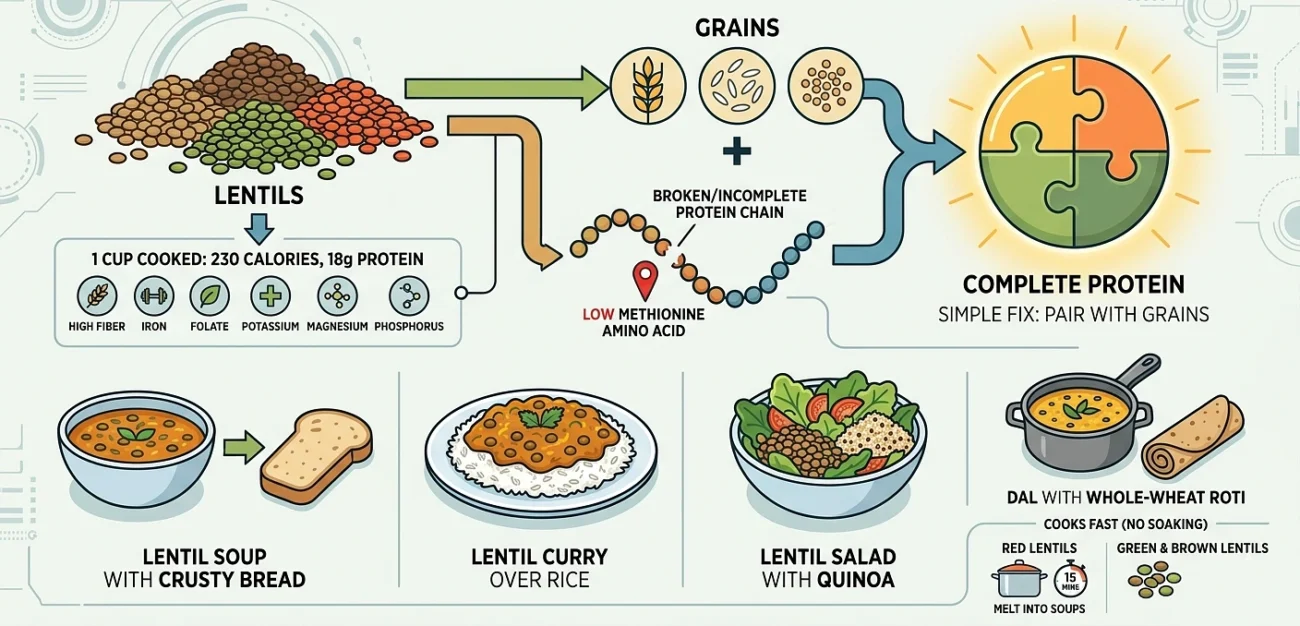
1 cup of cooked lentils provides 230 calories and 18 grams, as well as it is an excellent source of folate, iron, potassium, phosphorus, fiber, and a good source of magnesium.
The fix is simple. Pair them with grains across your day:
- Lentil soup with crusty bread.
- Lentil curry over rice.
- Lentil salad with quinoa.
- Dal with whole-wheat roti.
Cultures around the world figured this combination out thousands of years ago.
Lentils also cook fast. No overnight soaking. Red lentils are ready in 15 minutes and melt into soups. Green and brown lentils hold their shape for salads and stews.
Lean Beef: Protein and Iron Together
Lean beef offers heme iron, which your body absorbs more efficiently than the non-heme iron found in plants. It’s also loaded with zinc and vitamin B12.
The key is choosing the right cuts:
- Go for: round, sirloin, tenderloin, or ground beef labeled 93% lean or higher.
- Occasional only: ribeye, bacon, sausage, and heavily processed meats.
Tuna: The Pantry Essential
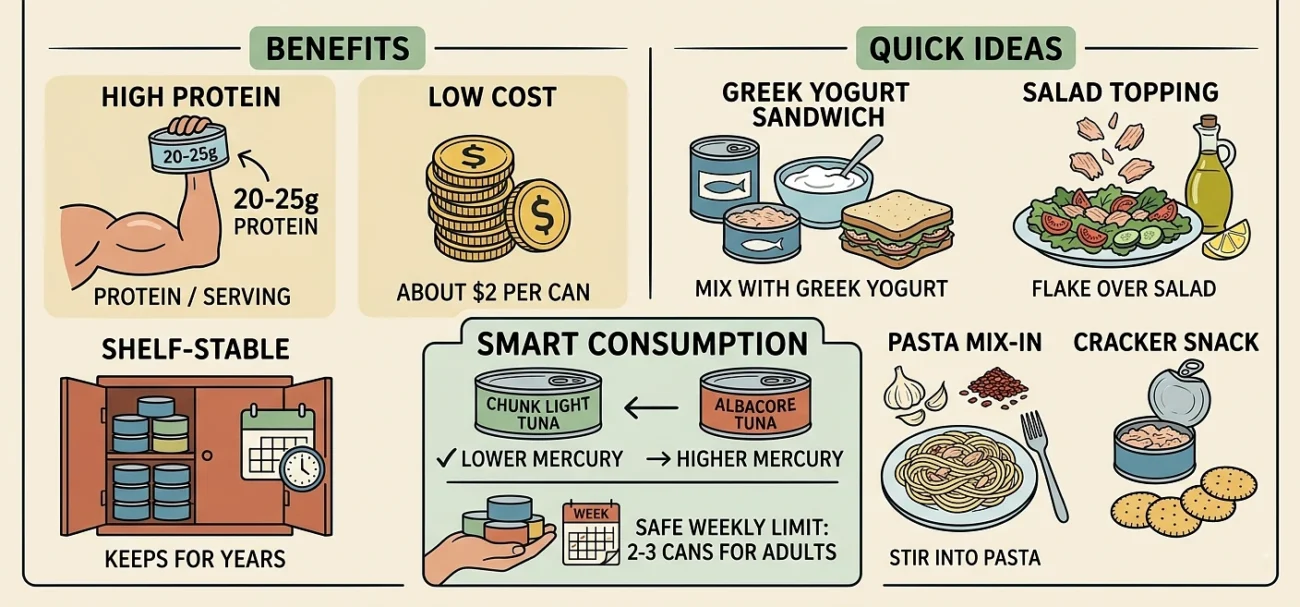
A can of tuna is the laziest high meal in the world, and that’s a compliment.
Canned tuna packs roughly 20 to 25 grams of per serving, costs about two dollars, and keeps in your cupboard for years.
Quick ideas:
- Flake over a salad with olive oil and lemon.
- Stir into pasta with garlic and chili flakes.
- Eat straight from the can with crackers.
Stick to chunk light tuna for regular eating. It’s lower in mercury than albacore. Two to three cans a week is a safe upper limit for most adults.
How to Build Meals Around Protein
Reading a list is easy. Changing how you eat is harder. A few shifts that actually work:
- Anchor every meal with a source first. Decide what your, then build the rest of the meal around it. This flips the usual approach where becomes an afterthought.
- Front-load your day. Most people under-eat at breakfast and overcompensate at dinner. Aim for 25 to 35 grams per meal rather than stacking it all at night.
- Keep shortcuts ready. Hard-boiled eggs, rotisserie chicken, canned fish, and single-serve Greek yogurt cups all make it possible to hit your numbers on busy days.
- Don’t fear repetition. Eating chicken and rice four times a week isn’t boring. It’s efficient. Save variety for the seasonings and sides.
References
- How much protein should we really be eating? Five things to know – Stanford Medicine (2026)
- How much protein do you really need? – UCLA Health (2025)
- Eggs, protein, and cholesterol: How to make eggs part of a heart-healthy diet – Harvard Health Publishing
- Moore DR, Robinson MJ, Fry JL, et al. Ingested protein dose response of muscle and albumin protein synthesis after resistance exercise in young men. American Journal of Clinical Nutrition, 2009;89(1):161–168
- 30 Foods High in Protein (USDA FoodData Central) – Nutrition Advance
- Nutrition – Farmed Salmon – Global Salmon Initiative
- Lentils – A Nutrition Powerhouse! – Wake Internal Medicine