
Groin Pain: Causes & How To Find Relief
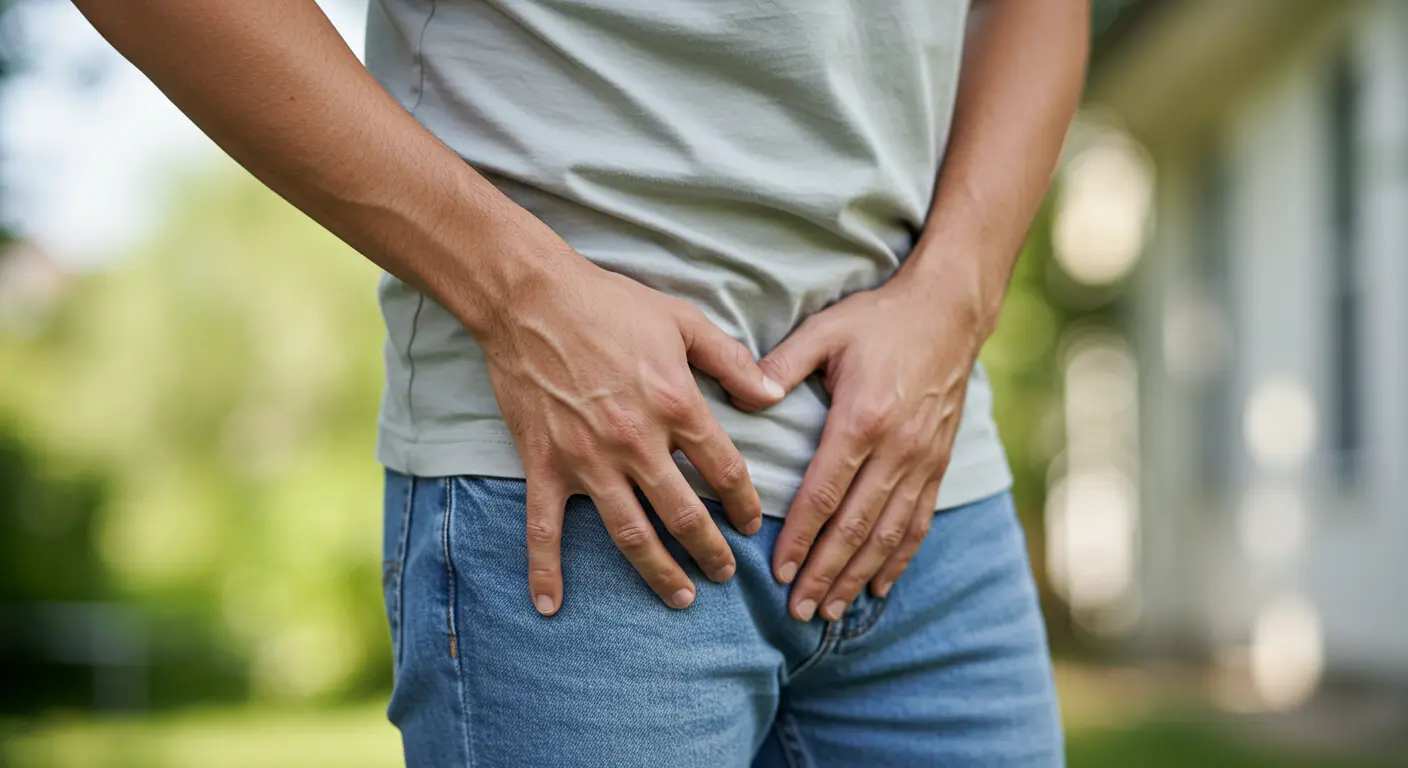
You know the feeling. That sharp little twinge when you swing your leg out of the car. The dull ache that sneaks in halfway through a walk. Or that weird pulling sensation mid-stride in a pickup soccer game the kind that stops you cold and makes you think, Groin pain has a real knack for bad timing.
Here’s the honest truth: “groin pain” isn’t really one thing. It’s a symptom. And it can point to all kinds of stuff, from a simple pulled muscle to a kidney stone making its slow, brutal way down your ureter (which, by the way, people often describe as the worst pain they’ve ever felt). Sometimes it hits out of nowhere. Sometimes it creeps in over weeks. For some people it stays in one spot. For others it radiates down the thigh, into the back, or into the testicles. Figuring out what’s actually going on takes a little detective work.
What Is Groin Pain?
It’s that fold where your lower belly meets the top of your thigh. Pain relief can sit above the fold, below it, or right in the crease. One side, both sides, sometimes wrapping into the lower back or inner thigh.
A lot of important things live in a very small space. Muscles, tendons, nerves, lymph nodes, blood vessels, and parts of the reproductive and urinary systems all crammed in together. One symptom, about ten possible causes. No wonder people end up confused.
The Usual Suspect: A Groin Strain
If you’re active at all, this is probably your first guess. And more often than not, your gut is right.
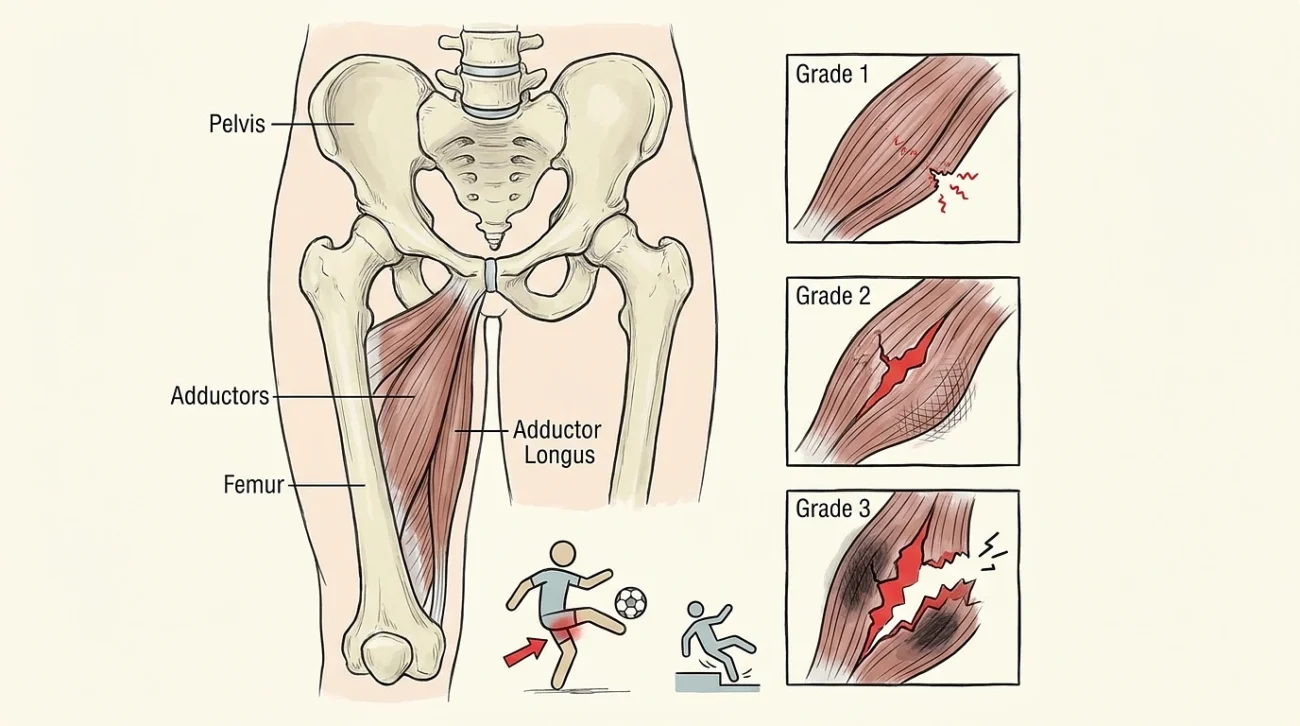
A groin strain is a tear or overstretch in your adductors =those inner-thigh muscles that pull your legs together. The adductor longus usually takes the worst of it, mostly because of the awkward angle it’s working at every time you cut sideways, kick, or change direction fast.
Strains come in three grades. Grade 1 is mild sore, a bit tender, but most things still work fine. Grade 2 is a partial tear, with noticeable weakness and usually some swelling a few days in. Grade 3 is a full rupture, and honestly, you won’t need anyone to tell you. The pain is awful, the muscle basically stops working, and there’s often visible bruising.
Soccer and hockey players deal with these constantly. But you don’t have to play a sport to end up with one. A slip on wet grass, a missed step coming downstairs, a heavy deadlift with sloppy form plenty of ways in.
It usually feels like a sharp stab at the exact moment it happens, followed by a nagging, draggy ache that flares up when you walk, take stairs, or try to squeeze your legs together against any kind of resistance.
Hernias:
Inguinal hernias are abnormalities in which a small segment of tissue (fat or intestine) forces its way through a small opening in the lower part of your abdominal wall. Ordinary they are and they are much more ordinary in men than they are in women.
The telltale sign? A bump on one side of your pubic bone that is more noticeable when standing, coughing or straining. You may have a burning or aching, some pressure or a pinching pain that radiates through your pelvis or your leg.
The annoying part here is that hernias do not heal. Asymptomatic ones may be observed and left unattended, but painful or enlarging ones will often require surgery. The last thing you want is a strangulated hernia which is where the trapped tissue loses its blood supply. It’s an emergency. Full stop.
Red flags: a swollen redness, dark purple, or dark. Sudden worsening pain. Nausea, vomiting, fever. Is unable to pass gas or have a bowel movement. Any of that? Don’t wait. ER.
Hip Arthritis:
This one surprises a lot of people. Hip osteoarthritis often doesn’t feel like hip pain at all. It feels like groin pain.
There’s a great UK study that nailed this down “Hip osteoarthritis: where is the pain?” by Khan and colleagues, published in the Annals of the Royal College of Surgeons of England back in 2004. They actually mapped where hip OA patients feel their pain. They compared 60 patients waiting for hip replacement with 60 waiting for spinal surgery. Groin pain turned up in 84.3% of the hip patients by far the most reliable clue that the joint was the real culprit. And here’s the kicker: nearly half of those hip OA patients also had pain radiating below the knee, which flipped a lot of what clinicians had been taught about where hip pain is “supposed” to show up.
Hip OA pain doesn’t arrive dramatically. It builds over months, sometimes years. It’s worst in the morning, worse after you’ve been sitting for a while, and worse when you load it up walking, stairs, getting in and out of a low chair. Some people hear a grinding sound (that’s crepitus) or feel the joint catch or lock. Morning stiffness that eases up within about half an hour is pretty classic.
Causes of Groin Pain?
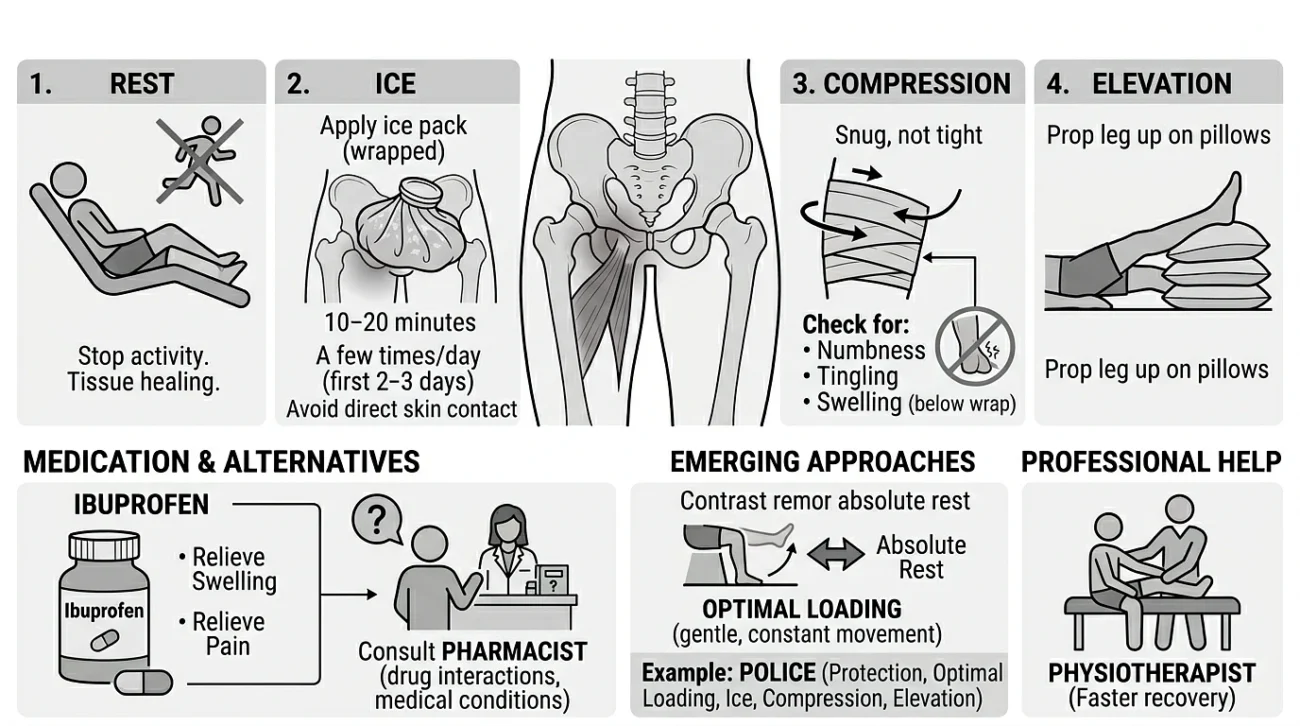
For a mild to moderate strain, old-school RICE is still a reasonable starting point.
- Rest. Stop doing whatever caused it. Give the tissue a chance to heal without you reaggravating it every few hours.
- Ice. Wrap a cold pack in a thin towel never put ice straight on your skin and hold it there for 10 to 20 minutes at a time, a few times a day. Most useful in the first two or three days.
- Compression. Elastic bandage, snug but not tight. If you’re getting numbness, tingling, or swelling below the wrap, it’s too tight. Loosen it.
- Elevation. Prop the leg up on pillows when you’re sitting or lying down.
- IBuprofen Can be used over-the-counter to relieve the swelling as well as the pain. Unless you know well whether it will interact with your other medications or medical conditions, consult with a pharmacist. Five minutes, no appointment, unexpectedly helpful talk.
RICE is not gospel as it was. Sports medicine has been silently changing to such approaches as POLICE (Protection, Optimal Loading, Ice, Compression, Elevation), where the constant and gentle movement of tissues isn’t totally restful although better than absolute rest in terms of tissues healing. When you have pulled something that is more than a simple adjustment, a physiotherapist will have you on your feet quicker than you do. Worth the visit.
A Prevention Move That’s Actually Proven
When your game requires cutting, kicking or running, then one exercise has real evidence supporting it, the Copenhagen Adduction Exercise.
In 2019 Haroy and co conducted a large cluster-randomized trial on it The Adductor Strengthening Programme prevents groin problems among male football players published in the British Journal of Sports Medicine. They selected 35 Norwegian semiprofessional soccer teams (a total of 652 players) and divided them into two. One performed Copenhagen exercise thrice a week in preseason and once a week during the competitive season, which is 28 weeks long. The other team practised as usual.
The result? A 41% drop in groin problems for the teams doing the exercise. The authors even pointed out that the real effect might be bigger, since some of the control-group guys apparently picked up on the exercise and started doing it on their own.
And the exercise itself is almost embarrassingly simple. Side plank, top leg resting on a partner or a bench, lower and raise your bottom leg slowly. No equipment. That’s literally it.
References
- Khan AM, McLoughlin E, Giannakas K, Hutchinson C, Andrew JG. Hip osteoarthritis: where is the pain? Annals of the Royal College of Surgeons of England, 2004
- Harøy J, Clarsen B, Wiger EG, Øyen MG, Serner A, Thorborg K, Hölmich P, Andersen TE, Bahr R. The Adductor Strengthening Programme prevents groin problems among male football players: a cluster-randomised controlled trial. British Journal of Sports Medicine, 2019; 53(3): 145–152
- Groin Pain: Causes & How To Find Relief – Cleveland Clinic – https://my.clevelandclinic.org/health/symptoms/groin-pain
- Groin Strain: Causes, Symptoms, Tests & Treatments – Cleveland Clinic – https://my.clevelandclinic.org/health/diseases/groin-strain
- Adductor Strain – StatPearls, NCBI Bookshelf – https://www.ncbi.nlm.nih.gov/books/NBK493166/
- Inguinal hernia – Symptoms & causes – Mayo Clinic – https://www.mayoclinic.org/diseases-conditions/inguinal-hernia/symptoms-causes/syc-20351547
- Inguinal Hernia – Johns Hopkins Medicine – https://www.hopkinsmedicine.org/health/conditions-and-diseases/hernias/inguinal-hernia
- Hip Osteoarthritis – OrthoInfo, American Academy of Orthopaedic Surgeons – https://orthoinfo.aaos.org/en/diseases–conditions/osteoarthritis-of-the-hip/
- Kidney Stones: Causes, Symptoms, Diagnosis & Treatment Cleveland Clinic – https://my.clevelandclinic.org/health/diseases/15604-kidney-stones
- Acute Renal Colic – StatPearls, NCBI Bookshelf – https://www.ncbi.nlm.nih.gov/books/NBK431091/
- Groin pain – MedlinePlus Medical Encyclopedia – https://medlineplus.gov/ency/article/003111.htm