
Enso Pain Relief: How Does It Really Work?

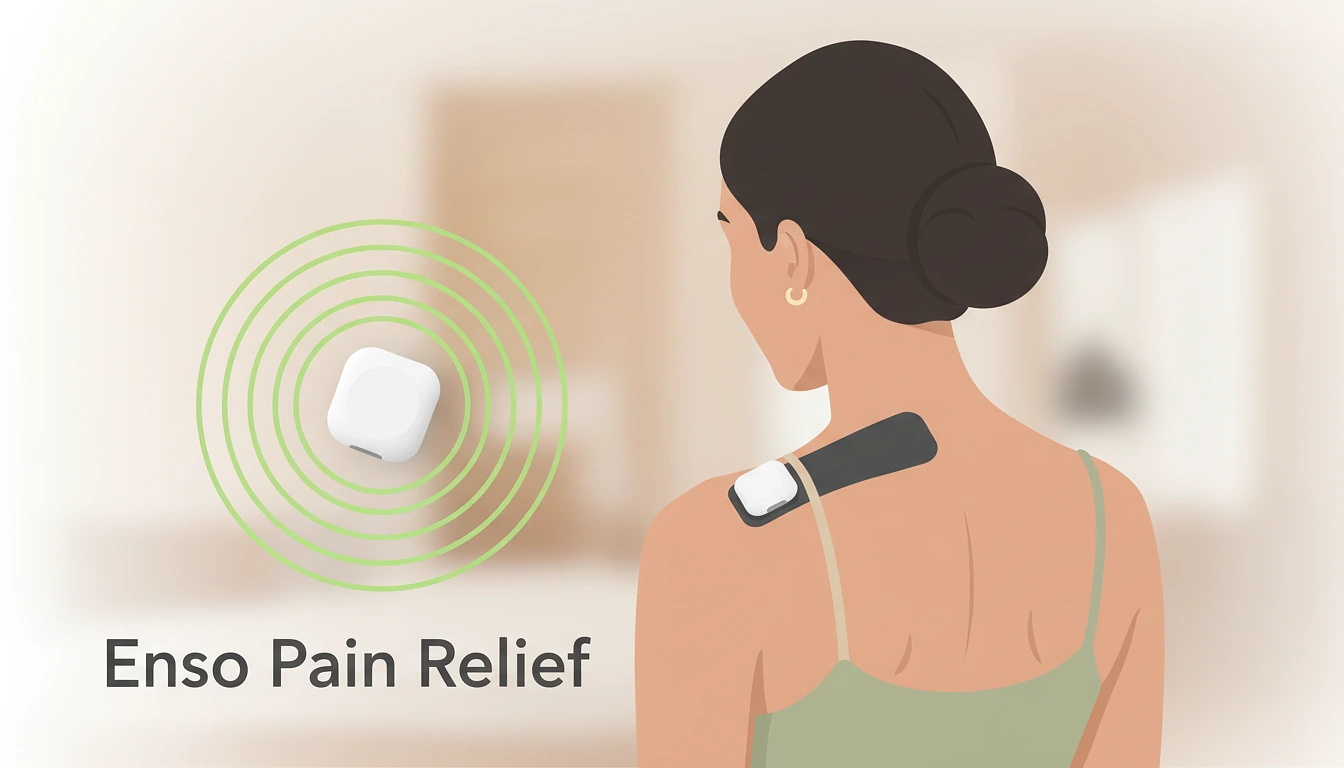
Enso is a tiny device from Hinge Health that relieves the muscles and joint pain, no sick note, no trailing cables. It’s FDA-approved and uses a technology called High-Frequency Impulse Therapy (HFIT). So, it blocks pain messages before they reach the brain, and encourages your body to produce its own painkillers. It’s not just a lot of hot air either. A peer-reviewed paper published in the Journal of Research found people using reduced their chronic back pain by 55% over four weeks – about twice as much as the placebo group. So if you’re looking for a non-medication approach to treating your aches and pains, this is one to try.
If you’ve ever suffered from a pinched nerve, stiff back or achy knees when you walk up stairs, you know what I mean. Pain doesn’t care what’s in the diary. It’s there on your morning meeting, at the grocery store, the moment you lie down. And if we’re being honest, we’ve been fighting with a pretty short list of options for a long time another ibuprofen, a nap, or suck it up, it’ll get better. Enso has been making some waves because it offers a new twist: medication-free relief that you can wear under your clothes and turn on when needed.
And it’s a bigger audience than you’d think. About 24.3% of American adults reported chronic pain in 2023, and 8.5% had high-impact chronic pain the kind that genuinely interferes with work and daily life (CDC NCHS Data Brief, 2024). Roughly one in four adults walking around with ongoing. So it’s no shock that non-drug options are finally getting serious attention.
What Is Enso?
Wireless wearable made by Hinge Health. It’s small, sticks to your skin with a reusable gel pad, and pairs with a smartphone app where you control the intensity, pick your waveform, and set how long the session runs. It’s FDA-cleared, non-invasive, non-addictive, and doesn’t need a prescription if you’re using it through Hinge Health’s program (Hinge Health, 2025).
What’s actually happening is pretty simple gentle electrical pulses move through your skin into the muscles and nerves underneath. This whole category of treatment is called electrical nerve stimulation, and physical therapy clinics have been using versions of it for decades.
How Enso Relieves Pain
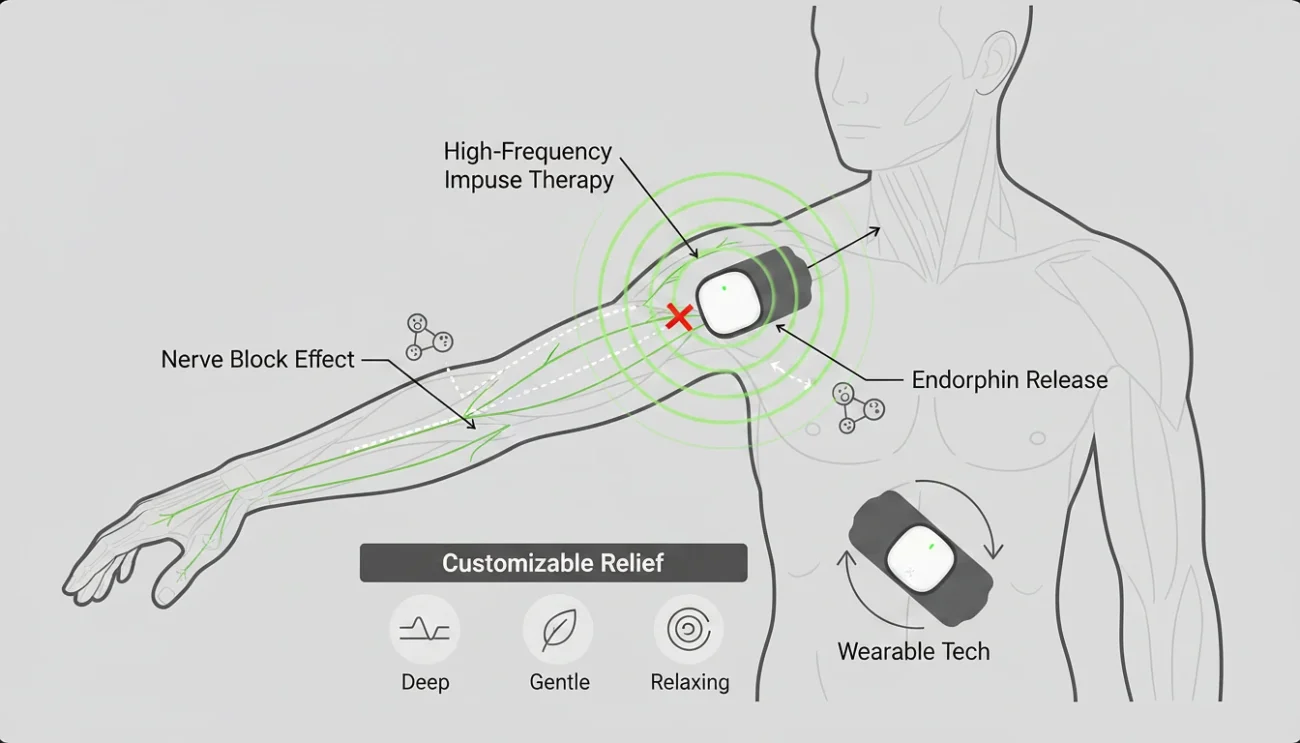
- High-Frequency Impulse Therapy (HFIT): Most TENS units stick with low-frequency stimulation.
- A “Nerve Block” Effect: The pulses create a steady sensation that essentially drowns out signals before they can travel up to your brain.
- Endorphin Release: That gentle buzzing also nudges your body to release more of its own natural painkillers endorphins.
- Customizable Relief: You’re not locked into one setting. Comes with several waveforms Deep, Gentle, and Relaxing so you can match the feel to what’s actually bothering you, whether it’s a sore muscle or a stiff joint.
- Wearable Tech: It’s small, light, and held on with reusable gel pads, so you can wear it through the day or before a workout without anyone noticing.
The Basic Science: How Electrical Stimulation Calms Pain
Before we go deeper into Enso, zoom out for a second. Why does an electrical pulse calm in the first place? Your nerves are constantly relaying messages between your body and brain. When a signal hits your spinal cord, your brain interprets it and that’s when you feel the ache, the throb, the sharp jolt. Electrical stimulation devices basically interrupt that conversation.
Researchers point to two main mechanisms. The first is the gate control theory, originally proposed by Melzack and Wall in 1965. The idea: your spinal cord has a kind of gate that decides which signals make it to the brain. When non-painful stimulation like a soft electrical pulse fires up the larger nerve fibers, it slams that gate shut on the smaller fibers carrying (Mayoral del Moral et al., Mechanism of Action of Peripheral Nerve Stimulation for Chronic Pain, 2023, PMC10003676).
The second mechanism taps into your body’s own pharmacy: endogenous opioids. Electrical stimulation can prompt your nervous system to release these natural painkillers, and they quiet signaling at multiple stops along the way in the brain and in the spinal cord.
What Makes Enso Different From a Regular TENS Unit?
If you’ve ever been wired up to a TENS machine in a clinic those familiar units with sticky pads and trailing cords might look like a close relative at first. But the tech under the hood is doing something different. Most TENS units run between 2 and 200 Hz. Enso uses High-Frequency Impulse Therapy (HFIT), which lives in the 30 to 150 kHz range hundreds of times higher than standard TENS (Amirdelfan et al., Journal of Pain Research, 2021).
Why is frequency important? When the pulses are of ultra-high frequency, they affect your nerve ion channels differently. Studies of these channels show that the high-frequency signal almost blocks the nerves nerves become less excitable, less likely to fire, and recover more quickly (Innovations of the World, 2023).
There’s a practical difference too. Traditional TENS pads need to sit right on the painful spot. Small enough to wear under your shirt while you work, walk, even sleep and the app handles the adjustments without you fumbling with knobs.
Effectiveness and Use
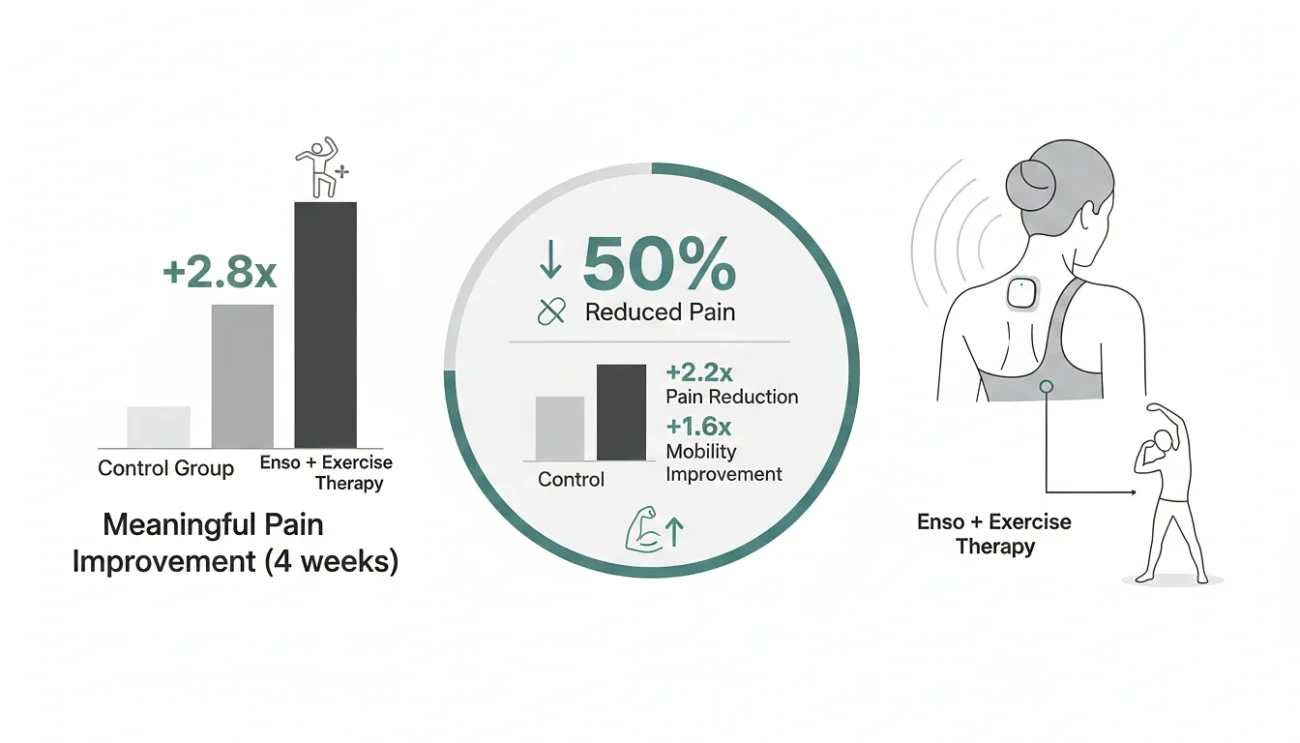
- A solid success rate: In published studies, users have seen drop by more than 50% which matters for anyone who’s been stuck on painkillers that barely scratch the surface.
- More than just less pain: People using reported up to 2.2 times more pain reduction and around 1.6 times more improvement in mobility versus control groups.
- Even better with exercise therapy: Pair with exercise therapy and the results jump. One study found users were 2.8 times more likely to see meaningful pain improvement at four weeks compared to people doing exercise alone.
What the Research Actually Show
The strongest evidence for comes from a multicenter randomized controlled trial published in the Journal of Research in September 2021. Researchers from UCSF and Memorial Sloan Kettering Cancer Center pitted HFIT against a sham device with 36 patients dealing with chronic low back pain over four weeks (Amirdelfan K, et al., 2021, J Pain Res 14:2991-2999, PMID: 34588809).
What the data showed:
- Pain reduction in the Enso group was about twice as large as the control (-54.7% vs. -25.3%, p ≤ 0.05).
- Walking speed on the Six-Minute Walk Test improved 2.5 times more (30.1% vs. 12.3%).
- Mobility on the Timed Up and Go Test improved 3.4 times more (65.9% vs. 19.4%).
Full transparency though this was a pilot study with a small group, funded by Thimble Bioelectronics, the original manufacturer (Hinge Health later acquired the company). That doesn’t make the findings worthless. Funding disclosures are a normal part of medical research. But one pilot trial isn’t the same as years of independent replication. The researchers themselves describe the results as “encouraging evidence” pointing toward more investigation.
Hinge Health has shared bigger internal numbers as well. According to the company, across more than 100,000 members and 3.3 million treatment sessions, users averaged a 56% reduction, with about 9 in 10 reporting clinically significant (Hinge Health press release via BusinessWire, September 2024). These are company-reported figures, so I’d treat them as supportive not on the same level as a peer-reviewed study.
A more recent randomized controlled trial of 325 participants also found that combining with exercise therapy delivered more meaningful reduction at four weeks compared to exercise therapy alone (Hinge Health Clinical Studies page, 2024).
What Enso Helps With
Based on its FDA clearance and how it’s being used in the real world, Meant for musculoskeletal pain the aches in your muscles, joints, and surrounding soft tissue. The most common spots people use it on:
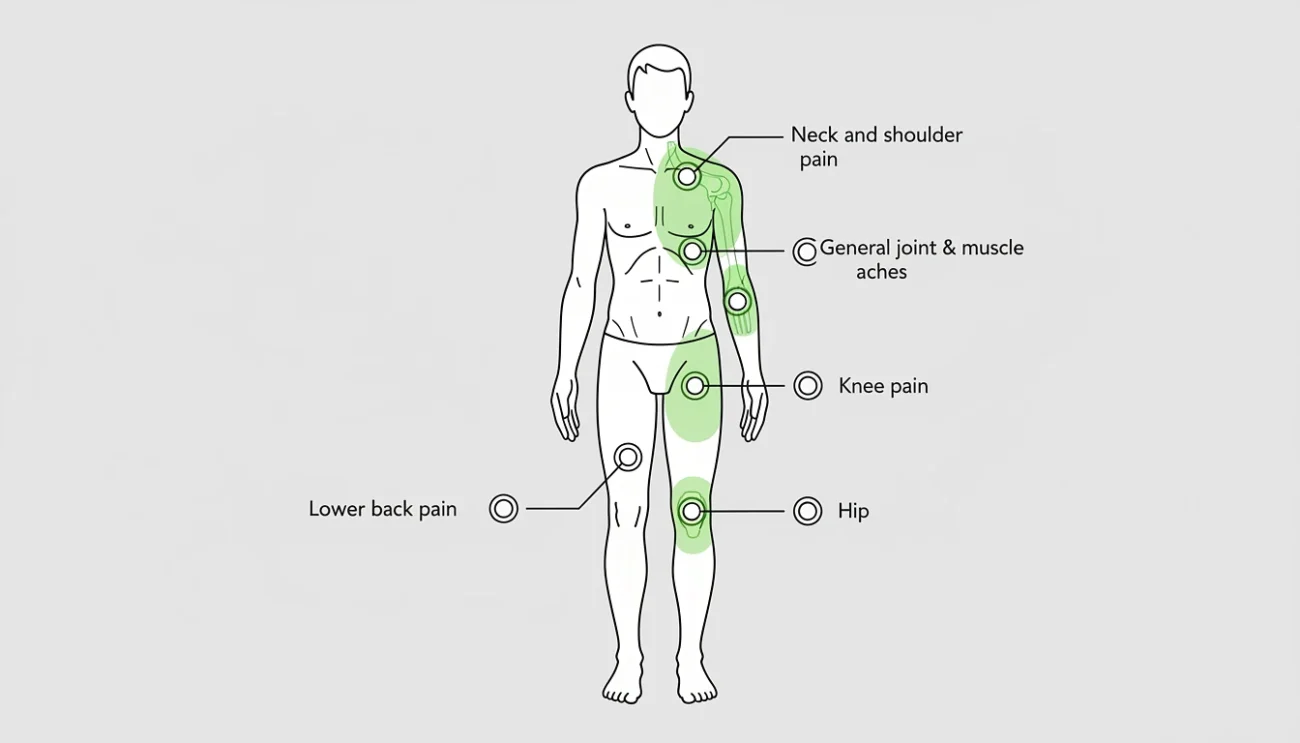
- Lower back pain.
- Neck and shoulder pain.
- Knee pain.
- Hip pain.
- General joint and muscle aches.
It’s not designed for things like nerve-damage from diabetes, post-surgical wound pain, or from internal organs. And like any electrical stimulation device, it’s not safe for people with pacemakers, certain implanted electronics, or anyone who’s pregnant (the usual TENS contraindications apply, per established physical therapy guidelines).
How a Session Actually Feels
When you turn on, you’ll feel a soft tingling or buzz under the pad. It shouldn’t hurt if it does, the intensity is too high. Most people describe it like a gentle pulsing, almost like a tiny massage. You pick a waveform in the app (Enso 3 ships with several options for different body parts and sensitivity levels), set the time, and get on with your day. Sessions can be short a few minutes is sometimes enough to take the edge off a flare but longer sessions are pretty common for chronic pain.
Relief usually kicks in within minutes and can hang around for hours after the session ends, depending on the person and the type of pain.
A Realistic Take
Enso is not a magic bullet, nor a silver bullet. What it seems to be according to the published evidence is a nice technique for managing musculoskeletal pain without drugs (particularly when you add exercise). If you’re a chronic back pain sufferer and you’re sick of switching between ibuprofen and a heating pad, that’s important. For someone with more complex pain, it should be part of a treatment plan you create with a health professional.
Step back a little and the real news is that non-pharmaceutical (aka drug) management is catching up. Electrical stimulation devices, exercise, cognitive therapy all this is mainstream now. It’s the future of serious management, partly because the opioid crisis made it all too clear that doing nothing else isn’t an option. Check with your doctor or physical therapist first. And if you do, be sure to stick with it for a few weeks before you judge whether it’s helping.
References
- Centers for Disease Control and Prevention, NCHS Data Brief No. 518: Chronic Pain and High-Impact Chronic Pain in U.S. Adults, 2023 (November 2024)
- Amirdelfan K, Hong M, Tay B, Reddy S, Reddy V, Yang M, Khanna K, Shirvalkar P, Abrecht C, Gulati A. High-Frequency Impulse Therapy for Treatment of Chronic Back Pain: A Multicenter Randomized Controlled Pilot Study. Journal of Pain Research. 2021;14:2991-2999. doi:10.2147/JPR.S325230
- Hinge Health. Enso: An FDA-cleared, wearable pain relief device.
- Hinge Health. Hinge Health Introduces Enso 3 (BusinessWire, September 10, 2024)
- Mayoral del Moral O, et al. Mechanism of Action of Peripheral Nerve Stimulation for Chronic Pain: A Narrative Review. PMC10003676
- New Clinical Study: Hinge Health Enso Wearable Demonstrates Significant Improvements in Both Mobility and Pain Reduction. BusinessWire, November 10, 2021