
Compression Socks for Shin Splints: Relief, Recovery & Prevention
Overview
- Shin splints (MTSS) cause pain along the inner edge of the tibia, most often from high-impact activity or sudden training increases.
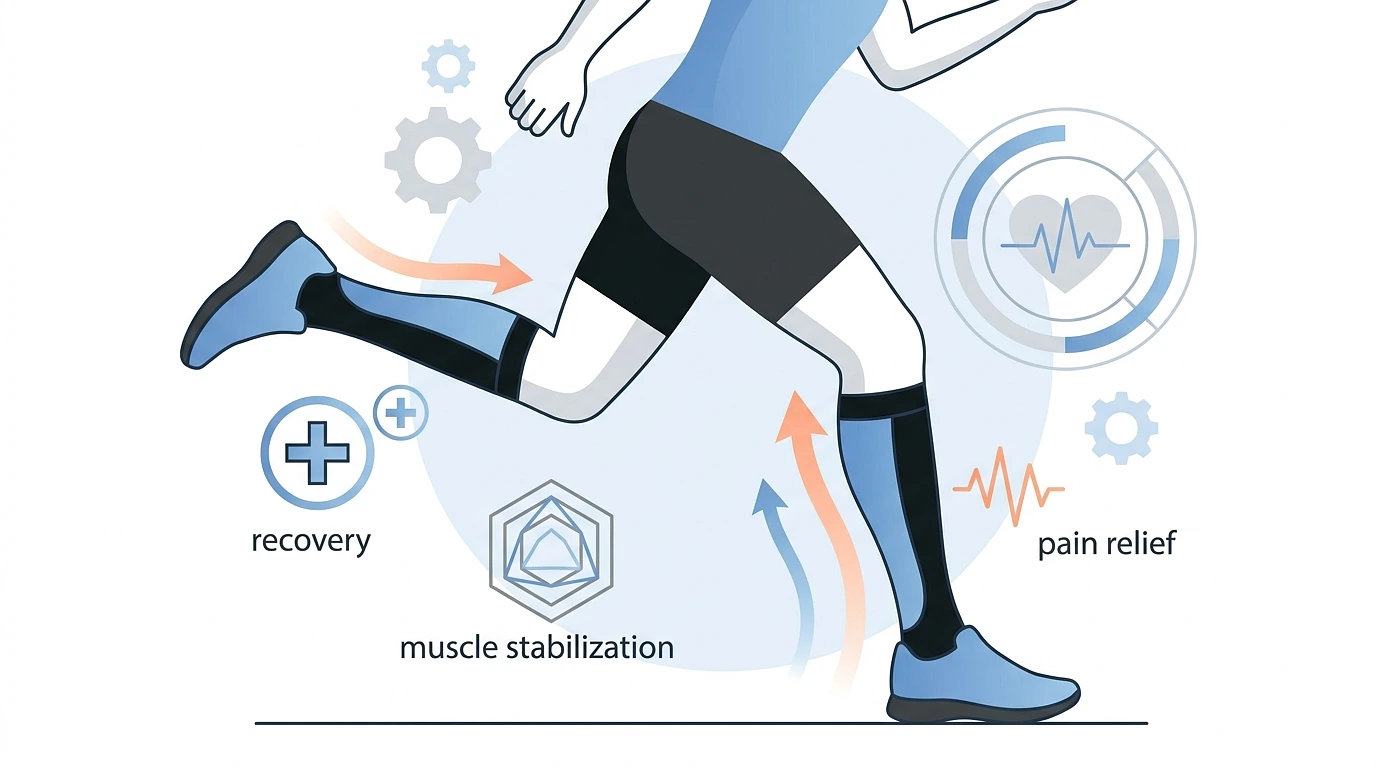
- Compression socks apply graduated pressure tightest at the ankle, easing up the leg to support circulation and stabilize muscles.
- They help in three ways: improved blood flow, reduced muscle vibration, and less swelling.
- The clinical evidence for treating MTSS alone is mixed, but compression is well-supported for recovery, soreness reduction, and injury prevention.
- Best used as part of a complete plan alongside rest, ice, strengthening, and smart training progression.
- Typical compression for shin splints: 15-20 mmHg, knee-high or over-the-calf fit, priced around $15-$50 USD per pair.
What Are Shin Splints?
Medial Tibial Stress Syndrome (MTSS), more commonly referred to as Shin Splints, is the pain that occurs along the inside of the tibia (shinbone). It is an inflammation of the muscles and/or tendons that surround the shinbone, and is frequently seen in runners, dancers and people who suddenly start exercising.
It’s especially prevalent in high-impact athletes. The incidence of MTSS is estimated to be as high as 35% in military personnel and athletes, and one study of naval recruits found 53% of female recruits developed shin splints during basic training.
The pain typically spreads across a broad section of the inner shin rather than one specific point a useful clue that distinguishes it from a stress fracture.
How Compression Socks Help Shin Splints
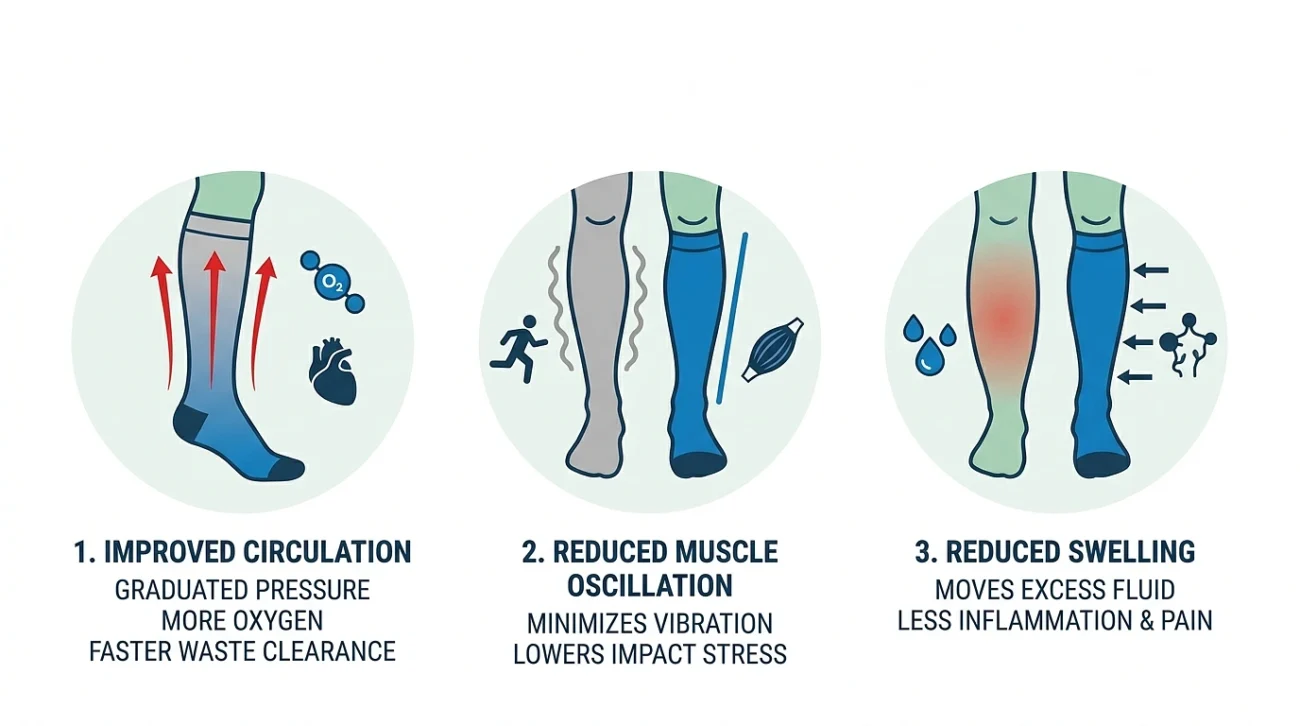
Compression socks aren’t magic, but they work on three legitimate physiological mechanisms.
1. Improved Circulation
Compression socks apply graduated pressure to the lower legs highest at the ankle, decreasing up the leg which encourages more efficient blood flow. Better circulation means more oxygen and nutrients reach inflamed tissues, and metabolic waste clears faster.
2. Reduced Muscle Oscillation
A study published in the British Journal of Sports Medicine found that graduated compression can reduce muscle oscillation and improve proprioception, both of which benefit runners dealing with lower leg injuries.
In plain terms: during running or jumping, your calf and shin muscles vibrate with every impact. That repetitive jiggling contributes to microtrauma and fatigue. Compression socks act like a stabilizing layer that minimizes those vibrations, lowering stress on the tibia and surrounding soft tissue.
3. Reduced Swelling and Inflammation
Shin splints are fundamentally an inflammatory response. Controlled external pressure helps move excess interstitial fluid out of the inflamed area through the lymphatic system, which directly translates to less swelling and less pain.
What Does the Evidence Actually Say?
Here’s where honesty matters more than hype.
A 2012 randomised clinical trial by Moen et al. studied 74 athletes with MTSS and found that adding compression stockings to a graded running programme showed no significant difference in time to recovery compared to graded running alone. A 2013 systematic review by Winters et al. in Sports Medicine concluded that stockings have not been proven effective for treating MTSS as a standalone therapy.
That sounds discouraging, but it doesn’t mean compression socks are useless. Studies consistently show compression socks aid in recovery and help minimize overall muscle soreness the major benefits appear in reducing lactic acid, preventing injury, and aiding faster recovery.
Bottom line: Compression socks won’t cure shin splints on their own, but they’re a valuable tool in a comprehensive recovery plan that includes rest, strengthening, and smart training progression.
Benefits at a Glance
| Benefit | What It Means for You |
|---|---|
| Pain relief during activity | Less discomfort while walking or running through mild flare-ups |
| Faster recovery | Reduced soreness and swelling after workouts |
| Muscle stabilization | Less vibration-induced microtrauma |
| Injury prevention | Lower cumulative stress when ramping up training |
| Daily comfort | Useful for long standing, travel, or post-workout wear |
How to Choose the Right Compression Socks
Not all compression socks are created equal. Here’s what to look for.
Compression Level (mmHg)
- 15–20 mmHg – Mild compression. Best for everyday wear, mild shin splint symptoms, and during activity. This is the sweet spot for most runners.
- 20–30 mmHg – Moderate compression. Good for recovery and more pronounced swelling. Usually requires consultation if you have circulation conditions.
- 30+ mmHg – Medical-grade. Only with a doctor’s recommendation.
Length
Choose over-the-calf or knee-high socks for shin splints. Sleeves (no foot) work too if you prefer different socks for fit, but full socks give better graduated pressure from the ankle up which is where the lymphatic drainage benefit comes from.
Fit
A proper fit is non-negotiable. Too loose and you lose the benefit; too tight and you risk restricting circulation. Most quality brands offer a sizing chart based on calf circumference and shoe size measure both before buying.
How to Wear Them Properly
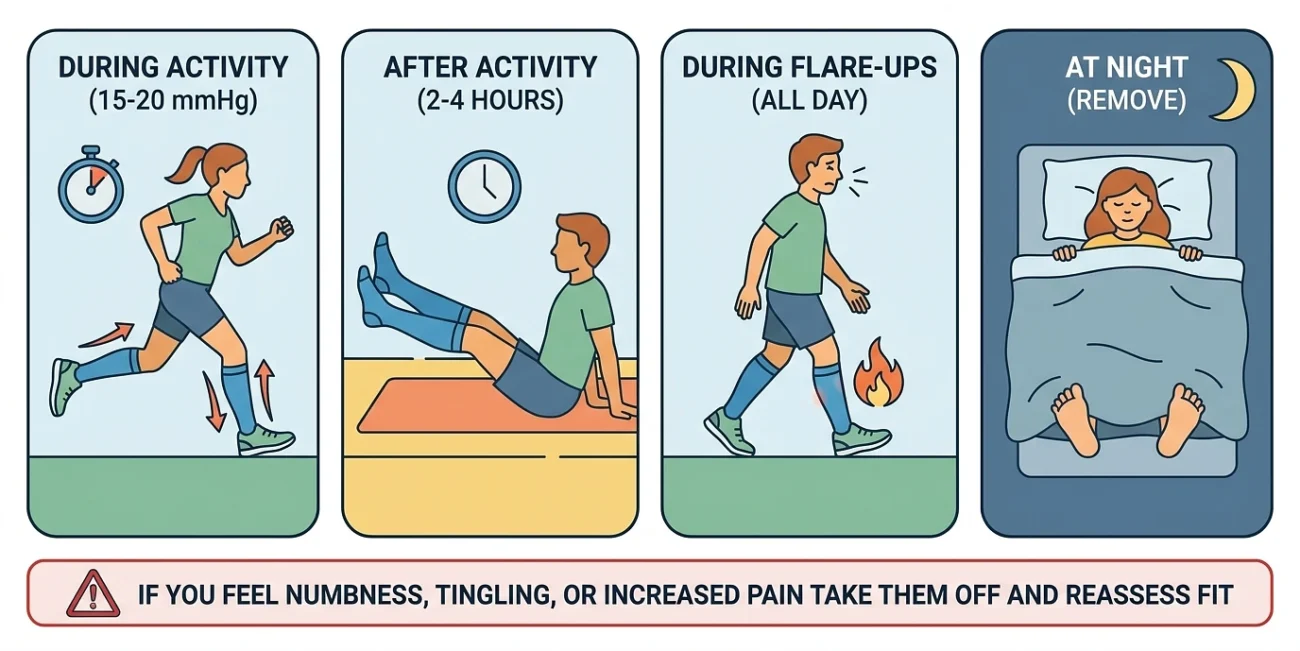
- During activity: Wear 15-20 mmHg socks while running, walking, or training to reduce vibration and support circulation.
- After activity: Continue wearing compression for 2-4 hours after exercise to support blood flow and reduce post-activity swelling.
- During flare-ups: Many athletes wear them throughout the day during acute shin splint episodes, especially when standing or walking a lot.
- At night: Most people remove compression socks during sleep to allow normal circulation patterns, unless a healthcare provider recommends otherwise.
If you ever feel numbness, tingling, or increased pain take them off and reassess the fit or compression level.
What Else You Should Do for Shin Splints
Compression socks work best alongside the fundamentals:
- Rest – Pull back on high-impact activity until the sharp pain subsides.
- Ice – 15 minutes on the shin, several times a day during the first few days.
- Strengthening – Calf raises, toe walks, and tibialis anterior exercises build resilience in the lower leg.
- Footwear check – Worn-out or wrong-fit shoes are a common culprit. Replace running shoes every 300-500 miles.
- Training progression – Increase mileage or intensity by no more than ~10% per week.
- Surface variety – Mix in softer surfaces like trails or treadmills if you usually run on concrete.
If pain persists beyond a few weeks, is sharply localized to one spot, or worsens at rest, see a sports medicine professional. It could be a stress fracture, which requires different treatment.