
hcooch ch2 h2o: Small Molecules, Big Health Impact

Overview
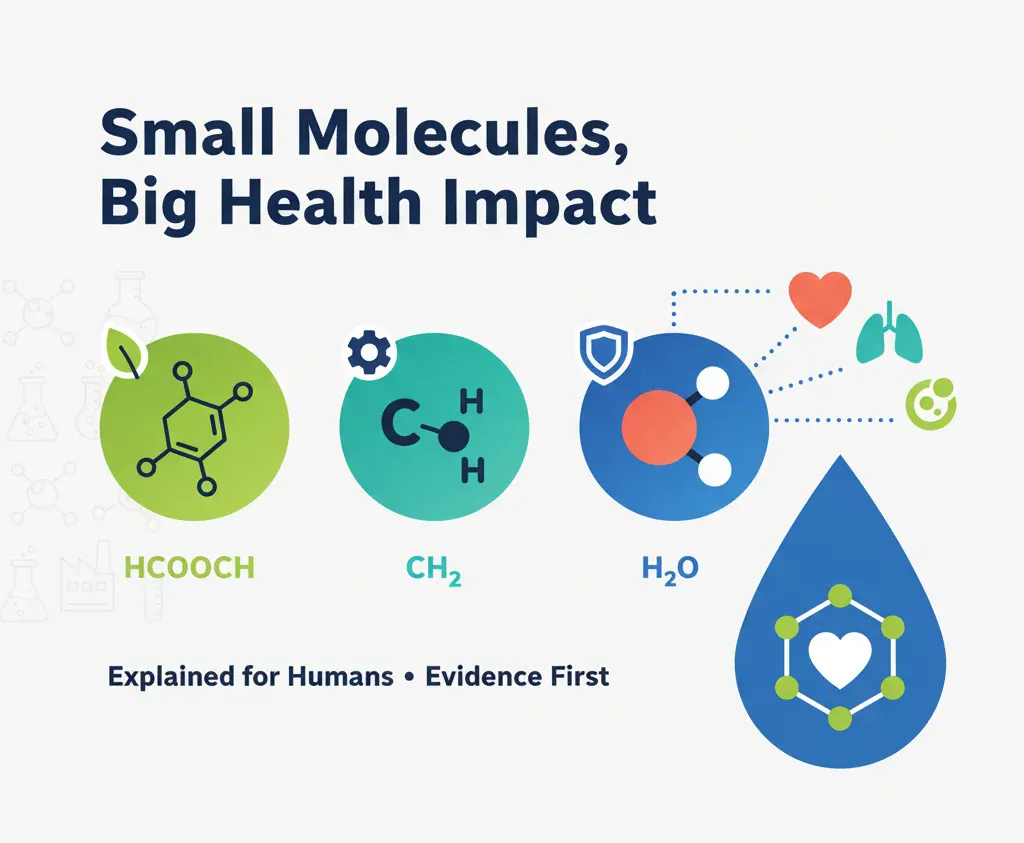
The three simple molecules, hcooch ch2 h2o, have a massive impact, from the lab bench to the pharmacy shelf. The tiny known as formic acid derivatives, methylene fragments and water are unsung heroes to the complex chemistry of life. They make medicines better, industries greener and products safer.
If you see something like “hcooch ch2 h2o”, it could seem like a secret code from a science fiction film. However, do not be deceived by the letters; these are remarkably potent for health and everyday life, and very simple. Let’s demystify what these little molecules are, how they communicate, and the importance of them that goes beyond what you’d think.
What Is hcooch ch2 h2o
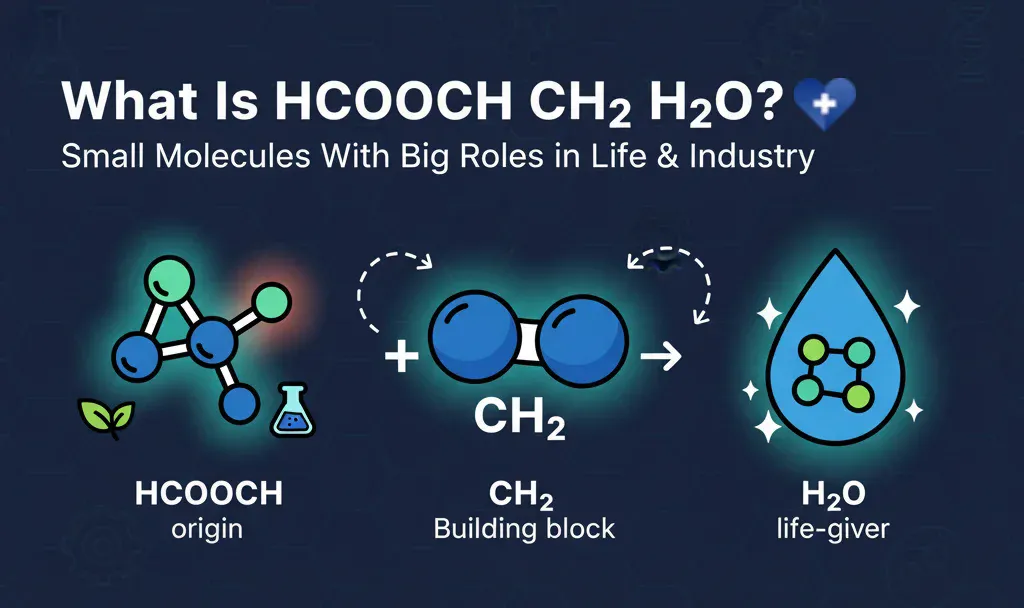
At its core, this formula is a combination of three key players:
- hcooch: It is an ester of formic acid (hcooch) and methanol, commonly used in organic reactions.
- ch2: The methylene group, a simple hydrocarbon fragment critical in building bigger molecules, including those in our bodies.
- h2o: The good old water, that’s in almost every chemical and biological reaction on earth!
Put these together, and you get a small molecular team that pops up in chemistry labs, industry, and even inside living cells. But don’t worry, you don’t need a chemistry degree to understand why they matter.
Why Small Molecules Like These Matter for Health
It’s easy to assume only big, complex molecules like proteins or DNA matter for health. But these small compounds play huge supporting roles behind the scenes.
- Nature’s Powerhouses: Formic Acid & Methyl Formate: From the Latin formica, this is the name given to an antibacterial agent which ants naturally produce. It will deter insects from enemies. Formic acid derivatives are known to play a role in human metabolism and have been investigated as a starting material for the synthesis of pharmaceuticals. Methyl formate, which is produced from formic acid, is used in medicines and perfumes, and is usually less toxic than other industrial solvents.
- The Molecular Lego Bricks: ch2 is not only a formula, it’s the building block for many organic. It is found in fats, hormones, vitamins and even in the base structure of DNA. These small carbon pieces are essential to the creation of the molecular chains and rings that are part of the complex of life.
- Water The Universal Health Medium-Take Water out of the drinking category. At the molecular level, it’s the medium in which thousands of biological reactions occur. It assists in breaking down nutrients, transports within cells, and directly involves in digestion and detoxification processes.
The Chemistry Behind Their Interaction
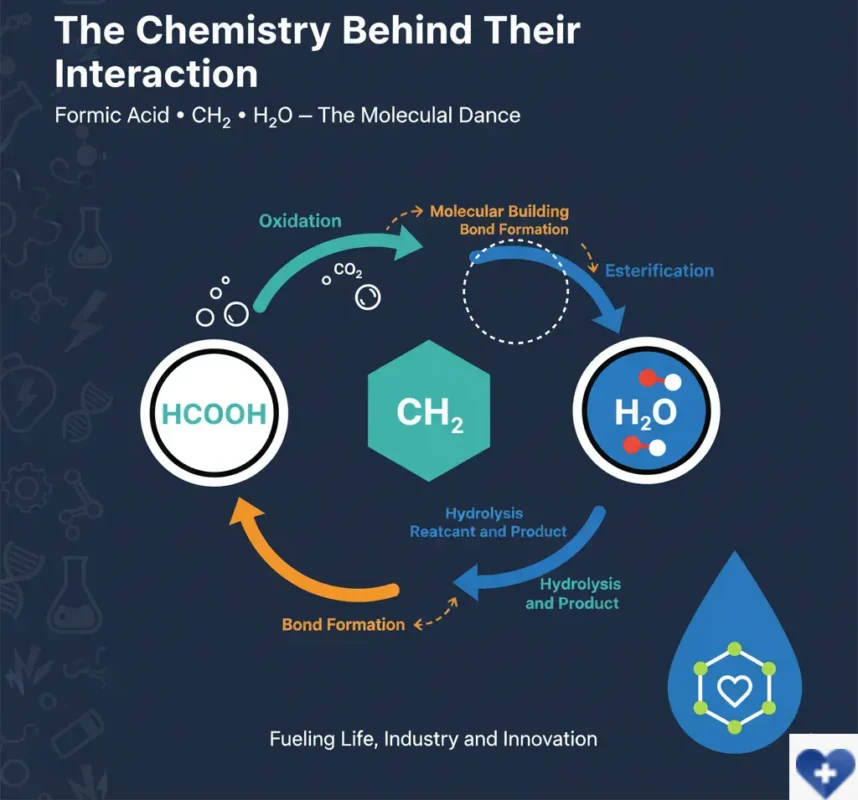
Let’s step into the lab (metaphorically) and see how these play together:- Reactions in Action: Formic acid (or its esters, like methyl formate) can undergo oxidation to produce carbon dioxide and water a reaction important in metabolic processes. At the same time, the groups of ch2 form bonds with other atoms, creating the complex molecules that we require, second by second.
- Water as a Reactant and Product: Water can participate in reactions by dissolving those same chemicals and also by reacting so as to break chemical bonds (hydrolysis) or combine to form new compounds. For instance, water as byproduct and key player in esterification reactions.
These chemical dances allow for endless molecular creativity fueling life, industrial processes, and even pharmaceutical breakthroughs.
Real World Health and Industrial Applications
You might wonder, “Great chemistry, but how does this touch my health or the environment” Here’s the scoop:
- Pharmaceutical Use: Solvents with methyl formate and water are used for extraction and purification of active ingredients from plants and other sources. This translates to improved drugs, frequently developed using less harmful chemicals.
- Green Chemistry: These can be used in Green Processes. The use of harmful chemicals in the production process is reduced, protecting workers and the environment, by using water-based solvents and mild acids like formic acid.
- Antibacterial and Preservative Effects: Antibacterial nature of formic acid and its derivatives can help maintain the hygiene of cosmetic or food products, thereby indirectly contributing to health.
- There is also one environmental advantage here: Solutions of methyl formate and water can be used in cleaners in industry to remove oils and greases without polluting water systems with any harmful substances.
hcooch ch2 h2o at a Glance: Science Meets Practicality
| Aspect | Science Speak | Why It Matters to You |
|---|---|---|
| Formic acid (hcooch) | Simplest carboxylic acid; reacts easily | Natural antibacterial, less toxic |
| Methylene group (ch2) | Backbone unit in organic molecule chains | Found in fats, vitamins, DNA |
| Water (h2o) | Universal solvent and participant | Essential for all life processes |
| Chemical reactions | Oxidation, hydrolysis, esterification | Basis of metabolism and drug synthesis |
| Industrial use | Green solvent, extraction, cleaning | Safer for environment and workers |
| Health impact | Antibacterial, supports drug purification | Cleaner products, better health |
Safety and Sustainability: Handling with Care and Respect
Even though these molecules look friendly, they need respect:
- Direct contact with or inhalation of formic acid may be corrosive.
- Generally water and methylene compounds are safer, but can affect the reactivity of other chemicals in mixtures.
- There are strict safety measures in the industry that prevent the use of such chemicals in a way that is harmful or polluting to us.
For sustainability, water-based solvents and mild acids are moving towards greener chemistry with an emphasis on recycling and minimizing hazardous waste.