
Koriandri: Health Benefits, Uses, and Facts

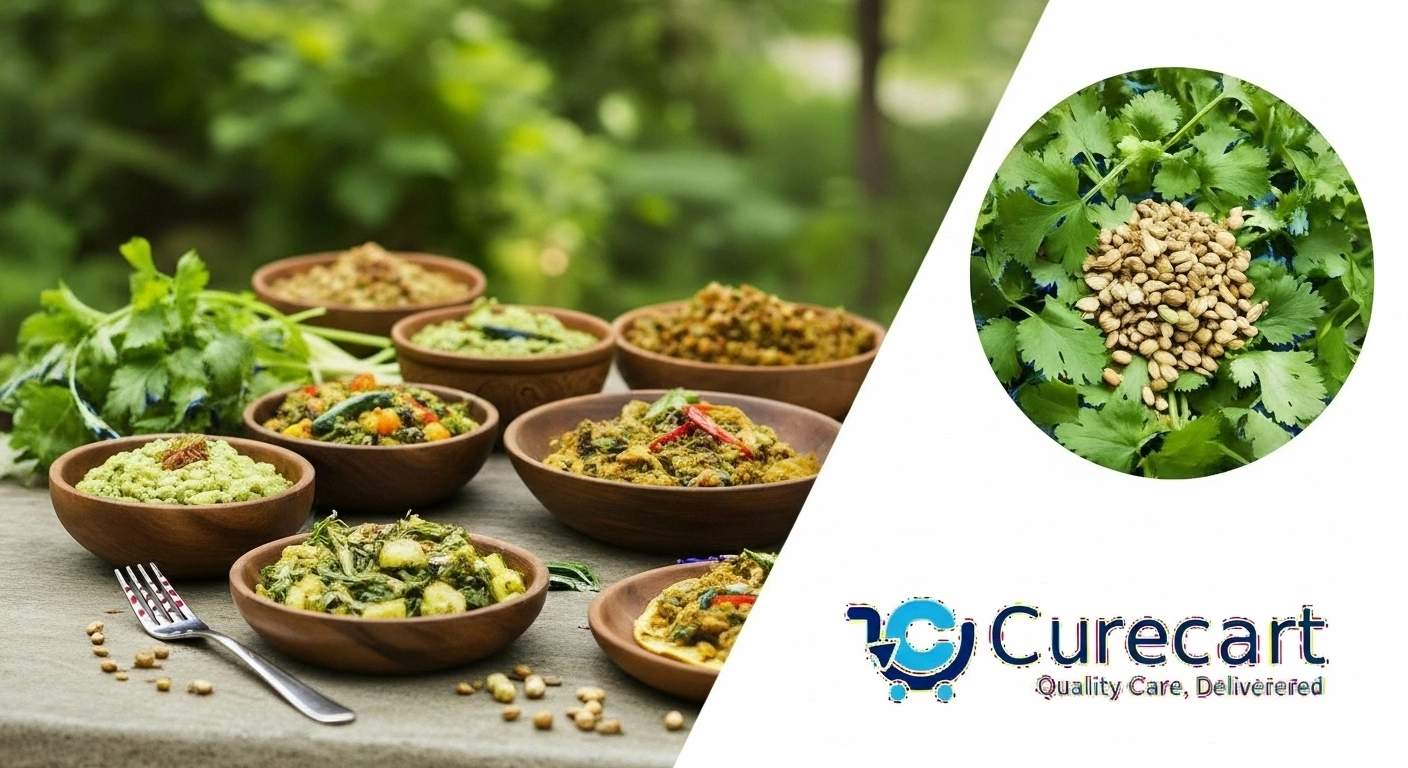
Koriandri aka Coriander (also known as cilantro) is a condiment herb from the Apiaceae family that is rich in nutrition and aromatic. The fresh leaves and dried seeds are used as food. It is famous for its digestive effect and its anti-inflammatory effect worldwide, but due to a genetic disposition some people find their leaves soapy.
The herb is a relative of celery, carrots and parsley, coming from Coriandrum sativum, a member of the Apiaceae family. The naming does catch a few people out and so it’s prudent to get this straight from the get-go. The dried seeds are known as coriander, and the fresh green leaves as cilantro in the United States. The other half of the world gets rid of that split and simply call it coriander seeds and coriander leaves. It could also be found as Chinese parsley. On different sides of the same plant, three names.
Why Your Body Likes It
Coriander boasts a low calorie count and packs a big flavor punch. Leaves and seeds are a constant source of vitamin K, vitamin C, vitamin A and minerals such as manganese and iron. That is one reason how the herb continues to be used in both traditional and contemporary diets without a lot of fat or extra calories in the meal.
The Benefits Worth Knowing:
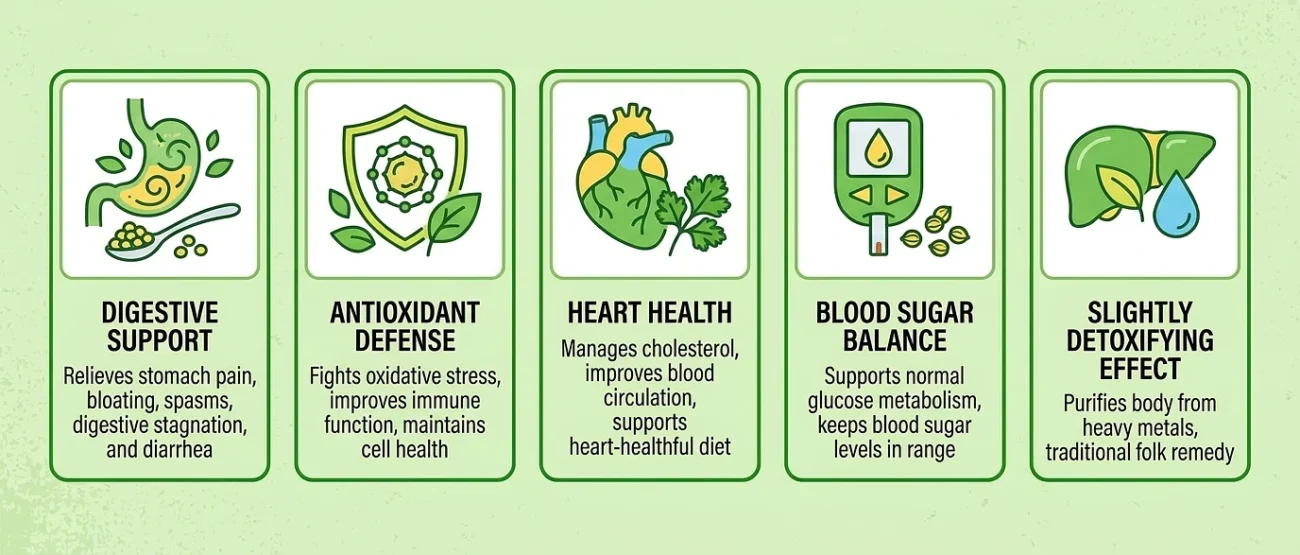
- Digestive support. This is the most popular use of coriander. It has been used for a long time to relieve stomach pain, bloating, abdominal spasms and digestive stagnation. Some people use it as a medicine for diarrhea, too.
- Antioxidant defense. The herb has a property of fighting against oxidative stress, that is, the slow wear and tear of the cells by your body throughout the day. It is believed that coriander improves the immune function by helping to maintain this load.
- Heart health. Coriander has long been associated with the heart, primarily with regard to managing cholesterol and blood circulation. It does not constitute therapy, but it fits well into a heart-healthful diet.
- Blood sugar balance. The plant’s compounds seem to be beneficial in maintaining normal glucose metabolism, meaning keeping blood sugar levels normal and not raised.
- Slightly detoxifying effect. Another old folk remedy that’s still mentioned is coriander and the ability it has to purify the body from heavy metals.
None of this turns the herb into medicine. But it does explain why a plant first grown for its taste keeps showing up in wellness conversations.How People Actually Use It
In the kitchen, the leaves and the seeds do almost opposite jobs and that’s exactly what makes the plant so useful.
Fresh cilantro leaves are typically a garnish. You toss them raw over curries, tacos and soups, allowing them to add a cool, bright note to those heavier dishes. They also form the base of green chutney, salsa and dip. The seeds have different properties. They are sweet, earthy, slightly nutty and used either dried or ground to add a warm base spice to curries and marinades, or as a subtle aroma to biscuits, cakes and root vegetable stews.
Coriander also occurs in two other locations. It is put into herbal teas, sometimes to stimulate appetite or to relieve nausea. And it’s a favorite with home growers, a fast and forgiving plant that thrives on a sunny windowsill or in any garden bed with well-drained soil. This is the easiest of all the herbs to start growing if you haven’t done so before.
Quick Nutrition Facts
Here’s roughly what a 100-gram serving of raw coriander leaves delivers:
| Nutrient | Amount per 100g | % Daily Value |
|---|---|---|
| Vitamin K | 310 mcg | 258% |
| Vitamin A | 6,748 IU | 135% |
| Vitamin C | 27 mg | 30% |
| Manganese | 0.4 mg | 19% |
| Iron | 1.8 mg | 10% |
The one that really stands out is the vitamin K, with one serving meeting more than two times the daily value. But it is important to remember that most people don't add coriander to a salad salad, they add it as a garnish, and as such, use much smaller amounts.A Few Things you Might Not Know
Soap gene is a genuine gene. If you go by the reviews, you’ll know that coriander is rated as a soap taste.According to the reviews, coriander has a soap taste. A portion of the population has a difference in their genes for the olfactory receptors that alters the way the aroma compounds of the leaf “read” the scent of the leaf, and it ends up closer to dish soap than fresh herb. Not being choosy but being genetic.
It travels. Coriander is certainly one of the most popular natural flavours on the planet, used in Asian, Mexican, Middle Eastern and European dishes. Not many herbs span these many borders.
Lots of flavor and super low calorie. While coriander is rich in vitamins, it is hardly a calorie bomb, which is why it gets used liberally by cooks.
FAQs
For most, yes – for some, no. An herb that doesn’t contain a lot of calories and isn’t harmful to standard portions of food. If you have a medical condition, or are taking medication, please check with a doctor first.
Those people have a genetic variation of their smell receptors that alters the perception of the smell compounds in the herb and makes it taste like soap.
Usually leaves are washed and used as a garnish or in chutneys while the seeds are dried and used in hot base spice mixes like curries and marinades.
These chemicals in the plant are linked to better glucose control, but they should not be used instead of a medicine prescribed by your doctor, and can only be used when combined with a healthy diet.