
Milyom: Unlocking the Power of Health and Fitness for Real Life Results

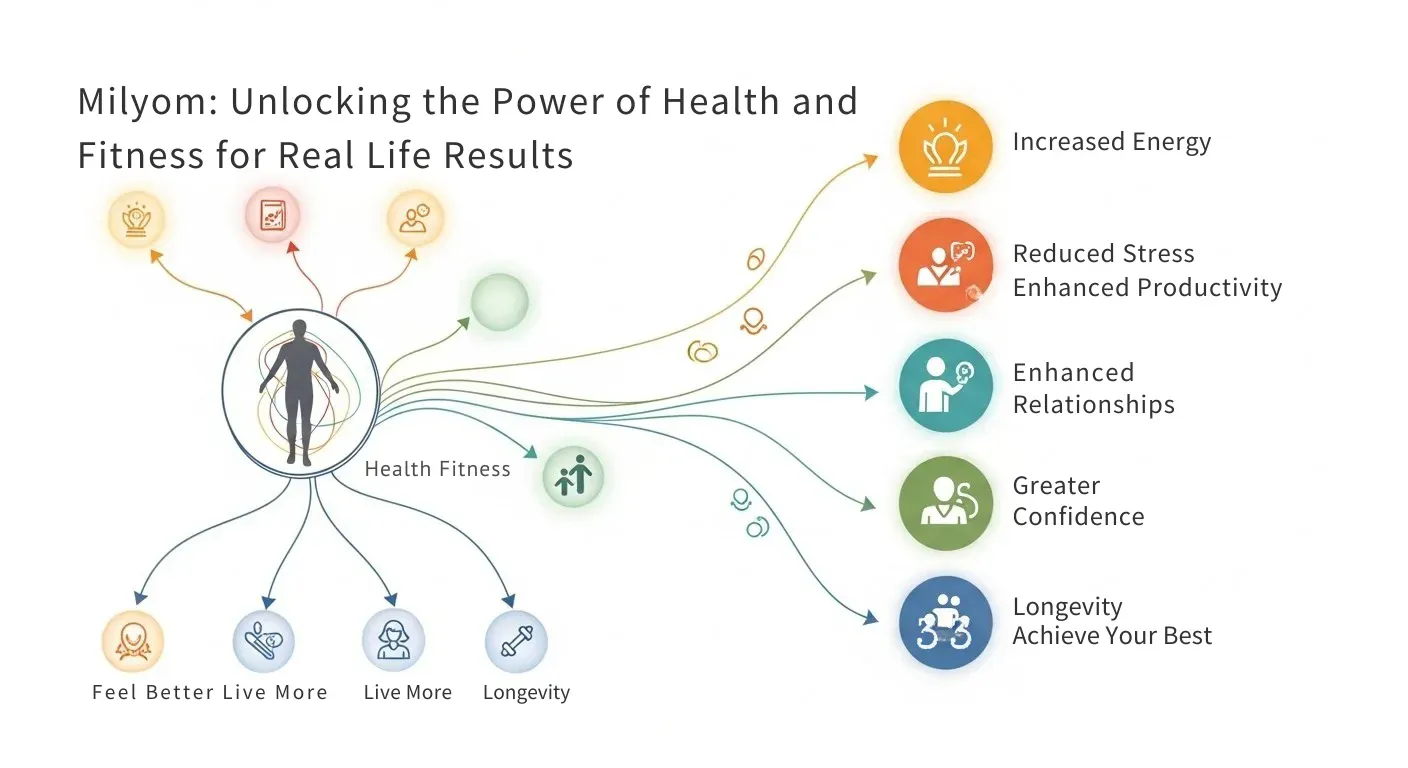
I’m sick of it, especially when everyone wastes their time, energy, and money on all the big promises but zero delivery fits of nonsense. You’ve seen it in the 7-day abs programs. The miracle supplements. That’s not natural. It’s not Milyom. Milyom is about something else a sustainable, evidence-based approach to health and fitness that aligns with the real needs of your life. Not the one you want to lead or the one Instagram influencers pretend to lead. The one with the lump keyboarded, financial constraints, and competing interests. This all in one guide will allow you to start a real game – life transformation journey without gimmicks, extremes, and may you sacrifice the rest. We’re going to cover the science, teach the strategies, and give you the step-by-step action plan to start right now.
Most Fitness Approaches Fail
Most Approaches Fail Here’s something no one in the fitness industry wants to admit: most approaches fail. Not because they are planned to but because they ignore one critical factor your humanity. Namely, a human being with some life to run besides lifting weights. They are designed with the assumption that you have endless time, endless motivation, and nothing else going on in your life. They require perfection from you and punish you on even a slightly lesser occasion. That sounds excessive but it’s also why 80% of people quitting their fitness in the first few months. It is not a lack of discipline or laziness. it’s unattainable. Milyom is a radically new approach to fitness in that regard. We don’t ask you to alter your entire life. We don’t restrict you to death and demand perfection. We understand that your journey is unique.
The Foundation Building Your Movement Practice
Let’s start with the basics moving your body regularly. I’m not talking about punishing yourself with brutal workouts you hate. I’m talking about finding ways to move that you actually enjoy enough to stick with long-term.
Understand Progressive Overload Without the Gym Bro Talk
Progressive overload sounds complicated, but it’s beautifully simple: gradually increase the challenge over time. That’s it. You don’t need to understand advanced exercise science or memorize complicated formulas. You just need to do slightly more than last time more weight, more reps, more sets, or better form.
Ten weeks of consistent resistance training can increase lean body weight by 1.4 kg and boost resting metabolic rate by approximately 7%. This isn’t about becoming a bodybuilder (unless that’s your goal). It’s about building functional strength that makes everyday life easier carrying groceries, playing with your kids, maintaining independence as you age.
The beautiful thing about progressive overload is that it works for everyone, regardless of fitness level. Beginners might progress by doing one more push-up than last week. Advanced lifters might add five pounds to their squat. The principle remains the same gradual, consistent improvement.
The Compound Movement Advantage
Once you’ve built basic strength and coordination, compound movements become your best investment. These are exercises that work multiple muscle groups simultaneously squats, deadlifts, bench presses, rows, overhead presses, pull-ups.
Why focus on compounds? Three reasons. First, they’re incredibly time-efficient one compound exercise replaces three or four isolation exercises. Second, they mimic real-world movements, building functional strength that transfers to daily activities. Third, they create significant hormonal responses that boost muscle growth and fat loss throughout your entire body.
You don’t need to be a powerlifter to benefit from compound movements. A working professional doing squats and rows twice a week will see better results than someone spending an hour on bicep curls and calf raises.
The Cardiovascular Component That Doesn’t Bore You to Death
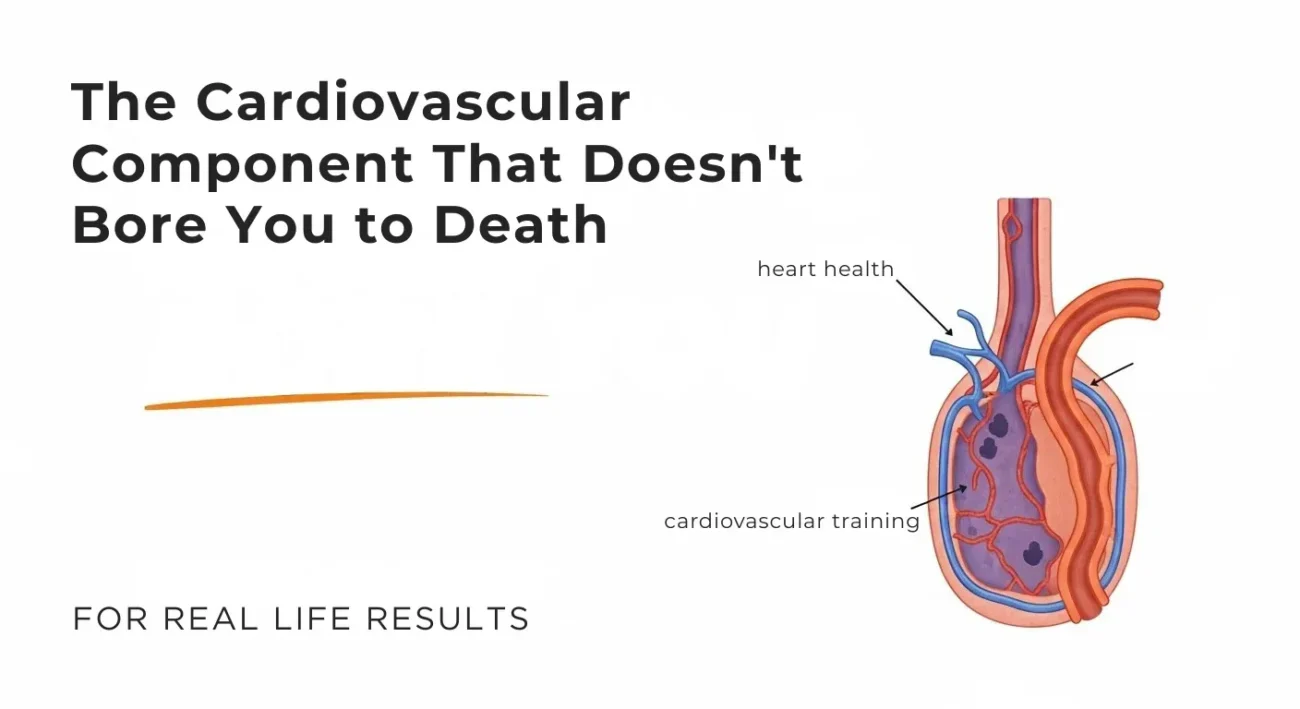
Cardio gets a bad reputation because most people associate it with endless treadmill sessions while staring at a wall. But cardiovascular training is essential for heart health, and it doesn’t have to be miserable.
Why Your Heart Needs Regular Training
You heart is a muscle, more specifically, the most important muscle in your body. Just like every other muscle, it needs to be regularly trained to be strong and healthy. Regular cardiovascular exercise reduces the risk of heart disease, reduces your chances of getting a stroke, and reduces your likelihood of premature death. Physical activity is one of the most crucial aspects of both preventing and controlling cardiovascular disease. Extensive research shows that exercise protects even more those with past CV history than those without. In other words, if you have heart disease, you need exercise even more, not less. Here is something that may surprise you: women experience a higher risk reduction than men when they exercise. When women perform five hours of moderate aerobic activity per week, the risk of premature death drops by 24%, while men report a reduction of 18% at the same amount of activity. It appears that womankind’s bodies produce significant gains from regular movement.
Finding Cardio That Doesn’t Feel Like Punishment
The secret to sustainable cardio is simple: find something you enjoy. Walking, cycling, swimming, rowing, dancing, hiking, playing basketball, jumping rope they all provide cardiovascular benefits. The “best” cardio is the one you’ll actually do consistently.
I have a friend who tried running for years because everyone told him it was the best cardio. He hated every minute of it and eventually quit exercising altogether. Then he discovered cycling and fell in love with it. He now rides 100+ miles per week and has transformed his health. The difference? He found his thing.
Don’t force yourself into activities you despise just because someone said they’re “optimal.” Life’s too short, and fitness should enhance your life, not make you miserable.
The Intensity Sweet Spot
For optimal cardiovascular health, you want a mix of different intensities. Steady-state cardio maintaining a moderate pace you can sustain for 30-60 minutes builds your aerobic base and can be done frequently without overtaxing your recovery systems.
Higher-intensity intervals short bursts of maximum effort followed by rest periods challenge your cardiovascular system differently. These sessions are time-efficient and create different metabolic adaptations than steady-state work.
The mistake many people make is doing all their cardio at medium intensity not quite easy, not quite hard. This “gray zone” doesn’t provide the benefits of either approach. Your easy workouts should feel genuinely easy (you can hold a conversation). Your hard workouts should feel genuinely hard (you’re breathing heavily and couldn’t maintain that pace for long).
Sleep The Missing Link in Your Fitness Equation
If I had to choose between perfect training with poor sleep or mediocre training with great sleep, I’d choose great sleep every single time. That’s how important it is.
What Actually Happens While You Sleep
Most people think sleep is just “turning off” for eight hours. Nothing could be further from the truth. Sleep is when your body does its most important repair and adaptation work.
During deep sleep stages, your body releases growth hormone, which drives muscle repair and growth. It consolidates muscle protein synthesis—the process of building new muscle tissue. It clears out metabolic waste products that accumulate during waking hours. It regulates appetite hormones that control hunger and fullness.
Without adequate sleep, these processes simply don’t happen efficiently. You can train perfectly and eat perfectly, but if you’re only sleeping five hours a night, you’re sabotaging yourself.
How Sleep Deprivation Destroys Your Progress
Sleep deprivation markedly impacts insulin sensitivity and appetite-regulating hormones, reversing the metabolic advantages of exercise. You produce more Ghrelin when you sleep less, making you wish to eat more, and less Leptin is produced, making you feel full. You are more likely to feel ravenous, crave sugar, and lack the willpower to avoid eating more. Poor sleep results in elevated cortisol, preventing muscle development while allowing stress to develop. What does this imply You’re killing your workouts and sticking to your eating plan to the letter. However, the lack of sleep renders it all useless. Despite the fact that a single night of poor sleep is considered to be relatively moderate, research revealed that sleep deprivation may be both detrimental to strength, endurance, and cognition. Protracted sleep loss may lengthen recovery, enhance injuries, and reduce exercise outcomes, according to the authors.
Creating Sleep That Actually Works
Improving sleep isn’t rocket science, but it does require consistency. Establish a regular sleep schedule—going to bed and waking up at the same times every day, even on weekends. Your body thrives on predictable rhythms.
Make your bedroom a sleep sanctuary. Keep it cool (65-68°F is ideal), dark, and quiet. Your bedroom should be associated with sleep and intimacy, not work, TV, or scrolling through your phone.
Limit caffeine after 2 PM and avoid heavy meals within three hours of bedtime. Both interfere with sleep quality. Also, reduce screen time for at least an hour before bed. The blue light from devices suppresses melatonin production, making it harder to fall asleep.
If you struggle with racing thoughts at night, try a “brain dump” before bed spend 10 minutes writing down everything on your mind. This helps externalize worries instead of letting them keep you awake.
Nutrition That Doesn’t Require a PhD to Understand
Every week there’s a new diet claiming to be the solution to all your problems. Keto. Paleo. Carnivore. Vegan. Intermittent fasting. Meal timing protocols. The options are overwhelming and often contradictory.
Here’s what you actually need to know: all diets work through the same mechanism they help you consume fewer calories than you burn. The specific method doesn’t matter nearly as much as finding an approach you can sustain long-term.
The Protein Priority That Changes Everything
Regardless of which dietary approach you follow, adequate protein intake is non-negotiable if you want to build or maintain muscle mass. Protein supports muscle maintenance and growth, helps you feel full longer, and has a higher thermic effect than carbs or fats (your body burns more calories digesting it).
Aim to spread protein consumption throughout the day to optimize muscle protein synthesis. This doesn’t mean you need to eat six meals daily or stress about “anabolic windows.” It just means including protein at most meals rather than loading it all into dinner.
Whole food sources like chicken, fish, eggs, beef, legumes, Greek yogurt, and cottage cheese provide complete amino acid profiles along with essential micronutrients. If you struggle to get enough protein from food alone, protein powder offers a convenient option—but food should always come first.
Fats That Fuel Your Hormones
Fats got demonized in the 1980s and 1990s, leading to a wave of low-fat products that replaced fat with sugar. We now know that was a catastrophic mistake. Healthy fats support hormone production, brain function, and nutrient absorption.
Sources like avocados, nuts, seeds, olive oil, fatty fish, and whole eggs provide essential fatty acids your body cannot produce independently. These fats are critical for optimal health, hormone balance, and even fat loss (yes, eating fat helps you lose fat when consumed as part of a balanced diet).
Don’t fear fats embrace them as a crucial part of your nutrition strategy. Just be mindful of portions since fats are calorie-dense. A handful of nuts is great. The entire jar? Probably not.
Hydration Without the Overcomplication
Water is boring. It doesn’t taste like much. It’s not exciting. But proper hydration profoundly impacts both performance and recovery. Even mild dehydration losing just 2% of your body weight in fluids impairs strength, endurance, and cognitive function.
Your water needs vary based on activity level, climate, body size, and individual factors. A simple way to monitor hydration is checking urine color. Pale yellow indicates good hydration. Dark yellow or amber means you need more water. Crystal clear might mean you’re overhydrating (yes, that’s possible).
Don’t wait until you’re thirsty to drink water. Thirst is a late indicator of dehydration. Keep a water bottle with you throughout the day and sip regularly, especially before, during, and after workouts.
The Mental Game Nobody Prepares You For
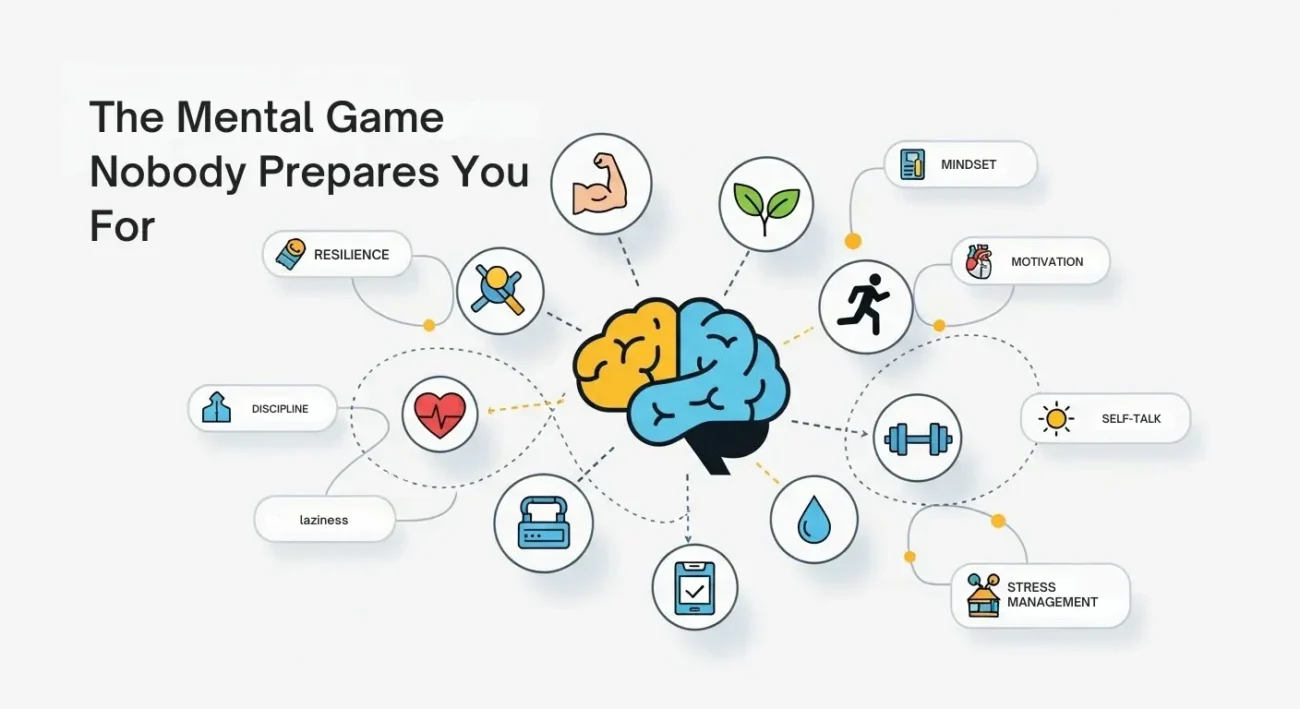
Physical transformation requires mental strength that nobody talks about. Your motivation will disappear sometimes. You’ll have weeks where nothing goes according to plan. You’ll encounter plateaus where progress stalls despite doing everything right. This is where most people quit.
Why Motivation Fails and Systems Succeed
Motivation is a feeling, and feelings are unreliable. They come and go based on your mood, stress levels, sleep quality, and a thousand other factors. Building your fitness journey on motivation alone is like building a house on sand it might work for a while, but eventually, everything collapses.
Systems beat motivation every single time. A system is a set of habits and routines that don’t depend on how you feel. You brush your teeth every day not because you’re motivated to, but because it’s a system you’ve built into your life.
Create systems for fitness the same way. Schedule workouts in your calendar like any other important appointment. Prep meals on Sunday so healthy options are readily available during the week. Keep workout clothes in your car so you can head straight to the gym after work.
Setting Goals That Actually Drive Progress
Outcome-based goals (“I want to lose 20 pounds”) set you up for frustration because you don’t directly control outcomes. You control actions, not results. External factors like water retention, hormonal fluctuations, stress levels, and sleep quality all affect outcomes regardless of your effort.
Process-based goals (“I’ll work out three times this week” or “I’ll eat protein at every meal”) give you daily wins that build momentum. When you achieve your process goals consistently, outcomes take care of themselves naturally over time.
The person who shows up to the gym three times weekly for six months will see results even if progress feels slow day-to-day. Consistency beats intensity every single time.
Tracking Progress Beyond the Scale
The scale tells one small part of your story. It doesn’t distinguish between muscle and fat, doesn’t account for water retention or hormonal fluctuations, and can wreck your motivation when it doesn’t cooperate.
Track multiple indicators of progress: progress photos, strength gains, energy levels, sleep quality, how your clothes fit, and how you feel. Muscle gain and fat loss can occur simultaneously, leaving scale weight unchanged while your body composition transforms dramatically.
I’ve worked with people who gained weight on the scale while losing two inches from their waist and dropping a clothing size. The scale would have told them they failed when they were actually succeeding. Don’t let a single metric define your journey.
The Recovery Strategies That Accelerate Progress
Recovery isn’t just about taking days off. It’s an active process that determines how quickly you adapt to training and how effectively you build strength and fitness.
Active Recovery That Actually Works
Rest days don’t mean doing absolutely nothing. Active recovery light movement on rest days promotes blood flow and nutrient delivery without adding significant stress. Walking, gentle yoga, swimming, or easy cycling all qualify as active recovery.
The key word is “gentle.” Active recovery shouldn’t leave you tired or sore. It should make you feel better, more mobile, and ready for your next hard training session. If your active recovery workout feels challenging, you’re doing it wrong.
Stress Management for Better Adaptation
Training is stress. Positive stress, but stress nonetheless. If your life is already maxed out with work stress, relationship stress, financial stress, and sleep deprivation, adding intense training might push you over the edge into overtraining.
This doesn’t mean you shouldn’t exercise when stressed. It means you might need to adjust intensity or volume. During high-stress periods, maintaining consistency matters more than crushing personal records.
Techniques like deep breathing, meditation, journaling, or spending time in nature can help manage overall stress levels, allowing your body to adapt better to training stimulus.
The Role of Nutrition Timing
While nutrient timing is less critical than total daily intake, strategic timing can optimize recovery. Consuming protein and carbohydrates within a few hours post-workout supports muscle protein synthesis and glycogen replenishment.
You don’t need to slam a shake within 30 minutes of finishing your workout (the “anabolic window” is much longer than previously thought), but eating a balanced meal within a few hours makes sense for optimal recovery.
Building Your Sustainable Fitness Lifestyle
The ultimate goal isn’t to be on a diet or following a workout program—it’s to build a lifestyle where healthy choices become automatic. This takes time, patience, and a willingness to experiment to find what works for you.
The 80/20 Principle for Long-Term Success
Perfection isn’t required for results. If you make healthy choices 80% of the time, the other 20% won’t derail your progress. This means you can enjoy social events, have dessert occasionally, and take unplanned rest days without guilt or stress.
The 80/20 principle makes fitness sustainable because it builds in flexibility. Life happens. You’ll have busy weeks, vacations, illnesses, and unexpected events. A rigid all-or-nothing approach collapses under these circumstances. A flexible 80/20 approach adapts and persists.
Finding Your Community
Fitness becomes significantly easier when you have support. This might be a workout partner, an online community, a coach, or friends with similar goals. Accountability and encouragement make a massive difference in long-term adherence.
Don’t underestimate the power of community. Surrounding yourself with people who value health and fitness normalizes these behaviors. You become the average of the five people you spend the most time with—choose wisely.
Celebrating Non-Scale Victories
Progress comes in many forms beyond body composition changes. Maybe you’re sleeping better. Maybe your mood has improved. Maybe you have more energy to play with your kids. Maybe you’re lifting heavier weights or running faster times.
These non-scale victories deserve celebration because they represent real improvements in your quality of life. Don’t dismiss them in favor of obsessing over the scale. Often, these victories matter more than weight changes in the long run.
References:
- Westcott WL. Resistance training is medicine: effects of strength training on health. Current Sports Medicine Reports. 2012;11(4):209-216.
- Aristizabal JC, Freidenreich DJ, Volk BM, et al. Effect of resistance training on resting metabolic rate and its estimation by a dual-energy X-ray absorptiometry metabolic map. European Journal of Clinical Nutrition. 2015;69:831-836.
- Valenzuela PL, Ruilope LM, Santos-Lozano A, et al. Exercise benefits in cardiovascular diseases: from mechanisms to clinical implementation. European Heart Journal. 2023;44(21):1874-1889.
- Ji H, Gulati M, Huang TY, et al. Sex differences in association of physical activity with all-cause and cardiovascular mortality. Journal of the American College of Cardiology. 2024;83:783-793.
- Paluch AE, Boyer WR, Franklin BA, et al. Resistance Exercise Training in Individuals With and Without Cardiovascular Disease: 2023 Update: A Scientific Statement From the American Heart Association. Circulation. 2024;149(3):e217-e231.