
Sugar Free Jello: Nutrition Facts and Health Benefits

Sugar free jello is a favorite dessert for diabetics, those on low carbs, and anyone who is looking to cut down on their calorie consumption. This kiddie friendly, sweet and fun-to-wobble edible is a no-sugar added dessert option. Should it be included in your healthy eating plan.
The basic ingredients include:
- Gelatin (usually from pork or beef)
- Artificial sweeteners
- Artificial flavors
- Artificial colors
- Citric acid or adipic acid for tartness
Nutrition Facts
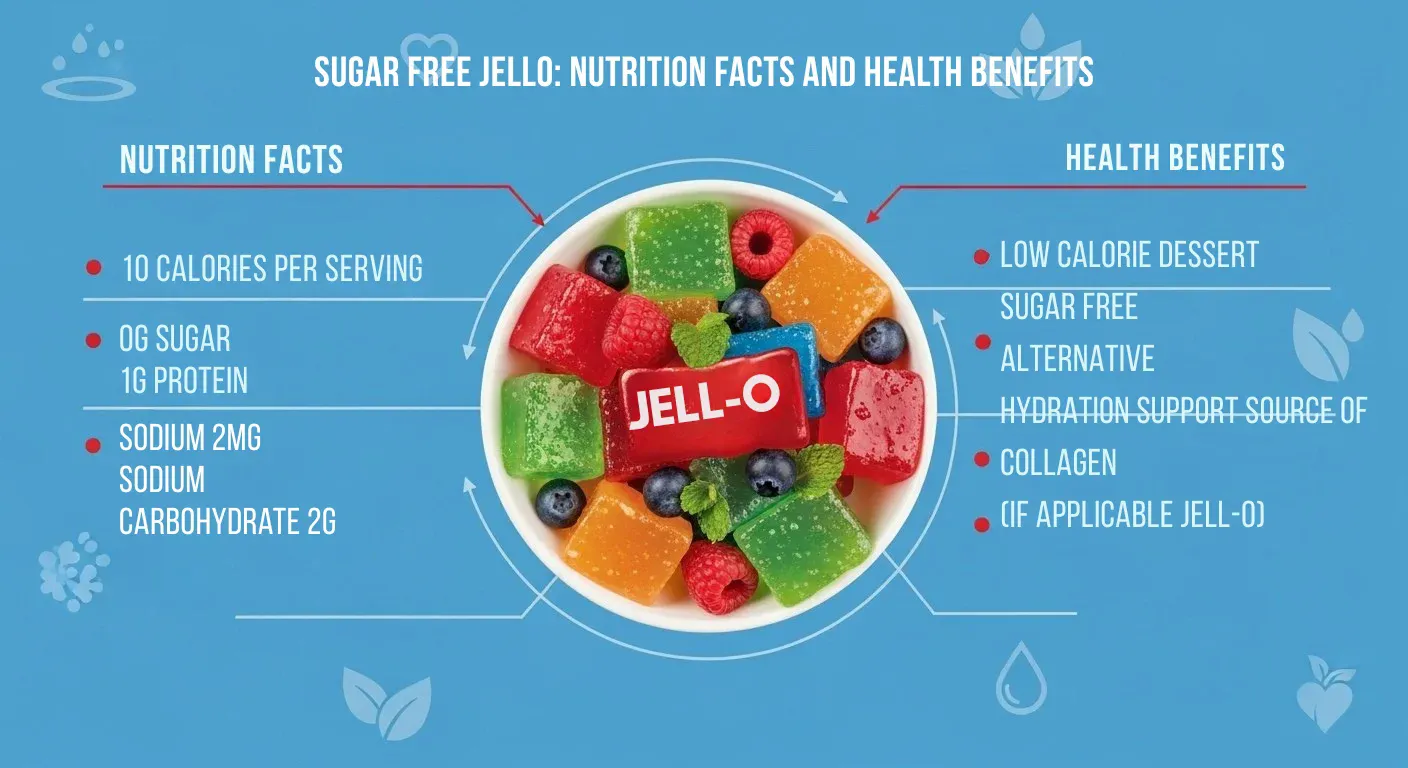
A standard serving of sugar-free (about one-half cup or 121g prepared) contains approximately:
- Calories: 5-10
- Total Fat: 0g
- Sodium: 40-80mg
- Total Carbohydrates: 0-1g
- Protein: 1-2g
- Sugar: 0g
Whilst there are a few slight variations between brand and flavor, it’s still quite low in calories compared to the sugar-laden version which contains about 80 calories per serving.
Health Benefits
Low-Calorie Dessert Option:
Offers a healthy alternative to satisfy sweet cravings without remorse. It has less than 10 calories a serving and can work in just about any diet. It is especially useful for the people who have to deal with weight loss while allowing themselves to have treats from time to time.
Suitable for Diabetics:
Since contains minimal carbohydrates and no sugar, it has negligible impact on blood glucose levels. This makes it a safe dessert option for people with diabetes who need to monitor their carbohydrate intake carefully. The glycemic index of sugar-free gelatin desserts is effectively zero, meaning they don’t cause blood sugar spikes.
Source of Protein:
Gelatin is not particularly rich in protein but contains 1-2g per serving. Gelatin consists mainly of the amino acids, glycine and proline, that are involved in the biosynthesis of collagen in the body.
May Support Joint and Bone Health:
Gelatin contains amino acids that are building blocks for collagen in the body. The main amino acids in gelatin are glycine and proline, which play a vital role in maintaining cartilage and connective tissue. The quantities of jello served are small but if you consume gelatin regularly you may get the collagen you need from your diet. But therapeutic effects would take higher doses than those typically consumed in dessert portions.
Hydration Support:
Jello prepared with water is about 85% water, so it is a source of fluids. It is not meant to take the place of plain water, but can be a good choice for those who find it difficult to drink sufficient amounts of water, such as older adults or someone recovering from sickness.
Easy to Digest:
Gentle on the digestive system and is frequently prescribed for a clear liquid diet prior to medical treatments or as a recovery plan from gastrointestinal problems. It’s smooth in texture and easy to digest, making it a popular choice in hospitals for post-surgical diets.
Potential Concerns
Artificial Sweeteners:
- Aspartame: One of the most extensively studied food additives worldwide, aspartame has been evaluated by regulatory agencies including the FDA and has been deemed safe for the general population at typical consumption levels. However, individuals with phenylketonuria (PKU), a rare genetic disorder, must strictly avoid aspartame as they cannot metabolize phenylalanine, one of its components.
- Sucralose: This artificial sweetener passes through the body largely unchanged and is considered safe by major health authorities. It provides sweetness without contributing calories or affecting blood glucose levels.
- Acesulfame Potassium (Ace-K): Another calorie-free sweetener commonly used in sugar-free products, it has been approved for use in foods and beverages by regulatory agencies.
While these sweeteners are approved for consumption and have extensive safety data, some individuals choose to limit artificial additives in their diets as a personal preference.
Artificial Colors and Flavors:
The artificial colors (Red 40, Yellow 5, Blue 1) and flavors are used in sugar-free jello to make it look and taste bright. The additives are safe for use according to the FDA, but some parents would like to reduce their kids’ exposure to artificial food dyes.
Limited Nutritional Value:
Sugar free jello is low on calories but low on nutrients. Low in vitamins, minerals and dietary fiber. It shouldn’t be considered a healthy food option that plays a significant role in your daily nutritional intake.
Possible Digestive Effects:
Artificial sweeteners can cause stomach upset in some people especially if used in excess. Everyone is different and sugar-free jello will not cause problems for most people if eaten in moderation.
How to Incorporate Sugar-Free Jello Into Your Diet
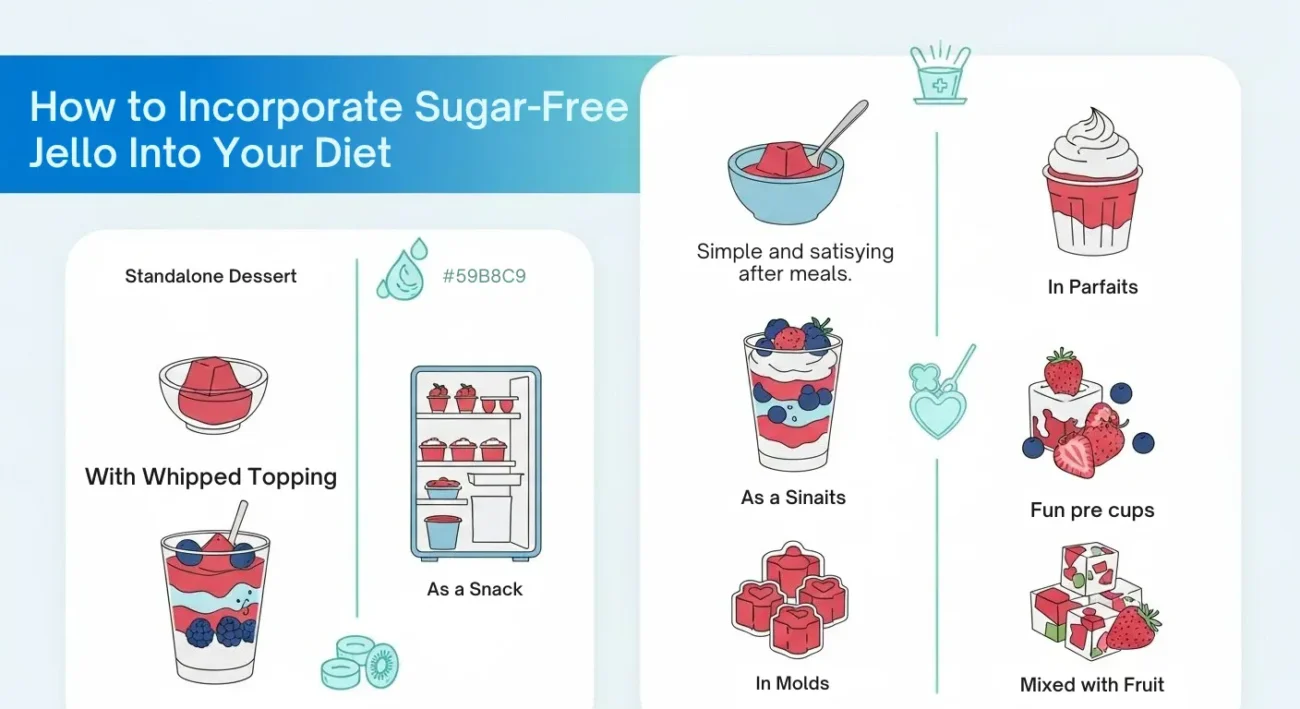
Sugar-free jello can be enjoyed in various creative ways:
- As a standalone dessert: Simple and satisfying after meals
- With whipped topping: Add a dollop of sugar-free whipped cream for extra richness
- In parfaits: Layer with Greek yogurt and fresh berries for added protein and nutrients
- As a snack: Keep pre-made cups in the refrigerator for quick, convenient snacks
- In molds: Create fun shapes for parties or special occasions
- Mixed with fruit: Add fresh fruit pieces before the jello sets for added nutrition, fiber, and texture
- Frozen treats: Freeze jello cups for a refreshing summer snack
References
- U.S. Food and Drug Administration – High-Intensity Sweeteners
- U.S. Department of Agriculture, FoodData Central – Gelatin Desserts, Dry Mix, Reduced Calorie, With Aspartame
- National Institutes of Health, National Library of Medicine – Phenylketonuria Information
- U.S. Food and Drug Administration – Color Additives Questions and Answers for Consumers