
Daxxify vs. Botox: Key Differences, Uses, Duration and Side Effects

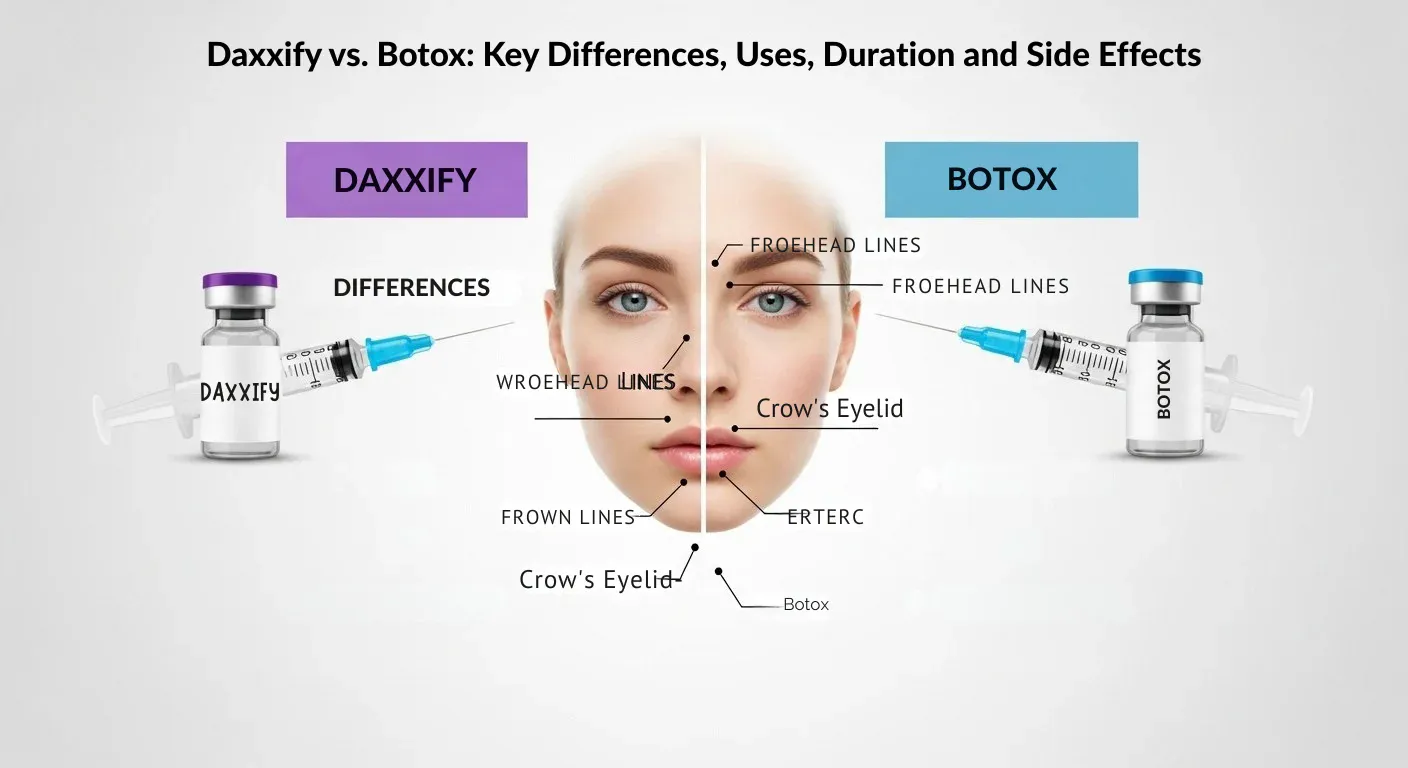
Both Daxxify vs. Botox use botulinum toxin type A to reduce wrinkles, primarily frown lines, but differ in formulation, duration, and FDA-approved uses. While Botox typically lasts 3-4 months and has broad uses, Daxxify utilizes a unique peptide stabilizer for effects lasting 6-9 months and is currently only FDA-approved for frown lines.
Choosing between cosmetic treatments can feel overwhelming, especially when you’re investing in your appearance. If you’re considering wrinkle reducing injections. While they might seem similar at first glance, understanding their differences could save you time, money, and help you achieve better results aligned with your lifestyle.
What Are Daxxify and Botox
Both Daxxify and Botox are neuromodulators medications that temporarily block nerve signals to muscles. When injected into specific facial muscles, they prevent those muscles from contracting, which smooths out wrinkles and fine lines. They both contain botulinum toxin type A, the same active ingredient that has been used safely in medical and cosmetic treatments for decades.
Botox entered the cosmetic market in 2002 and quickly became synonymous with wrinkle treatment. Its longevity means extensive real-world data, predictable results, and a proven safety record spanning over two decades.
Received FDA approval in September 2022, making it the newest player in the neuromodulator market. What sets it apart isn’t just that it’s new it’s the first botulinum toxin product to use a completely different stabilization technology.
The Key Scientific Difference: How They are Made
The most important distinction between these treatments lies in their formulation.
Botox, along with other established neuromodulators like Dysport and Jeuveau, uses human serum albumin (HSA) as a stabilizer. This protein, derived from human blood, has been the industry standard for decades. It works well, but it has limitations in how long the product remains active in your muscles.
Takes a different approach. Instead of using human or animal-derived proteins, it uses Peptide Exchange Technology. This proprietary peptide stabilizer helps the botulinum toxin bind more effectively to nerve endings and potentially stay active longer at the injection site. Think of it as a more efficient delivery system that helps the medication “stick around” longer where it’s needed.
Duration: The Biggest Practical Difference
Here’s where your decision really comes down to lifestyle and preferences.
Botox Timeline:
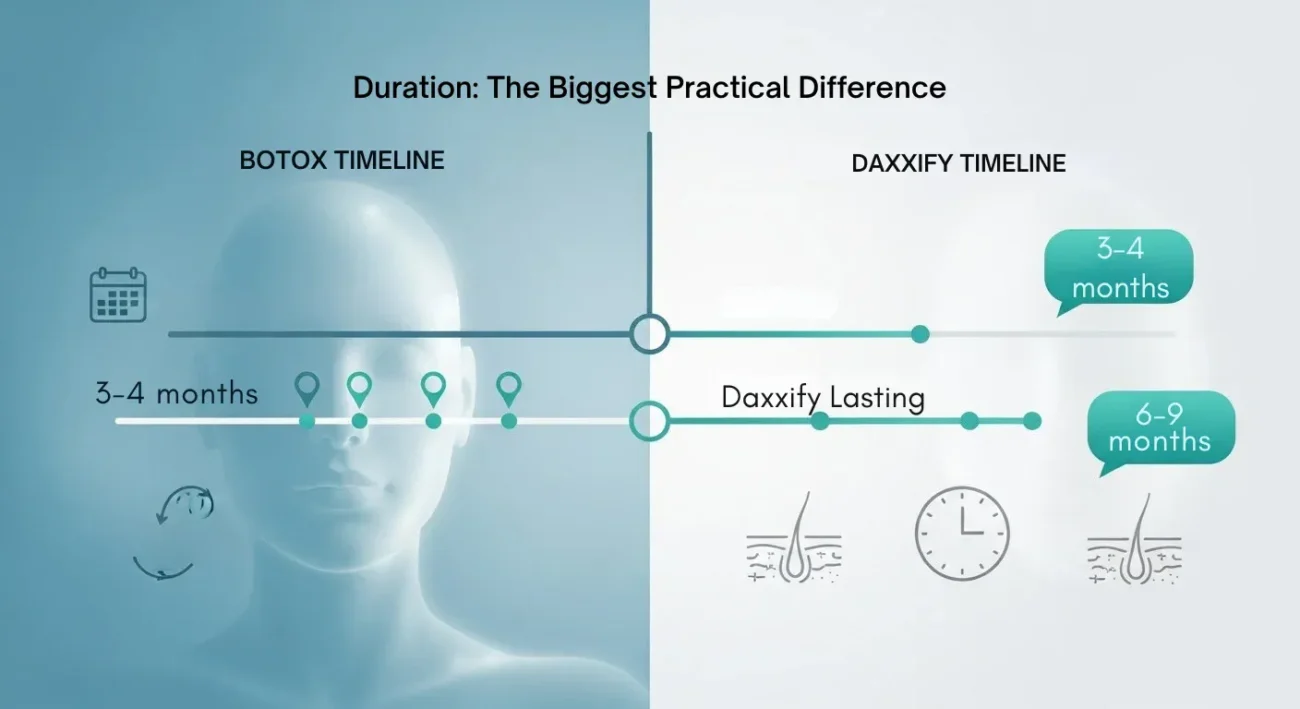
Botox typically lasts 3 to 4 months. By the time you reach the three-month mark, you’ll likely start noticing muscle movement returning, and by four months, most people are ready for their next treatment. This means you’re looking at approximately 3-4 appointments per year to maintain your results.
Daxxify Timeline:
About half of the study participants still had smooth, wrinkle-free skin at the 6-month mark. Roughly 10% of people experienced results lasting up to 9 months.
However and this is crucial these numbers represent averages from controlled clinical studies. In real-world use, individual results vary dramatically. Some people find Daxxify lasts the full 6-9 months, while others get closer to 4-5 months. Your metabolism, muscle strength, facial expressions, and how your body processes the medication all play roles in how long results last.
The practical benefit? Even if only lasts 5-6 months for you instead of 9, that’s still fewer appointments than Botox requires. For busy professionals or people who dislike frequent medical appointments, this can be a significant quality-of-life improvement.
How Quickly Will You See Results
- Botox: Most people notice improvements starting around day 3-5, with full results visible by 10-14 days.
- Daxxify: Results typically appear within 1-2 days, sometimes even faster. The peptide formulation allows for quicker binding to nerve receptors, so you might notice muscle relaxation sooner.
What Can Each Treatment Address
Botox:
Botox has FDA approval for multiple cosmetic areas:
- Frown lines between the eyebrows (glabellar lines)
- Horizontal forehead lines
- Crow’s feet around the eyes
It also treats numerous medical conditions including chronic migraines, excessive sweating, overactive bladder, and muscle spasm disorders.
Daxxify:
Currently, is FDA-approved only for:
- Glabellar lines (frown lines between the eyebrows)
- Cervical dystonia (neck muscle spasms)
However, the manufacturer has only provided official dosing guidelines for glabellar lines. When a provider uses it for other areas, they’re relying on their experience and judgment rather than manufacturer protocols.
For first time patients or those wanting treatment in multiple facial areas, Botox’s extensive approvals and established dosing guidelines can provide more reassurance.
Common Wrinkles Both Treatments Address
When used by experienced practitioners, both products effectively treat:
- Frown Lines: The vertical “11” lines between your eyebrows that make you look angry or worried even when you’re not.
- Forehead Lines: Those horizontal creases that deepen when you raise your eyebrows or express surprise.
- Crow’s Feet: The fine lines radiating from the outer corners of your eyes that appear when you smile or squint.
- Other Dynamic Wrinkles: Lines around the nose, lip area, and other facial wrinkles caused by repeated muscle movements.
The key word is “dynamic” these treatments work on wrinkles caused by muscle movement, not static wrinkles from sun damage or aging skin. For those deeper etched lines present even when your face is relaxed, you’d need different treatments like dermal fillers or skin resurfacing.
Side Effects What to Realistically Expect
The side effect profiles are similar because both products contain the same active ingredient botulinum toxin type A. The safety concerns are comparable.
Common, Temporary Side Effects:
The most frequently reported issues are mild and resolve on their own:
- Injection Site Reactions: Pain, redness, swelling, or bruising where the needle entered your skin. About 9% of Daxxify patients in clinical trials experienced injection site reactions, with pain being most common at 4%, followed by redness at 3% and swelling at 3%.
- Headache: Approximately 5-6% of people experience headaches after treatment, typically within the first week. These usually respond well to over-the-counter pain relievers.
- Eyelid Drooping (Ptosis): This affects about 1-2% of patients and happens when the medication migrates slightly from the injection site, affecting muscles that lift the eyelid. It’s temporary but can last several weeks. Proper injection technique by an experienced provider significantly reduces this risk.
- Facial Weakness: About 1% of people experience mild weakness in treated facial muscles, which is actually the intended effect when it occurs in the target area, but can be concerning if it affects nearby muscles.
Serious But Rare Side Effects:
Both products carry FDA black box warnings about the potential spread of toxin effects beyond the injection site. This is rare but potentially serious:
Botulism-Like Symptoms: The medication can theoretically spread to other parts of your body, causing muscle weakness throughout the body, double vision, difficulty swallowing, trouble speaking, or breathing difficulties. These symptoms can appear hours to weeks after injection and require immediate medical attention.
The risk is extremely low in cosmetic doses when administered properly. It’s higher in patients with pre-existing neuromuscular disorders like myasthenia gravis or ALS, which is why these conditions are contraindications for treatment.
- Eye Problems: When used for frown lines, both treatments can cause dry eyes, reduced blinking, or corneal problems. If you already have dry eye syndrome, discuss this with your provider beforehand.
- Allergic Reactions: Like any medication, allergic reactions ranging from mild skin rash to severe anaphylaxis are possible. True allergic reactions to botulinum toxin are rare, but reactions to other ingredients in the formulation can occur.
- Cardiovascular Concerns: The FDA notes extremely rare reports of irregular heart rhythms and heart attacks in patients receiving botulinum toxin products, though causation hasn’t been definitively established.
Medications That Interact:
Both Daxxify and Botox can have enhanced effects when combined with certain medications:
- Aminoglycoside antibiotics (like gentamicin or tobramycin): These can strengthen the muscle-relaxing effects, potentially causing excessive weakness.
- Anticholinergic medications: Drugs for overactive bladder, Parkinson’s disease, or certain antihistamines may interact.
- Other botulinum toxin products: Using multiple botulinum toxin products simultaneously or close together increases risks.
- Muscle relaxants: Can compound neuromuscular blocking effects.
Always provide your injector with a complete list of medications and supplements you’re taking.
Understanding Unit Dosing
Here’s something that confuses many patients: units of Daxxify are not equivalent to units of Botox. Each botulinum toxin brand has its own proprietary unit measurement system.
For treating glabellar lines:
- Daxxify: 40 units total (8 units per injection across 5 injection sites)
- Botox: 20 units total (4 units per injection across 5 injection sites)
This doesn’t mean uses “more” medication or is less efficient the unit systems simply aren’t comparable. It’s like comparing pounds to kilograms; they measure the same thing but use different scales.
Your provider determines the appropriate dose based on your muscle mass, strength, and treatment area. Men typically require higher doses than women due to greater muscle bulk.
Cost Analysis: The Full Financial Picture
Looking only at per-treatment pricing misses the bigger picture.
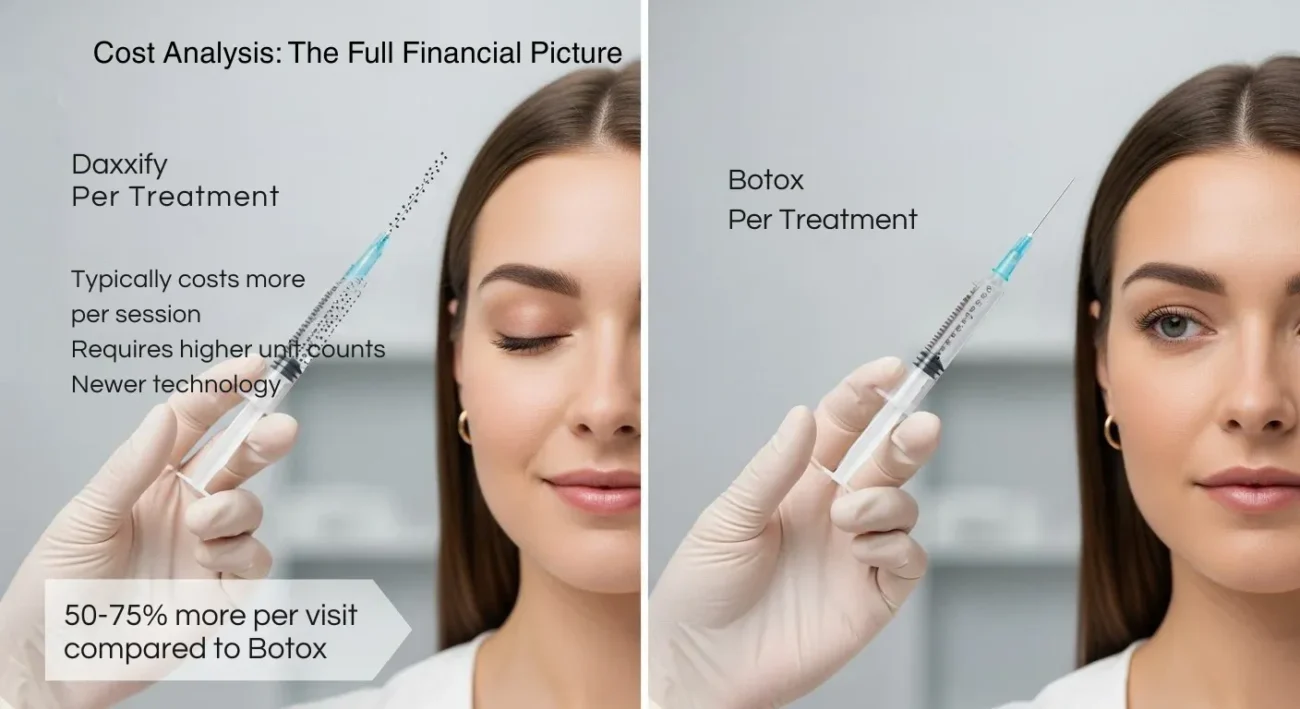
Daxxify Per Treatment: Typically costs more per session because it requires higher unit counts (in Daxxify units) and represents newer technology. You might pay 50-75% more per visit compared to Botox.
Annual Investment: However, when you calculate yearly costs:
- Daxxify: 2 treatments per year = 2 × higher session cost
- Botox: 3-4 treatments per year = 3-4 × lower session cost
Depending on your provider’s pricing and how long each product lasts for you specifically, the annual investment can be surprisingly similar.
Beyond pure dollars, consider:
- Time value: Fewer appointments mean less time off work, fewer trips to the clinic
- Consistency: With longer-lasting results, you’re less likely to have periods where your wrinkles are fully visible between appointments
- Flexibility: Botox’s shorter duration means you can adjust your look more frequently if you’re still fine-tuning your ideal appearance
Which Treatment Is Right for You
Choose Daxxify If You:
- Value convenience over all else: If you travel frequently, have a packed schedule, or simply dislike medical appointments, treating every 6 months instead of every 3 months is a major lifestyle improvement.
- Have used Botox successfully: If you already know you respond well to botulinum toxin treatments and want to extend your results.
- Want consistent results year-round: The longer duration means you’re less likely to experience that “fading” period before your next appointment.
- Are comfortable with newer technology: Daxxify has only been on the market since 2022, meaning less long-term safety data compared to Botox’s 20+ year track record.
- Don’t mind higher upfront costs: If paying more per session doesn’t concern you, and you’re focused on the annual total rather than per-treatment expense.
Choose Botox If You:
- Are new to neuromodulators: Starting with a shorter-duration treatment lets you test how you respond without a 6-9 month commitment. If you don’t like the results, they’ll fade faster.
- Want more flexibility: The 3-4 month duration means you can adjust dosing or injection sites more frequently as you learn what works best for your face.
- Need multiple areas treated: Botox’s FDA approvals for forehead, crow’s feet, and glabellar lines mean established dosing protocols for comprehensive facial treatment.
- Prefer established safety data: Two decades of use means extensive real-world safety information and predictable outcomes.
- Want lower per-session costs: If cash flow matters more than annual totals, Botox’s lower individual treatment cost may fit your budget better.
- Require treatment for medical conditions: Botox has more extensive medical approvals beyond cosmetic use.
Important Considerations for Both Options
- Individual variation is huge: Clinical trial averages don’t predict your personal results. Some Daxxify patients report only 3-4 months of benefit, while some Botox users enjoy 5-6 months. Your metabolism, genetics, muscle use patterns, and even your diet and exercise habits can influence duration.
- Provider expertise matters more than product choice: A skilled injector who understands facial anatomy, proper dosing, and injection technique will achieve better results with either product than an inexperienced provider. Board certification in dermatology or plastic surgery, along with extensive experience specifically with neuromodulators, should be your top priorities.
- Results take practice: Your first treatment may not be perfect. It often takes 2-3 sessions to dial in the exact dosing and placement that achieves your ideal look. This is normal and expected.
- Antibody resistance is possible: With repeated use of any botulinum toxin, a small percentage of patients develop neutralizing antibodies that reduce effectiveness. If this happens with one brand, switching to a different formulation sometimes helps. Clinical data shows antibody formation in approximately 1.8% of Daxxify patients.
- Natural movement should remain: The goal isn’t a “frozen” face it’s reducing wrinkles while maintaining natural expressions. A skilled injector preserves your ability to show emotion while smoothing lines.
Real Talk Setting Realistic
- Neither product is permanent: All neuromodulator results are temporary. You’re committing to ongoing treatments to maintain results, whether that’s every few months or twice yearly.
- You won’t look 20 years younger: These treatments address dynamic wrinkles from muscle movement. They won’t fix sun damage, skin texture issues, volume loss, or sagging. For comprehensive facial rejuvenation, you might need additional treatments like fillers, lasers, or skin care.
- Everyone will respond differently: Your friend’s 9-month Daxxify results don’t guarantee yours will last that long. Your colleague’s Botox “wearing off in 2 months” doesn’t mean you’ll have the same experience.
- Bruising happens: Even with the most skilled injector, bruising at injection sites occurs in about 1-5% of treatments. Avoiding blood thinners (with your doctor’s approval), alcohol, and certain supplements before treatment reduces this risk.
- The first few days matter: Avoid rubbing the treated area, lying down for 4 hours post-treatment, or intense exercise for 24 hours. These precautions prevent the medication from migrating to unintended areas.
Making Your Decision
Schedule consultations with experienced providers who offer both products. A good injector will:
- Assess your facial anatomy and muscle strength.
- Discuss your aesthetic goals in detail.
- Explain which product they recommend for your specific situation.
- Show before-and-after photos of their own patients.
- Discuss realistic expectations for duration and results.
- Provide transparent pricing for both options.
- Answer questions without pressuring you toward either product.
Red flags include providers who:
- Claim one product is universally “better”.
- Guarantee specific duration results.
- Offer dramatically discounted pricing (potentially diluted product).
- Lack proper medical credentials.
- Rush the consultation or seem dismissive of concerns.
References:
- U.S. Food and Drug Administration. FDA Prescribing Information for DAXXIFY (daxibotulinumtoxinA-lanm) for Injection.
- Bertucci V, Solish N, Kaufman-Janette J, et al. DaxibotulinumtoxinA for Injection has a prolonged duration of response in the treatment of glabellar lines: pooled data from two multicenter, randomized, double-blind, placebo-controlled, phase 3 studies (SAKURA 1 and SAKURA 2). Journal of the American Academy of Dermatology. 2020;82(4):838-845.
- Fabi SG, Cohen JL, Green LJ, et al. DaxibotulinumtoxinA for Injection for the treatment of glabellar lines: efficacy results from SAKURA 3, a large, open-label, phase 3 safety study. Dermatologic Surgery. 2020;47(1):48-54.
- American Society of Plastic Surgeons. How does Daxxify compare to Botox