
What It Means to Take Control of Midlife Wellness: Seeing Midlife as Renewal

The narrative around midlife has long centered on decline. Hot flashes. Memory lapses. Slowing metabolism. Energy loss.
The subtle or not-so-subtle message: brace for deterioration.
Research tells a different story. Midlife—roughly ages 35 to 65—represents a critical window for preventing chronic disease, optimizing function, and setting the foundation for healthy aging. Not a period of inevitable descent but an opportunity for intentional renewal.
The Midlife in the United States study, a 30-year longitudinal research project tracking over 7,000 adults, has documented something unexpected: cognitive decline is not inevitable. Having a sense of purpose in life associates with better health and longer life.
The physical and psychological changes happening during this period create openings for intervention that didn’t exist earlier and won’t exist later.
Understanding midlife as renewal requires looking past cultural stereotypes about aging to examine what science actually reveals about this life stage.
The Research Behind Midlife Transformation
For decades, childhood and older age dominated longevity research. The territory between remained largely uncharted.
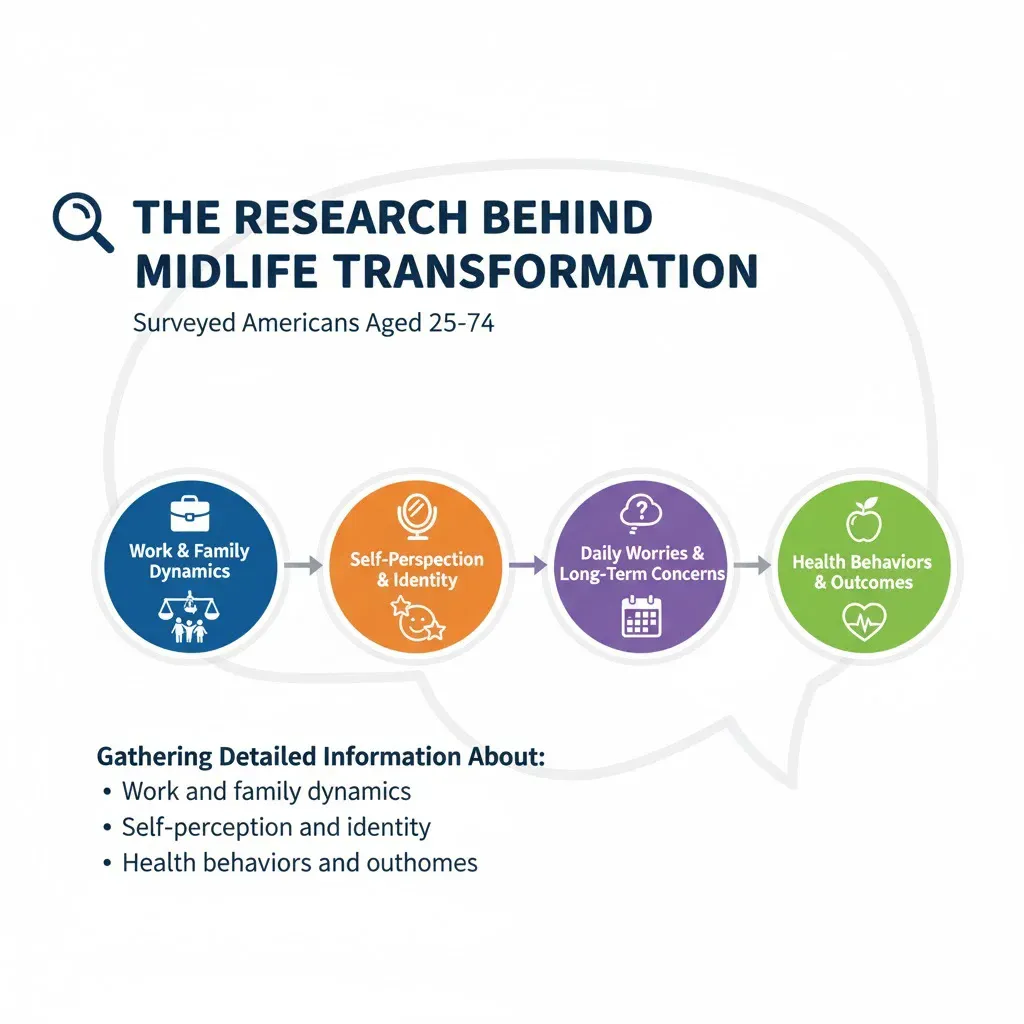
The Midlife in the United States study changed that when it launched in 1995. Scientists from diverse fields wanted answers: How does physical and mental health change across adult decades? For whom? Why?
They surveyed Americans aged 25-74, gathering detailed information about:
- Work and family dynamics
- Self-perception and identity
- Daily worries and long-term concerns
- Health behaviors and outcomes
The study proved so valuable that the National Institute on Aging awarded the University of Wisconsin-Madison Institute on Aging $62 million in 2023 to continue the research for another six years.
Running parallel since 1996, the Study of Women’s Health Across the Nation tracked 3,302 women across multiple ethnic groups—African American, White, Chinese, Hispanic, and Japanese participants. The diversity matters because midlife experiences vary significantly across cultures and backgrounds.
Three decades of data collection later, the findings challenge everything we assumed about midlife decline.
One of the most robust discoveries: purpose in life predicts longevity independent of other health factors.
Purpose Powers Physical Health
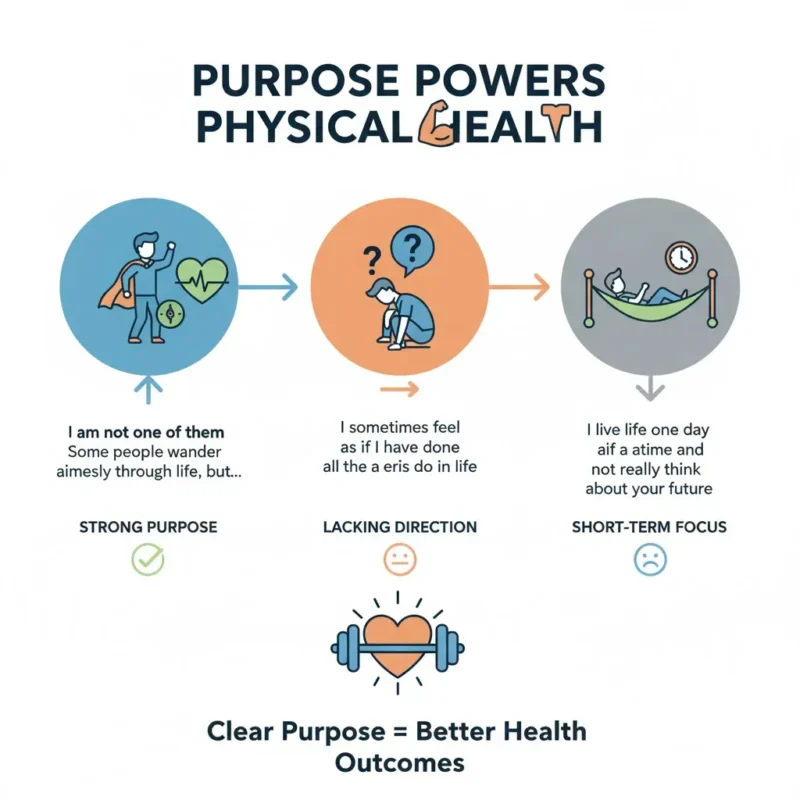
Research published in Psychological Science in 2014 examined over 6,000 adults from the MIDUS study. Participants rated their agreement with statements like:
- “Some people wander aimlessly through life, but I am not one of them”
- “I sometimes feel as if I have done all there is to do in life”
- “I live life one day at a time and do not really think about the future”
The results were striking.
Individuals with higher purpose in life scores lived longer than their counterparts over the 14-year follow-up period—even when researchers controlled for positive relationships, positive emotions, and other markers of psychological well-being. The benefits didn’t depend on age, retirement status, or how long participants lived during the study period.
Purpose appeared to buffer against mortality risk across all of adulthood.
A 2024 follow-up study published in Psychology and Aging tested whether purpose or life satisfaction mattered more for longevity. Using 23 years of MIDUS data tracking nearly 6,000 adults, researchers found something unexpected: purpose in life remained significant across all analyses while life satisfaction became only marginally significant when both were examined together.
Translation: feeling satisfied with life matters, but having something to live for matters more.
The brain connection: Research published in Frontiers in Psychiatry in 2024 used diffusion MRI brain scans from MIDUS participants. Greater purpose in life correlated with better white matter integrity in brain regions involved in memory and emotional regulation—the structural foundation for cognitive resilience.
Purpose doesn’t just correlate with feeling good about life. It associates with measurable biological markers that influence how long and how well people live.
The 2023 study in the International Journal of Environmental Research and Public Health demonstrated something particularly relevant for midlife: purpose in life moderated the relationship between poor self-rated health and mortality. People who felt their health was poor but maintained strong purpose showed better survival rates than those with poor health and low purpose.
Having something to live for provides a buffer when health challenges arise.
The Critical Window Concept
The journal Women’s Midlife Health defines midlife as spanning ages 35-40 through 60-65. This period coincides with the menopausal transition in women but represents a vulnerable window for both sexes.
Think of it as a biological inflection point.
Research published in the journal in 2023 identifies midlife as the critical period for interventions to reduce bone strength loss, protect cardiovascular health, and promote psychological well-being. The timing matters because certain physiological changes happen during this window that won’t reverse later.
- Bone loss: accelerates dramatically during the late menopausal transition—approximately two years before through one year after menopause. Screening and treatment during this specific window can prevent precipitous bone density decline that increases fracture risk for decades afterward.
- Cardiovascular changes: cluster during midlife. The menopausal transition brings adverse shifts in cholesterol, body fat composition, blood pressure, and glucose metabolism. Arterial stiffness increases. Studies tracking these changes find that addressing cardiovascular risk factors during midlife has outsized impact on future heart health compared to interventions that begin later.
A 2022 paper published in Menopause journal describes the menopausal transition as a “portal to the second half of life.”
The metaphor captures something important. Portals work both ways. They’re thresholds where direction gets chosen. Walk through intentionally or drift through passively—either way, you’re going through.
The window concept reframes midlife from passive decline to active opportunity. Interventions during this period don’t just slow deterioration. They can prevent it from starting.
Physical Renewal Through Lifestyle
Research consistently points to lifestyle as the most powerful tool for midlife wellness.
Not supplements. Not expensive treatments. The basics.
The American Heart Association’s Life’s Simple 7 framework identifies seven modifiable risk factors for cardiovascular health:
- Blood pressure control
- Cholesterol management
- Blood sugar regulation
- Regular physical activity
- Healthy diet patterns
- Weight management
- Smoking cessation
Population adherence to these seven factors remains far from optimal. But research shows addressing them during midlife substantially reduces cardiovascular disease risk for the decades that follow.
Sleep becomes non-negotiable. Studies tracking midlife women find that up to half report sleep problems—trouble falling asleep, waking during the night, early morning wakening. All worsen during the menopausal transition. Poor sleep links to increased depressive symptoms, cardiovascular risk, and worse quality of life.
Addressing sleep during this window provides benefits that compound over subsequent decades.
Movement matters differently now. Fitness trends for midlife adults in 2025 reflect growing recognition that bodies need different approaches at different life stages. Low-impact training like Pilates, barre, and functional movement builds strength and flexibility while minimizing joint stress.
The emphasis has shifted from high-intensity interval training to sustainable approaches. Researchers note that HIIT delivers impressive short-term results but proves difficult to sustain over a lifetime of fitness. Gentler, consistent routines prioritize longevity over quick wins.
Research suggests moderate physical activity—150 minutes weekly, roughly 30 minutes five days per week—provides substantial health benefits. The activity doesn’t need to be extreme:
- Walking counts
- Yoga counts
- Swimming counts
- Gardening counts
Consistency matters more than intensity.
Finding Purpose in Midlife
If purpose in life predicts longevity and buffers health challenges, the practical question becomes: how does someone cultivate it?
Research on purpose development suggests it involves three elements:
1. Identifying activities and goals that feel meaningful
Not what should feel meaningful. What actually does. The difference matters enormously.
2. Engaging with commitments larger than oneself
Work, family, community, creative pursuits, volunteer activities—any sustained engagement with something that feels significant.
3. Maintaining direction even when circumstances shift
Purpose persists through changes. Jobs end, children leave, health challenges emerge. Purpose adapts but doesn’t disappear.
The MIDUS research indicates purpose doesn’t require grand ambitions. Small, consistent commitments to things that matter work as well as large ones:
- Helping neighbors with groceries or childcare
- Teaching skills to younger people in your field
- Contributing to local organizations or causes
- Pursuing learning in areas of genuine interest
- Mentoring someone navigating challenges you’ve faced
One distinguishing feature separates purpose from other forms of satisfaction: future orientation.
Studies find that people who report living “one day at a time and not really thinking about the future” or feeling “as if I have done all there is to do in life” show lower purpose scores and worse health outcomes.
Purpose requires believing there are still meaningful things ahead. Goals to pursue. Contributions to make. Experiences to have. Relationships to deepen.
This future orientation matters more in midlife than earlier decades. Younger adults often have purpose built into life structure through education, early career building, or family formation. Midlife requires more intentional construction.
Sleep and Metabolic Health
Sleep problems during midlife don’t just cause fatigue. Research published in the Journal of the American Heart Association has linked poor sleep during the menopausal transition to increased cardiovascular disease risk, particularly when combined with vasomotor symptoms like hot flashes.
The combination creates compounding effects. Women experiencing both hot flashes and short sleep duration show particularly elevated cardiovascular risk compared to those with just one or neither condition.
Metabolic changes accelerate:
- Insulin sensitivity decreases
- Fat distribution shifts toward abdominal storage
- Muscle mass declines without intervention
- Resting metabolic rate drops
None of these changes are inevitable consequences of aging. They’re modifiable through targeted lifestyle strategies.
Strength training becomes increasingly important during this period. Muscle tissue burns more calories at rest than fat tissue, helping maintain metabolic rate. Weight-bearing exercise protects bone density. Resistance training preserves muscle mass that otherwise declines with age.
Two to three strength sessions weekly provide substantial benefits. The weights don’t need to be heavy. Bodyweight exercises work. Resistance bands work. The stimulus matters more than the load.
Nutrition matters differently in midlife than earlier decades:
Protein requirements increase to maintain muscle—roughly 1.2 to 1.6 grams per kilogram of body weight daily for active adults, higher than the standard recommendations designed for younger populations.
Calcium and vitamin D support bone health during the critical window for bone loss. Fiber supports metabolic and cardiovascular function while helping maintain stable blood sugar.
These aren’t radical interventions. They’re adjustments based on changing physiology.
Mental and Emotional Resilience
Stress management becomes central to midlife wellness as responsibilities often peak during these years. Career demands. Aging parents. Growing children. Financial pressures.
The sandwich generation phenomenon—caring for both children and elderly parents simultaneously—creates sustained stress that impacts both mental and physical health.
Research on midlife stress reveals a complex picture. Some studies suggest self-reported stress actually decreases for most people as they transition through midlife, after adjusting for age and sociodemographic factors. Others document increased psychological symptoms during perimenopause.
The variability suggests individual circumstances matter enormously. Midlife stress isn’t universal or inevitable, but for those experiencing it, the health impacts can be significant.
Mindfulness practices integrate stress management directly into wellness routines:
- Yoga combines movement, breath, and meditation
- Tai chi builds balance while calming the nervous system
- Breathwork provides immediate stress relief
- Meditation builds lasting capacity for emotional regulation
These approaches don’t just provide temporary relief. Regular practice appears to build lasting capacity for stress resilience.
Social connection also buffers midlife stress. Strong relationships predict better health outcomes independent of other factors.
Quality matters more than quantity. A few close, supportive relationships provide more benefit than many superficial connections. The friend who listens without judging. The partner who shares burdens. The colleague who understands work pressures. The neighbor who shows up when needed.
Research tracking social connection across the lifespan consistently finds that relationship quality in midlife predicts health outcomes decades later.
Hormone Health and Natural Interventions
As awareness grows about hormones’ role in mood, , and cognitive function, midlife adults increasingly seek natural approaches to support hormonal balance.
For women, the emphasis involves managing perimenopausal and menopausal transitions through nutrition, targeted supplements, and lifestyle modifications. Phytoestrogen-rich foods, omega-3 fatty acids, antioxidants, magnesium, and vitamin D all play roles in addressing symptoms and supporting long-term health.
For both sexes, sleep quality, stress management, and exercise influence hormone production and regulation. These factors interact: poor sleep disrupts hormone balance, which worsens sleep quality, creating cycles that compound over time.
Breaking these cycles requires addressing multiple factors simultaneously rather than targeting single symptoms in isolation.
Reframing the Narrative
The cultural narrative around midlife emphasizes loss. Loss of youth. Loss of fertility. Loss of physical capability. Loss of relevance.
Research suggests this framing obscures what’s actually happening during these decades. Yes, certain capacities decline. Ovarian function ends. Muscle mass decreases without intervention. Metabolism slows.
But other capacities strengthen. Emotional regulation often improves. Psychological well-being frequently increases. Purpose and meaning can deepen. Experience and wisdom accumulate.
The University of Wisconsin-Madison research on midlife documents that with proper attention to health behaviors, social connections, and psychological well-being, this life stage can represent renewal rather than decline.
The critical factor appears to be taking control—making intentional choices about lifestyle, relationships, purpose, and health behaviors rather than passively accepting default trajectories.
Renewal doesn’t mean returning to youth. It means building foundations for the decades ahead while living fully in the present. It means recognizing that how these years unfold isn’t predetermined by biology alone but shaped substantially by daily choices and sustained commitments.
Midlife wellness requires rejecting the decline narrative without denying real changes. Both acknowledgment and agency. Both realism and optimism.
The research offers clear direction: cultivate purpose, maintain social connections, prioritize sleep, move regularly, manage stress, eat well, address health issues promptly. The basics work. They’ve always worked. Midlife simply makes them more important.
Taking control of midlife wellness means recognizing this period as what the science suggests it actually is—not a long goodbye to youth but a critical window for building health that lasts.
References
- Midlife in the United States (MIDUS) Study, University of Wisconsin-Madison Institute on Aging, National Institute on Aging funding renewal (2023)
- Study of Women’s Health Across the Nation (SWAN), Center for Midlife Science, University of Michigan (1996-present)
- Hill, P.L., & Turiano, N. (2014). Purpose in life as a predictor of mortality across adulthood. Psychological Science, 25(7), 1482-1486
- Martela, F., Laitinen, E., & Hakulinen, C. (2024). Which predicts longevity better: Satisfaction with life or purpose in life? Psychology and Aging, 39(6), 589-598
- Nair, A.K., et al. (2024). Purpose in life as a resilience factor for brain health: diffusion MRI findings from the Midlife in the U.S. study. Frontiers in Psychiatry, 15:1355998
- Friedman, E.M., & Teas, E. (2023). Self-Rated Health and Mortality: Moderation by Purpose in Life. International Journal of Environmental Research and Public Health, 20(12), 6171
- Harlow, S.D., et al. (2023). Women’s midlife health: the unfinished research agenda. Women’s Midlife Health, 9(7)
- Thurston, R.C., et al. (2022). Charting the Path to Health in Midlife and Beyond: The Biology and Practice of Wellness. Menopause, 29(5), 504-513