
How to Reduce Crackling and Crunching in the Neck
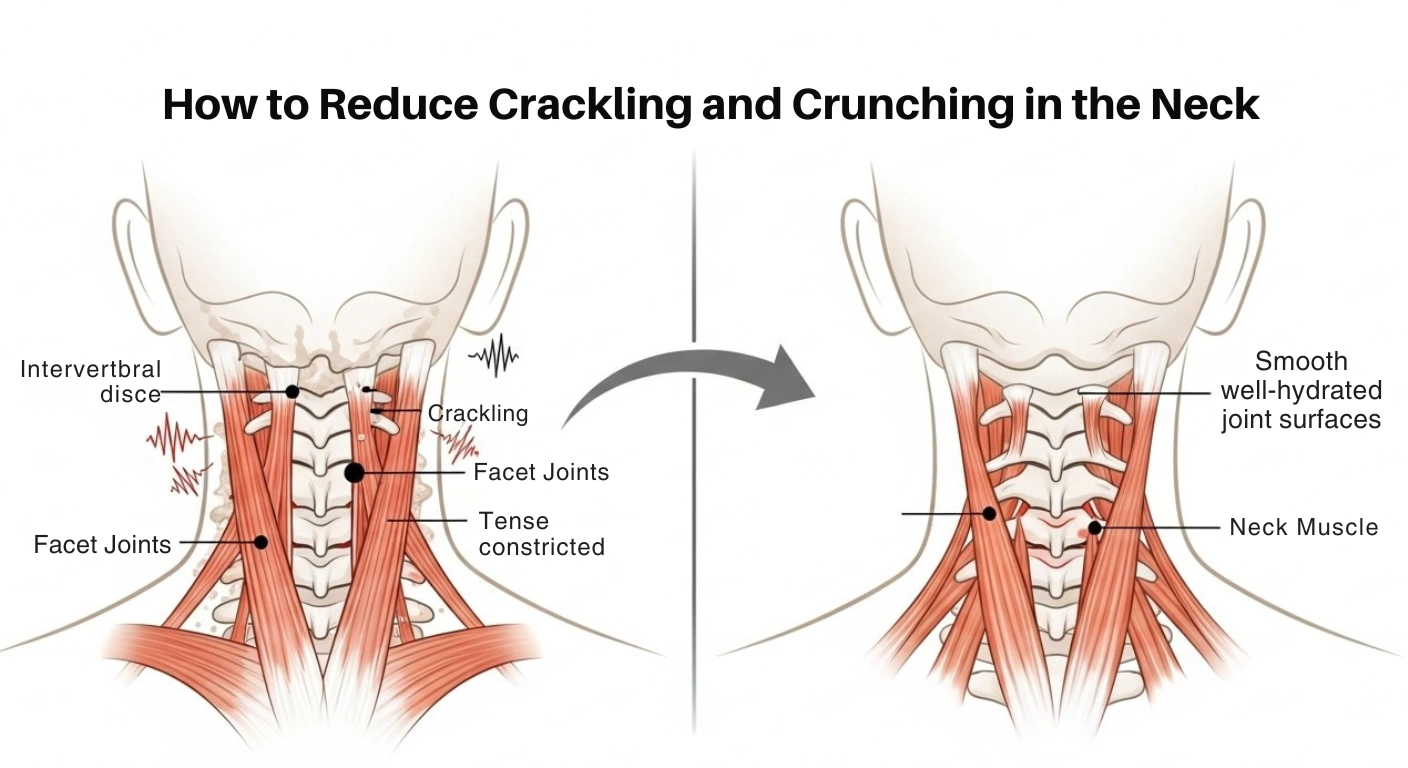
That disturbing crackling, popping or grinding sound that you hear in your neck when you turn it has a name: neck crepitus. Those clicking and crunching noises you hear when you turn your head are fairly common, particularly as we age more than 80% of people in their sixties experience them. Neck crepitus is innocent, does not hurt, and does no harm, but by understanding what causes it and knowing how to treat it can be a factor for overall neck health.
What Causes Neck Crunching Sounds
Your neck contains complex structures including seven cervical vertebrae, cushioning discs, joints, ligaments, and muscles. Several mechanisms can produce these distinctive sounds.
- The release of gas bubbles is one of the most frequent. The spinal bones in your neck are cushioned by synovial fluid that enable them to move freely. As your neck moves, pressure on those joints may make a little gas bubble escape from the joint or collapse, causing that cracking sound. This is akin to cracking your knuckles and ultimately harmless.
- Deteriorant involving the joints and arthritis occurs with increasing frequency as we get older. As you get older, the covering that protects the cartilage on your neck joints degenerates due to normal wear. Referred to as cervical spondylosis or cervical osteoarthritis, the condition occurs when the protective cartilage between vertebrae begins to wear away. While this occur, bones can rub against each other more directly and creating the grinding or crunching sounds along with movement. This wear and tear process usually begins in midlife and continues over time.
- Tightness of muscles and ligaments is a factor in the production of crepitus. Your neck referred to as the cervical spine is involve tendons or ligaments around the neck in extension and rotation, which can snap/pop around bony prominences when one turn their head. This is most common in people who sit a lot with poor posture or do desk work etc.
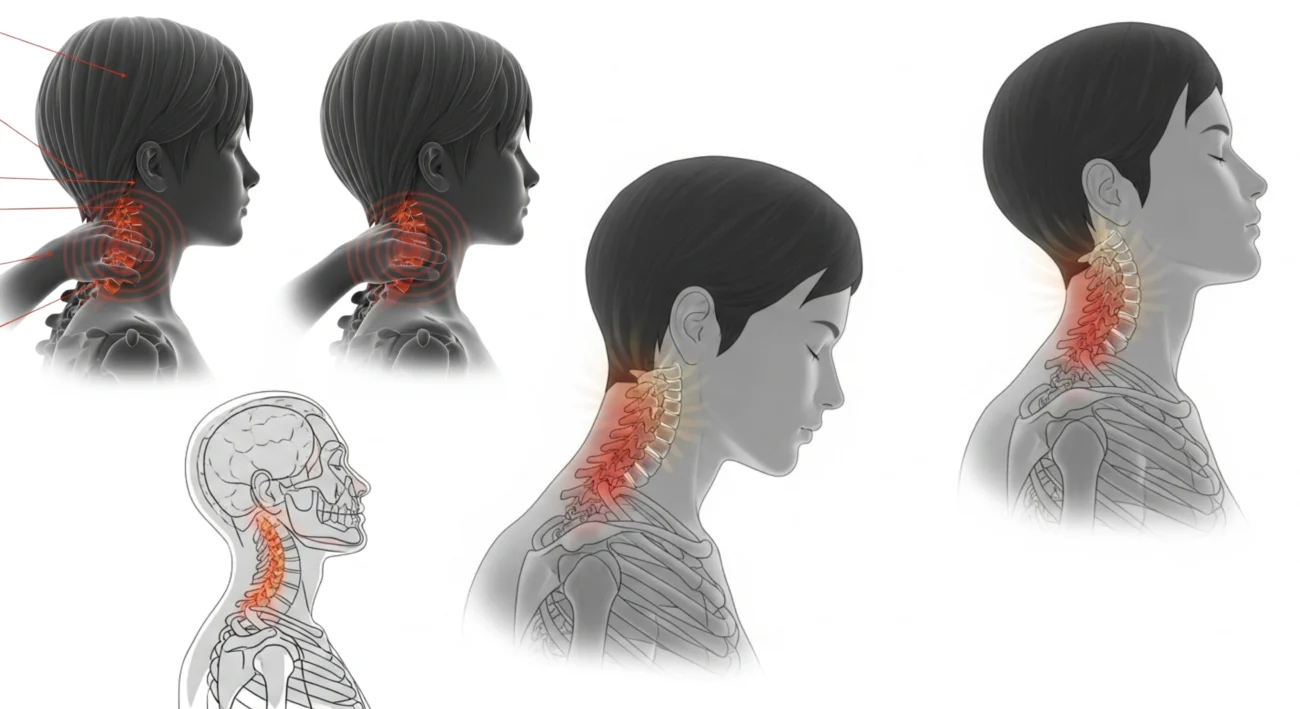
- And not to forget, bad posture puts a lot of pressure on your cervical spine. The head weighs around 10-12 pounds, but if you are hunching and leaning your head forward a less mentioned outcome of poor posture or excessive screen time is that the load on your neck joints increases enormously. In the long run, that extra wear and tear on your joints causes them to change shape, as well as how your spine moves – creating more crepitus.
When to Be Concerned
Occasional popping or cracking without accompanying symptoms is generally not a cause for concern. However, you should consult a healthcare professional if you experience:
- Persistent pain or sharp pain during neck movement
- Stiffness that limits your range of motion
- Numbness, tingling, or weakness in your arms or hands
- Dizziness or nausea following neck movements
- Crepitus that worsens over time or occurs frequently
These symptoms may indicate underlying conditions like disc degeneration, nerve compression, or cervical myelopathy that require professional evaluation.
Proven Strategies to Reduce Neck Crunching
Improve Your Posture:
Posture is the foundation of neck health. Keeping yourself aligned properly takes less pressure off your cervical spine anteriorly, and can help avoid current as well as future crepitus. Concentrate on bringing your ears in line over your shoulders instead of taking the head too far forward. When sitting while desk or computer work, make sure to have your monitor at eye level so you’re not poking your head forward too much. Just make sure to give yourself a break every 30 minutes or so to reset your posture and stretch those neck muscles.
Perform Targeted Neck Stretches:
Gentle stretching helps ease tight muscles that might contribute to crepitus. Even a few minutes of daily stretching just 5 to 10 minutes at a time can lead to noticeable improvements.
Upper trapezius stretch: Place your left hand on the right side of your head, pressing slightly to bring your head toward the left shoulder. Hold for 30 seconds and then switch sides. Do 3 to 5 reps on each side.
Corner pec stretch: Stand in a doorway or corner with your forearms resting flat against the door frame at shoulder height. Gently bend forward until you feel a slight stretch in the front of your shoulders. Hold for 30 seconds and do 3–5 times. This stretch helps to relieve tightness in pecs which contribute to the forwards shoulder position.
Strengthen Your Neck and Shoulder Muscles:
Weak and/or underactive muscles may result in poor neck- movement, which promotes the development of compensation patterns that generate crepitus. Strength training helps to keep everything aligned and minimizes the impact on your joints.
Tuck your chin exercise: This a very effective postural exercise to develop isometric strength of the deep cervical flexor muscles and posterior upper thoracic extensors necessary for good posture. With your back to a wall, sit up (or stand). Easy, low-pressure performance tasks such as pulling your chin gently straight back into a “double chin” position and holding for seconds. Do 5-7 reps several times a day, if you can. You can exercise while you’re seated at a desk or in your car.
Shoulder blade squeezes: Squeeze shoulder blades together and hold for a few seconds, then release. Easy isometric resistance exercises like this work the muscles that support your neck and can be done without using special equipment.
Apply Heat or Cold Therapy:
Heat and cold treatments may help relieve pain and can also decrease inflammation. Use a heating pad or soak in a warm bath to loosen muscles and stimulate blood flow. If it is an acute problem, you could also consider ice packs to decrease inflammation. Try both to see which works Niacin flushes may hit allergies.
Maintain Healthy Weight and Regular Exercise:
Your neck muscles and joints are under extra pressure if you’re overweight. One way to lessen this burden is by keeping the weight off. Regular exercise is useful in reducing the symptoms of crepitus, not only by making the spine strong and healthy but also if neck exercises are included in your daily routine.
Optimize Your Sleep Environment:
How you sleep has a lot to do with the health of your neck. An ideal pillow should be one that maintains your head, neck and the rest of body alignment throughout the night. Your pillow needs to accommodate your neck’s normal curvature, so it won’t force it into any extreme positions.
Create Ergonomic Workspace Setup:
If you sit at a desk, make ergonomic changes that minimize neck strain. Stand up your workstation to eye height, place your keyboard and mouse at a comfortable height and make sure your chair supports the natural curve of your lower back. Fine tuning will avoid the erosion and abrasion that brings about chronic crepitus.
Professional Treatment Options
When home strategies aren’t sufficient, professional interventions can help:
If you have neck crepitus, physical therapy can help. Individualized exercise anti aging programs are developed by your physical therapist to address your muscle imbalances, joint misalignments and postural dysfunctions. Physical therapy treats the underlying cause, not just the symptoms ensuring long term improvement.
Joint mobilizations, soft tissue work, and trigger point therapy are manual therapy techniques that ease tightness and reset smoother movement. These manual therapies increase blood flow, promote healing and reduce pain.
Some people with back pain can be helped with chiropractic care. The practice of other spinal adjustments by properly skilled personnel may enhance joint range of motion and position, resulting in decrease in crepitus. But you should work with experienced practitioners and discuss this option with your doctor.
In the meantime, over-the-counter drugs like ibuprofen or acetaminophen can help to lower pain and inflammation if necessary, but they treat symptoms rather than underlying causes.
The Bottom Line
The majority of cases of neck crepitus are harmless and do not require any treatment. Good posture, regular stretching and strength exercises, ergonomics while you work or play, and ideal sleep positioning can all help avoid the frequency and severity of crackling in your neck.
You should definitely go see a pro to rule out some of the scarier possibilities if you have crepitus and it is also associated with pain, stiffening, limited range of motion or nervous system symptoms. Early treatment prevents escalation while keeping your neck healthy for years to come.
References:
- Oklahoma Pain & Spine Management. “Neck Crepitus: Symptoms, Causes & Treatment.”
- Medical News Today. “What Can Cause the Neck to Make a Crunching Sound?”
- Town Center Orthopaedics. “Why is My Neck Cracking, Crunching, and Popping?”
- Spine-Health. “Neck Cracking and Grinding: What Does It Mean?”
- Elite Pain & Spine Institute. “Neck Crepitus: Causes, Symptoms, Treatment, Risks & FAQs.”
- Baylor University Medical Center – Dallas. “What Causes Cricks in the Neck?”
- IMPACT Physical Therapy. “6 Exercises to Reduce Stress & Strain in Your Neck.”
- Spine-Health. “Neck Strengthening Exercises.”
- Houghton Physical Therapy. “Don’t Ignore That Crunch! How Physical Therapy Helps With Neck Noises.”
- Advent Physical Therapy. “Neck Crepitus Causes & Treatments.”