
Voryhamilcon: Practical Guide to Dual Antimicrobial Strategies in Health

You have probably seen the term Voryhamilcon floating around while researching antimicrobial treatments. And if you felt confused, that is totally normal. Most people have no clue what it means.
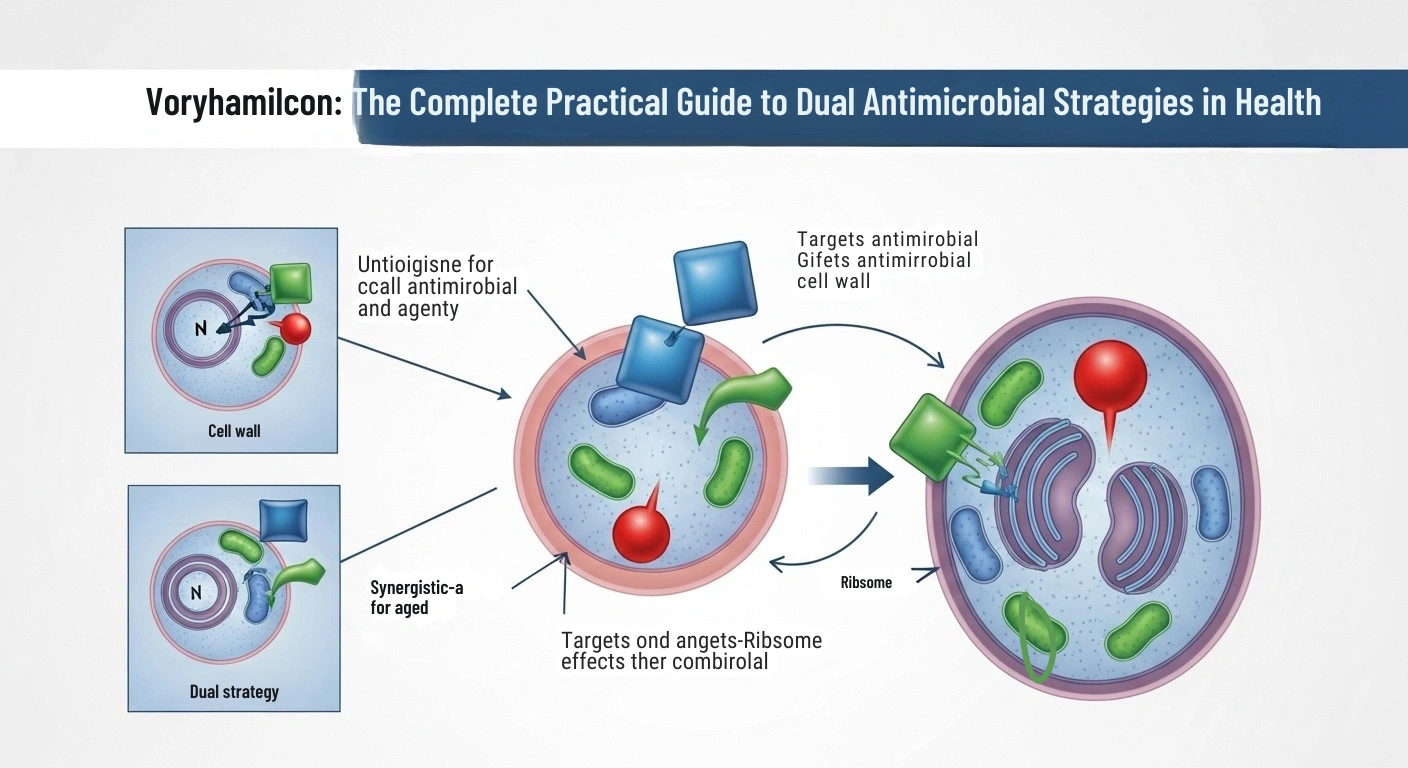
Here is the deal. Voryhamilcon is not a drug you can buy. It is a conceptual framework for thinking about dual antimicrobial strategies. The idea blends antifungal principles with antibacterial treatments into one smart approach for managing tough infections.
What is Voryhamilcon
Voryhamilcon does not appear in any standard medical database. No FDA approval exists for it. You will not find clinical trials under this name.
But the concept behind it is very real.
The Vory part draws from antifungals like voriconazole, which treats serious fungal infections. The hamilcon part points to antibacterial or broad-spectrum antimicrobial action.
Put them together and you get a mental model for dual antimicrobial coverage. This matters most when doctors face infections where the exact cause is still unknown.
Think of it like fighting a fire when you do not know if it is electrical or chemical. You want an extinguisher that handles both. That is the Voryhamilcon idea in a nutshell.
Why Dual Antimicrobial Strategies Matter Now
Antimicrobial resistance is not a future problem. It is already here. Resistant infections played a role in nearly 5 million deaths worldwide in 2019. Fungal infections are climbing global priority lists fast.
The old way of prescribing one antibiotic and hoping for the best does not work anymore.
Doctors now lean toward combination strategies. Two or more agents team up to cover different pathogen types. The Voryhamilcon framework fits right into this shift.
Here is why dual strategies are gaining ground:
- Mixed infections with both bacteria and fungi happen more often than people realize, especially in hospitals
- Single-agent therapy carries a higher chance of resistance building up
- Two agents working through different mechanisms can produce better results than one alone
- Broader coverage buys time while diagnostic tests catch up
The Two Pillars of Voryhamilcon
This framework stands on two pillars. Understanding both is key.
The Antifungal Pillar:
This covers agents that target fungal organisms. Some block ergosterol production, which fungi need for healthy cell membranes. Others mess with fungal DNA replication. Voriconazole belongs to the azole class and works well against Aspergillus and certain Candida strains.
The Antibacterial Pillar:
This includes traditional antibiotics like beta-lactams, fluoroquinolones, and newer options like oxazolidinones. The goal is to knock out bacterial pathogens, whether gram-positive, gram-negative, or somewhere in between.
When both pillars work together, the coverage expands dramatically. This is not about throwing every drug at the problem. It is about smart, evidence-based pairing.
| Feature | Single-Agent Therapy | Dual Strategy Voryhamilcon |
|---|---|---|
| Pathogen Coverage | One type only | Both bacterial and fungal |
| Resistance Risk | Higher over time | Lower with multiple mechanisms |
| Best For | Confirmed single infections | Unknown or mixed infections |
| Side Effects | Generally lower | Needs careful monitoring |
| Treatment Speed | Slower if wrong agent picked | Faster with broader coverage |
| Hospital Use | Mild infections | ICU and immunocompromised patients |
| Drug Interactions | Minimal | Moderate to high |
| Cost | Lower | Higher but may cut hospital stays |
When Should You Consider Dual Antimicrobial Therapy
Not every infection needs two agents. Overusing broad treatments wastes resources and feeds resistance. But certain situations call for the Voryhamilcon approach.
Critically ill patients in ICU settings often present with unknown infections. Waiting for lab results before acting could cost a life. Dual coverage buys time.
Immunocompromised individuals face the highest risk. This group includes:
- Organ transplant recipients
- Cancer patients on chemotherapy
- People living with HIV
- Those with uncontrolled diabetes
Their weakened defenses let bacteria and fungi attack at the same time.
Treatment failure cases also need a rethink. When standard antibiotics do not work, a hidden fungal component might be the reason.
Post-surgical infections after major procedures can involve mixed microbial populations. Surgeons often use dual strategies here as a precaution.
Practical Steps to Apply the Voryhamilcon Framework
Whether you work in healthcare or just want to understand your treatment better, these steps lay out the process.
- Identify symptoms clearly. Look at the full picture. Fever, cough, skin changes, and unusual discharge can mean very different things depending on context.
- Get the right tests. Blood cultures, fungal cultures, imaging, and sensitivity testing all matter. More data means sharper decisions.
- Check the risk profile. Think about immune status, recent surgeries, hospital stay length, past antibiotic use, and conditions like diabetes or lung disease.
- Pick complementary agents. This is the core of Voryhamilcon. Pair agents that target different pathways. A cell-wall antibiotic plus an ergosterol-blocking antifungal covers two separate fronts.
- Monitor and adjust. Dual therapy demands close attention. Regular blood work, liver checks, and drug level monitoring help catch problems early.
Safety Risks You Cannot Ignore
Most articles gloss over this part. Dual antimicrobial therapy carries serious risks. These are powerful drugs, not vitamins.
Liver Toxicity:
Both antifungals and certain antibiotics process through the liver. Stacking them increases the workload fast. Regular liver function tests are mandatory, not optional.
Kidney Strain:
Some agents clear through the kidneys. Dual therapy can speed up renal damage, especially in older patients or those with existing kidney problems.
Drug Interactions:
Azole antifungals block CYP450 liver enzymes that break down many common drugs. Adding an antifungal to an antibiotic regimen can spike blood levels unpredictably.
Key safety rules to remember:
- Never start dual therapy without a qualified doctor supervising
- Track liver and kidney function throughout the treatment
- Report yellowing skin, dark urine, extreme tiredness, or rashes immediately
- Review all current medications for potential interactions before starting
Emerging Technologies Shaping Dual Therapy
The Voryhamilcon framework keeps evolving. New technology is pushing it forward.
Rapid Diagnostics:
Modern platforms identify pathogens within hours instead of days. Doctors can start broad and narrow fast, cutting unnecessary drug exposure.
Nanotechnology Delivery:
Researchers now package antimicrobial agents inside nanoparticles. Imagine sending an antifungal directly to lung tissue while an antibiotic hits a wound infection. Fewer systemic side effects, better targeting.
Artificial Intelligence:
Machine learning tools analyze patient data and infection patterns to recommend optimal drug combinations and doses. These tools are still developing, but they point toward truly personalized antimicrobial therapy.
What Everyday People Should Know
You do not need a medical degree to benefit from the Voryhamilcon concept. A few practical takeaways can help anyone.
Stop self-medicating. Taking leftover antibiotics for a fungal problem or vice versa makes things worse. It feeds resistance and delays proper treatment.
Ask your doctor the right question. When someone prescribes antimicrobials, ask whether your infection is bacterial, fungal, or both. This one question can change your treatment path.
Finish the full course. Whether on one drug or two, completing the entire prescription matters. Stopping early lets surviving microorganisms bounce back stronger.
Watch for warning signs. On any antimicrobial therapy, look out for:
- Yellowing skin or eyes
- Dark colored urine
- Extreme fatigue that does not improve
- Rashes or unusual skin reactions
Contact your doctor right away if any of these appear.
Final Thoughts
Voryhamilcon comes down to one simple idea. When an infection is complex, your treatment should match that complexity. This framework helps doctors and patients think smarter about when two antimicrobial agents work better than one. Resistance is growing, mixed infections are rising, and the old single-drug playbook is fading. Understanding dual strategies puts you ahead, whether you are making clinical decisions or simply trying to take better care of your own health. Stay curious and keep asking questions.