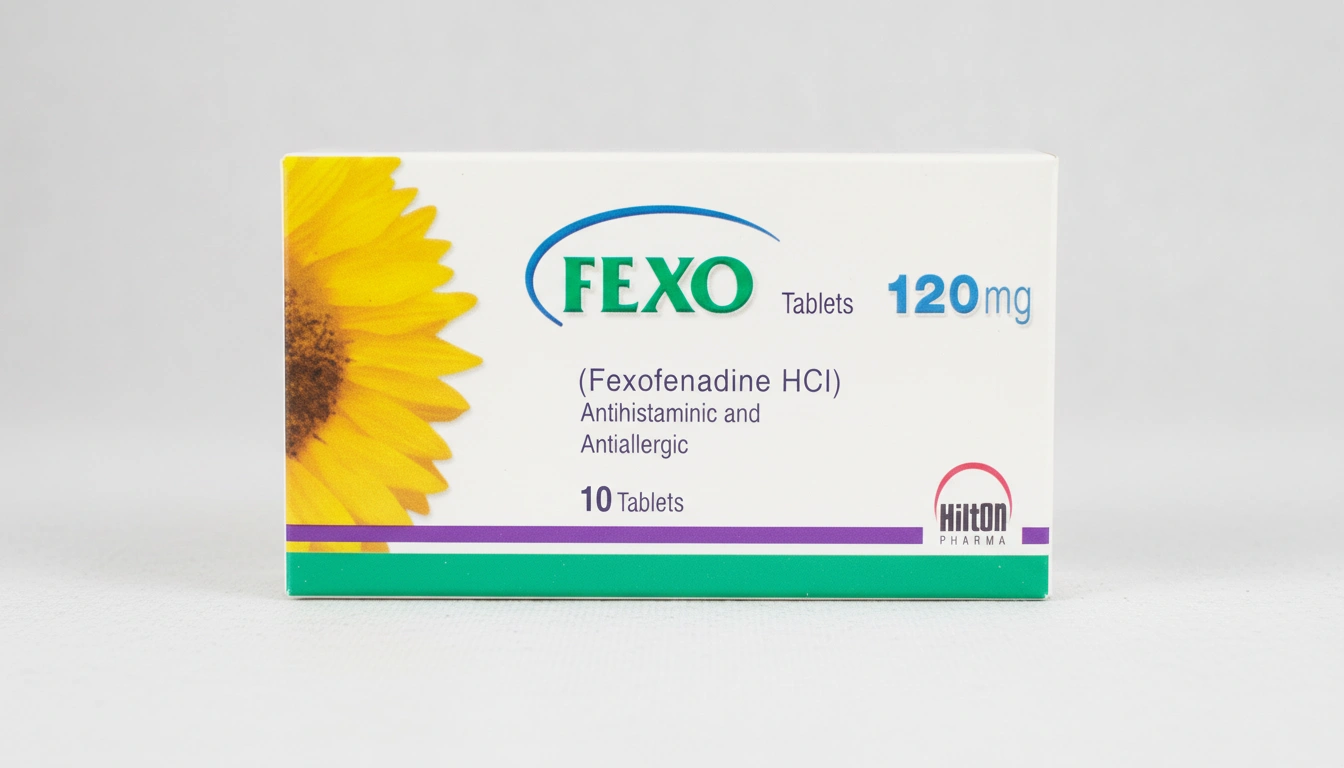
Fexo: Uses, Side Effects, and More
If you have ever dealt with a runny nose that just would not stop, relentless sneezing, or itchy and watery eyes every allergy season, chances are your doctor or pharmacist has mentioned fexofenadine. It is sold under brand names like Allegra, and in many markets people simply call it Fexo. It is one of the most widely used antihistamines in the world today, and honestly, for good reason.
But like any medication, there are important things you should know before you start taking it. This guide covers everything what Fexo is, what it treats, how it works, the right doses, possible side effects, things you should avoid, and two topics that most other guides do not even touch.
What Is Fexo?
Fexo is the brand name used in several countries for fexofenadine hydrochloride, a second-generation antihistamine. It was patented in 1979, got FDA approval in 1996, and has grown into one of the most commonly prescribed allergy medications in the world. By 2023, it ranked as the 219th most commonly prescribed medication in the United States, with over 1 million prescriptions written in that year alone (Wikipedia – Fexofenadine).
Fexofenadine also appears on the World Health Organization’s List of Essential Medicines, which speaks to how well its safety and effectiveness have held up across populations and decades of use.
It did not start as a completely new drug, either. Fexofenadine is the major active metabolite of an older antihistamine called terfenadine. When researchers found that it kept all of terfenadine’s allergy-fighting ability while producing fewer adverse reactions, terfenadine was gradually pulled from the market and fexofenadine took its place.
How Does Fexo Work?
When your body comes into contact with an allergen pollen, dust, pet dander it triggers mast cells and basophils to release histamine. That histamine then binds to H1 receptors across the body, producing the symptoms most allergy sufferers know all too well: sneezing, itching, runny nose, and watery eyes.
Fexofenadine works by selectively blocking those H1 receptors, so histamine cannot bind and set off a reaction (StatPearls, NCBI Bookshelf – Fexofenadine). What makes it stand out is where it works. It targets peripheral H1 receptors the ones outside the central nervous system so it does not need to cross the blood-brain barrier to do its job.
That is the reason Fexo sits in the “non-drowsy” category. Older first-generation antihistamines like diphenhydramine pass into the brain easily, bind to off-target receptors, and cause sedation. Fexo largely sidesteps that entirely. It also carries no documented anticholinergic, antidopaminergic, or antiserotonergic activity, meaning it leaves those other body systems alone (DrugBank – Fexofenadine).
After you take it orally, fexofenadine reaches peak blood concentration in roughly 1 to 3 hours. Its elimination half-life sits at around 14 hours, which is why once or twice-daily dosing works well (DrugBank – Fexofenadine). About 80% of the drug leaves the body unchanged through the feces, with another 11 to 12% going out through urine. The liver does very little work here, which matters for people with liver conditions.
What Is Fexo Used For?
The FDA has approved fexofenadine for two main conditions (FDA Prescribing Information – Allegra).
Seasonal Allergic Rhinitis (Hay Fever):
This is the most common reason people take it. Fexo relieves the familiar hay fever symptoms that come with seasonal allergens like pollen sneezing, runny nose, itchy or watery eyes, and nasal congestion. It is approved for adults and children as young as 2 years old for this condition.
Chronic Idiopathic Urticaria (Hives):
Fexo is also FDA-approved for chronic idiopathic urticaria, which is a condition where hives keep coming back with no clear cause. It is approved for adults and children from 6 months of age and older. It significantly brings down both the itching and the number of hives that appear.
Other Uses:
Its profile also supports use in cholinergic urticaria. Both the American Academy of Allergy, Asthma and Immunology and the American College of Allergy, Asthma and Immunology consider second-generation antihistamines like fexofenadine safe and effective for managing this condition (StatPearls, NCBI Bookshelf – Fexofenadine). There is also some emerging, though still inconsistent, evidence that it may help relieve itching as an add-on treatment in eczema.
One thing worth being clear about Fexo does not cure allergic rhinitis or urticaria. It manages symptoms while you are taking it. It is not a permanent fix.
Dosage: How Much Should You Take?
All figures below come directly from the official FDA prescribing information.
Adults and children 12 years and older:
- 60 mg twice daily, or 180 mg once daily, taken with water
Children 6 to 11 years:
- 30 mg twice daily for both allergic rhinitis and urticaria
Children 6 months to 5 years (urticaria) / 2 to 5 years (allergic rhinitis):
- Oral suspension is typically used; a 15 mg dose for children aged 6 months to under 2 years produces blood exposure levels comparable to a standard adult dose (FDA Prescribing Information – Allegra)
Adults with reduced kidney function (creatinine clearance below 80 mL/min):
- Starting dose drops to 60 mg once daily; end-stage renal disease cuts fexofenadine clearance by 63%, which means far more drug stays in the body than intended (StatPearls, NCBI Bookshelf – Fexofenadine)
A note on fatty meals: Taking fexofenadine alongside a high-fat meal can reduce its concentration in the bloodstream by 20 to 60%, depending on whether you are taking a regular tablet, an orally disintegrating tablet, or a suspension (Wikipedia – Fexofenadine). The drug can be taken with or without food in general, but a heavy, greasy meal right at dosing time is worth avoiding.
Fexo Dual Mode of Action: More Than Just an Antihistamine
Most patient guides describe fexofenadine as a simple H1-blocker it blocks histamine, stops the reaction, done. But the science tells a fuller story, and it is one that all three of the most widely read competitor guides on this topic skip over entirely.
Beyond blocking histamine receptors, fexofenadine has been shown to carry real anti-inflammatory effects at the doses people actually take. Research in the Journal of Allergy and Clinical Immunology found that in vitro and in vivo studies showed fexofenadine reduces allergic inflammatory responses driven by mast cells, basophils, epithelial cells, eosinophils, and lymphocytes (“Efficacy and safety profile of fexofenadine HCL,” Journal of Allergy and Clinical Immunology, 2003).
On human nasal epithelial cells specifically, the drug was found to:
- Slow down eosinophil-driven changes in cell permeability
- Cut the release of pro-inflammatory mediators including IL-8 and GM-CSF
- Suppress ICAM-1 levels, a molecule widely considered a marker of allergic inflammation
A PMC review went further, documenting that fexofenadine also inhibits the production of leukotrienes (LTC4, LTD4, LTE4), prostaglandins (PGE2 and PGF2α), and suppresses cyclooxygenase-2 — all inflammatory pathways that go well beyond the histamine response (PMC – “Fexofenadine hydrochloride in the treatment of allergic disease”).
A randomized, double-blind, placebo-controlled crossover study in the World Allergy Organization Journal involving 20 seasonal allergic rhinitis patients found that one week of fexofenadine pre-treatment at 180 mg once daily significantly reduced allergen-driven nasal congestion and vascular permeability. Researchers partly attributed this to the anti-inflammatory action working alongside H1 blockade (World Allergy Organization Journal “Twenty-five years: The fexofenadine clinical experience,” 2024).
This dual action is part of why fexofenadine has a measurable effect on nasal congestion, which is a symptom that pure H1 blocking alone cannot fully address.
Side Effects of Fexo
Common Side Effects:
Fexo is generally well tolerated. The official FDA prescribing data, pulled from clinical trials involving more than 5,000 patients, lists the most common side effects in adults and older children (those occurring in at least 2% of subjects) as:
- Headache
- Back pain
- Dizziness
- Stomach discomfort
- Pain in the extremities
In children aged 6 to 11, the most frequently reported side effects were cough, upper respiratory tract infection, fever, and ear infections (otitis media). In younger children aged 6 months to 5 years, the common ones were vomiting, diarrhea, drowsiness or fatigue, and runny nose (FDA Prescribing Information – Allegra).
Some people do feel mild drowsiness, though it is far less common than with older antihistamines.
Less Common Side Effects:
These show up less often but are documented:
- Dry mouth
- Muscle aches or pain
- Nausea
- Menstrual cramps
- Anxiety and insomnia, both of which are rare (Wikipedia – Fexofenadine)
Serious Side Effects:
These are uncommon, but they need immediate attention:
- Fast or irregular heartbeat — The NHS advises contacting a doctor or calling an emergency line right away if this happens (NHS – Side effects of fexofenadine)
- Severe allergic reaction — Symptoms can include anaphylaxis, swelling of the face or throat (angioedema), chest tightness, difficulty breathing, flushing, and rash; these have been reported rarely in post-marketing data (FDA Prescribing Information – Allegra)
Stop taking the medication immediately if either of these occurs and get medical help.
What About the Heart?
Fexofenadine was partly developed because its predecessor, terfenadine, carried serious cardiac arrhythmia risks. Fexofenadine does not prolong the QT interval at recommended doses. A 2018 review listed it alongside levocetirizine, desloratadine, and cetirizine as a safe choice even for people with inherited long QT syndrome (Wikipedia – Fexofenadine). That said, if you already have a heart condition, always check with your doctor before adding any new medication.
Drug Interactions and What to Avoid
Fruit Juice:
Taking Fexo with grapefruit, orange, or apple juice can drop the drug’s bioavailability by around 36% (DailyMed – Fexofenadine Hydrochloride). The culprit is the OATP transporters in the gut — fruit juice compounds block these transporters, which are what pull fexofenadine into the bloodstream in the first place.
A published study on NCBI confirmed that orange juice and apple juice reduced oral fexofenadine absorption by 31% and 22% respectively in rat models (PubMed – “Effect of fruit juices on the oral bioavailability of fexofenadine in rats”). Take Fexo with water, every time.
Aluminum and Magnesium Antacids:
Do not take fexofenadine within 15 minutes of antacids like Maalox that contain aluminum or magnesium hydroxide. Studies showed this combination cut the drug’s total exposure by 41% and dropped its peak concentration by 43% (DailyMed – Fexofenadine Hydrochloride). Space your antacid dose a few hours away from Fexo.
Erythromycin and Ketoconazole:
Both of these an antibiotic and an antifungal raise fexofenadine’s blood concentration when taken together. They do this by blocking p-glycoprotein (P-gp), a gut transporter that normally keeps a lid on how much fexofenadine gets absorbed. With P-gp blocked, more drug enters the bloodstream than expected. Ketoconazole also lowers gastrointestinal secretion of fexofenadine, while erythromycin may reduce its biliary excretion (FDA Prescribing Information – Allegra). If you are prescribed either, let your doctor know you are on fexofenadine.
Green Tea:
A study in Clinical Pharmacology and Therapeutics (Misaka et al., 2022) found that green tea extract noticeably reduced fexofenadine levels in healthy volunteers, most likely through the same OATP pathway as fruit juices. It is worth keeping green tea away from your dosing window.
Apalutamide:
Apalutamide, used in prostate cancer treatment, lowers fexofenadine’s total exposure by 30% through its effect on P-glycoprotein transporters, which can make the antihistamine less effective (StatPearls, NCBI Bookshelf – Fexofenadine). If you are on cancer medications, go over all interactions with your care team.
Sedating Medications:
Fexo itself is largely non-sedating, but pairing it with drugs that cause drowsiness opioids, sleeping pills, muscle relaxers, anti-anxiety medications can stack those sedative effects. Always give your doctor or pharmacist the full picture of what you are taking (Drugs.com – Fexofenadine).
Fexo and Drug Tests: A Warning Most Guides Do Not Mention
This section does not appear in any of the main competitor guides on fexofenadine. For most people it will never come up, but for those in workplace drug testing, rehabilitation programs, or any legal situation involving urine screening, it is genuinely important.
Fexofenadine has been documented to cause false-positive results for tramadol an opioid painkiller on standard urine immunoassay drug tests. A case report in Case Reports in Psychiatry (Yousuf et al., 2023, Wiley/Hindawi) detailed two separate patients who tested positive for tramadol while taking 180 mg of fexofenadine daily for skin allergies. Here is what happened in both cases:
- A positive tramadol result appeared within days of starting fexofenadine
- Follow-up tests kept coming back positive throughout the course of treatment
- All results turned negative once fexofenadine was stopped
- Neither patient had used tramadol
Laboratory biochemists at ALLTEST, a UK-based drug testing manufacturer, confirmed that fexofenadine concentrations above 10 ng/mL trigger positive tramadol readings on point-of-care urine kits at all sensitivity thresholds (UK Drug Testing – Fexofenadine Cross-Reactivity with Tramadol Drug Tests). They issued a specific alert saying that any positive tramadol result in someone taking fexofenadine must be confirmed through GC/MS testing before any action is taken.
StatPearls (NCBI Bookshelf) also flags this issue, noting that caution is needed when reading positive tramadol urine results in patients on fexofenadine, and that more research is still needed to fully understand why this cross-reactivity happens (StatPearls, NCBI Bookshelf – Fexofenadine).
If you are subject to drug testing of any kind, tell the testing facility you are on fexofenadine before the test. If a positive tramadol result comes back, ask for GC/MS confirmatory testing. A standard immunoassay screen is not enough to rule out a false positive in this situation.
Special Populations: Pregnancy, Breastfeeding, and the Elderly
Pregnancy
Fexofenadine was historically placed in FDA Pregnancy Category C — animal studies showed some risk, and there were no adequate controlled studies in pregnant women. It is generally avoided during pregnancy, with antihistamines that have a longer safety record being preferred instead. If you are pregnant or trying to become pregnant, speak to your doctor before taking it (StatPearls, NCBI Bookshelf – Fexofenadine).
Breastfeeding
Fexofenadine does pass into human milk. The American Academy of Pediatrics has stated it is “compatible with nursing,” but getting individual guidance from your doctor is still the right move (RxList – Fexofenadine).
Elderly Patients
No broad restrictions exist for older adults using fexofenadine, but elderly patients are more likely to have age-related kidney decline. Since the drug leans heavily on renal clearance to leave the body, a dose adjustment may be needed (Mayo Clinic – Fexofenadine oral route).
Fexo vs. Other Antihistamines: How Does It Compare?
Fexo sits in the same second-generation class as cetirizine (Zyrtec) and loratadine (Claritin). Here is how the comparisons shake out:
- Versus cetirizine: Equally effective for allergic rhinitis, but fexofenadine causes less drowsiness
- Versus loratadine and desloratadine: Fexofenadine shows a significantly stronger ability to block histamine-induced wheal and flare reactions
- Versus levocetirizine: Fexofenadine comes in slightly behind in head-to-head comparisons
- At high doses: No cardiovascular or sedative effects have appeared even at roughly ten times the recommended dose; human studies have safely tested single doses up to 800 mg and twice-daily doses of 690 mg for a full month without clinically significant problems (Wikipedia – Fexofenadine)
Individual responses also vary more than people expect. A medication that works perfectly for one person may feel less effective or less tolerable for another. A bit of trial across antihistamines is sometimes needed to find the right one (MedCentral – Fexofenadine).
Storage and Practical Tips
- Store at room temperature between 20°C and 25°C (68°F to 77°F), away from moisture and heat
- Shake the oral suspension well before every dose
- Always take with plain water, not juice or tea
- Skip heavy, high-fat meals right around dosing time
- If you miss a dose, take it when you remember; if your next dose is coming up soon, just skip it do not double up
- Tell any testing facility you are on fexofenadine before a urine drug screen
- Keep the medication out of reach of children at all times
References
- Drugs.com – Fexofenadine
- Mayo Clinic – Fexofenadine oral route
- NHS – Side effects of fexofenadine
- MedlinePlus – Fexofenadine: https://medlineplus.gov/druginfo/meds/a697035.html
- Misaka S., et al. (2022). “Exposure of fexofenadine, but not pseudoephedrine, is markedly decreased by green tea extract in healthy volunteers.” Clinical Pharmacology and Therapeutics. Via GoodRx
- Journal of Allergy and Clinical Immunology – “Efficacy and safety profile of fexofenadine HCL” (2003)
- PMC – “Fexofenadine hydrochloride in the treatment of allergic disease”
- World Allergy Organization Journal – “Twenty-five years: The fexofenadine clinical experience” (2024)
- Yousuf et al. (2023). “False Positive Tramadol Urine Testing in Patients Taking Fexofenadine.” Case Reports in Psychiatry, Wiley/Hindawi
- UK Drug Testing – Fexofenadine Cross-Reactivity with Tramadol