
Does Crying Make Your Eyelashes Longer? A Health Care Perspective

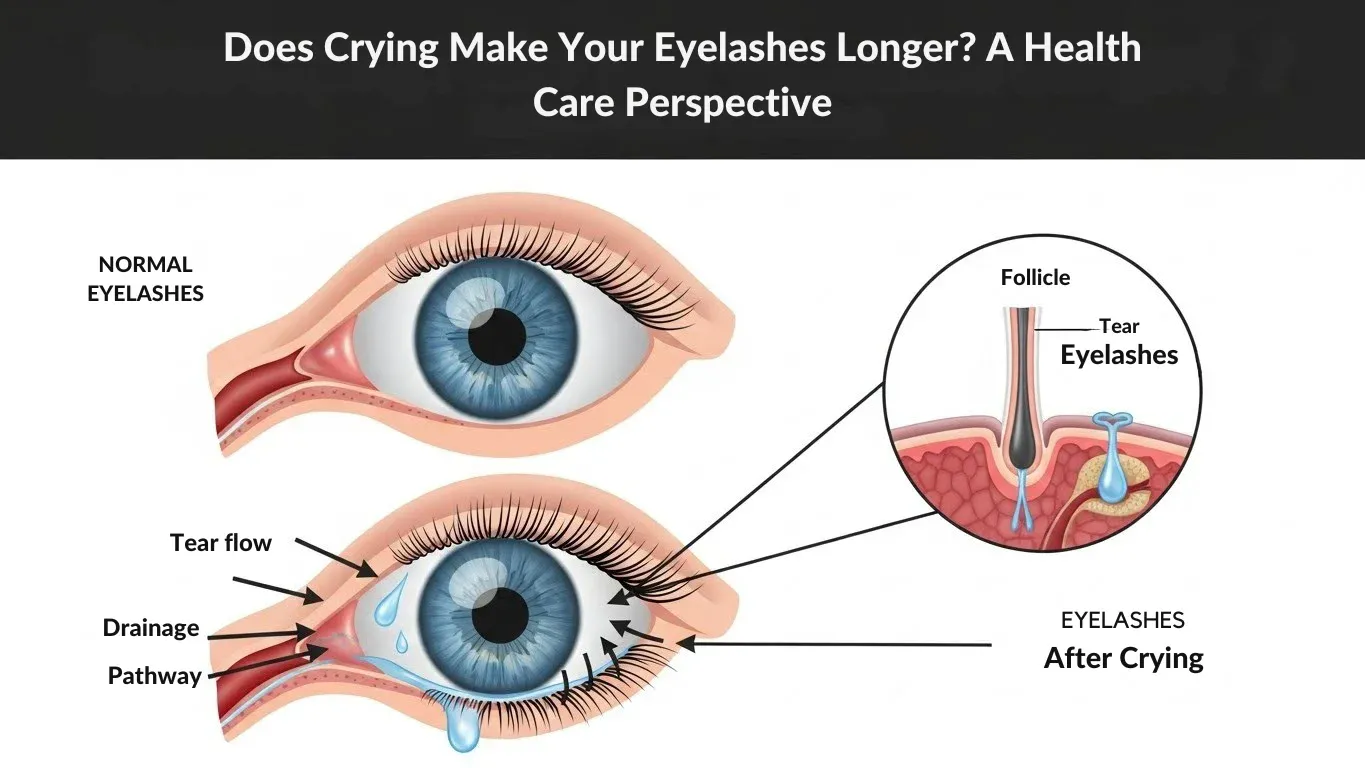
The notion that tears can make eyelashes longer, shinier, and darker is a beauty myth, as tears do not encourage eyelashes to grow. Dermatologists say that longer lashes are just a temporary effect of getting wet, not growing, because tears do not contain the ingredients (peptides) needed to encourage growth.
This is a common beauty myth perhaps due to the way wet lashes look when they’re damp, they seem darker, shinier, and clumped, giving the illusion of longer lashes.
- Tears contain no growth-stimulating ingredients. Tears are primarily water, along with some oils, enzymes, and electrolytes, which serve to lubricate and cleanse the eye, not foster hair growth.
- Lash growth is determined by genetics and overall health. The length and thickness of your eyelashes are largely due to your natural hair growth cycle, which takes about 6-10 weeks to complete.
- Rubbing your eyes can cause damage. Aggressively wiping away tears can weaken lash follicles and cause premature shedding or breakage, which is counterproductive to length.
Does Crying Actually Make Your Eyelashes Longer
Here’s the short, science-based answer: Tears don’t contain anything that triggers lash growth, and the process of crying doesn’t stimulate your hair follicles. Can make your eyelashes look longer temporarily something we’ll talk about in detail soon. Now let’s break this down piece by piece in a way that’s easy to understand, without confusing medical language.
Why People Think Tears Make Lashes Grow
The idea didn’t come out of nowhere. Many people swear their eyelashes look darker, fuller, or shinier after a good cry. And honestly? They’re not wrong they do look slightly different, but only for a short time.
After Crying, Your Lashes Look More Define
When you cry, your eyes water, and that moisture shifts the way light reflects on your lashes. Wet lashes clump together and look darker. Darker lashes automatically look longer kind of like someone applied a natural coat of mascara.
Crying Reduces Puffiness
This one is tricky. Not all reduces puffiness sometimes you end up looking like you lost a boxing match. But many people cry lightly, and tears can actually drain fluid around the eyes, making the eyelid area look a little sharper. When the skin around your eyes looks tighter, your lashes appear more prominent.
Your Eyes Dilate After Crying
When you have a strong emotional moment, your body releases adrenaline. That causes tiny changes in the eyes, including dilation. Dilated pupils can make lashes look more noticeable almost like an emotional Instagram filter.
These effects explain why people believe the myth, but none of them affect actual eyelash growth.
What Really Controls Eyelash Growth
If tears don’t help, then what does? Eyelashes follow a simple biological pattern.
Your Eyelashes Grow in Three Stages
This is true for every hair on your body, but each area has its own timeline.
- Anagen phase (growth phase): This is when lashes actually grow, usually lasting 4-10 weeks.
- Catagen phase (transition phase): Growth stops and the follicle shrinks.
- Telogen phase (resting phase): The lash sits there until it falls out naturally, making room for a new one.
Why Your Lash Length Is Mostly Genetic
Just like height, freckles, and eye color, lash length is mostly inherited. If your parents have short lashes, chances are yours won’t look like a mascara commercial either.
Your Hormones Also Play a Role
Stress hormones like cortisol can slow lash growth. Some medical conditions and health medications can cause lashes to thin. Meanwhile, certain hormones during pregnancy may make lashes grow faster.
Tears, unfortunately, don’t influence hormones in a way that makes eyelashes longer.
What Actually Inside Your Tears
| Component in Tears | What It Does | Does It Help Eyelashes Grow? |
|---|---|---|
| Water | Keeps the eyes hydrated and helps wash away irritants. | It only moistens the lashes temporarily. |
| Electrolytes (Salts) | Maintain proper tear balance and support eye surface health. | They don’t interact with lash follicles. |
| Lipids (Oily Substances) | Prevent tears from evaporating too quickly and protect the tear film. | They only add a slight shine to lashes. |
| Enzymes | Fight bacteria and help keep the eyes clean and protected. | They have no effect on hair growth. |
| Proteins | Keep the eye surface moist and healthy. | They don’t provide nutrients to lash follicles. |
Do Tears Strengthen or Condition the Lashes
You may have heard someone say, “Crying conditions your lashes.” This is a misunderstanding.
Tears moisturize the lashes temporarily, but they don’t nourish them the way hair-care products do. And if you rub your eyes while something almost everyone does—your lashes can actually fall out more easily.
Rubbing is one of the top reasons people accidentally lose eyelashes.
Health Care Insights How Crying Really Affects the Eye Area
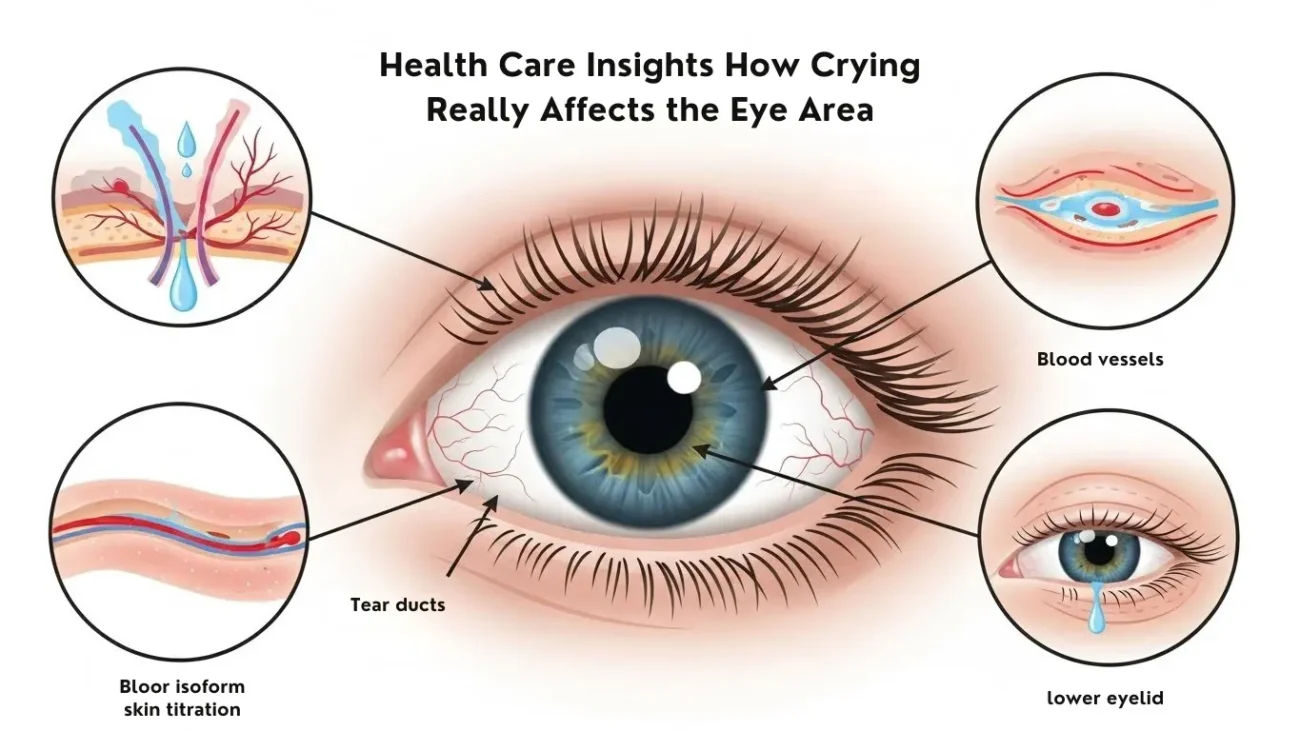
Tears Flush Out Irritants
This is good tears clear dust, allergens, and bacteria from your eyes.
Crying Improves Eye Moisture
Healthy moisture supports lash flexibility. Dry lashes break more easily, so tear moisture indirectly helps keep them from snapping. But this is different from making them grow longer.
Heavy Crying Can Cause Swelling
When you cry intensely, blood vessels around your eyes expand. This can make your eye area puffy and irritated, which can lead to eyelash damage if you rub your eyes afterward.
So overall, crying has a mixed effect: slightly helpful for lash moisture but not enough to influence growth.
Safe, Science Backed Ways to Get Longer Eyelashes
Now let’s talk about what does work. This section goes beyond competitors’ content and includes medically accurate, reader-friendly advice.
Use Lash Strengthening Serums:
There are two kinds:
- Cosmetic serums (help lashes look healthier)
- Medical-grade serums like Latisse (actually make lashes grow)
Latisse is the only FDA-approved treatment for lash growth.
Avoid Excessive Rubbing:
Rubbing can damage follicles and make lashes fall out prematurely.
Eat Lash Friendly Nutrients:
Your hair follicles love:
- Biotin
- Vitamin E
- Omega-3 fatty acids
- Iron
These support overall hair health, including eyelashes.
Clean Your Lash Line Gently
Oil, bacteria, and makeup residue can block follicles.
Replace Old Mascara Regularly
Old mascara dries out lashes and increases breakage.
Manage Stress
High cortisol levels slow hair growth. Getting enough sleep and reducing stress can indirectly help lashes grow better.
Why Emotional Health and Eyelash Health
Emotional health is just as important to the health of our eyelashes as the physical stress we go through. When we go through prolonged periods of stress, the body’s immune system and hormones get thrown out of balance, and that can lead to excess hair loss, including eyelashes, stress is also a trigger for people to rub their eyes a lot. Maybe when they’re tired or even just overwhelmed, the repeated friction can cause eyelashes to contract or just fall out a lot faster than they should. On the other hand, when things are running smoothly in the mind and the emotions are in check, the rest of the system also runs smoothly, and a balanced state leads to more hair in general. The eyelashes get to benefit.