
Does Ketamine Therapy Get You High? Its Role in Mental Health Treatment

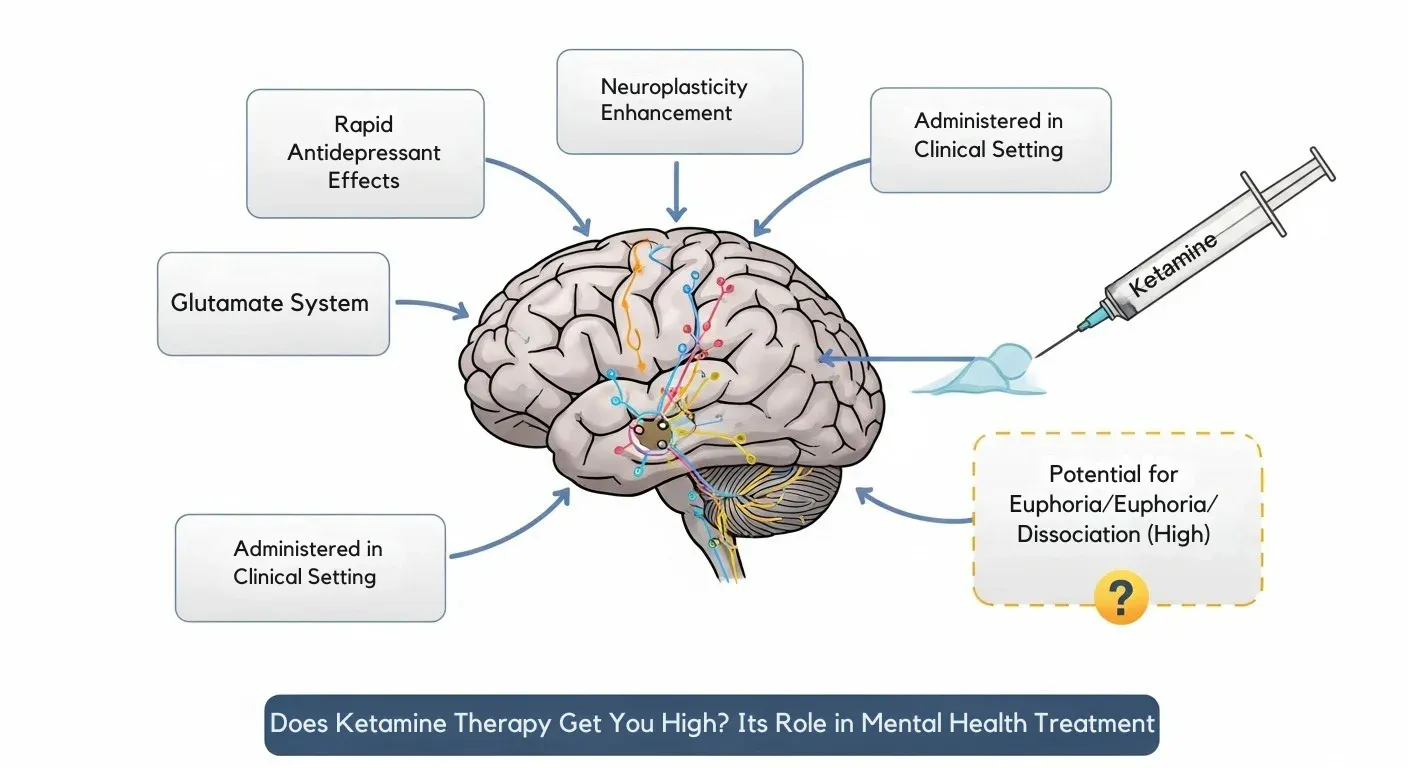
The “ketamine therapy make me high” sits at the top of most patients’ concerns when considering this treatment for depression or PTSD. It’s an honest question that deserves an honest answer: yes, ketamine produces altered states of consciousness during treatment sessions. But understanding what that actually means and why it matters for mental health requires looking beyond the simplistic label of “getting high.”
From Battlefield Medicine to Breakthrough Treatment
Ketamine entered medical practice in 1970 as an anesthetic, valued particularly because it doesn’t suppress breathing like many other anesthetics. For decades, it remained primarily in operating rooms and emergency departments. The psychiatric revolution began almost accidentally when clinicians noticed something unexpected: patients receiving ketamine for pain management often reported dramatic, rapid improvements in their depression symptoms.
This observation sparked research into ketamine’s potential as a psychiatric medication. Unlike traditional antidepressants that require weeks of daily use to show effects, ketamine can produce measurable improvements in depressive symptoms within hours of a single administration.
What the “High” Actually Feels Like
During a therapeutic ketamine session, patients experience what clinicians call dissociation a temporary altered state where you feel detached from your usual sense of self or surroundings. The experience varies considerably between individuals, but common descriptions include:
Feeling as though you’re floating or weightless, with your body becoming distant or unfamiliar. Time perception shifts minutes might feel like hours, or the opposite. Some patients report enhanced sensitivity to music or visual patterns, even with eyes closed. Others describe a sense of profound calm or emotional release, as though stepping outside their usual mental patterns.
The intensity depends on the dose and delivery method. IV ketamine infusions typically produce more pronounced effects than the nasal spray form. During the 40-60 minute infusion period, patients remain conscious and can communicate with medical staff, though they may feel dreamy or have difficulty focusing on complex thoughts.
These sensations fade within 1-2 hours after treatment ends. Clinics typically require patients to rest in a comfortable chair or bed during the session, and most people need someone to drive them home afterward.
Therapeutic Doses vs. Recreational Use
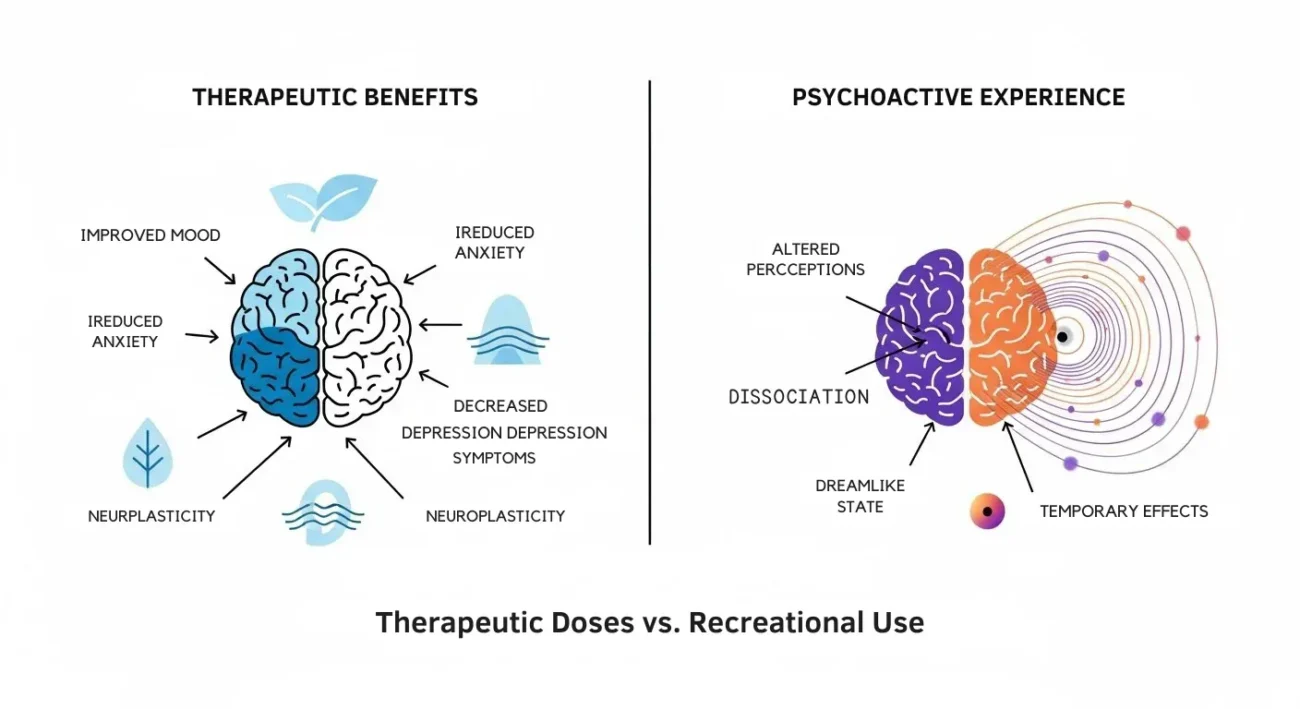
Here’s where the distinction becomes critical. Medical ketamine therapy uses carefully calibrated doses designed to produce therapeutic benefits while minimizing risks. A typical IV infusion for depression uses 0.5 milligrams per kilogram of body weight. Recreational users often consume several times this amount, seeking more intense dissociative experiences.
The setting matters enormously. Therapeutic ketamine happens in a controlled medical environment with monitoring equipment, trained staff, and emergency protocols if needed. The intention differs fundamentally from recreational use patients aren’t seeking escape or euphoria, but rather treatment for severe mental health conditions that haven’t responded to other interventions.
The administration schedule also separates medical use from abuse patterns. Standard ketamine therapy involves six infusions spread over 2-3 weeks, followed by maintenance sessions every few weeks or months. This intermittent pattern contrasts sharply with the frequent, high-dose pattern characteristic of substance abuse.
How Ketamine Changes Your Brain
The dissociative experience during infusion isn’t the actual treatment it’s a side effect of the mechanism that creates lasting changes in your brain. Ketamine blocks NMDA receptors, triggering a cascade of neurological events. Within hours of treatment, it stimulates the release of glutamate, a neurotransmitter that activates connections between neurons.
This glutamate surge promotes synaptogenesis the formation of new synaptic connections between brain cells. Research using brain imaging has shown increased connectivity in regions like the prefrontal cortex and hippocampus, areas often affected by chronic depression. These structural changes appear to persist for weeks or months after treatment, explaining why the antidepressant effects outlast the immediate drug experience.
Some researchers propose that the dissociative state itself may contribute therapeutically by allowing patients to view their problems from a shifted perspective, potentially facilitating psychological insights. However, the biological mechanisms appear to drive most of the sustained benefit.
Different Ways to Receive Treatment
Intravenous (IV) Infusion: The most extensively studied method delivers ketamine directly into the bloodstream through an IV line over approximately 40 minutes. This produces the most pronounced dissociative effects and has shown the strongest evidence for treating severe depression.
Intranasal Esketamine (Spravato): The FDA approved this nasal spray specifically for treatment-resistant depression in 2019. Patients self-administer the spray in a medical office and remain under observation for two hours. The dissociative effects tend to be milder than with IV infusion.
Intramuscular Injection: Less common in clinical practice, this method produces effects similar to IV ketamine but with slightly different timing of onset and peak effects.
Oral and Sublingual Forms: Some clinics offer ketamine as a tablet or lozenge that dissolves under the tongue. These methods produce less intense effects due to the way the body processes the drug when taken orally, but may work for maintenance treatment in some patients.
The Reality of Treatment Resistant Depression
To understand why people accept the dissociative side effects of ketamine, you need to understand the desperation of treatment-resistant depression. When someone has tried multiple antidepressants, undergone therapy, and still can’t function or escape suicidal thoughts, the altered state during a ketamine session seems like a minor inconvenience.
Studies have shown response rates of 50-70% in patients who haven’t improved with traditional treatments. For someone living with severe depression, these odds represent genuine hope. The rapid onset matters too—traditional antidepressants require 4-6 weeks to show benefits, during which time a severely depressed person remains at risk.
Ketamine has also shown promising results for:
Suicidal Ideation: Research has documented rapid reductions in suicidal thoughts, sometimes within hours of treatment. For patients in acute crisis, this rapid action could be lifesaving.
PTSD: Ketamine may help patients process traumatic memories with reduced emotional intensity, though research in this area remains ongoing.
Severe Anxiety: Particularly when it co-occurs with depression, ketamine has shown benefits for treatment-resistant anxiety disorders.
Safety Profile and Monitoring
Medical ketamine therapy requires thorough screening before treatment begins. Clinics conduct cardiovascular assessments because ketamine temporarily raises blood pressure and heart rate during infusion. Patients with uncontrolled hypertension or significant heart disease may not be suitable candidates.
History of psychotic disorders typically disqualifies patients from ketamine treatment due to concerns about triggering psychotic episodes. Substance abuse history requires careful evaluation while not an absolute contraindication, it necessitates additional safeguards and monitoring.
During treatment, common side effects include nausea, dizziness, and the dissociative effects themselves. Some patients find the altered state uncomfortable or anxiety-provoking, particularly during their first session. Clinics address this by creating a calm environment with soft lighting, comfortable seating, and often music to help patients relax into the experience.
Long-term or high-dose recreational ketamine use can damage the bladder and urinary tract, but this complication appears rare with properly monitored medical treatment. Cognitive effects from therapeutic ketamine seem minimal and temporary, with most patients returning to baseline functioning within hours of treatment.
What Happens During a Typical Session
Understanding the practical reality of a ketamine therapy session helps demystify the experience. You’ll typically arrive at a medical office or specialized ketamine clinic. After checking vital signs, the medical team establishes IV access and begins the infusion.
Most clinics provide a reclining chair in a quiet, dimly lit room. Many offer eye masks and headphones with carefully selected music designed to support the dissociative experience. The ketamine infusion lasts about 40 minutes, during which time a clinician remains nearby to monitor you.
As the drug takes effect, you’ll notice your body feeling heavy or light, your thoughts becoming dreamlike, and possibly visual distortions or enhanced sensory perception. Some patients describe profound emotional experiences or insights. Others simply feel detached and wait for the session to end.
After the infusion completes, you’ll rest for another 15-30 minutes as the acute effects fade. Most people feel ready to stand and walk within 90 minutes of starting, though you’ll still need someone else to drive you home. The rest of your day should be light—avoid important decisions or demanding tasks for at least 24 hours.
Long Term Outcomes and Maintenance
Ketamine isn’t a cure for depression or other mental health conditions. Most patients experience a return of symptoms weeks to months after treatment, requiring maintenance infusions. The frequency varies enormously between individuals—some people need monthly treatments, others only a few times per year.
The goal is to use ketamine to break the cycle of severe depression, creating a window where other treatments like therapy can be more effective. Many clinics integrate ketamine with ongoing psychotherapy, using the neuroplastic changes from ketamine to support deeper therapeutic work.
Some patients eventually transition off ketamine entirely as they build other coping strategies and stability. Others require ongoing maintenance indefinitely. The treatment landscape continues to evolve as researchers learn more about optimal protocols and long-term effects.
Making an Informed Decision
If you’re considering ketamine therapy, focus on finding a reputable provider who treats it as part of comprehensive mental health care, not a quick fix. Quality clinics conduct thorough evaluations, provide medical monitoring during treatment, and integrate ketamine with therapy and other support.
Ask about the clinic’s experience, their protocols for managing side effects, and their approach to screening for addiction risk. Legitimate providers will discuss both benefits and risks honestly, including the dissociative effects you’ll experience during treatment.
The altered state during ketamine therapy is real, temporary, and supervised. It’s not recreational it’s a side effect of a treatment that can provide remarkable relief for people suffering from severe, treatment-resistant mental health conditions. For many patients, the brief dissociative experience is a small price to pay for a chance at recovery.
References:
- FDA Approval Documentation – Ketamine (1970) and Esketamine/Spravato (2019) approval information.
- National Institute of Mental Health – Research on Rapid-Acting Treatments for Treatment-Resistant Depression.
- American Psychiatric Association – Position statements and clinical guidance on ketamine use in psychiatry.
- Journal of Psychopharmacology – Multiple peer-reviewed studies on ketamine’s mechanisms and efficacy in depression treatment (available via PubMed and major medical databases).
- Yale School of Medicine – Research from the Depression Research Program on ketamine’s effects on brain synapses and neural connectivity.