
Etoricoxib – Side Effects, Dosage, Uses & More

Overview
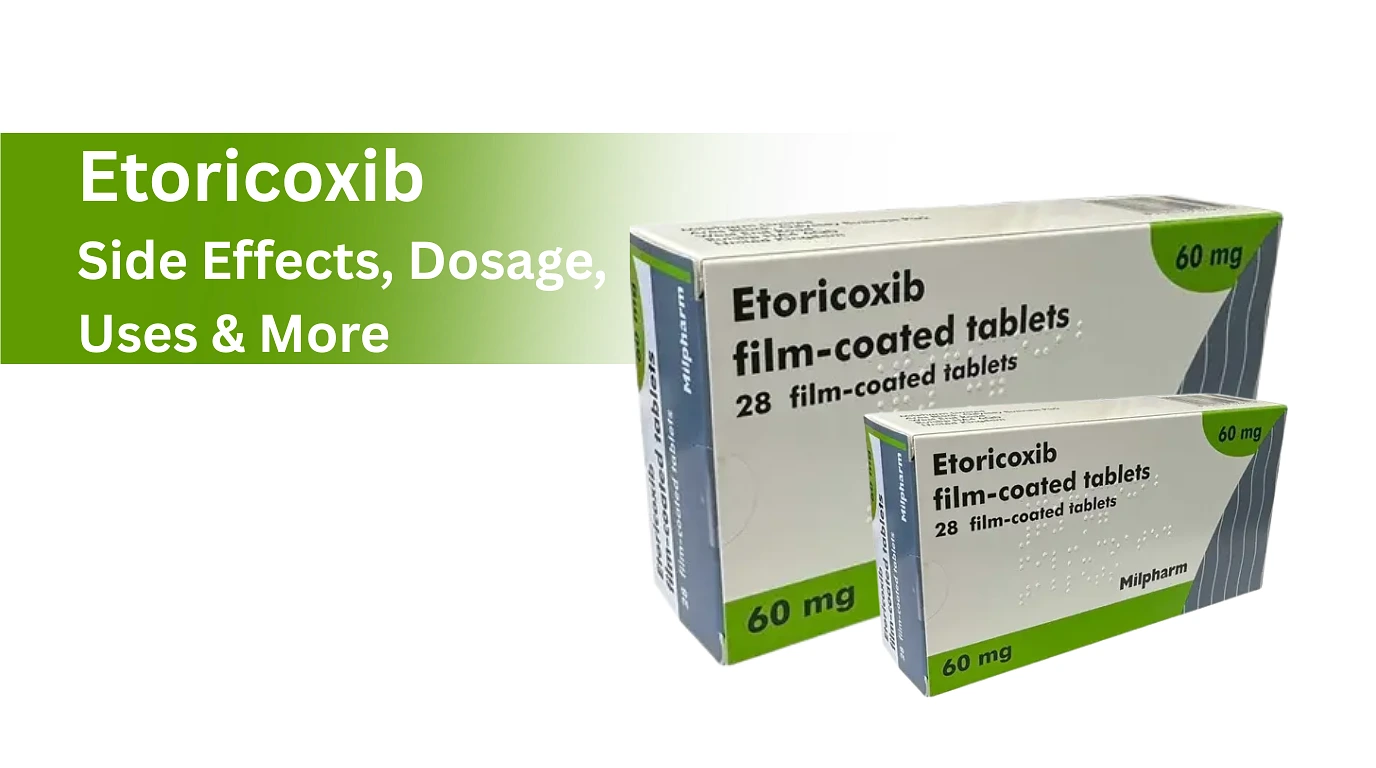
Etoricoxib is a non-steroidal anti-inflammatory drug (NSAID) and a selective COX-2 inhibitor used to treat pain, inflammation, and stiffness in various arthritic conditions and for short-term management of acute pain. It is highly selective for the COX-2 enzyme, meaning it is often gentler on the stomach than traditional NSAIDs, though it carries potential cardiovascular risks.
Disclaimer
The information provided here is designed to inform and educate only and should not be used as a medical diagnosis or treatment. Do not use any medication, without asking your doctor’s advice first. Etoricoxib is a medicine that can only be sold with a prescription. Not approved for use in the USA.
Uses
Etoricoxib is commonly prescribed for:
- Osteoarthritis – long-term joint pain and stiffness.
- Rheumatoid arthritis – autoimmune joint inflammation.
- Ankylosing spondylitis – chronic spinal inflammation.
- Acute gouty arthritis – sudden, severe joint pain caused by uric acid crystals.
- Acute pain – including post-operative dental pain and musculoskeletal injuries.
- Primary dysmenorrhea – painful menstrual cramps.
Dosage
Dosage depends on the condition. The lowest effective dose for the shortest duration is recommended.
- Osteoarthritis: 30 mg once daily (may increase to 60 mg).
- Rheumatoid arthritis / Ankylosing spondylitis: 60–90 mg once daily.
- Acute gout: 120 mg once daily (max 8 days).
- Post-operative dental pain: 90 mg once daily (max 3 days).
- Primary dysmenorrhea: 60–120 mg once daily.
It can be taken with or without food, but onset is faster on an empty stomach.
When to Avoid Etoricoxib
Etoricoxib should not be used if you have:
- An allergy to etoricoxib, aspirin, or other NSAIDs.
- Active peptic ulcers or gastrointestinal bleeding.
- Severe liver or kidney disease.
- Heart disease, including heart failure, angina, or a history of heart attack/stroke.
- Pregnancy or if breastfeeding.
- Patients under 16 years of age.
Common Side Effects
- Headache
- Dizziness
- Nausea, indigestion, or stomach pain
- Diarrhea or constipation
- Swelling in legs/ankles (edema)
- Increased blood pressure
- Fatigue or weakness
- Dry mouth or mouth ulcers
Serious Side Effects (Seek Medical Help)
- Chest pain, shortness of breath, or signs of heart attack.
- Sudden weakness, slurred speech, or signs of stroke.
- Black or bloody stools, vomiting blood (GI bleeding).
- Yellowing of skin or eyes (liver problems).
- Severe skin rash, blistering, or peeling (Stevens-Johnson syndrome).
- Swelling of face, lips, or throat (allergic reaction).
- Reduced urination or signs of kidney failure.
Precautions
- High blood pressure: Must be controlled before starting; monitor regularly during treatment:
- Stomach ulcers / GI bleeding history: Use with caution.
- Kidney or liver disease: Dose adjustment may be needed.
- Elderly patients: More sensitive to side effects; lower doses preferred.
- Avoid alcohol, as it increases the risk of stomach bleeding.
- Use the lowest effective dose for the shortest possible duration.
Drug Interactions
Tell your doctor about all medicines you take. Notable interactions include:
- Warfarin and other blood thinners increased bleeding risk.
- ACE inhibitors, ARBs, diuretics reduced effect; risk of kidney issues.
- Lithium increased lithium levels.
- Methotrexate increased toxicity.
- Rifampicin reduces etoricoxib levels.
- Oral contraceptives slight increase in estrogen levels.
- Other NSAIDs or aspirin higher risk of GI bleeding.
Storage
Store at room temperature (below 30°C / 86°F), away from moisture, heat, and direct sunlight. Keep out of reach of children.
Missed Dose
Take it as soon as you remember. If it’s almost time for your next dose, skip the missed one do not double up.
Overdose
Symptoms may include severe nausea, vomiting, abdominal pain, drowsiness, high blood pressure, or kidney/liver problems. Seek emergency medical help immediately.