
Proper Use of an Evox Oxygen Concentrator

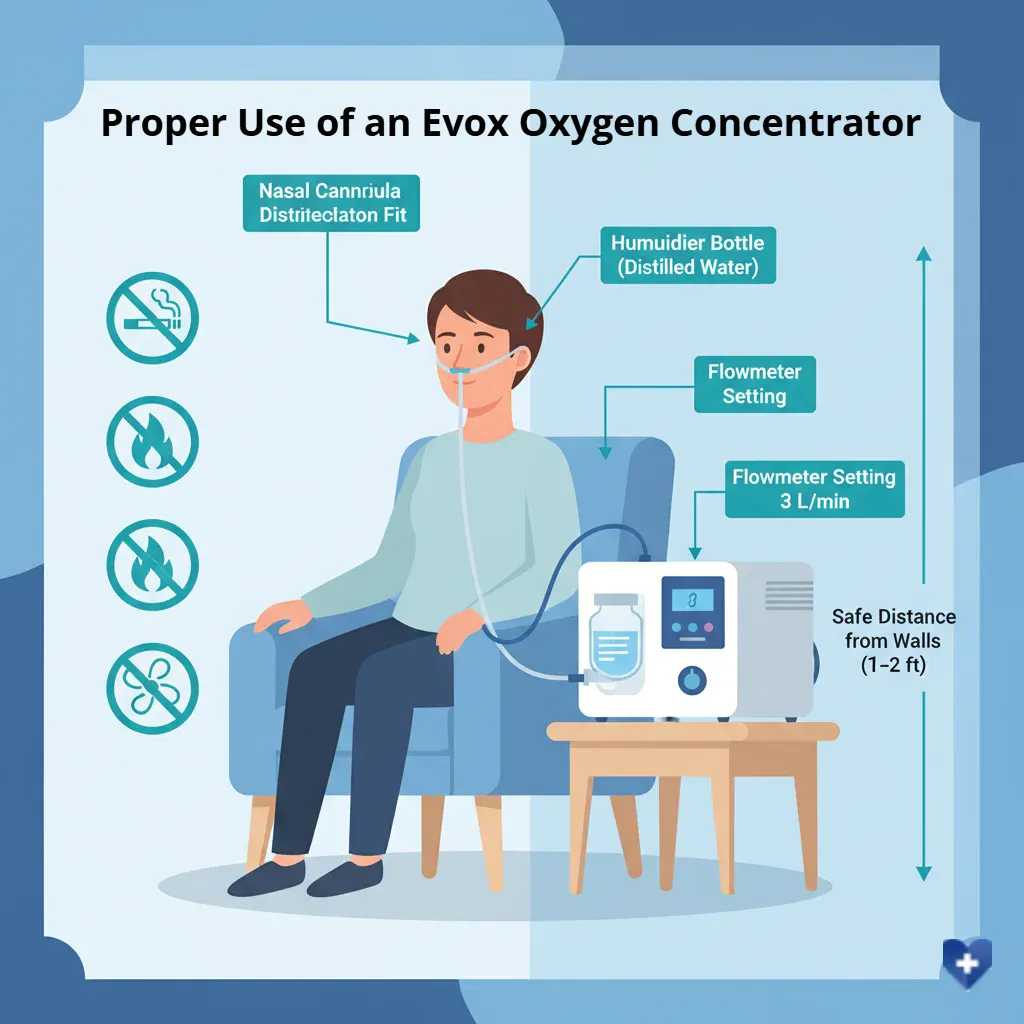
For the proper use of an evox oxygen concentrator, first connect the tubing and, if prescribed, the humidifier bottle filled with distilled water. Place the unit at least one to two feet from walls or furniture to allow for proper airflow. After plugging it into a dedicated, grounded outlet, turn it on and wait 15–20 minutes for the oxygen concentration to stabilize. Set the flowmeter to the rate prescribed by your doctor and ensure the cannula or mask is fitted correctly. Always turn the unit off when not in use. Critical safety rules include never smoking or using open flames near the unit and keeping the area clear of flammable materials and excessive dust.
Oxygen concentrators have become essential medical devices for millions of people requiring supplemental oxygen therapy. If you’ve been prescribed an Evox oxygen concentrator, understanding how to use it properly ensures you receive the maximum therapeutic benefit while maintaining safety.
What Is an Oxygen Concentrator?
An oxygen concentrator is a medical device that takes in room air, removes nitrogen through a filtration process, and delivers concentrated oxygen to the user. Unlike traditional oxygen tanks that store compressed oxygen, concentrators generate oxygen continuously from the surrounding air, making them a more convenient long-term solution for home oxygen therapy.
The device works by pulling air through filters and using a molecular sieve bed to separate oxygen from other gases. The concentrated oxygen typically ranging from 87% to 95% purity is then delivered through tubing to a nasal cannula or oxygen mask.
Understanding Your Prescription
Before using your Evox concentrator, you need a prescription from a qualified healthcare provider. Oxygen is classified as a medication, and like any medication, it requires proper dosing.
Your prescription will specify:
- Flow rate in liters per minute (LPM)
- Duration of use (continuous, during sleep, or during activity)
- Oxygen delivery method (nasal cannula or mask)
Never adjust your oxygen flow rate without consulting your doctor. Too little oxygen won’t adequately treat your condition, while excessive oxygen can cause complications including oxygen toxicity in rare cases.
Initial Setup and Placement
Choosing the Right Location
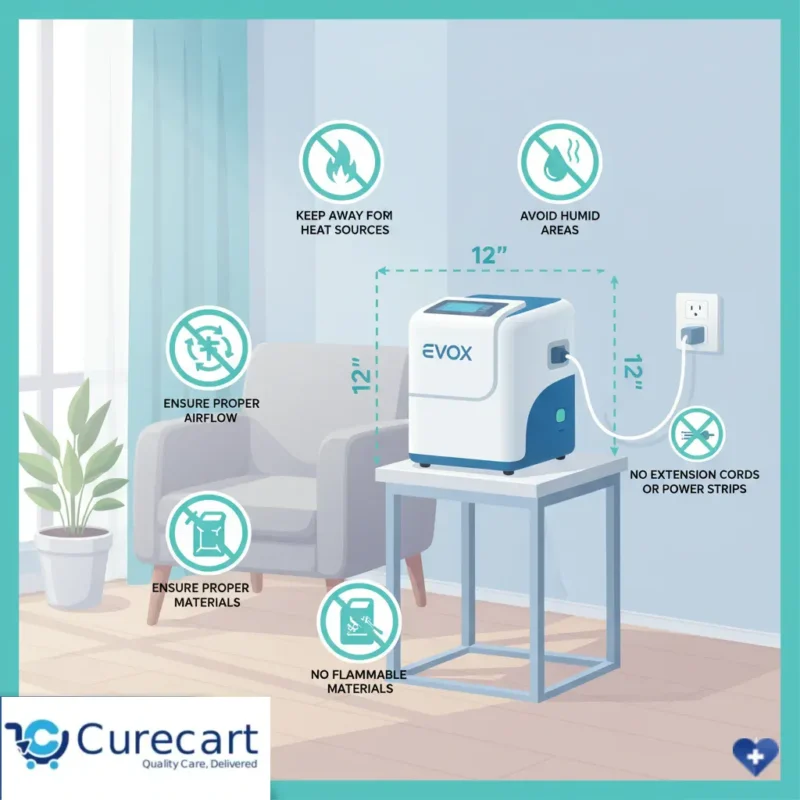
Proper placement of your oxygen concentrator affects both its performance and your safety. Position the unit in a well-ventilated area with at least 12 inches of clearance on all sides. This spacing allows proper airflow to prevent overheating and ensures the intake vents can draw in sufficient room air.
Keep the concentrator away from:
- Heat sources like radiators, space heaters, or direct sunlight
- Humid areas such as bathrooms
- Dusty environments that can clog filters faster
- Flammable materials including curtains and upholstery
Place the device on a flat, stable surface at a height that makes it easy to read the controls and flow meter. Many users find that positioning it on a small table or stand works well.
Power Requirements
Plug your concentrator directly into a grounded wall outlet. Avoid using extension cords or power strips, as these can cause voltage drops that affect the device’s performance or create fire hazards.
Most oxygen concentrators consume between 300 and 600 watts of electricity. If you’re concerned about your home’s electrical capacity, especially in older homes, consult an electrician to ensure your circuits can safely handle the load.
Operating Your Evox Concentrator
Starting the Device
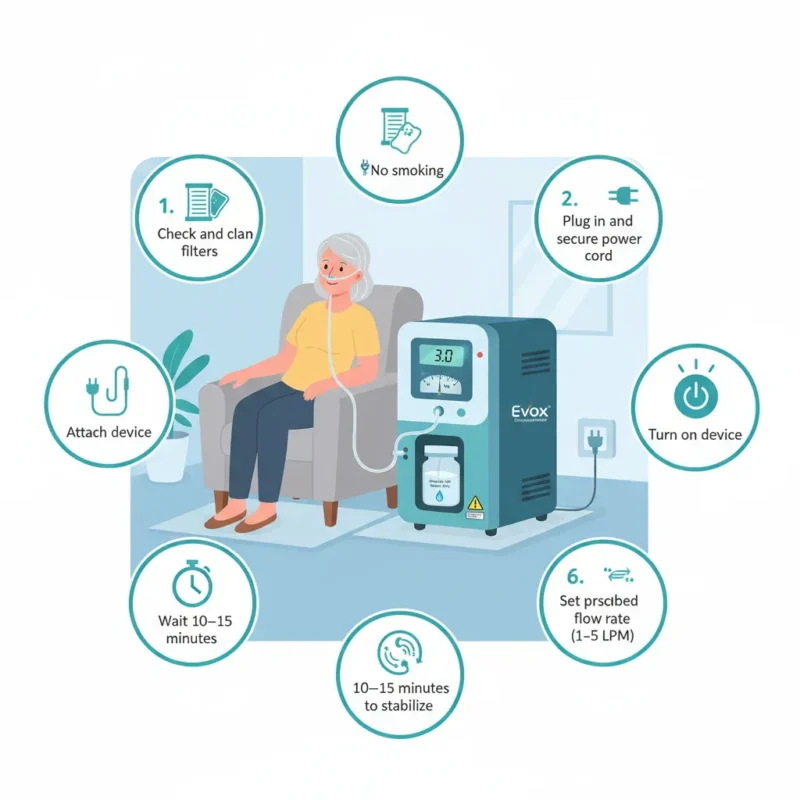
Follow these steps each time you start your concentrator:
- Ensure all external filters are clean and properly installed
- Check that the power cord is securely connected
- Attach oxygen tubing to the outlet port on the device
- Connect your nasal cannula or oxygen mask to the other end of the tubing
- Press the power button to turn on the unit
- Wait 10-15 minutes for the concentrator to reach optimal oxygen concentration levels
- Set the flow rate to your prescribed setting using the adjustment knob or digital controls
Setting and Monitoring Flow Rate
The flow rate dial or digital display shows how many liters per minute of oxygen you’re receiving. Most Evox models provide flow rates from 1 to 5 LPM, though some models offer higher flows.
To verify your flow rate is accurate, observe the ball indicator in the flow meter (if your model has one). The center of the ball should align with your prescribed flow rate marking. If the flow seems incorrect or the device triggers low-flow alarms, contact your equipment provider for calibration.
Using the Oxygen Delivery System
Nasal Cannula: This is the most common delivery method for low to moderate flow rates. Insert the curved prongs gently into your nostrils, with the tubes resting over your ears and secured under your chin with the adjustable slider. The cannula should feel comfortable—if it causes irritation or pressure sores, adjust the fit or use padding.
Replace your nasal cannula at least weekly or whenever it becomes stiff, discolored, or damaged. Regular replacement prevents bacterial buildup and ensures optimal oxygen delivery.
Oxygen Mask: For higher flow rates or when mouth breathing is necessary, masks provide better oxygen delivery. Position the mask to cover both your nose and mouth, adjusting the elastic strap for a snug but comfortable fit. Check that no large gaps exist between the mask and your face, as these reduce oxygen concentration.
Humidifier Use
Oxygen from concentrators is dry and can irritate nasal passages during extended use. Many Evox models include an optional humidifier bottle that adds moisture to the oxygen stream.
To use the humidifier:
- Fill the bottle with distilled water to the indicated line (never use tap water, as minerals can damage the device)
- Attach the bottle to the designated port on the concentrator
- Change the water daily to prevent bacterial growth
- Clean the bottle weekly with soap and water, rinsing thoroughly
Some people find humidification unnecessary at lower flow rates but essential at 3 LPM and above. Discuss with your healthcare provider whether humidification would benefit you.
Critical Safety Precautions
Fire and Combustion Risks
Oxygen itself doesn’t burn, but it dramatically accelerates combustion. This makes fire safety your top priority when using oxygen therapy.
Maintain these safety practices:
- Never smoke or allow anyone to smoke while oxygen is in use
- Keep the concentrator at least 5-10 feet from open flames, including candles, fireplaces, and gas stoves
- Avoid using flammable products like aerosol sprays, petroleum jelly, or alcohol-based hand sanitizers near oxygen
- Remove oil-based cosmetics and lotions from your face and hands before oxygen use
- Post “No Smoking – Oxygen in Use” signs at home entrances
In case of fire, immediately turn off your oxygen and evacuate. Have a fire extinguisher accessible and ensure family members know how to use it.
Electrical Safety
While rare, electrical issues can occur with any powered medical device:
- Inspect the power cord regularly for fraying or damage
- Keep the cord away from walking paths to prevent tripping
- Don’t use the concentrator near water or in damp conditions
- Unplug the device during thunderstorms if you have an alternative oxygen source
Monitoring Device Performance
Pay attention to your concentrator’s alarms and indicators. Most Evox models feature:
- Low oxygen concentration alarms
- High temperature warnings
- Low flow alerts
- Power failure indicators
If an alarm sounds, don’t ignore it. Check the user manual for specific troubleshooting steps. Common causes include clogged filters, kinked tubing, or equipment malfunction. When in doubt, switch to your backup oxygen supply and contact your equipment provider immediately.
Daily Maintenance
Proper maintenance extends your concentrator’s lifespan and ensures consistent oxygen delivery.
External Cleaning
Wipe down the exterior casing daily with a slightly damp cloth to remove dust and debris. Avoid harsh chemicals or abrasive cleaners that might damage the plastic housing. Make sure the unit is unplugged before cleaning.
Tubing Inspection
Check your oxygen tubing daily for:
- Kinks or twists that restrict flow
- Cracks or holes that leak oxygen
- Discoloration or stiffness indicating age
Replace tubing monthly or immediately if damaged. Standard oxygen tubing comes in various lengths up to 50 feet, allowing you to move around your home while using oxygen. Longer tubing may require higher flow rates to compensate for oxygen loss over distance consult your provider before using tubing longer than 25 feet.
Nasal Cannula Care
Wash your nasal cannula every few days with mild soap and warm water, rinse thoroughly, and allow it to air dry completely. Despite regular cleaning, replace cannulas weekly to maintain hygiene and comfort.
Weekly and Monthly Maintenance
Filter Cleaning
Filters are your concentrator’s first defense against dust and contaminants. Most Evox models have foam filters that require weekly cleaning:
- Turn off and unplug the concentrator
- Locate the filter compartment (usually on the side or back panel)
- Remove the filter cover and take out the foam filter
- Rinse the filter under warm running water with a small amount of mild dish soap
- Squeeze gently to remove soap, then rinse until water runs clear
- Squeeze out excess water without wringing or twisting
- Lay flat on a clean towel and allow to air dry completely for 24 hours
- Once completely dry, reinstall the filter and replace the cover
Never use your concentrator without filters installed, as unfiltered air damages internal components. Keep spare filters on hand so you can swap them during cleaning cycles.
Some models include both washable foam filters and replaceable HEPA filters. HEPA filters typically need replacement every 6-12 months and should not be washed—check your user manual for specific guidance.
Humidifier Bottle Maintenance
If using a humidifier bottle:
- Empty and refill with fresh distilled water daily
- Wash the bottle weekly with warm soapy water
- Disinfect monthly by soaking in a solution of one part white vinegar to three parts water for 30 minutes, then rinse thoroughly
- Replace the bottle every 6 months or if you notice cracks or cloudiness
External Vent Cleaning
Monthly, use a soft brush or cloth to gently clean the air intake vents on the concentrator. These vents can accumulate dust that reduces airflow and efficiency. Avoid pushing debris into the vents—wipe in an outward direction.
Professional Servicing
Schedule professional maintenance with your equipment provider every 6-12 months, or according to the manufacturer’s recommendations. During service visits, technicians will:
- Test oxygen purity and concentration levels
- Calibrate sensors and alarms
- Inspect internal components including the compressor and sieve beds
- Replace worn parts before they fail
- Clean internal areas you can’t access
- Update software if applicable
Regular professional maintenance catches potential problems before they cause equipment failure, ensuring uninterrupted oxygen therapy.
Troubleshooting Common Problems
Low Oxygen Concentration Alarm
If your concentrator alerts you to low oxygen concentration:
- Check for clogged or dirty filters and clean or replace them
- Ensure adequate room ventilation—the device needs fresh air to work properly
- Verify all tubing connections are secure and not damaged
- Confirm the flow rate setting matches your prescription
- Make sure nothing blocks the air intake vents
If the alarm persists after these checks, switch to backup oxygen and contact your provider.
Unit Won’t Power On
When your concentrator won’t start:
- Verify the power cord is fully plugged into both the wall outlet and the device
- Check if a circuit breaker has tripped
- Inspect the power cord for visible damage
- Ensure all access panels and doors are properly closed (many models have safety switches that prevent operation if panels are open)
- Try a different electrical outlet to rule out outlet problems
Excessive Noise
All oxygen concentrators produce some operational noise, typically 40-50 decibels (similar to a quiet conversation). However, unusual or loud noises may indicate:
- Loose components that need tightening
- Filter obstruction restricting airflow
- Compressor issues requiring professional service
- Internal mechanical problems
If your Evox becomes noticeably louder than usual, contact your equipment provider for assessment.
High Temperature Warnings
Concentrators can overheat if:
- Placed in direct sunlight or near heat sources
- Air circulation is blocked
- Filters are severely clogged
- The ambient room temperature is too high
- Internal components are failing
Move the unit to a cooler, well-ventilated location and ensure filters are clean. If overheating continues, the device needs professional service.
Traveling with Your Oxygen Concentrator
Portable oxygen concentrators offer freedom to travel, but planning is essential.
Preparing for Travel
Before any trip:
- Contact your equipment provider to discuss travel plans and device options
- Obtain a letter from your doctor stating your medical need for oxygen
- Research oxygen equipment providers at your destination in case you need service
- Bring extra batteries if using a portable unit
- Pack spare filters, tubing, and cannulas
Air Travel
Airlines accommodate passengers requiring medical oxygen, but policies vary. Most require:
- At least 48-72 hours advance notice
- Medical documentation from your physician
- FAA-approved portable oxygen concentrator (most modern portable units are approved)
- Sufficient battery power for 150% of the flight duration
Airlines generally don’t allow stationary concentrators in cabins due to size and power requirements. Check your specific airline’s policies well before your travel date.
Car Travel
When traveling by car:
- Secure the concentrator to prevent it from shifting or tipping
- Ensure adequate ventilation—never leave it in a closed, hot vehicle
- Use a car power inverter designed for medical equipment if you need to run the device while driving
- Bring backup portable oxygen cylinders in case of power inverter failure
International Travel
International travel requires additional preparation:
- Check voltage requirements some countries use different electrical standards
- Bring appropriate plug adapters and voltage converters if needed
- Research customs regulations for medical equipment
- Learn basic phrases about your medical needs in the local language
- Have your doctor’s letter translated if traveling to non-English speaking countries
When to Contact Your Healthcare Provider
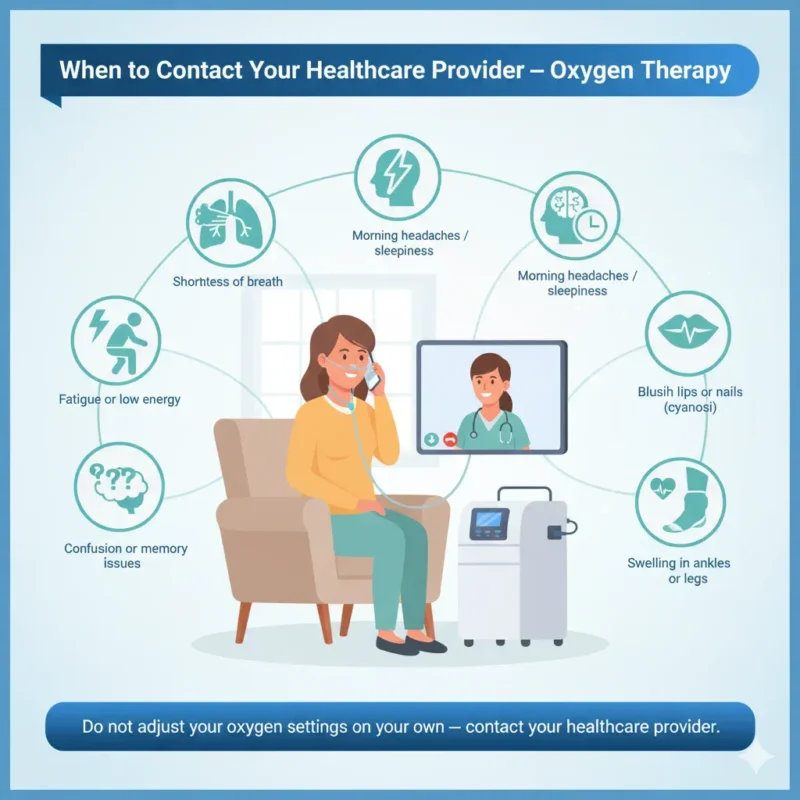
Your oxygen therapy may need adjustment if you experience:
- Increased shortness of breath despite using oxygen as prescribed
- Persistent fatigue or decreased energy levels
- Morning headaches or daytime sleepiness (possible signs of nighttime oxygen desaturation)
- Confusion, difficulty concentrating, or memory problems
- Bluish discoloration of lips, nail beds, or skin
- Chest pain, rapid heartbeat, or irregular pulse
- Swelling in ankles, legs, or abdomen
These symptoms might indicate that your oxygen needs have changed or that your current therapy isn’t adequate. Don’t adjust your oxygen settings on your own contact your doctor for evaluation.
Understanding Your Condition
Oxygen therapy treats various conditions including:
- Chronic Obstructive Pulmonary Disease (COPD)
- Pulmonary fibrosis
- Heart failure
- Cystic fibrosis
- Sleep apnea (in some cases)
- Lung cancer
- Pneumonia recovery
Understanding why you need supplemental oxygen helps you appreciate the importance of consistent use. Many people with chronic conditions require long-term or lifelong oxygen therapy, while others need it temporarily during recovery.
Backup Oxygen Supply
Power outages happen, and equipment can malfunction. Always maintain a backup oxygen source such as:
- Portable oxygen cylinders with at least 24-48 hours of supply at your prescribed flow rate
- A backup portable oxygen concentrator if you rely on oxygen continuously
- Battery backup systems for your primary concentrator
Contact your local power company to register as a medical necessity customer. Many utilities offer priority restoration during outages for homes with essential medical equipment.
Store backup cylinders in a cool, well-ventilated area away from heat and flames. Check cylinder pressure monthly to ensure adequate supply.
Oxygen Purity and Quality
Your Evox concentrator should maintain oxygen purity between 87% and 95%. Many models include oxygen sensors that continuously monitor purity and trigger alarms if concentration falls below acceptable levels.
Factors affecting oxygen purity include:
- Filter cleanliness
- Altitude (concentrators work harder at higher elevations)
- Age of the device and sieve beds
- Ambient air quality
If purity alarms activate frequently despite proper maintenance, the sieve beds may be depleted. These typically last 4-7 years but may need earlier replacement depending on usage patterns.
Cost Considerations
Oxygen concentrators involve several costs:
- Initial equipment cost or rental fees
- Electricity to run the device
- Replacement supplies (filters, tubing, cannulas)
- Professional maintenance
- Backup oxygen supplies
Medicare and most insurance plans cover home oxygen therapy when medically necessary and prescribed by a doctor. Coverage typically includes the concentrator, supplies, and maintenance. Check with your insurance provider about coverage details, co-pays, and approved equipment suppliers.
Quality of Life with Oxygen Therapy
Properly used oxygen therapy significantly improves quality of life for people with respiratory and cardiac conditions. Users often report:
- Increased energy and ability to complete daily activities
- Better sleep quality and reduced daytime fatigue
- Improved exercise tolerance
- Enhanced mental clarity and cognitive function
- Reduced shortness of breath during activities
- Better overall mood and reduced anxiety related to breathing difficulties
The key to these benefits is consistent, appropriate use of your oxygen therapy as prescribed. Many people resist using oxygen due to stigma or inconvenience, but modern portable concentrators make oxygen therapy more discreet and manageable than ever.
Storage Guidelines
If you need to temporarily store your concentrator:
- Clean and dry all components thoroughly
- Store in a cool, dry location with stable temperatures between 50-95°F
- Cover the unit with a breathable cloth to protect from dust
- Remove filters and store separately in sealed plastic bags
- Unplug the device and coil the power cord loosely without tight bends
- Store upright—never lay concentrators on their side for extended periods
Before reusing after storage, inspect all components, reinstall filters, and let the device run for 15 minutes before use.
Environmental Considerations
Oxygen concentrators are more environmentally friendly than traditional oxygen delivery methods. They eliminate the need for frequent tank deliveries, reducing transportation emissions. The devices are also energy-efficient, with modern models consuming less electricity than many household appliances.
Dispose of old concentrators, filters, and components according to local regulations for electronic waste. Many equipment providers offer recycling programs for medical devices.
Final Thoughts
Your Evox oxygen concentrator is a vital medical device that requires proper use and care. By following these guidelines, maintaining your equipment, and staying in regular contact with your healthcare team, you ensure safe, effective oxygen therapy that supports your health and quality of life.
References:
- American Thoracic Society: Patient Education – Oxygen Therapy
- Centers for Medicare & Medicaid Services: Oxygen and Oxygen Equipment Coverage
- FDA Medical Device Safety Communications: Home Use of Medical Devices
- National Heart, Lung, and Blood Institute: Oxygen Therapy Overview
- Respiratory Health Association: Home Oxygen Therapy Guidelines