
Norethisterone: Key Uses, Drug Interactions and How It Works
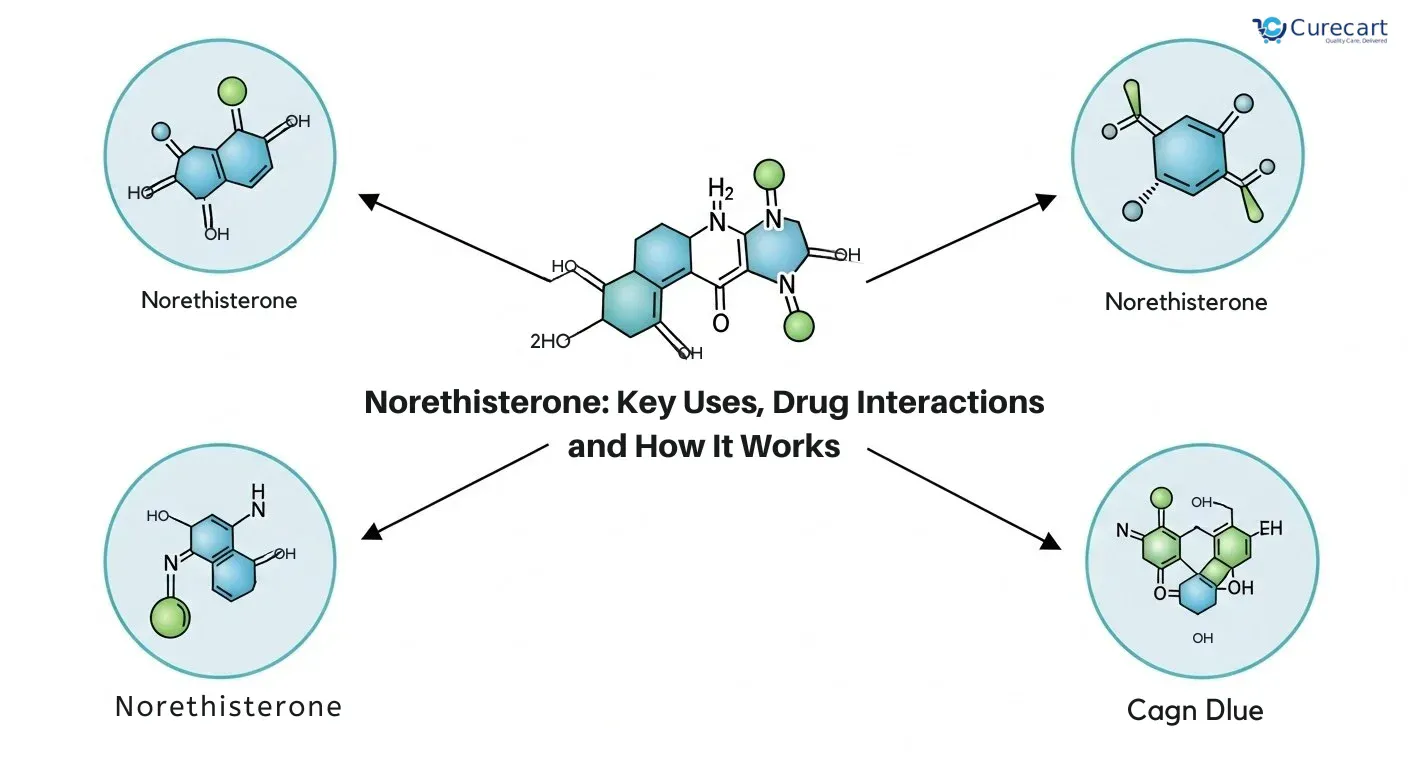
Norethisterone, also known as norethindrone, is a synthetic progestin medication that mimics the effects of the natural hormone progesterone. Widely used in women health, it helps manage various hormonal imbalances and reproductive issues. Developed in the mid-20th century, it remains a cornerstone in treatments for conditions like endometriosis and irregular menstruation. This article explores its mechanism of action, primary applications, and potential interactions, drawing from established medical resources to provide a clear, evidence-based overview.
How Norethisterone Works
Norethisterone functions primarily as a progestin, binding to progesterone receptors in target tissues such as the uterus, breasts, and central nervous system. This binding alters gene expression, influencing cellular activity in reproductive and other hormone-sensitive areas. By suppressing the release of gonadotropin-releasing hormone (GnRH) from the hypothalamus, it reduces the secretion of luteinizing hormone (LH) and follicle-stimulating hormone (FSH) from the pituitary gland. These hormonal shifts disrupt the normal menstrual cycle, often preventing ovulation—though in lower doses used for contraception, ovulation may still occur in about half of users.
Additional effects include thickening the cervical mucus, which creates a barrier to sperm penetration, and inducing atrophy of the endometrial lining, making it less receptive to implantation. In the uterus, it stops the buildup of the lining and promotes the production of specific hormones that stabilize the cycle. For hormone replacement therapy (HRT), it counteracts estrogen’s growth-promoting effects on the endometrium, reducing the risk of hyperplasia. Metabolically, norethisterone undergoes extensive liver processing, with active metabolites like 5α-reduced forms contributing to its potency, and it exhibits a half-life of 8-10 hours, allowing for once-daily dosing in most cases.
These actions make norethisterone versatile, but its partial androgenic activity due to low affinity for androgen receptors can lead to side effects like acne in some individuals.
Key Uses of Norethisterone
Norethisterone’s ability to regulate hormonal fluctuations supports its role in several gynecological and reproductive health scenarios. Below are its primary indications, supported by clinical guidelines.
Contraception
In low doses (typically 0.35 mg daily), norethisterone serves as a progestin-only oral contraceptive, often called a “mini-pill.” It primarily works by altering cervical mucus and endometrial conditions to prevent pregnancy, with ovulation suppression occurring less consistently than in combined pills. This option is particularly suitable for women who cannot tolerate estrogen-containing contraceptives, such as those breastfeeding or with a history of migraines.
Treatment of Endometriosis
For endometriosis, where uterine-like tissue grows outside the uterus causing pain and heavy bleeding, norethisterone (5-10 mg daily) reduces symptoms by suppressing endometrial growth and inflammation. It is often used long-term to manage pain and prevent lesion progression, sometimes in combination with GnRH agonists like leuprolide.
Management of Menstrual Disorders
Norethisterone addresses secondary amenorrhea (absence of periods in women who previously menstruated), abnormal uterine bleeding, and irregular cycles due to hormonal imbalances. Doses of 5 mg three times daily can induce withdrawal bleeding to restart the cycle or control heavy flow. It is also effective for postponing menstruation, started 3 days before the expected period at 5 mg three times daily.
Hormone Replacement Therapy (HRT)

Combined with estrogen, norethisterone prevents endometrial hyperplasia in postmenopausal women on HRT. Formulations like estradiol/norethisterone acetate treat vasomotor symptoms (hot flashes), vulvovaginal atrophy, and hypoestrogenism, improving quality of life without unopposed estrogen risks.
Other off-label uses include treating premenstrual syndrome, menstrual migraines, and polycystic ovary syndrome-related oligomenorrhea, though these require physician oversight.
Drug Interactions with Norethisterone
Like many hormonal medications, norethisterone can interact with other drugs, herbs, and lifestyle factors, potentially altering its effectiveness or increasing side effect risks. Always consult a healthcare provider before combining therapies.
Enzyme-Inducing Medications
Drugs that accelerate liver metabolism via CYP3A4 induction, such as carbamazepine, phenytoin, phenobarbital, rifampin, and certain antiretrovirals (e.g., ritonavir), can reduce norethisterone levels, leading to contraceptive failure or diminished therapeutic effects. Monitoring or alternative contraception is advised during co-administration.
Herbal Supplements
St. John’s wort, a common herbal antidepressant, induces CYP3A4 and may decrease norethisterone efficacy, particularly for contraception. Avoid starting this supplement without medical advice.
Other Hormonal or Targeted Therapies
Certain antivirals like dasabuvir, ombitasvir, and paritaprevir are contraindicated due to heightened risks of liver enzyme elevation. Tranexamic acid, used for heavy bleeding, should not be combined as it may exacerbate clotting risks. In HRT contexts, interactions with cyclosporine or lamotrigine may require dose adjustments.
Lifestyle Factors
Tobacco smoking increases the risk of cardiovascular side effects like blood clots, especially in women over 35. Caffeine may amplify minor side effects, though evidence is limited.
A comprehensive review of all medications is essential, as interactions can vary by dose and individual factors.
Below is an informational table chart summarizing the key uses, mechanism of action, and important drug interactions of norethisterone (also known as norethindrone).
Conclusion
Norethisterone remains a reliable option for managing hormonal disruptions, from contraception to endometriosis relief, thanks to its targeted progesterone-like actions. While effective, its interactions underscore the importance of personalized medical guidance to maximize benefits and minimize risks. If you’re considering norethisterone, discuss your full health profile with a provider for safe use.
References:
- Faculty of Sexual & Reproductive Healthcare Clinical Guidance: Progestogen only Pills (2019)
- National Health Service (NHS) – Norethisterone Patient Information Leaflet
- Electronic Medicines Compendium (eMC) – Norethisterone Summary of Product Characteristics
- British National Formulary (BNF) – Norethisterone Drug Monograph
- Royal College of Obstetricians and Gynaecologists – Management of Menorrhagia Guidelines