
Health Benefits of Nuru Massage You Need to Know

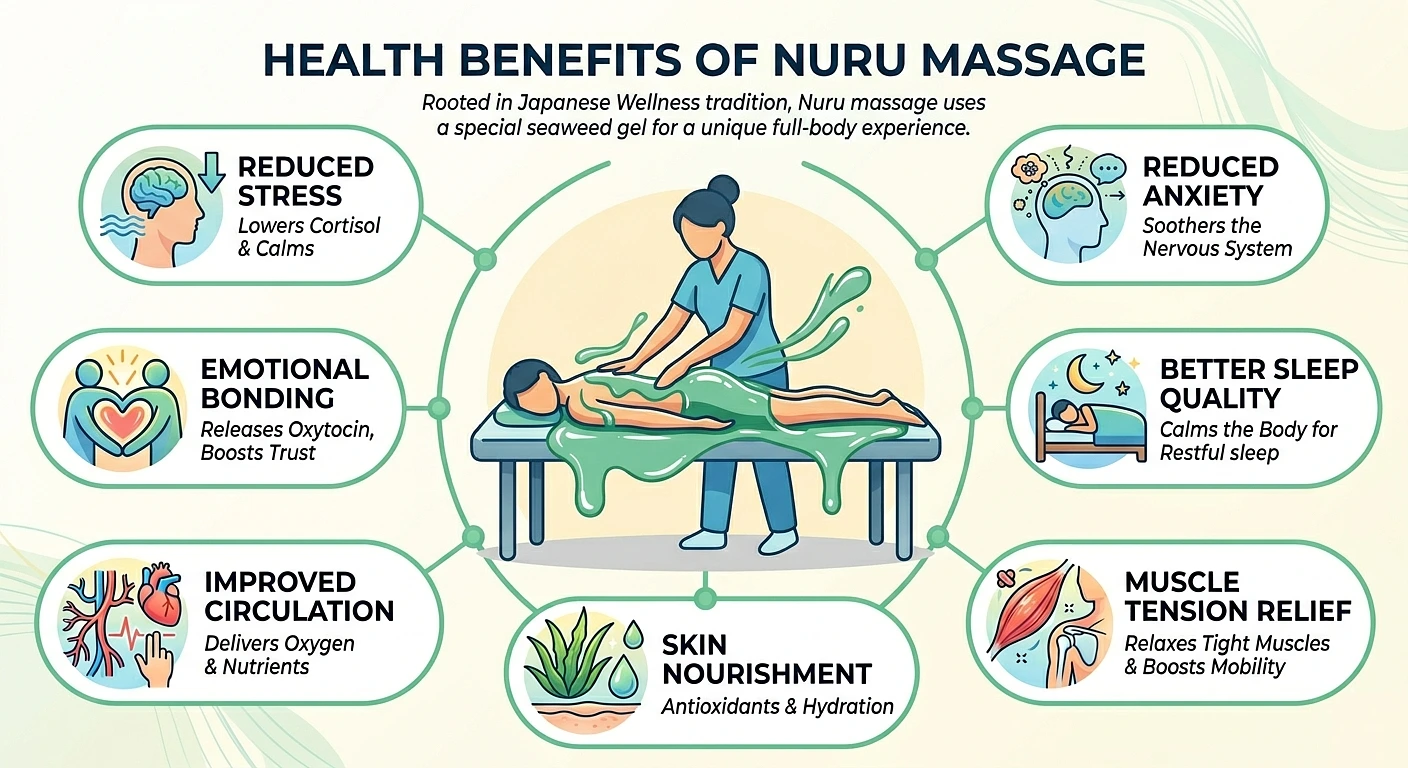
Nuru massage, rooted in Japanese wellness tradition, has quietly made its way into modern self-care and couples’ therapy conversations. Derived from the Japanese word meaning “slippery,” it involves a special seaweed-based gel applied to the body for a smooth, full-body contact experience. While often associated with intimacy, professional carries a surprising range of physical and psychological health benefits that deserve a closer look.
- Deep stress relief through cortisol reduction and nervous system regulation
- Oxytocin release that strengthens emotional bonding and trust
- Improved blood circulation for better oxygen delivery and muscle recovery
- Skin nourishment from seaweed, Aloe Vera, and antioxidant-rich gel ingredients
- Muscle tension relief and improved joint mobility
- Better sleep quality by calming the body’s stress response
- Reduced anxiety through stimulation of touch-sensitive nerve fibers
What Is Nuru Massage?
Nuru massage involves applying a colorless, odorless, water-based gel traditionally made from nori (seaweed) extract to the body. The therapist or partner then uses full-body gliding movements to stimulate muscles, skin, and the nervous system simultaneously. The result is a deeply immersive, sensory-rich experience unlike standard table massage.
1. Deep Stress Relief and Nervous System Regulation
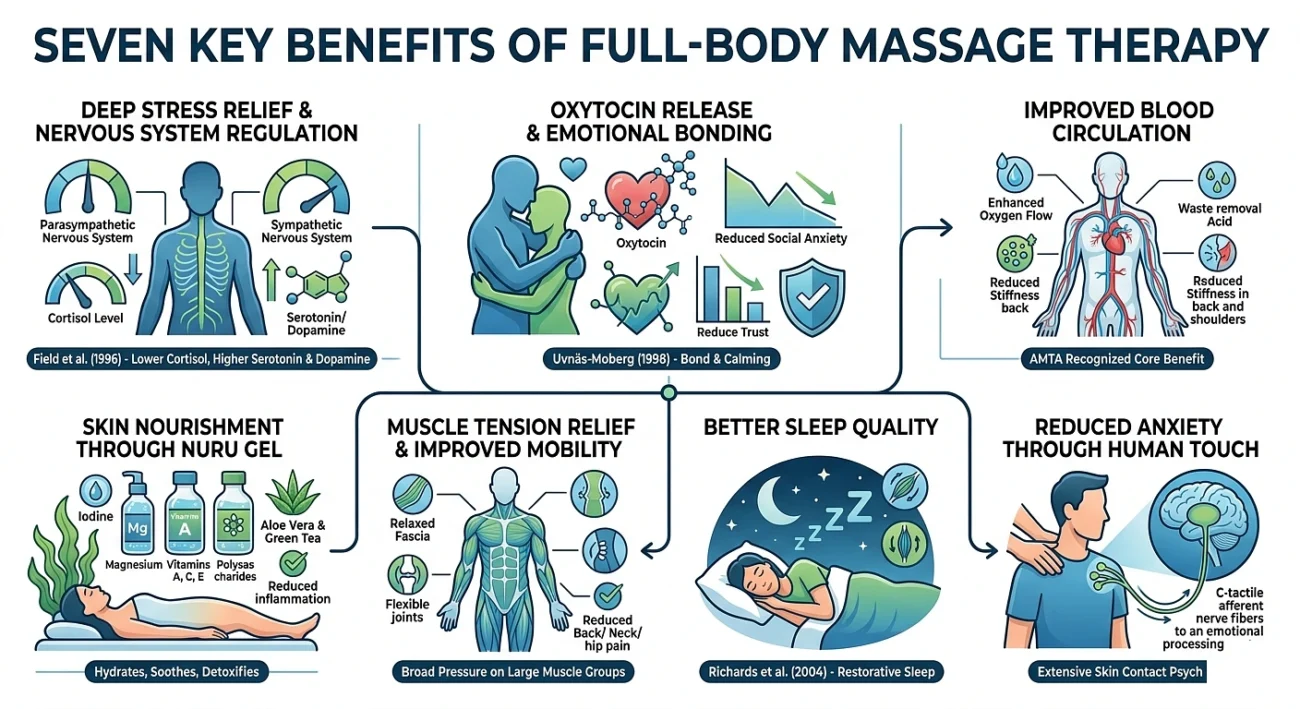
One of the most immediate and measurable benefits of any full-body massage including Nuru is stress relief. The rhythmic, continuous touch activates the parasympathetic nervous system, pulling the body out of its chronic “fight or flight” state.
Research from the Touch Research Institute at the University of Miami, led by Dr. Tiffany Field, demonstrated that massage therapy significantly lowers cortisol levels (the body’s primary stress hormone) while simultaneously increasing serotonin and dopamine neurotransmitters responsible for mood stability and feelings of well-being (Field et al., International Journal of Neuroscience, 1996).
2. Oxytocin Release and Emotional Bonding
Physical touch especially the kind that is warm, sustained, and full-body triggers the release of oxytocin, often called the “bonding hormone.” Oxytocin plays a central role in reducing social anxiety, building trust, and deepening emotional connection between people.
Dr. Kerstin Uvnäs-Moberg, a Swedish physiologist, documented in her widely cited work that positive physical contact consistently elevates oxytocin levels, producing calming effects on both the nervous system and emotional state (Uvnäs-Moberg, Psychoneuroendocrinology, 1998).
3. Improved Blood Circulation
The gliding, full-body pressure movements characteristic of Nuru massage mechanically stimulate blood vessels near the skin’s surface, promoting circulation throughout the body. Better circulation means:
- More efficient oxygen delivery to muscles and tissues
- Faster removal of metabolic waste products like lactic acid
- Reduced muscle stiffness and soreness, particularly in the back and shoulders
Improved peripheral circulation is a well-documented outcome of massage therapy and is recognized by the American Massage Therapy Association as one of its core physiological benefits.
4. Skin Nourishment Through Nuru Gel
The star ingredient in Nuru massage is the gel itself, traditionally derived from Nannochloropsis or Porphyra species of seaweed (commonly called nori). Seaweed is naturally rich in:
- Iodine, magnesium, and vitamins A, C, and E all essential for skin repair and hydration
- Polysaccharides compounds known to retain moisture and support the skin barrier
Beyond the seaweed base, quality Nuru gels often contain Aloe Vera, whose anti-inflammatory and wound-healing properties are well-established in dermatological literature, and Green Tea extract, a proven source of antioxidants that protect skin cells from oxidative stress.
The result is a massage that doesn’t just feel good it actively hydrates, soothes, and detoxifies the skin during the session itself.
5. Muscle Tension Relief and Improved Mobility
- Relaxation of tight fascia (the connective tissue surrounding muscles)
- Improved range of motion in joints
- Reduced pain in areas like the lower back, neck, and hips
These effects are not unique to Nuru but are significantly enhanced by the full-body nature of the technique, which targets multiple muscle groups simultaneously rather than in isolation.
6. Better Sleep Quality
Stress reduction and muscle relaxation two primary outcomes of also two of the most reliable pathways to improved sleep. When cortisol drops and the parasympathetic nervous system takes over, the conditions required for deep, restorative sleep are naturally met.
A 2004 review published in the Journal of Holistic Nursing (Richards, K.C., et al.) examined massage’s effect on sleep across multiple populations and found consistent improvements in sleep quality, duration, and the ability to fall asleep particularly in individuals dealing with chronic stress or anxiety.
7. Reduced Anxiety Through Human Touch
Human beings are biologically wired to respond positively to safe, consensual touch. Skin-to-skin contact stimulates C-tactile afferent nerve fibers a specific type of nerve fiber in the skin that is uniquely tuned to gentle, stroking touch and directly connected to emotional processing centers in the brain.
This neurological pathway is a significant reason, with its extensive skin contact, produces such pronounced psychological relief beyond what standard massage achieves.
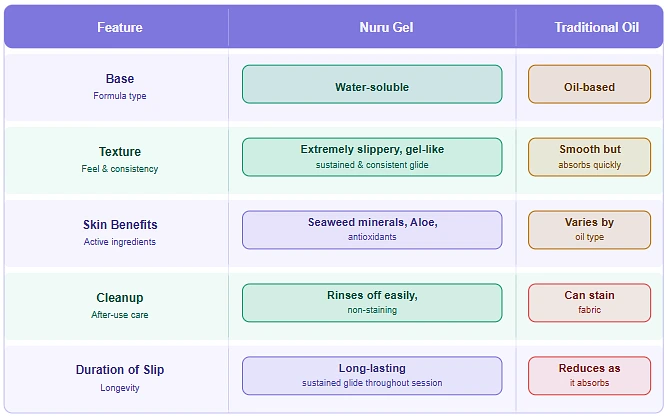
Nuru Gel vs. Traditional Massage Oil: What’s the Difference?
Safety and Practical Tips
- Communicate clearly: Discuss comfort levels, boundaries, and preferences before the session, especially in a partner setting.
- Prepare your space: Use waterproof sheets, a vinyl mattress cover, or an inflatable massage mattress the gel is notoriously messy.
- Patch test the gel: Despite being skin-friendly, individuals with seaweed or iodine sensitivities should test a small area first.
- Choose reputable professionals: If booking at a spa, research the establishment thoroughly to ensure it operates within professional and legal standards.
References
- Field, T., Ironson, G., Scafidi, F., Nawrocki, T., Goncalves, A., Burman, I., … & Kuhn, C. (1996). Massage therapy reduces anxiety and enhances EEG pattern of alertness and math computations. International Journal of Neuroscience, 86(3–4), 197–205.
- Uvnäs-Moberg, K. (1998). Oxytocin may mediate the benefits of positive social interaction and emotions. Psychoneuroendocrinology, 23(8), 819–835.
- Richards, K. C., Gibson, R., & Overton-McCoy, A. L. (2000). Effects of massage in acute and critical care. AACN Advanced Critical Care, 11(1), 77–96. (Foundational review on massage and sleep/relaxation outcomes available via AACN journals)
- American Massage Therapy Association Massage Therapy Research Roundup: Circulation and Cardiovascular Benefits.
- Serrano, J.C.E., et al. (2021). Dietary seaweed as a source of beneficial bioactive compounds. Marine Drugs, 19(7), 390.