
Forever Chemicals Are in the Rain Now – Even in Pakistan. Here’s What That Means for You

Let me start with the part that surprised me, because it should surprise you too. There is no longer anywhere on Earth where the rain is clean enough to drink by the strictest modern standard and that includes the rain falling on Karachi, Lahore, and the northern mountains.
I don’t mean dirty the way we already know rain gets dirty here, from rooftops and dust. I mean a specific class of man-made chemicals called PFAS “forever chemicals” now found in rainwater everywhere, including places with no industry at all. A landmark study from Stockholm University tested rainwater across the globe and found that levels of two of the best-known PFAS routinely sit far above the safety limits the US EPA sets for drinking water. The lead author put it bluntly: by the latest US guideline, rainwater anywhere on the planet would be judged unsafe to drink.
What PFAS Actually Are
PFAS stands for per- and polyfluoroalkyl substances a family of synthetic chemicals invented back in the 1940s. They got popular for a good reason: they repel water and oil and shrug off heat. That’s why they ended up in non-stick pans, waterproof jackets, food packaging, cosmetics, and firefighting foam.
The same toughness that made them useful is the problem. They barely break down. Once made, they stay in soil, in water, in the air, and in us. That’s the “forever” nickname. When a factory makes or uses them, they travel out through wastewater and air into the wider environment, and from there into the water cycle itself.
How Do They End Up In The Rain?
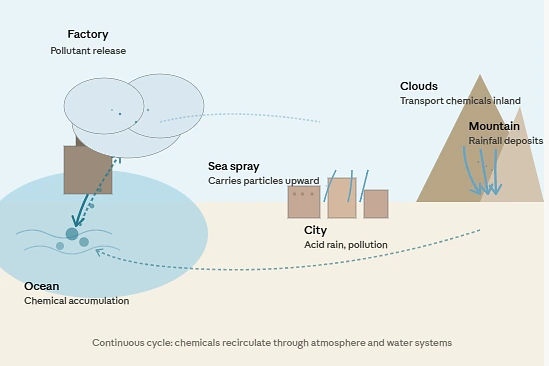
This is the part people find hard to believe. How does a chemical from a factory get into a raindrop over a remote mountain?
The water cycle carries it. PFAS get into oceans and surface water, sea spray flings them back into the atmosphere, they ride the wind, and they come back down as rain anywhere. The Stockholm team found unsafe levels even in Antarctica and the Tibetan Plateau, two of the emptiest places on Earth. Their conclusion was that we’ve crossed a “planetary boundary” for this pollution no matter where you live, you carry a low background exposure.
For us in Pakistan, the takeaway is uncomfortable: this isn’t a rich-industrial-country problem we get to sit out. The rain over Pakistan is part of the same global atmosphere. We get the same fallout.
Why A Doctor Pays Attention To This
I’ll be measured here, because fear isn’t useful and the science is still developing. The lead researcher himself said he isn’t claiming we’re all going to fall ill from this. So let me separate what’s established from what’s still being studied.
Research has linked PFAS exposure, over time, to effects on the hormonal and reproductive systems, thyroid disease, raised cholesterol, reduced fertility, liver strain, and a higher risk of certain cancers with some studies also connecting it to higher blood pressure in older women. These are associations from long-term, repeated exposure, not from drinking one glass of rainwater once.
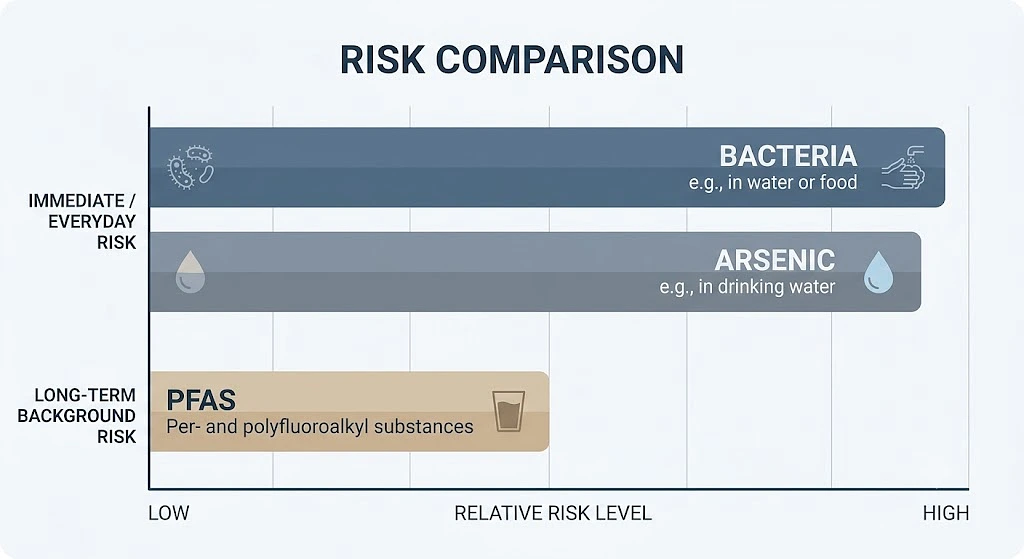
The reason it matters is the forever part. Because these chemicals don’t leave the environment and don’t leave the body easily, the concern is slow accumulation across years. That’s a different kind of risk from the bacteria we usually warn about quiet and long-term, not “you’ll have diarrhoea by tonight.”
How Worried Should A Family In Pakistan Be?
Honestly, this issue sits lower on the daily-risk list here than the water problems we already have and that context matters.
For most Pakistani households, the immediate threat from water isn’t PFAS it’s bacteria and heavy metals. Testing across our cities keeps finding heavy microbial contamination, with fecal coliform readings in some places as high as 1,100 CFU per 100 mL when the safe figure is essentially zero. Arsenic in groundwater across parts of Sindh and Punjab is documented and serious, affecting a large share of samples in some districts.
[REAL DATA SLOT — your strongest receipt goes here.] Insert what you actually see at CureCartDirect. For example: the real spike in ORS / anti-diarrhoeal orders you record during monsoon months, or the most common waterborne complaints your consulting doctors report, or what your at-home water-related lab tests turn up most often. One real figure here is what makes this article impossible for a competitor to copy.
These are the things that send people for help the stomach infections, the typhoid, the long-term arsenic exposure. PFAS is a real global concern layered on top of all that, not instead of it.
So, honestly framed: if you're drinking untreated rainwater or groundwater in Pakistan, the bacteria and arsenic should worry you first and most. PFAS is the reason the old romantic idea — "rainwater is the pure, natural choice" — is now simply outdated, everywhere, for everyone.
What You Can Actually Do About It
You can’t control the global atmosphere. You can control what reaches your family’s glass.
- Don’t drink untreated rainwater, however clean it looks. That belief is the one this whole story retires.
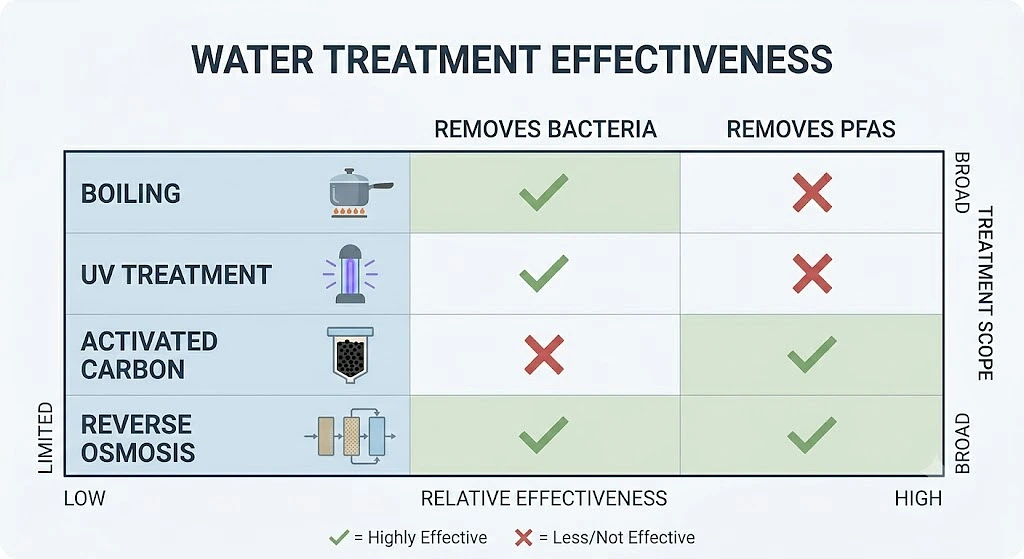
- Boiling does not remove PFAS. This matters, because boiling is our default fix here – it kills germs, not forever chemicals. The filtration that helps with PFAS is activated carbon and especially reverse osmosis (RO).
- For the bacteria that are the bigger everyday danger, boiling and UV do work – so a household ideally wants both: something for microbes and an RO or carbon stage for chemical contaminants.
- If you rely on a private source — a tank, a borehole, harvested rain get it tested locally rather than guessing.
[REAL CLINICIAN QUOTE SLOT.] One or two genuine sentences from your actual consulting doctor (e.g. Dr. Rabeya Tufail) on what they see in patients from untreated water sources, or their practical advice. A real, attributed quote from a named clinician on your team is what converts this from “a doctor’s voice” into real medical authority the authenticity tier the content needs.
Where we fit is narrow, and I’d rather be clear than oversell it. As a pharmacy we don’t sell water filters or test your tank. What we sit close to is the consequences: the oral rehydration salts (ORS) for waterborne stomach illness that floods in every monsoon, and the at-home lab testing and doctor consultations for when someone gets sick from water they assumed was safe. If a family member has ongoing unexplained symptoms and you’re on an untreated source, that’s worth a conversation with a doctor and, where appropriate, proper testing not a self-diagnosis off an article.
This is general health information, not a diagnosis or a substitute for testing your own water. If you depend on rainwater or untreated groundwater for drinking, have it checked locally, and see a doctor if anyone develops symptoms you can't explain.