
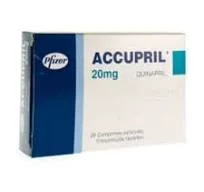


Accupril
₨ 316
Quinapril is a prescription antihypertensive medicine belonging to the class of Angiotensin-Converting Enzyme (ACE) inhibitors. It is widely used in cardiology and internal medicine for its role in the management of elevated blood pressure and cardiac workload regulation.
Its therapeutic value lies in its ability to relax blood vessels, improving blood circulation and reducing strain on the heart.
Pharmacological Classification
-
Drug Class: ACE inhibitor
-
Generic Name: Quinapril
-
Dosage Form: Oral Tablet
-
Therapeutic Category: Cardiovascular / Antihypertensive agent
-
Prescription Requirement: Yes
Composition
Each tablet contains:
-
Quinapril Hydrochloride – available in strengths of 5mg, 10mg, 20mg, or 40mg.
Inactive ingredients may include lactose monohydrate, magnesium stearate, povidone, and microcrystalline cellulose (varies by manufacturer).
Pharmacological Action / Mechanism of Action
Quinapril works by inhibiting the angiotensin-converting enzyme (ACE), which prevents the conversion of angiotensin I to angiotensin II.
Angiotensin II normally causes blood vessels to narrow and promotes the release of aldosterone, leading to sodium and water retention.
By blocking this process, Quinapril:
-
Relaxes blood vessels (vasodilation)
-
Lowers systemic vascular resistance
-
Reduces cardiac afterload and preload
-
Improves oxygen delivery to tissues
This multi-level action assists in the overall cardiovascular workload reduction and supports hemodynamic stability.
Pharmacokinetics
-
Absorption: Rapidly absorbed following oral administration.
-
Onset of Action: Within 1 hour; maximum effect observed in 2–4 hours.
-
Bioavailability: Approximately 60% (reduced slightly with food).
-
Metabolism: Hydrolyzed in the liver to the active metabolite, quinaprilat.
-
Elimination: Excreted primarily via urine.
-
Half-life: 2–3 hours (parent drug); 3–5 hours (active metabolite).
Clinical Function
Quinapril is primarily indicated in medical practice for:
-
Regulation of elevated blood pressure (hypertension)
-
Supportive therapy in congestive heart failure (CHF), where cardiac output is reduced
-
Vascular protection in long-term management of cardiovascular conditions
By controlling vascular tone and reducing intravascular pressure, it indirectly assists in minimizing the risk of complications such as left ventricular hypertrophy, stroke, and myocardial strain.
Physical Characteristics
-
Dosage Form: Film-coated tablet
-
Color/Shape: Varies with manufacturer (commonly white or light pink, round or oval)
-
Packaging: Typically available in 10-tablet strips or blister packs
Usage and Administration
-
Route: Oral
-
Timing: As directed by a physician
-
Food Interaction: Can be taken with or without food (preferably at a consistent time daily).
-
Missed Dose: Should not be doubled; continue with the next scheduled dose.
Adverse Reactions (Observed in Clinical Use)
Common:
-
Dizziness, headache
-
Fatigue or weakness
-
Mild cough
-
Nausea or abdominal discomfort
Less Common but Clinically Notable:
-
Hypotension (low blood pressure)
-
Hyperkalemia (raised potassium levels)
-
Angioedema (facial or throat swelling)
-
Altered liver enzyme function
-
Changes in kidney parameters (serum creatinine, urea)
Patients are usually monitored periodically through renal and electrolyte testing during therapy.
Precautionary Information
-
Should be administered cautiously in patients with renal impairment, hepatic dysfunction, or fluid depletion.
-
Avoid concurrent use with potassium supplements, diuretics, or NSAIDs unless medically supervised.
-
Not suitable for pregnant or breastfeeding women due to potential fetal and neonatal toxicity.
-
Caution advised in individuals with aortic stenosis or previous angioedema history.
Drug Interactions
Possible interactions may occur with:
-
Diuretics (e.g., furosemide, hydrochlorothiazide) – may enhance hypotensive effect
-
NSAIDs (e.g., ibuprofen, diclofenac) – may reduce antihypertensive action
-
Potassium-sparing agents (e.g., spironolactone) – risk of hyperkalemia
-
Lithium and antidiabetic agents – altered pharmacodynamic response
Always ensure regular review of medication history by a qualified healthcare provider.
Storage Conditions
-
Store below 30°C in a cool, dry place.
-
Protect from light, moisture, and heat.
-
Keep away from children and pets.
Additional Information
-
Manufacturing Origin: Available under various local and international pharmaceutical brands.
-
Control Drug: Not a controlled substance under the Drug Act of Pakistan.
Quick Reference
| Property | Detail |
|---|---|
| Generic Name | Quinapril |
| Drug Class | ACE Inhibitor |
| Dosage Form | Oral Tablet |
| Strengths | 5mg, 10mg, 20mg, 40mg |
| Main Function | Lowers vascular resistance, supports cardiac function |
| Common Side Effects | Dizziness, cough, fatigue |
| Storage | Below 30°C, dry place |
| Prescription Required | Yes |
Medical Disclaimer
This profile is provided for informational and educational purposes only. It is not a medical prescription or a substitute for professional consultation, diagnosis, or treatment. Always seek the guidance of a qualified doctor or healthcare professional in Pakistan regarding any medicine, dosage, or related health concerns.



Reviews
There are no reviews yet.