
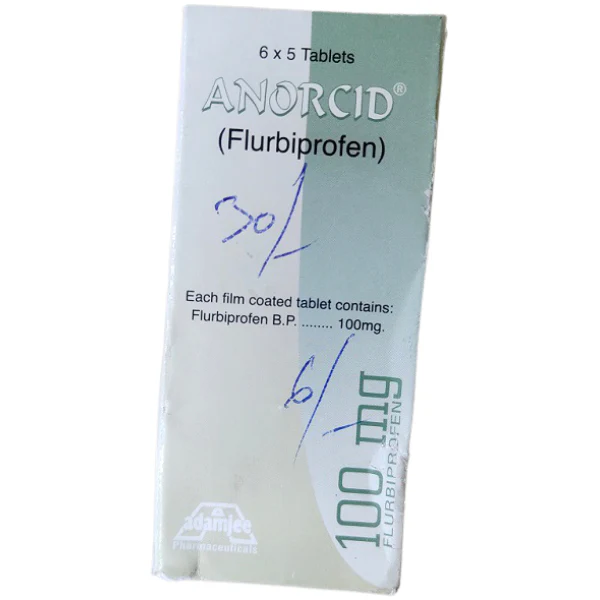


Description
Anorcid 100 mg Tablet contains Flurbiprofen, a non-steroidal anti-inflammatory drug (NSAID) used to relieve pain, inflammation, and joint stiffness. It is commonly prescribed for rheumatoid arthritis, osteoarthritis, ankylosing spondylitis, and muscular or post-injury pain. It works by blocking prostaglandins, the chemicals responsible for swelling and pain.
Primary Uses
-
Joint pain and inflammation.
-
Rheumatoid arthritis and osteoarthritis.
-
Ankylosing spondylitis (spinal stiffness).
-
Muscular pain, sprains, and strains.
Indications
Anorcid is indicated for:
-
Rheumatic conditions affecting joints, bones, and cartilage.
-
Muscle sprains or strains.
-
General inflammatory pain in adults.
Dosage & Administration
-
Take as directed by your physician.
-
Usually taken orally with a glass of water.
-
Can be taken with or without food, but taking with meals may reduce stomach irritation.
-
Not recommended for children unless prescribed.
Side Effects
Common:
-
Redness or irritation of skin.
-
Itching or rash.
-
Mild digestive discomfort.
-
Sensitivity to sunlight.
Seek medical help if severe reactions occur.
Warnings & Precautions
Pregnancy:
Use only if no safer alternative is available. Always consult your doctor.
Breastfeeding:
May pass into breast milk. Consult a healthcare provider before use.
General Precautions:
Use with caution in patients with:
-
Asthma.
-
Kidney or liver issues.
-
Heart disease or high blood pressure.
-
Bleeding disorders.
Avoid alcohol consumption while using NSAIDs.
Contraindications
-
Known allergy to Flurbiprofen, Aspirin, or other NSAIDs.
-
Asthma triggered by painkillers.
-
History of NSAID-induced allergic reactions.
Frequently Asked Questions (FAQs)
What is this medicine used for?
It treats joint pain, swelling, stiffness, and muscle aches caused by arthritis or injury.
How should I store it?
Store at room temperature (18–25°C), away from light, moisture, and children.
Can I take it without food?
Yes, but taking it with food may reduce stomach discomfort.
Is it suitable for muscle pain?
Yes, it is commonly used for muscular pain and stiffness.
Who should avoid it?
People with asthma, NSAID allergy, or stomach ulcers should avoid it.
Expert Advice
-
Do not exceed the recommended dose.
-
Stop use and consult a doctor if pain persists or side effects worsen.
-
Use sunscreen or protective clothing, as it may increase sun sensitivity.
Disclaimer
This information is provided for educational purposes only and is not a substitute for medical advice. Always consult your doctor or pharmacist before starting or stopping any medication.



Reviews
There are no reviews yet.