
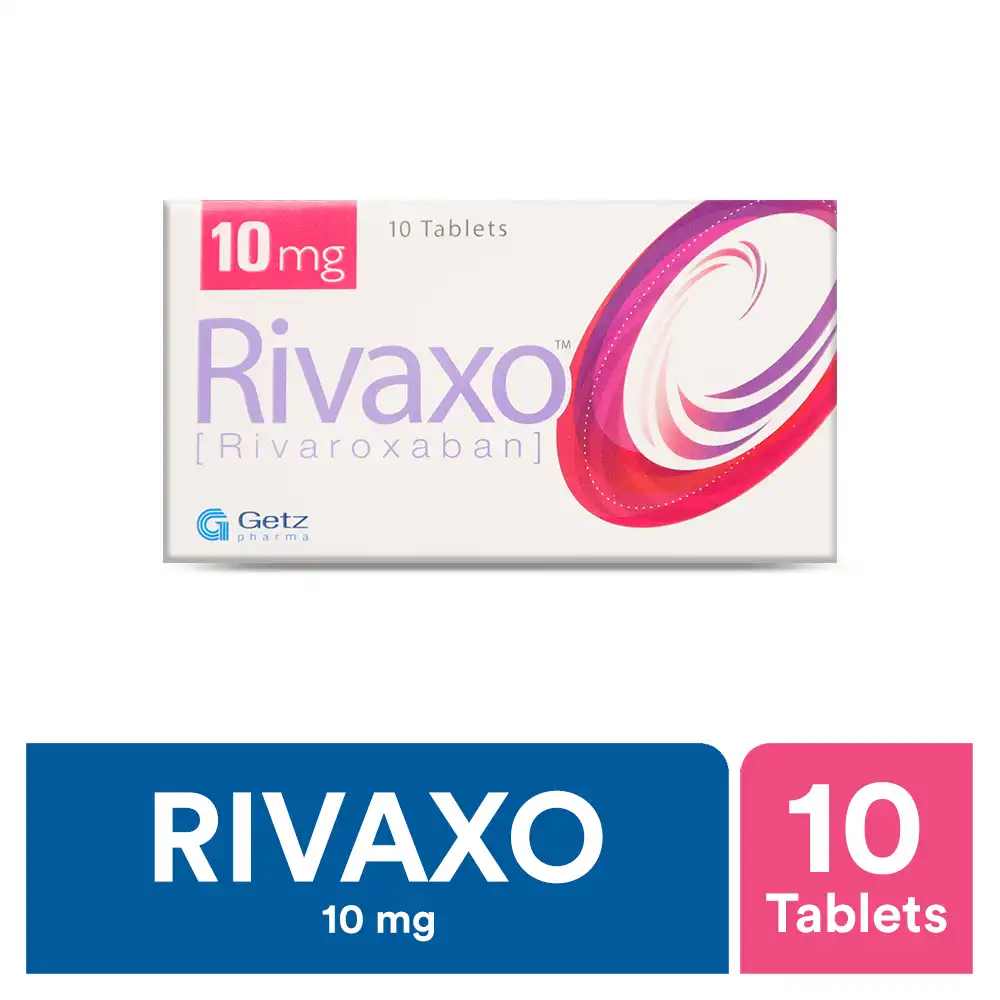


Description Rivaxo Tablets 10mg contain Rivaroxaban, a direct oral anticoagulant (DOAC) and selective Factor Xa inhibitor used to prevent and treat blood clots. It inhibits Factor Xa in the coagulation cascade, blocking both intrinsic and extrinsic pathways to prevent thrombin formation and thrombus development without affecting platelets or existing thrombin. This oral tablet is ideal for adults post-major leg surgery or with conditions like atrial fibrillation, offering effective clot prevention with once-daily dosing.
Ingredients Rivaroxaban 10mg.
Drug Class Direct Oral Anticoagulant / Factor Xa Inhibitor.
Dosage Form Tablet (Pack size not specified; typically 10 or 30 tablets per strip).
Uses Rivaxo Tablets are prescribed for:
- Preventing venous thromboembolism (VTE) after major leg surgeries (e.g., hip/knee replacement).
- Reducing risk of stroke and systemic embolism in non-valvular atrial fibrillation.
- Treating deep vein thrombosis (DVT) and pulmonary embolism (PE).
- Preventing recurrent DVT/PE after initial treatment.
- Supporting cardiovascular health in patients with high clot risk.
Doctor’s Review Dr. Amna Qureshi, a distinguished hematologist in Karachi, praises Rivaxo’s efficacy: “Rivaxo 10mg is a game-changer for post-surgical clot prevention and atrial fibrillation management, offering predictable anticoagulation without frequent monitoring. I ensure patients are screened for bleeding risks to maximize safety.”
Dosage (Follow physician’s instructions — typical guideline)
- Adults (Post-orthopedic surgery): 10mg once daily for 2-5 weeks (knee: 2 weeks; hip: 5 weeks), starting 6-10 hours post-op.
- Atrial fibrillation/DVT/PE: 15mg twice daily for 21 days (with food), then 20mg once daily.
- Maintenance: 10-20mg once daily, based on risk and renal function.
- Renal impairment (CrCl 15-29ml/min): Use cautiously; avoid if CrCl <15ml/min.
- Take with food for higher doses (15mg/20mg); 10mg can be taken with/without food.
In Case of Overdose Overdose increases bleeding risk, causing symptoms like nosebleeds, bruising, or severe hemorrhage (e.g., GI bleeding). Seek immediate medical attention. Treatment may involve activated charcoal (if recent), prothrombin complex concentrate (PCC), or supportive care. Rivaroxaban-specific reversal agent (andexanet alfa) may be used in emergencies.
Missed Dose Take as soon as remembered on the same day; if missed, skip and resume next dose—do not double up to avoid bleeding risk. Consult your doctor if misses are frequent to ensure consistent anticoagulation.
How to Use
- Swallow tablet whole with a glass of water; 10mg dose can be taken with or without food, higher doses with food.
- Take at the same time daily (e.g., evening) for steady levels.
- Do not crush or chew unless dispersible form is prescribed.
- Inform all healthcare providers (e.g., dentists, surgeons) before procedures.
- Monitor for bleeding signs (e.g., blood in urine/stool)—report immediately.
When Not to Use Avoid Rivaxo if:
- Allergic to Rivaroxaban or excipients.
- Experiencing active excessive bleeding (e.g., peptic ulcer, intracranial hemorrhage).
- Severe liver disease with bleeding risk (e.g., cirrhosis).
- Pregnant or breastfeeding (potential fetal/infant harm).
- Severe renal impairment (CrCl <15ml/min).
- Using prosthetic heart valves or concurrent strong CYP3A4 inhibitors/inducers.
Side Effects Common:
- Bleeding post-surgery, nosebleeds, bruising.
- Anemia (fatigue, pallor).
- Nausea, headache, dizziness.
Uncommon / Severe (Stop and seek medical help):
- GI or genitourinary bleeding, hematoma.
- Low blood pressure, tachycardia, fainting.
- Liver dysfunction (elevated enzymes, jaundice).
- Allergic reactions (rash, swelling, breathing difficulty).
Precautions & Warnings
- Monitor for bleeding signs (occult or overt), especially first weeks or post-procedure.
- Use cautiously in CrCl 15-29ml/min; stop if severe hemorrhage occurs.
- High bleeding risk in active cancer (GI/GU tumors)—weigh benefits vs. risks.
- Avoid neuraxial anesthesia (spinal/epidural) unless Rivaroxaban is stopped 24 hours prior.
- Discontinue 24-48 hours before major surgery; consult your doctor.
- Elderly or low-weight patients may need closer monitoring.
Drug Interactions
- Anticoagulants (e.g., enoxaparin, warfarin): Increased bleeding risk—avoid unless transitioning.
- Antiplatelets (e.g., clopidogrel, aspirin): Heightened bleeding—use cautiously.
- NSAIDs (e.g., naproxen): Increased GI bleeding risk.
- CYP3A4 inhibitors (e.g., ketoconazole, ritonavir): Raise Rivaroxaban levels—avoid or adjust.
- CYP3A4 inducers (e.g., rifampin): Reduce efficacy—monitor closely.
- P-gp inhibitors: May increase bleeding risk—use with caution.
Food Interactions
- 10mg dose: Take with or without food; 15mg/20mg doses: Take with food for better absorption.
- Avoid grapefruit juice—may increase Rivaroxaban levels.
- Limit alcohol to reduce bleeding risk and liver strain.
- Maintain a balanced diet; no specific food restrictions noted.
Storage/Disposal
- Store at room temperature (15-30°C), away from direct light and heat.
- Keep in original packaging, out of reach of children and pets.
- Do not use past expiration date; check package for details.
- Dispose via pharmacy take-back programs; do not flush or trash.
Quick Tips
- Carry a medical alert card noting anticoagulant use.
- Use a soft toothbrush/electric razor to minimize bleeding.
- Report unusual bruising, blood in urine/stool, or nosebleeds immediately.
- Stop 24-48 hours before surgery—consult your doctor.
- Maintain hydration to support kidney function.
Disclaimer This information is provided for educational purposes only and does not replace medical advice. Use only under the supervision of a licensed physician. Do not self-medicate.


Reviews
There are no reviews yet.