
Signs of Depression: When to See a Psychiatrist

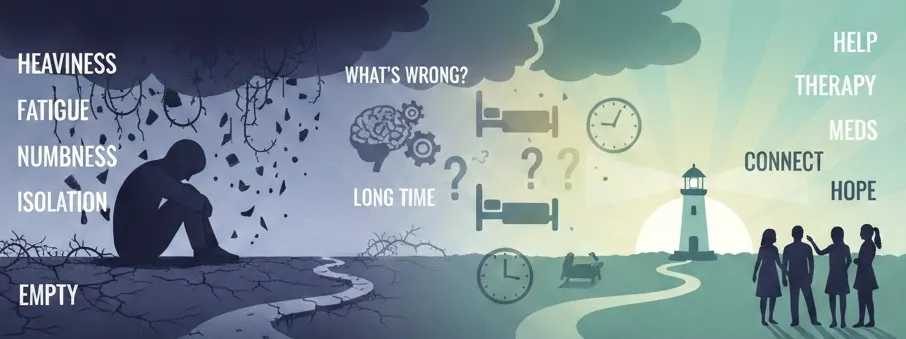
Most people describe depression as “feeling sad,” which is a bit like describing a heart attack as “chest discomfort.” Technically accurate, wildly incomplete. The World Health Organization estimates around 280 million people globally live with depression, and a significant chunk of them spent months or years assuming they were just tired, lazy, or going through a rough patch.
Depression is sneaky that way. It doesn’t announce itself. It creeps in gradually until one day you realize you haven’t enjoyed anything in weeks and you can’t remember when that started.
Clinical Depression vs. Bad Moods
Everyone feels down sometimes. Your project fails, a relationship ends, you get sick—sadness makes sense in those contexts. Clinical depression is different because it doesn’t need a reason, and it doesn’t lift when circumstances improve.
The psychiatric definition requires symptoms lasting at least two weeks, but honestly, most people who end up diagnosed have been struggling for months before they seek help. There’s this weird gap between “I’m just stressed” and “okay, something is actually wrong” that people sit in for way too long.
A bad week feels heavy. Depression feels like the heaviness is you now—like you can’t remember what it felt like before, and you’re not sure you believe it’ll ever feel different.
Emotional Signs
The stereotypical image is someone crying constantly, but plenty of people with depression don’t cry at all. They feel flat. Empty. Like emotions are happening behind glass and they can’t quite reach them.
- Persistent sadness is the obvious one, but it shows up differently for different people. Some feel it as heaviness in their chest. Others describe it more as numbness or disconnection.
- Anhedonia—the clinical term for losing interest in things you used to enjoy—is one of the most reliable indicators. You loved cooking and now ordering takeout feels like too much effort. You used to call friends on weekends and now you let their texts sit for days. It’s not that you’re busy. You just… don’t want to. And you’re not sure why.
- Guilt and worthlessness thoughts often spiral in ways that don’t match reality. You made a small mistake at work three weeks ago and you’re still replaying it at 2am, convinced everyone noticed and judges you for it. Or you feel like a burden to people who genuinely want to spend time with you.
- Irritability gets overlooked, especially in men. Depression doesn’t always look sad from the outside—sometimes it looks like someone with a short fuse who snaps at minor inconveniences and can’t figure out why everything annoys them lately.
Physical Signs
This surprises people: depression lives in your body, not just your head.
- Sleep problems go both directions. Some people can’t fall asleep or wake up at 3am with racing thoughts. Others sleep 12+ hours and still feel exhausted. Both patterns point to the same underlying issue—your brain’s regulatory systems aren’t working right.
- Fatigue that doesn’t respond to rest is incredibly common. You slept eight hours and you’re still dragging yourself through the day. Coffee doesn’t help. Weekends don’t help. People keep asking if you’re getting sick and you don’t know what to tell them.
- Appetite shifts can also go either direction. Stress eating or completely losing interest in food—both happen. Some people notice weight changes before they notice mood changes, which is why doctors sometimes catch depression during routine checkups.
- Physical aches with no clear cause show up more than most people expect. Headaches, back pain, stomach issues, muscle tension. You get tests done and everything comes back normal, which is almost more frustrating than getting a diagnosis.
- Psychomotor changes is the clinical term for when your body literally slows down or speeds up. Moving feels effortful. Talking feels slow. Or the opposite—restless, agitated, can’t sit still, can’t stop fidgeting. Other people notice this before you do, usually.
Cognitive Signs
Your brain on depression doesn’t work the same as your brain not on depression. That sounds obvious but it catches people off guard when they experience it.
- Concentration problems make everything harder. You read the same paragraph four times and still don’t absorb it. You sit down to write an email and forty minutes later you’ve written two sentences. Work that used to take an hour now takes all day, which makes you feel worse, which makes concentration even harder. Fun cycle.
- Indecisiveness can become paralyzing. What to eat for dinner becomes an impossible question. You stand in front of the fridge for ten minutes and eventually just close it and skip the meal. Small choices feel overwhelming because everything feels overwhelming.
- Negative thought patterns run on autopilot. You interpret neutral situations negatively without realizing you’re doing it. A friend cancels plans and your brain immediately goes to “they don’t actually like me” instead of “they’re probably busy.” These thought patterns feel like facts, which is part of what makes them so hard to challenge.
- Memory problems are subtle but real. You forget conversations you had last week. You lose track of what you were doing mid-task. This isn’t dementia—it’s your brain running on reduced capacity because it’s fighting itself constantly.
Behavioral Signs
Sometimes other people notice changes before you do.
- Social withdrawal happens gradually. You skip one hangout, then another, then you realize you haven’t seen friends in a month and the thought of making plans feels exhausting rather than appealing. Isolation feels easier in the moment but makes everything worse over time.
- Neglecting responsibilities can look like laziness from outside. Dishes pile up. Emails go unanswered. Bills are late. It’s not that you don’t care—you care and you still can’t make yourself do it, which feels even worse than not caring would.
- Substance use often increases as self-medication. A drink or two to take the edge off becomes a drink every night becomes more than that. Same with anything that temporarily numbs—food, screens, shopping, whatever works until it doesn’t.
- Reduced productivity affects work, school, relationships. You’re showing up but you’re not really there. Performance slips and you know it’s slipping but you can’t seem to fix it. This sometimes triggers job loss or academic problems that add real-world stress on top of the depression, compounding everything.
When It’s More Than a Rough Patch
A few questions worth asking yourself honestly:
Has this been going on for more than two weeks without significant improvement? Are your symptoms affecting your ability to work, maintain relationships, or handle daily tasks? Did the feelings come on without an obvious cause, or did they stick around long after a triggering event resolved? Do you feel like yourself, or do you feel like something fundamental has shifted?
Duration and intensity matter most here. Bad days end. Bad weeks end. If you’re tracking in months and nothing is shifting, that’s signal.
When to Seek Professional Help Immediately
Certain symptoms require urgent attention. If you’re experiencing any of these, contact a mental health professional or crisis service now:
- Thoughts of suicide or self-harm
- Making plans or preparations to hurt yourself
- Inability to perform basic functions (eating, sleeping, hygiene)
- Hallucinations or delusions
- Severe substance dependence alongside depression
- Feeling unsafe with yourself
In Singapore, you can reach the Samaritans of Singapore (SOS) at 1-767, available 24 hours.
Who Should You Actually See?
This confuses people because mental health has a lot of overlapping job titles.
- General practitioners can screen for depression and prescribe basic antidepressants. For straightforward cases, this might be enough. They’ll refer you onward if your situation is more complicated.
- Psychologists provide therapy—talk-based treatment like cognitive behavioral therapy (CBT) or other approaches. They can’t prescribe medication in most places, but therapy is often just as effective as medication for mild to moderate depression, and works best alongside medication for severe cases.
- Psychiatrists are medical doctors specialized in mental health. They can prescribe medication, diagnose complex conditions, adjust treatment when things aren’t working, and manage cases where depression overlaps with other issues. You’d want a psychiatrist specifically if you have severe symptoms, if basic antidepressants aren’t helping, if you might have bipolar rather than unipolar depression, or if you have other psychiatric conditions alongside depression.
Many people see a psychiatrist for medication management and a psychologist for therapy simultaneously—the combination approach has the strongest evidence for moderate to severe depression.
What Happens at a Psychiatric Appointment
First visits are mostly talking. The psychiatrist will ask about your symptoms, how long you’ve had them, what makes them better or worse, your medical history, family mental health history, any substances you use, and how your daily functioning is affected.
This can feel invasive but the information matters for accurate diagnosis. Depression overlaps symptom-wise with several other conditions—thyroid problems, bipolar disorder, anxiety disorders, grief, certain medications—and sorting out what’s actually happening requires detailed history.
You might get questionnaires to fill out. You might get blood tests ordered to rule out physical causes. You probably won’t get prescribed anything on the first visit until the psychiatrist has a fuller picture.
Dr. Lim Wei Kang, a consultant psychiatrist at the Institute of Mental Health in Singapore, notes that patients often delay seeking help because they’re unsure whether their symptoms are “bad enough” to warrant professional attention. “If it’s affecting your life, it’s worth discussing with someone qualified. There’s no threshold you have to meet before you’re allowed to get help.”
Treatment Overview
Depression is treatable. That sounds like a platitude but it’s genuinely true—most people improve significantly with appropriate treatment.
- Therapy teaches you to recognize distorted thought patterns and develop coping strategies. CBT is the most researched, but other approaches work too. Takes time to show results, usually several weeks to months.
- Medication addresses the neurochemical side. Antidepressants aren’t happy pills and don’t work instantly—they typically take 4-6 weeks to reach full effect, and the first one you try might not be the right fit. Finding the right medication at the right dose sometimes requires patience and adjustments.
- Lifestyle factors matter more than they sound like they should. Exercise has antidepressant effects roughly equivalent to medication for mild depression. Sleep hygiene, social connection, reducing alcohol—these aren’t substitutes for treatment but they’re meaningful complements.
- Combination approaches work best for most moderate to severe cases. Medication plus therapy outperforms either alone in studies.
What doesn’t work: pushing through, waiting for it to pass, believing you should be able to handle this on your own. Depression is a medical condition with established treatments. Using them isn’t weakness—it’s accurate assessment of what the situation requires.