
Tooth Filling Can’t Floss? What You Should Know

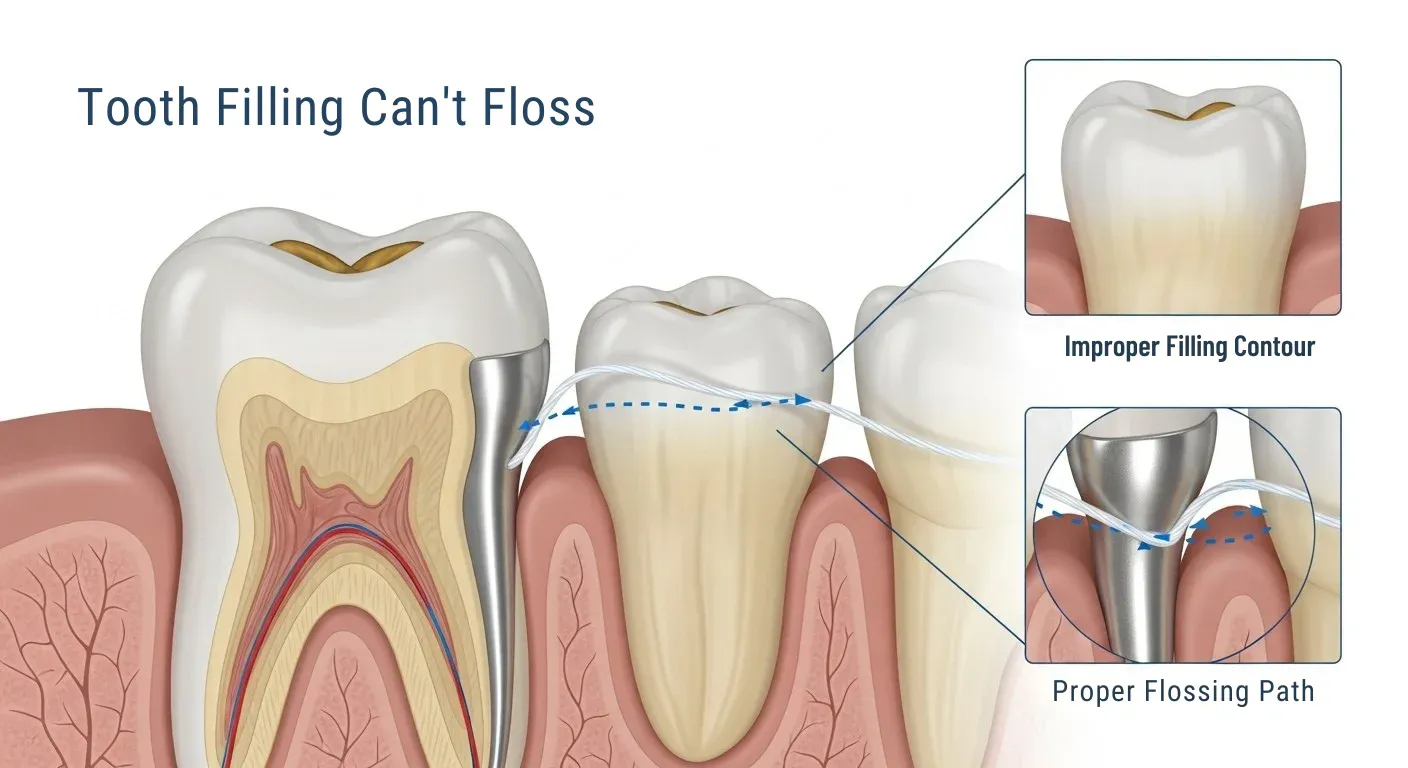
Difficulty flossing after a tooth filling is a common issue that generally requires professional adjustment. It usually indicates a “tight contact” or a rough edge in the filling material, which can trap food and bacteria if not addressed. Do not force the floss, as this can damage your gums or the restoration itself. Instead, use alternative cleaning aids like a water flosser or interdental brushes temporarily and promptly schedule a follow-up appointment with your dentist. They can easily smooth or adjust the filling to create a proper contact point, ensuring long term dental health and proper hygiene.
If you’ve recently gotten a dental filling and now find yourself unable to floss between that tooth and its neighbor, you’re not alone. This is a common issue that shouldn’t be ignored, as it can lead to future dental problems if left unaddressed.
Why You Can’t Floss After a Filling
When a filling is placed, the material needs to properly contour to your tooth’s natural shape. If floss gets stuck, shreds, or simply won’t pass through, several issues might be at play:
The filling is too high or bulky. Sometimes the composite resin or amalgam extends slightly beyond the tooth’s natural contour, creating an overhang that blocks the floss pathway.
Rough edges or excess material. If the filling wasn’t smoothed properly during placement, rough spots can catch and tear floss.
The contact point is too tight. Your teeth naturally touch their neighbors at specific contact points. A new filling can alter this contact, making it impossibly tight for floss to pass through.
The filling has created a ledge. When filling material extends into the space between teeth without proper contouring, it creates a shelf that blocks floss.
Why This Matters for Your Oral Health

Being unable to floss isn’t just an inconvenience it’s a genuine health concern. The spaces between your teeth harbor bacteria and food particles that brushing alone cannot remove.
Plaque accumulation between teeth is a primary cause of interproximal cavities (cavities that form between teeth). When floss can’t reach these areas, bacterial biofilm builds up undisturbed, increasing your risk for:
- Gum disease from accumulated plaque along the gumline
- Tooth decay on the adjacent tooth surfaces
- Bad breath from trapped food particles
- Inflammation and bleeding gums in that specific area
The irony is that you just had a cavity filled, and now you’re unable to clean an area that could develop another cavity. Interdental cleaning is essential because toothbrush bristles simply cannot reach the contact points between teeth where decay frequently develops.
What You Should Do
Contact your dentist promptly. This isn’t something that will fix itself or that you should try to work around. Most dentists will gladly make adjustments to ensure proper flossing access, often at no additional charge if you return within a reasonable timeframe after the original procedure.
Don’t force the floss. Aggressively trying to push floss through a tight spot can damage your gums or break off filling material. If gentle attempts don’t work, stop and schedule an adjustment.
Try different floss types temporarily. While waiting for your appointment, waxed floss or floss tape may slide through more easily than unwaxed varieties. Some people also find success with floss threaders or interdental brushes to clean around the problem area.
The Adjustment Process
When you return to your dentist, they’ll typically:
- Use floss to identify exactly where the blockage occurs
- Examine the filling’s contours and contact point
- Use special instruments to reshape or smooth the filling
- Polish the adjusted area
- Test with floss to ensure proper access
This adjustment usually takes just a few minutes and should provide immediate relief. The filling itself remains intact—your dentist is simply refining its shape.
Common Filling Problems That Block Floss
Overhanging margins occur when excess filling material extends beyond the tooth structure into the gum area or between teeth. These overhangs trap plaque and make flossing impossible or painful.
Improper proximal contours happen when the filling doesn’t recreate the natural curved shape where your tooth contacts its neighbor. Instead of a gentle point of contact, you might have a flat surface or bulge that blocks the floss pathway entirely.
Inadequate finishing and polishing can leave the filling surface rough. Even microscopic roughness can catch floss fibers, causing shredding or complete blockage.
Preventing This Issue
If you haven’t had your filling yet, or you’re planning future dental work:
- Ask your dentist to check flossing access before you leave the chair
- Mention if you notice any problems while you’re still at the appointment
- Try flossing gently that same evening to catch issues early
Dentists typically check the bite and basic contours after placing a filling, but the flossing pathway isn’t always tested unless the patient mentions it or the dentist specifically checks. Don’t hesitate to speak up it’s much easier to adjust immediately than to schedule a return visit.
When Flossing Feels Different But Works
Sometimes a new filling changes the sensation of flossing without actually preventing it. You might notice the floss feels tighter or makes a snapping sound when it passes through. This can be normal if:
- The floss still moves through smoothly (even if snugly)
- There’s no pain or bleeding
- The floss doesn’t shred or get stuck
Your teeth may have had more space between them before due to decay, and the filling has now restored normal contact. Healthy adjacent teeth should touch at a single point, creating what dentists call the “contact area.” Give yourself a week or two to adjust to the new sensation.
Long Term Consequences of Ignoring the Problem

Leaving this issue unresolved creates a vicious cycle. The area you can’t floss becomes a breeding ground for bacteria. Food particles wedge into the space and ferment, producing acids that attack tooth enamel. Within months, you could develop:
Secondary decay on the filled tooth or its neighbor. This means more drilling, larger fillings, and potentially root canals if the decay reaches the tooth’s nerve.
Periodontal disease starting at that specific site. Chronic inflammation damages the bone supporting your teeth. Once bone is lost, it doesn’t grow back.
Chronic bad breath that no amount of mouthwash can mask, because you can’t mechanically remove the source the trapped debris between your teeth.
Alternative Cleaning Methods
While waiting for your adjustment appointment, you might try:
Water flossers can sometimes reach around problematic fillings better than string floss. The pressurized water stream dislodges food particles even when traditional floss won’t pass through.
Interdental brushes (tiny Christmas tree-shaped brushes) might access the area from the gum side if there’s enough space.
Proxy brushes and soft picks provide some cleaning, though they’re less effective than proper flossing.
These are temporary measures only. They don’t replace the need for a properly contoured filling that allows normal flossing.
The Bottom Line
Not being able to floss after a filling is a fixable problem that requires professional attention. Your dentist placed that filling to protect your tooth, but that protection only works if you can maintain proper hygiene around it. Don’t hesitate to reach out for an adjustment—it’s a routine part of dental care, and your dentist would rather make it right than have you develop problems in that area down the line.
Proper flossing access isn’t a luxury; it’s essential for maintaining the health of both the filled tooth and its neighbors. The small inconvenience of a follow-up appointment vastly outweighs the risk of developing new cavities or gum disease in an area you can’t clean. If your dentist seems dismissive of your concerns, advocate for yourself. A properly placed filling should not prevent you from flossing. Period. This is basic dental standard of care, and you deserve a filling that allows you to maintain your oral hygiene effectively.
References:
- American Dental Association – Dental Fillings: Options, Costs.
- American Dental Association – Floss/Interdental Cleaners.
- American Dental Association – Toothbrushes.
- Cleveland Clinic – Dental Filling.