
12 Natural Ways to Get Healthy, Glowing Skin

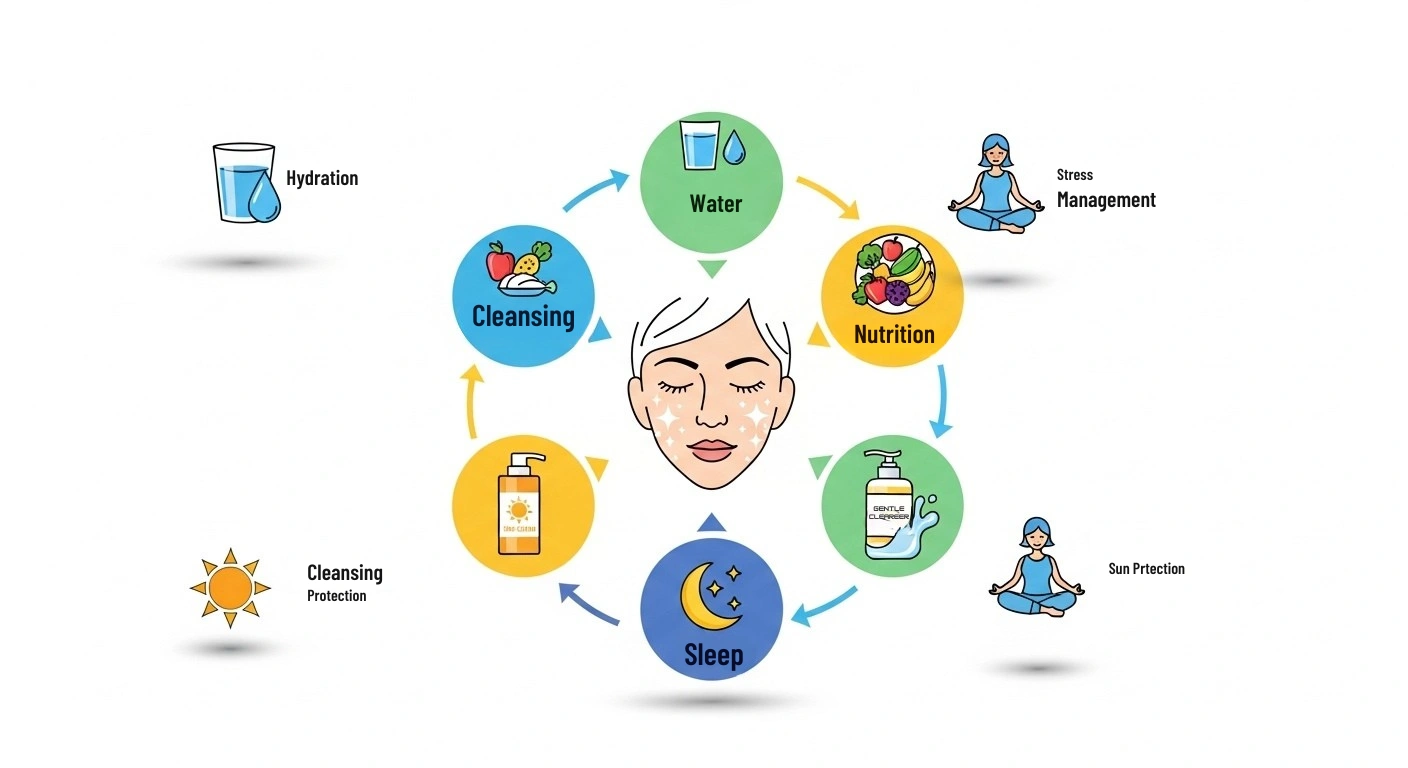
Be honest with yourself for a second. You’ve scrolled through Instagram, spotted someone with impossibly radiant skin, and wondered “What on earth are they using?” Here’s the truth. It’s usually not a $200 serum or some fancy clinic treatment.
Most people with gorgeous skin stick to simple, natural habits. Your skin shows how you treat your body from the inside out. And the best part? You don’t need a bathroom shelf full of expensive products to get there.
Stay Hydrated Your Skin
Your skin is the largest organ you’ve got. Every cell in it needs water to do its job. When you don’t drink enough, your skin turns dull, tight, and wrinkle-prone fast.
But you don’t have to force down eight glasses a day to stay hydrated. Water-rich foods like cucumbers, watermelon, oranges, and celery do a lot of the heavy lifting too.
That said, watch out for these common hydration killers:
- Coffee — It’s a diuretic, so it pushes water out of your body faster than you’d think
- Alcohol — It messes with your kidneys and drains vitamin A, which your skin needs for repair
- Sugary drinks — They spike your blood sugar and trigger inflammation, both of which wreck collagen
Here’s a simple morning habit that works: drink a glass of warm lemon water before anything else. The vitamin C gives your skin an antioxidant kick, and the warm water wakes up your digestion which, as you’ll see later, plays a big role in how your skin looks.
Eat Skin Friendly Foods
This one isn’t just something your grandmother liked to say. There’s real science behind the link between your plate and your face. The right foods hand your skin everything it needs to heal, renew, and glow.
Load up on these:
- Fatty fish like salmon and mackerel — Omega-3s keep your skin soft and moisturized
- Avocados — Full of healthy fats, vitamin E, and vitamin C for better elasticity
- Sweet potatoes and carrots — Beta-carotene in these works like a natural sunscreen from the inside
- Blueberries, kale, and spinach — Loaded with antioxidants that fight off skin-damaging free radicals
- Dark chocolate — Seriously! It’s packed with antioxidants that protect your skin
Now here’s something almost nobody talks about: fiber. It moves waste and toxins out of your system and improves blood flow to your skin cells. Apples, beans, pears, and leafy greens are all solid choices. If your digestion feels sluggish, your face will show it usually as dullness or random breakouts.
Get Quality Sleep It’s Called Beauty Sleep
Your body does its best repair work while you sleep. Skin cells turn over, blood rushes to your face, and your body pumps out collagen the stuff that keeps everything firm and smooth. Miss out on sleep often enough, and you’ll see dark circles, puffy eyes, and a washed-out look staring back at you.
Poor sleep kills your blood circulation too, which leaves your skin dry and pale.
Here’s how to make the most of your sleep:
- Get 7 to 9 hours of actual, uninterrupted rest every night
- Switch to a silk or satin pillowcase — Cotton soaks up your skin’s natural oils and traps dead cells, which leads to breakouts and that dull morning look
- Keep your room cool — Around 65°F or 18°C helps your body repair more efficiently
- Sleep on your back if you can — Pressing your face into a pillow for hours creates wrinkles over time
- Put the phone away 30 minutes before bed — Blue light throws off your melatonin and ruins sleep quality
A silk pillowcase sounds like a luxury thing, but it’s one of the cheapest upgrades that actually makes a difference. Your hair benefits from it too.
Use Natural Oils Instead of Chemical Moisturizers
Nature already made some of the best moisturizers around. You just need to pick the right one for your skin type.
Here are the ones worth trying:
- Jojoba oil — Its structure is close to your skin’s own oils, so it moisturizes without clogging pores. Works for every skin type, including oily
- Rosehip oil — High in vitamin A; great for fading scars, fine lines, and dark spots
- Argan oil — Packed with vitamin E; perfect if your skin runs dry or you’re dealing with aging
- Coconut oil — Deeply hydrating, but better for your body than your face if you’re breakout-prone
One more thing most people miss: If the air in your home feels dry you know, the kind where static zaps you every time you touch something get a humidifier for your bedroom. Dry air sucks moisture straight out of your skin, and no cream can fully fix that. A humidifier keeps the air around you balanced while you sleep.
Protect Your Skin from the Sun
If there’s one thing almost every dermatologist agrees on, it’s this: nothing ages your skin faster than the sun. Up to 90% of visible wrinkles come from sun damage not from getting older.
UV rays tear apart collagen and elastin, create dark spots, and raise your skin cancer risk.
But you don’t need to avoid sunlight completely. About 10 to 15 minutes of gentle morning sun gives your body the vitamin D it needs.
For the rest of the day, protect yourself:
- Wear a wide-brimmed hat and sunglasses when you’re outside
- Stay in the shade between 10 a.m. and 4 p.m. when the sun hits hardest
- Use mineral sunscreen with zinc oxide or titanium dioxide these bounce UV rays off your skin instead of absorbing them, which makes them safer than chemical options
- Cover up with long sleeves if you’ll be outside for a while
Put sunscreen on as the very last step of your morning routine. And yes even in winter. If you can see the sun, your skin can feel it.
Manage Your Stress Your Skin Reads Your Emotion
Ever noticed how you break out right before a big event or after a rough week,That’s cortisol doing its thing. Stress floods your body with this hormone, which ramps up oil production, clogs your pores, and triggers breakouts.
Long-term stress does even more damage. It weakens your skin’s protective barrier and can set off conditions like eczema and psoriasis. And here’s the kicker stress also wrecks your gut, which then affects your skin. It’s a nasty cycle.
Things that actually help bring stress down:
- Meditation — Just 10 minutes a day makes a real difference in cortisol levels
- Deep breathing — You can do it anywhere, anytime
- Yoga — Combines movement with breathing and mental calm
- Journaling — Writing down what’s bothering you takes weight off your mind
- Spending time outdoors — Nature has a calming effect that’s hard to match
- A warm bath — Simple, old-school, and it works
Sometimes managing stress means making hard choices setting boundaries, working fewer hours, or stepping away from people who drain you. It’s not easy. But your skin and your peace of mind are both worth it.
Exercise Regularly Earn That Post-Workout Glow
When you move your body, blood flows faster and carries more oxygen and nutrients to your skin. That’s what gives you that fresh, flushed look after a good workout and it’s not just temporary. Over time, regular exercise helps your skin repair itself, build more collagen, and stay vibrant.
You don’t need a gym membership or a personal trainer. Thirty minutes a day, five days a week, is enough.
Pick whatever you enjoy:
- A brisk walk around the neighborhood
- A yoga session at home
- Dancing or Zumba
- A bike ride
- Swimming laps
- A quick HIIT session
Sweating also pushes toxins out through your pores, so it’s basically a free mini-detox. And since exercise crushes stress too, you’re knocking out two tips at once.
Don’t forget: Wash your face after every workout. Sweat, bacteria, and oil sitting on your skin will clog pores fast. A gentle cleanser and some cool water are all you need.
Try DIY Face Masks Your Kitchen Has More Than You Think
You don’t need to spend money on fancy masks. Your kitchen already has ingredients that your skin will love. Homemade masks are cheap, free of weird chemicals, and they genuinely work.
Here are some tried-and-true recipes:
- Turmeric and yogurt — Turmeric fights inflammation with its curcumin content, and yogurt gently exfoliates with lactic acid. Go easy on the turmeric though too much will leave a yellow tint on your skin
- Honey and aloe vera — Honey pulls moisture from the air into your skin, and it kills bacteria too. Aloe calms, hydrates, and heals. This combo is perfect if you deal with acne
- Mashed banana and olive oil — Bananas bring potassium plus vitamins A, B, and E. This one fades dark spots and gives dry skin a deep drink of moisture
- Cucumber and rose water — Cooling, refreshing, and it takes puffiness down right away
Leave any of these on for 15 to 20 minutes, then rinse with lukewarm water.
One thing about water temperature: Don’t wash your face with hot water. It strips away your skin’s natural oils and damages the barrier that keeps moisture in. Some dermatologists even say you should finish with a splash of cool water it tightens pores and gives your face a more alive, refreshed look.
Fix Your Gut Health Tip Most People Skip
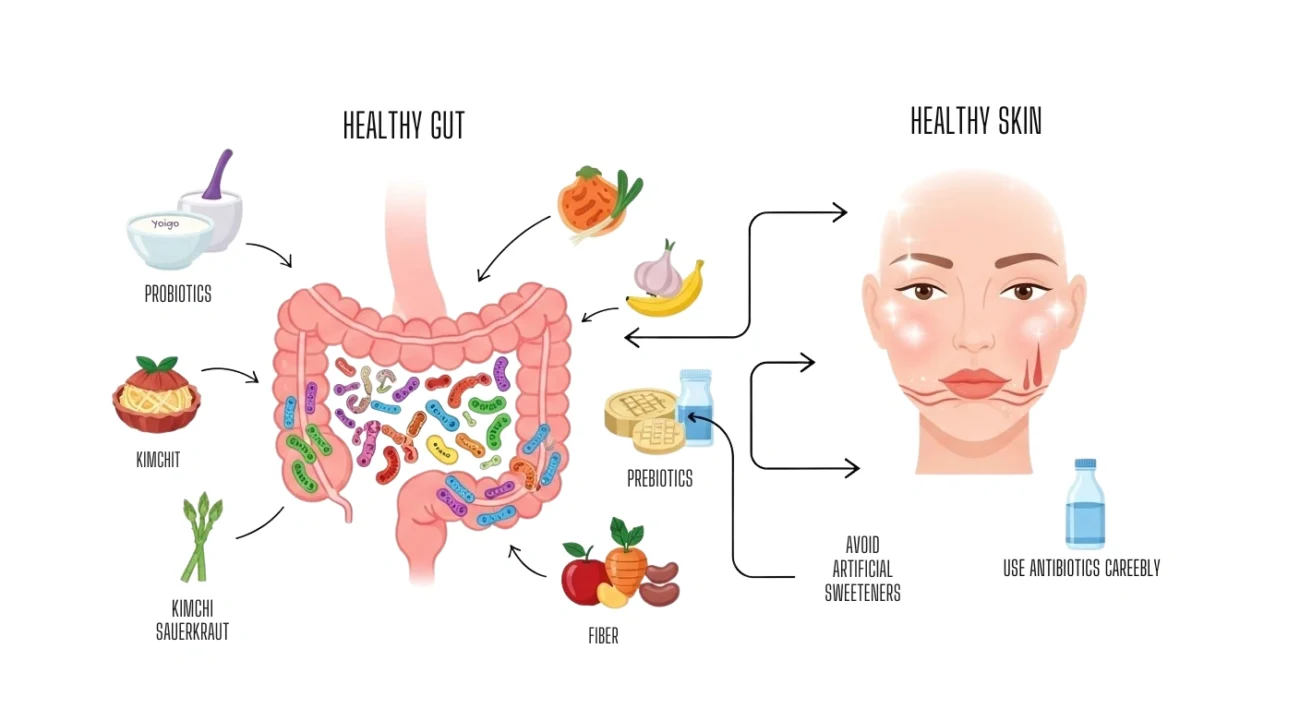
Here’s where things get interesting. Scientists now know that your gut and your skin talk to each other constantly. When your gut bacteria are out of balance, your skin pays the price often in the form of acne, eczema, rosacea, or psoriasis.
Think of your gut like the engine of a car and your skin like the warning lights on the dashboard. When something’s off under the hood, the lights start flashing.
Here’s how to keep your gut in good shape:
- Eat probiotic foods — Kimchi, sauerkraut, kefir, and natural yogurt feed your gut with good bacteria
- Eat prebiotic foods — Garlic, onions, bananas, and asparagus feed the bacteria that are already there
- Get more fiber — Whole grains, fruits, veggies, and beans keep everything moving smoothly
- Cut back on artificial sweeteners — They throw off your gut bacteria balance
- Don’t overuse antibiotics — Only take them when your doctor says you genuinely need them
Something else to consider: A collagen supplement can help if you’re over 25 and your skin feels like it’s losing firmness. As you age, your body makes less collagen on its own. Research shows that hydrolyzed collagen peptides support skin elasticity and hydration from the inside. It’s not a miracle cure, but paired with a healthy gut and a good diet, it gives your skin a real boost.
Be patient with gut health changes. You’ll start noticing results in about 4 to 8 weeks, but once things improve, the difference tends to stick around.
Stop Touching Your Face, Quit Smoking and Watch Your Drinking
Most glowing skin articles skip right past this one, but it matters more than people realize.
Keep Your Hands Off Your Face
Your hands touch your phone, doorknobs, keyboards, railings, and a hundred other things every single day. Every time you rest your chin on your hand or rub your eyes, all that bacteria and grime goes straight onto your skin. It clogs pores and causes breakouts.
Here’s the wild part most of us touch our faces dozens of times a day and don’t even notice it. Once you start paying attention, you’ll catch yourself doing it all the time. Just being aware of it is the first step toward stopping.
Quit Smoking Your Skin Is Begging You
Cigarette smoke carries over 4,000 chemicals, and they do real damage to your skin:
- They destroy collagen and elastin, the two things that keep skin firm
- They narrow the blood vessels in your face, cutting off the nutrients your skin needs
- They speed up wrinkles and leave your complexion dull and yellowish
- They slow down how fast your skin heals from cuts, scars, or blemishes
- They drain your vitamin D levels, which your skin depends on
The silver lining? Your skin starts bouncing back pretty quickly once you quit. A lot of people notice a difference in just a few weeks.
Go Easy on the Alcohol
Drinking too much, too often takes a toll:
- It dehydrates your body from the inside out
- It robs you of B vitamins and folic acid, which your skin needs to stay moisturized
- It cranks up inflammation, leading to puffiness, redness, and dullness
You don’t have to give it up completely. One drink a day for women and two for men is considered moderate. Just make sure you’re drinking extra water alongside it.
Try Facial Massage and Gua Sha
This is the tip that barely anyone talks about, and I honestly don’t understand why. It’s cheap, it takes five minutes, and it works from the very first time you try it.
People in China and India have used facial massage for centuries. And now modern research backs up what they’ve known all along it really does improve your skin.
Here’s what regular facial massage and gua sha do for you:
- Push more blood to your skin cells — That means more oxygen and nutrients reaching your face
- Drain excess fluid — This reduces puffiness and those tired-looking bags under your eyes
- Release tension in your face — Especially around your jaw, forehead, and temples
- Encourage collagen production — Over time, this firms and lifts your skin naturally
- Help your products absorb deeper — Your oils and serums actually work harder after a massage
Final Thoughts
Healthy, glowing skin doesn’t come from a bottle it comes from how you live your life. What you eat, how you rest, how you handle tough days, and the small choices you make every morning and night all add up over time. Pick two or three tips from this list, turn them into habits, and build from there. Your skin will catch up. And the glow you see in the mirror? That’ll be the real deal no filter required.